Results by title
74 books match the query 'Origin' and 9 start with o
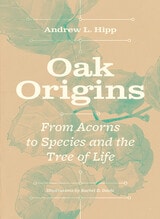
Oak Origins
From Acorns to Species and the Tree of LifeAndrew L. Hipp
University of Chicago Press, 2024
An oak begins its life with the precarious journey of a pollen grain, then an acorn, then a seedling. A mature tree may shed millions of acorns, but only a handful will grow. One oak may then live 100 years, 250 years, or even 13,000 years. But the long life of an individual is only a part of these trees’ story.
With naturalist and leading researcher Andrew L. Hipp as our guide, Oak Origins takes us through a sweeping evolutionary history, stretching back to a population of trees that lived more than 50 million years ago. We travel to the ancient tropical Earth to see the ancestors of the oaks evolving side by side with the dinosaurs. We journey from the oaks’ childhood in the once-warm forests of the Arctic to the montane cloud forests of Mexico and the broad-leaved evergreen forests of Southeast Asia. We dive into current research on oak genomes to see how scientists study genes’ movement between species and how oaks evolve over generations—spanning tens of millions of years. Finally, we learn how oak evolutionary history shapes the forests we know today, and how it may even shape the forests of the future.
Oaks are familiar to almost everyone, and beloved. They are embedded in our mythology. They have fed us, housed us, provided wood for our ships and wine barrels and homes and halls, planked our roads, and kept us warm. Every oak also has the potential to feed thousands of birds, squirrels, and mice and host countless insects, mosses, fungi, and lichens. But as Oak Origins makes clear, the story of the oaks’ evolution is not just the story of one important tree. It is the story of the Tree of Life, connecting all organisms that have ever lived on Earth, from oaks’ last common ancestor to us.

On the Origin of Language
Jean-Jacques Rousseau and Johann Gottfried Herder
University of Chicago Press, 1986

On the Origin of Phyla
James W. Valentine
University of Chicago Press, 2004
One of the twentieth century's most distinguished paleobiologists, Valentine here integrates data from molecular genetics, evolutionary developmental biology, embryology, comparative morphology, and paleontology into an analysis of interest to scholars from any of these fields. He begins by examining the sorts of evidence that can be gleaned from fossils, molecules, and morphology, then reviews and compares the basic morphology and development of animal phyla, emphasizing the important design elements found in the bodyplans of both living and extinct phyla. Finally, Valentine undertakes the monumental task of developing models to explain the origin and early diversification of animal phyla, as well as their later evolutionary patterns.
Truly a magnum opus, On the Origin of Phyla will take its place as one of the classic scientific texts of the twentieth century, affecting the work of paleontologists, morphologists, and developmental, molecular, and evolutionary biologists for decades to come.
"Truly a magnum opus, On the Origin of Phyla has already taken its place as one of the classic scientific texts of the twentieth century, affecting the work of paleontologists, morphologists, and developmental, molecular, and evolutionary biologists for decades to come."—Ethology, Ecology & Evolution
"Valentine is one of the Renaissance minds of our time. . . . Darwin wisely called his best-known work On the Origin of the Species; the origin of the phyla is an even stickier problem, and Valentine deserves credit for tackling it at such breadth . . . . A magnificient book."—Stefan Bengtson, Nature

On the Origin of Superheroes
From the Big Bang to Action Comics No. 1Chris Gavaler
University of Iowa Press, 2015
From the creation of the universe, through mythological heroes and gods, to folklore, ancient philosophy, revolutionary manifestos, discarded scientific theories, and gothic monsters, the sweep and scale of the superhero’s origin story is truly epic. We will travel from Jane Austen’s Bath to Edgar Rice Burroughs’s Mars to Owen Wister’s Wyoming, with some surprising stops along the way. We’ll meet mad scientists, Napoleonic dictators, costumed murderers, diabolical madmen, blackmailers, pirates, Wild West outlaws, eugenicists, the KKK, Victorian do-gooders, detectives, aliens, vampires, and pulp vigilantes (to name just a few). Chris Gavaler is your tour guide through this fascinating, sometimes dark, often funny, but always surprising prehistory of the most popular figure in pop culture today. In a way, superheroes have always been with us: they are a fossil record of our greatest aspirations and our worst fears and failings.

Origin and Evolution of Planetary and Satellite Atmospheres
Edited by S. K. Atreya, J. B. Pollack, and M.S. Matthews
University of Arizona Press, 1989

Origin of Russian Communism
Nicolas Berdyaev
University of Michigan Press, 1959

Origin of the Earth and Moon
Edited by R. M. Canup and K. Righter
University of Arizona Press, 2000
This book is intended to serve as a resource for those scientists working closely in this field, while at the same time it provides enough balance and depth to offer an introduction for students or technically minded general readers. Its thirty chapters address isotopic and chemical constraints on accretion, the dynamics of terrestrial planet formation, the impact-triggered formation of the Earth-Moon system, differentiation of the Earth and Moon, the origin of terrestrial volatiles, and conditions on the young Earth and Moon.
Covering such subjects as the history and origin of the Moon's orbit, water on the Earth, and the implications of Earth-Moon interactions for terrestrial climate and life, the book constitutes a state-of-the-art overview of the most recent investigations in the field. Although many advances have been made in our ability to evaluate competing models of the formation of the Earth-Moon system, there are still many gaps in our understanding. This book makes great strides toward closing those gaps by highlighting the extensive progress that has been made and pointing toward future research.

Original Signs
Gesture, Sign, and the Sources of LanguageDavid F. Armstrong
Gallaudet University Press, 2002
In the ongoing debate about evolution, scholars frequently argue either the perspective that humans stand as the end product of a deliberate process or that they derive from a series of random acts of natural selection. David F. Armstrong’s new book Original Signs embraces the Darwinian concept of natural selection and extends it to apply to the formation of language. While most current linguistic theory envisions language as a system for translating the contents of the mind into linear strings of arbitrary symbols, Armstrong asserts that this model does not characterize signed languages. He shows that language is inherently a multichannel activity, of which the two primary channels are auditory and visual.
Original Signs employs a more expansive notion of language that takes into account the full range of human communicative behavior. By making no strict separation between language and gesture, this thought-provoking work reveals that the use by deaf people of signs to create a fully formed language is also a natural facet of communication development for hearing people.
Armstrong explores the influences of Plato and Descartes on modern linguistics, and delineates the theories of earlier anthropological linguists Edward Sapir and Benjamin Lee Whorf, who thought of language as natural experiments connected to individual cultures. This exceptional work of scholarship methodically demonstrates that the intricacies of how languages develop, whether they depend upon words or signs, and that the complexity among languages that contact one another cannot be accounted for by the sequential hierarchical processes previously put forth by linguists and logicians. Original Signs will prove to be a fascinating, watershed work invaluable to linguists, anthropologists, and all other scholars and students engaged in the search for the origin of language.
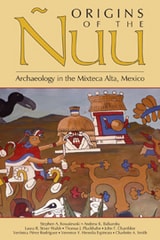
Origins of the Ñuu
Archaeology in the Mixteca Alta, MexicoStephen A. Kowalewski
University Press of Colorado, 2009
The ñuu - the kingdoms of the famous Mixtec codices - are traced back through the Postclassic and Classic periods to their beginnings in the first states of the Terminal Formative, revealing their origin, evolution, and persistence through two cycles of growth and collapse. Challenging assumptions that the Mixtec were peripheral to better-known peoples such as the Aztecs or Maya, the book asserts that the ñuu were a major demographic and economic power in their own right.
Older explanations of multiregional or macroregional systems often portrayed civilizations as rising in a cradle or hearth and spreading outward. New macroregional studies show that civilizations are products of more complex interactions between regions, in which peripheries are not simply shaped by cores but by their interactions with multiple societies at varying distances from major centers. Origins of the Ñuu is a significant contribution to this emerging area of archaeological research.