Results by title
95 books match the query 'Plato' and 2 start with o

On Manly Courage
A Study of Plato's LachesWalter T. Schmid. Foreword by George Kimball Plochmann
Southern Illinois University Press, 1992
Walter T. Schmid offers the first original interpretation of the Laches since Hermann Bonitz in the nineteenth century in the only full-length commentary on the Laches available in English.
Schmid divides the book into five main discussions: the historical background of the dialogue; the relation of form and content in a Platonic dialogue and specific structural and aesthetic features of the Laches; the first half of the dialogue, which introduces the characters and considers the theme of the education of young men; the inquiry with Laches, which examines the traditional Greek conception of military courage; and the inquiry with Nicias in which two nontraditional conceptions of courage are mooted, one closely associated with the sophistic movement in Athens, the other with Socrates himself. Furnishing a detailed paragraph-by-paragraph reading that traces Socrates’ ongoing quest for virtue and wisdom—a wisdom founded in the action of a whole human life—Schmid conclusively shows how and why the Laches fills an important niche in Plato’s moral theory.
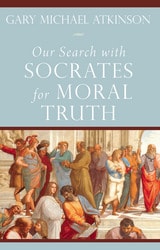
Our Search with Socrates for Moral Truth
Gary Michael Atkinson
Catholic University of America Press, 2015