Results by title
2018 books match the query 'Political aspects' and 39 start with o
Obama's Race
The 2008 Election and the Dream of a Post-Racial AmericaMichael Tesler and David O. Sears
University of Chicago Press, 2010
Barack Obama’s presidential victory naturally led people to believe that the United States might finally be moving into a post-racial era. Obama’s Race—and its eye-opening account of the role played by race in the election—paints a dramatically different picture.
The authors argue that the 2008 election was more polarized by racial attitudes than any other presidential election on record—and perhaps more significantly, that there were two sides to this racialization: resentful opposition to and racially liberal support for Obama. As Obama’s campaign was given a boost in the primaries from racial liberals that extended well beyond that usually offered to ideologically similar white candidates, Hillary Clinton lost much of her longstanding support and instead became the preferred candidate of Democratic racial conservatives. Time and again, voters’ racial predispositions trumped their ideological preferences as John McCain—seldom described as conservative in matters of race—became the darling of racial conservatives from both parties. Hard-hitting and sure to be controversial, Obama’s Race will be both praised and criticized—but certainly not ignored.
Obama, Clinton, Palin
Making History in Elections 2008Edited by Liette Gidlow
University of Illinois Press, 2011
Election 2008 made American history, but it was also the product of American history. Barack Obama, Hillary Clinton, and Sarah Palin smashed through some of the most enduring barriers to high political office, but their exceptional candidacies did not come out of nowhere. In these timely and accessible essays, a distinguished group of historians explores how the candidates both challenged and reinforced historic stereotypes of race and sex while echoing familiar themes in American politics and exploiting new digital technologies.
Contributors include Kathryn Kish Sklar on Clinton’s gender masquerade; Tiffany Ruby Patterson on the politics of black anger; Mitch Kachun on Michelle Obama and stereotypes about black women’s bodies; Glenda E. Gilmore on black women’s century of effort to expand political opportunities for African Americans; Tera W. Hunter on the lost legacy of Shirley Chisholm; Susan M. Hartmann on why the U.S. has not yet followed western democracies in electing a female head of state; Melanie Gustafson on Palin and the political traditions of the American West; Ronald Formisano on the populist resurgence in 2008; Paula Baker on how digital technologies threaten the secret ballot; Catherine E. Rymph on Palin’s distinctive brand of political feminism; and Elisabeth I. Perry on the new look of American leadership.
Objects of Empire
The Ceramic Tradition of the Imperial Inca StateTamara L. Bray
University of Texas Press, 2025
A comparative, empire-wide study of the ceramics associated with the imperial Inca state, theorizing the role of these highly recognizable vessel forms in legitimizing Inca rule and establishing imperial identities.
The beautiful polychrome ceramics of the imperial Inca state have long been noted for their seemingly repetitive nature but little considered beyond this basic observation. The widespread distribution and general uniformity of the Inca pottery, however, hints at its larger importance to the imperial project. Moving beyond the pervasive "seen one, seen 'em all" mentality, Objects of Empire brings to light the variability and rich semiotic content of imperial Inca vessels. Taking a comparative, empire-wide approach, Tamara Bray identifies the parameters and significance of this variability, and defines the core elements of the imperial state style. She then investigates where, when, and why differences and deviations from the perceived norm occur.
This study illuminates the strategies of territorial expansion and political control that lay at the heart of the Inca juggernaut, as well as the role of objects in the calculus of would-be rulers and subjects. Based on a unique and extensive database of imperial Inca pottery developed through detailed study of archaeologically recovered and museum-based collections, Objects of Empire reveals how power and legitimacy were produced and reproduced under the Inca through the material culture of everyday life.
Objects of Liberty
British Women Writers and Revolutionary SouvenirsPamela Buck
University of Delaware Press, 2024
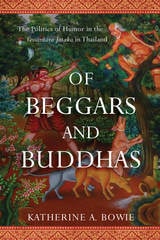
Of Beggars and Buddhas
The Politics of Humor in the Vessantara Jataka in ThailandKatherine A. Bowie
University of Wisconsin Press, 2020
The Vessantara Jataka has served both monastic and royal interests, encouraging parents to give their sons to religious orders and intimating that kings are future Buddhas. But, as Bowie shows, characterizations of the beggar Jujaka in various regions and eras have also brought ribald humor and sly antiroyalist themes to the story. Historically, these subversive performances appealed to popular audiences even as they worried the conservative Bangkok court. The monarchy sporadically sought to suppress the comedic recitations. As Thailand has changed from a feudal to a capitalist society, this famous story about giving away possessions is paradoxically being employed to promote tourism and wealth.
Of Death and Dominion
The Existential Foundations of GovernanceMohammed Bamyeh
Northwestern University Press, 2007
Death is the opposite not of life, but of power. And as such, Mohammed Bamyeh argues in this original work, death has had a great and largely unexplored impact on the thinking of governance throughout history, right down to our day. In Of Death and Dominion Bamyeh pursues the idea that a deep concern with death is, in fact, the basis of the ideological foundations of all political systems.
Concentrating on four types of political systems—polis, empire, theocracy, and modern mass society systems—Bamyeh shows how each follows a specific strategy designed to pit power against the equalizing specter of death. Each of these strategies—consolation, expansion, preparation, and repression—produces a certain style of political behavior, as well as particular psychic traumas. In making his argument, Bamyeh revisits a wide range of empirical and theoretical discussions in existentialist philosophy, psychoanalysis, comparative historical sociology, literary studies, and anthropology. By demonstrating how schemes of power are by definition also schemes for defying death—despite their claims to the contrary—his book encourages us to think of a new style of politics, one oriented toward life.
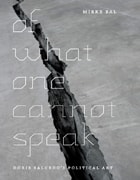
Of What One Cannot Speak
Doris Salcedo's Political ArtMieke Bal
University of Chicago Press, 2010
Doris Salcedo, a Colombian-born artist, addresses the politics of memory and forgetting in work that embraces fraught situations in dangerous places. Noted critic and theorist Mieke Bal narrates between the disciplines of contemporary culture in order to boldly reimagine the role of the visual arts. Both women are pathbreaking figures, globally renowned and widely respected. Doris Salcedo, meet Mieke Bal.
In Of What One Cannot Speak, Bal leads us into intimate encounters with Salcedo’s art, encouraging us to consider each work as a “theoretical object” that invites—and demands—certain kinds of considerations about history, death, erasure, and grief. Bal ranges widely through Salcedo’s work, from Salcedo’s Atrabiliarios series—in which the artist uses worn shoes to retrace los desaparecidos (“the disappeared”) from nations like Argentina, Chile, and Colombia—to Shibboleth, Salcedo’s once-in-a-lifetime commission by the Tate Modern, for which she created a rupture, as if by earthquake, that stretched the length of the museum hall’s concrete floor. In each instance, Salcedo’s installations speak for themselves, utilizing household items, human bones, and common domestic architecture to explore the silent spaces between violence, trauma, and identity. Yet Bal draws out even deeper responses to the work, questioning the nature of political art altogether and introducing concepts of metaphor, time, and space in order to contend with Salcedo’s powerful sculptures and installations.
An unforgettable fusion of art and essay, Of What One Cannot Speak takes us to the very core of events we are capable of remembering—yet still uncomfortably cannot speak aloud.
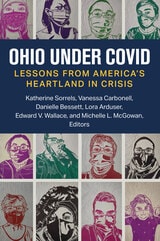
Ohio under COVID
Lessons from America's Heartland in CrisisKatherine Sorrels, Vanessa Carbonell, Danielle Bessett, Lora Arduser, Edward Wallace, and Michelle L. McGowan, Editors
University of Michigan Press, 2023
In early March of 2020, Americans watched with uncertain terror as the novel coronavirus pandemic unfolded. One week later, Ohio announced its first confirmed cases. Just one year later, the state had over a million cases and 18,000 Ohioans had died. What happened in that first pandemic year is not only a story of a public health disaster, but also a story of social disparities and moral dilemmas, of lives and livelihoods turned upside down, and of institutions and safety nets stretched to their limits.
Ohio under COVID tells the human story of COVID in Ohio, America’s bellwether state. Scholars and practitioners examine the pandemic response from multiple angles, and contributors from numerous walks of life offer moving first-person reflections. Two themes emerge again and again: how the pandemic revealed a deep tension between individual autonomy and the collective good, and how it exacerbated social inequalities in a state divided along social, economic, and political lines. Chapters address topics such as mask mandates, ableism, prisons, food insecurity, access to reproductive health care, and the need for more Black doctors. The book concludes with an interview with Dr. Amy Acton, the state’s top public health official at the time COVID hit Ohio. Ohio under COVID captures the devastating impact of the pandemic, both in the public discord it has unearthed and in the unfair burdens it has placed on the groups least equipped to bear them.

Oil Wars
Yahia Said
Pluto Press, 2007
Oil and Nation
A History of Bolivia's Petroleum SectorStephen C. Cote
West Virginia University Press, 2016
The book advances chronologically from Bolivia’s earliest petroleum pioneers in the nineteenth century until the present, inserting oil into historical debates about Bolivian ethnic, racial, and environmental issues, and within development strategies by different administrations. While Bolivia is best known for its tin mining, Oil and Nation makes the case that nationalist reformers viewed hydrocarbons and the state oil company as a way to modernize the country away from the tin monoculture and its powerful backers and toward an oil-powered future.
Oligarchy in America
Power, Justice, and the Rule of the FewLuke Winslow
University of Alabama Press, 2024
Roderick P. Hart Outstanding Book Award for the National Communication Association's Political Communication Division
A fascinating survey of the history of political and economic ideas in the US that have led to an increasingly entrenched ultra-rich class of oligarchs.
To an American, oligarchy is something that happens somewhere else. In Oligarchy in America, Luke Winslow reveals oligarchy’s deep intellectual roots and alarming growth in America. The book provides conceptual tools the lack of which have prevented Americans from recognizing oligarchy at home.
Winslow argues that generic labels like “billionaires” for a class of ultra-rich masks the pervasive structures that entrench their power. He introduces instead the concept of democratic oligarchy—an institutional arrangement in which the ultra-rich form a class consciously creating and leveraging state power to accumulate wealth.
Like a master class in political ideas, Winslow traces the intellectual lineage of oligarchy in the US. His lively and compulsively readable survey examines key rhetorical sources such as Herbert Spencer, Andrew Carnegie, Friedrich Hayek, Lewis Powell, Milton Friedman, Charles Koch, Donald Trump, Tucker Carlson, and others.
Oligarchy in America maps the connective web of oligarchic ideas uniting these disparate figures. By offering a lucid framework through which to view oligarchic ideas ambient in American culture, Winslow makes a vital contribution to readers and scholars of communication and rhetorical studies, public address, economics, and political science.

On Paradox
The Claims of TheoryElizabeth S. Anker
Duke University Press, 2022
On Petrocultures
Globalization, Culture, and EnergyImre Szeman
West Virginia University Press, 2019
On Petrocultures brings together key essays by Imre Szeman, a leading scholar in the field of energy humanities and a critical voice in debates about globalization and neoliberalism. Szeman’s most important and influential essays, in dialogue with exciting new pieces written for the book, investigate ever-evolving circuits of power in the contemporary world, as manifested in struggles over space and belonging, redefinitions of work and individual autonomy, and the deep links between energy use and climate change.
These essays explore life lived in the twenty-first century by examining critically the vocabulary through which capitalism makes sense of itself, focusing on concepts like the nation, globalization, neoliberalism, creativity, and entrepreneurship. At the heart of the volume is the concept of “petrocultures,” which demands that we understand a fundamental fact of modern life: we are shaped by and through fossil fuels. Szeman argues that we cannot take steps to address global warming without fundamentally changing the social, cultural, and political norms and expectations developed in conjunction with the energy riches of the past century. On Petrocultures maps the significant challenge of our dependence on fossil fuels and probes ways we might begin to leave petrocultures behind.
On Site, In Sound
Performance Geographies in América LatinaKirstie A. Dorr
Duke University Press, 2018
On The Condition of Anonymity
Unnamed Sources and the Battle for JournalismMatt Carlson
University of Illinois Press, 2012

On the Porch
Life and Music in Terlingua, TexasW. Chase Peeler
University of Texas Press, 2021
In sunbaked Terlingua, Texas (pop., a few hundred), residents joke that there is a musician under every rock. Located ten miles from Mexico in one of the remotest corners of the United States, the town had a recording studio before it had a school, a well-stocked grocery store, or even a water utility. Open jam sessions are a daily ritual, and some songwriters make a living from their craft despite being thousands of miles from New York or Nashville. Why does such a tiny and isolated place ring with singing and guitars?
Based on more than two years of on-the-ground research, On the Porch tells the story of this small but remarkable community. Chase Peeler invites us into the music, introducing us to a cast of characters as unique as the town itself. He reveals how novices and experts perform together—a rarity in contemporary America. He recounts the devastation brought on by a border closure and describes how music is once again uniting people across the Rio Grande. He considers the impact of gentrification in an off-the-grid paradise, and how this threatens to transform a precarious musical ecosystem. On the Porch is a celebration of human musicality, of the role that music plays and can play in our lives, both in Terlingua and beyond.
One Less Car
Bicycling and the Politics of AutomobilityAuthored by Zack Furness
Temple University Press, 2010
Although millions of people in the United States love to ride bicycles for exercise or leisure, statistics show that only 1% of the total U.S. population ride bicycles for transportation—and barely half as many use bikes to commute to work. In his original and exciting book, One Less Car, Zack Furness examines what it means historically, culturally, socioeconomically, and politically to be a bicycle transportation advocate/activist.
Presenting an underground subculture of bike enthusiasts who aggressively resist car culture, Furness maps out the cultural trajectories between mobility, technology, urban space and everyday life. He connects bicycling to radical politics, public demonstrations, alternative media production (e.g., ‘zines), as well as to the development of community programs throughout the world.
One Less Car also positions the bicycle as an object with which to analyze and critique some of the dominant cultural and political formations in the U.S.—and even breaks down barriers of race, class and gender privilege that are interconnected to mobility. For Furness, bicycles not only liberate people from technology, they also support social and environmental justice. So, he asks, Why aren’t more Americans adopting them for their transportation needs?
One or Two Words
Language and Politics in the Toraja Highlands of IndonesiaAurora Donzelli
National University of Singapore Press, 2020
Online Deliberation
Design, Research, and PracticeEdited by Todd Davies and Seeta Peña Gangadharan
CSLI, 2009
Ontological Terror
Blackness, Nihilism, and EmancipationCalvin L. Warren
Duke University Press, 2018
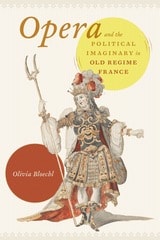
Opera and the Political Imaginary in Old Regime France
Olivia Bloechl
University of Chicago Press, 2018
In Opera and the Political Imaginary in Old Regime France, however, Olivia Bloechl reveals another layer of French opera’s political theater. The make-believe worlds on stage, she shows, involved not just fantasies of sovereign rule but also aspects of government. Plot conflicts over public conduct, morality, security, and law thus appear side-by-side with tableaus hailing glorious majesty. What’s more, opera’s creators dispersed sovereign-like dignity and powers well beyond the genre’s larger-than-life rulers and gods, to its lovers, magicians, and artists. This speaks to the genre’s distinctive combination of a theological political vocabulary with a concern for mundane human capacities, which is explored here for the first time.
By looking at the political relations among opera characters and choruses in recurring scenes of mourning, confession, punishment, and pardoning, we can glimpse a collective political experience underlying, and sometimes working against, ancienrégime absolutism. Through this lens, French opera of the period emerges as a deeply conservative, yet also more politically nuanced, genre than previously thought.
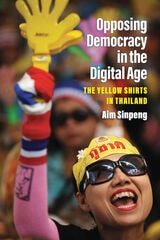
Opposing Democracy in the Digital Age
The Yellow Shirts in ThailandAim Sinpeng
University of Michigan Press, 2021
Opposing Democracy in the Digital Age is about why ordinary people in a democratizing state oppose democracy and how they leverage both traditional and social media to do so. Aim Sinpeng focuses on the people behind popular, large-scale antidemocratic movements that helped bring down democracy in 2006 and 2014 in Thailand. The yellow shirts (PAD—People’s Alliance for Democracy) that are the focus of the book are antidemocratic movements grown out of democratic periods in Thailand, but became the catalyst for the country’s democratic breakdown. Why, when, and how supporters of these movements mobilize offline and online to bring down democracy are some of the key questions that Sinpeng answers. While the book primarily uses a qualitative methodological approach, it also uses several quantitative tools to analyze social media data in the later chapters. This is one of few studies in the field of regime transition that focuses on antidemocratic mobilization and takes the role of social media seriously.
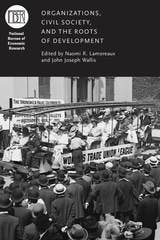
Organizations, Civil Society, and the Roots of Development
Edited by Naomi R. Lamoreaux and John Joseph Wallis
University of Chicago Press, 2017
The contributions to Organizations, Civil Society, and the Roots of Development seek to answer this question through an exploration of how developing nations throughout the eighteenth and nineteenth centuries, including the United States, United Kingdom, France, and Germany, made the transition to allowing their citizens the right to form organizations. The transition, contributors show, was not an easy one. Neither political changes brought about by revolution nor subsequent economic growth led directly to open access. In fact, initial patterns of change were in the opposite direction, as political coalitions restricted access to specific organizations for the purpose of maintaining political control. Ultimately, however, it became clear that these restrictions threatened the foundation of social and political order. Tracing the path of these modern civil societies, Organizations, Civil Society, and the Roots of Development is an invaluable contribution to all interested in today’s developing countries and the challenges they face in developing this organizational capacity.
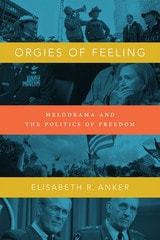
Orgies of Feeling
Melodrama and the Politics of FreedomElisabeth R. Anker
Duke University Press, 2014
Osiris, Volume 17
Science and Civil SocietyEdited by Lynn K. Nyhart and Thomas Broman
University of Chicago Press, 2002
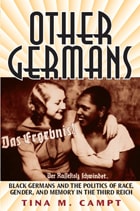
Other Germans
Black Germans and the Politics of Race, Gender, and Memory in the Third ReichTina M. Campt
University of Michigan Press, 2005
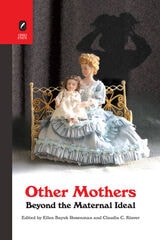
Other Mothers
Beyond the Maternal IdealEdited by Ellen Bayuk Rosenman and Claudia C. Klaver
The Ohio State University Press, 2008
This collection addresses this void, revealing the extraordinary diversity of Victorian motherhood. Exploring diaries, novels, and court cases, with contexts ranging from London to Egypt to Australia, these varied accounts take the collection “beyond the maternal ideal” to consider the multiple, unpredictable ways in which motherhood was experienced and imagined in this formative historical period.
Other Mothers joins revisionist approaches to femininity that now characterize Victorian studies. Its contents trace intersections among gender, race, and class; question the power of separate spheres ideology; and insist on the context-specific nature of social roles. The fifteen essays in this volume contribute to the fields of literary criticism, history, cultural studies, and history.
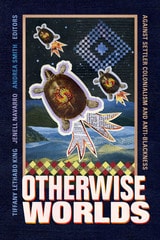
Otherwise Worlds
Against Settler Colonialism and Anti-BlacknessTiffany Lethabo King, Jenell Navarro, and Andrea Smith, editors
Duke University Press, 2020
Contributors. Maile Arvin, Marcus Briggs-Cloud, J. Kameron Carter, Ashon Crawley, Denise Ferreira da Silva, Chris Finley, Hotvlkuce Harjo, Sandra Harvey, Chad B. Infante, Tiffany Lethabo King, Jenell Navarro, Lindsay Nixon, Kimberly Robertson, Jared Sexton, Andrea Smith, Cedric Sunray, Se’mana Thompson, Frank B. Wilderson

Our Man in Warszawa
How the West Misread PolandJo Harper
Central European University Press, 2021
Written by a Brit who has lived in Poland for more than twenty years, this book challenges some accepted thinking in the West about Poland and about the rise of Law and Justice (PiS) as the ruling party in 2015. It is a remarkable account of the Polish post-1989 transition and contemporary politics, combining personal views and experience with careful fact and material collections. The result is a vivid description of the events and scrupulous explanations of the political processes, and all this with an interesting twist – a perspective of a foreigner and insider at the same time. Settled in the position of participant observer, Jo Harper combines the methods of macro and micro analysis with CDA, critical discourse analysis. He presents and interprets the constituent elements and issues of contemporary Poland: the main political forces, the Church, the media, issues of gender, the Russian connection, the much-disputed judicial reform and many others.
A special feature of the book is the detailed examination of the coverage of the Poland’s latest two elections, one in 2019 (parliamentary) and the other in 2020 (presidential) in the British media, an insightful and witty specimen of comparative cultural and political analysis.
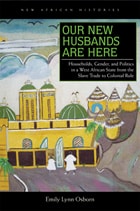
Our New Husbands Are Here
Households, Gender, and Politics in a West African State from the Slave Trade to Colonial RuleEmily Lynn Osborn
Ohio University Press, 2011
In Our New Husbands Are Here, Emily Lynn Osborn investigates a central puzzle of power and politics in West African history: Why do women figure frequently in the political narratives of the precolonial period, and then vanish altogether with colonization? Osborn addresses this question by exploring the relationship of the household to the state. By analyzing the history of statecraft in the interior savannas of West Africa (in present-day Guinea-Conakry), Osborn shows that the household, and women within it, played a critical role in the pacifist Islamic state of Kankan-Baté, enabling it to endure the predations of the transatlantic slave trade and become a major trading center in the nineteenth century. But French colonization introduced a radical new method of statecraft to the region, one that separated the household from the state and depoliticized women’s domestic roles. This book will be of interest to scholars of politics, gender, the household, slavery, and Islam in African history.
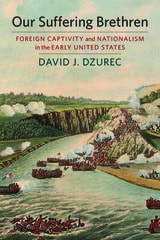
Our Suffering Brethren
Foreign Captivity and Nationalism in the Early United StatesDavid J. Dzurec III
University of Massachusetts Press, 2019
In October 1785, American statesman John Jay acknowledged that the more his countrymen “are treated ill abroad, the more we shall unite and consolidate at home.” Behind this simple statement lies a complicated history. From the British impressment of patriots during the Revolution to the capture of American sailors by Algerian corsairs and Barbary pirates at the dawn of the nineteenth century, stories of Americans imprisoned abroad helped jumpstart democratic debate as citizens acted on their newly unified identity to demand that their government strengthen efforts to free their fellow Americans. Deliberations about the country's vulnerabilities in the Atlantic world reveal America's commitment to protecting the legacy of the Revolution as well as growing political divisions.
Drawing on newspaper accounts, prisoner narratives, and government records, David J. Dzurec III explores how stories of American captivity in North America, Europe, and Africa played a critical role in the development of American political culture, adding a new layer to our understanding of foreign relations and domestic politics in the early American republic.
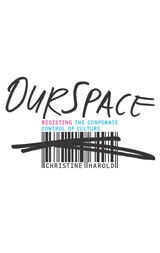
OurSpace
Resisting the Corporate Control of CultureChristine Harold
University of Minnesota Press, 2009
Culture jamming is so twentieth century! What’s next?
When reporters asked about the Bush administration’s timing in making their case for the Iraq war, then Chief of Staff Andrew Card responded that “from a marketing point of view, you don’t introduce new products in August.” While surprising only in its candor, this statement signified the extent to which consumer culture has pervaded every aspect of life. For those troubled by the long reach of the marketplace, resistance can seem futile. However, a new generation of progressive activists has begun to combat the media supremacy of multinational corporations by using the very tools and techniques employed by their adversaries.
In OurSpace, Christine Harold examines the deployment and limitations of “culture jamming” by activists. These techniques defy repressive corporate culture through parodies, hoaxes, and pranks. Among the examples of sabotage she analyzes are the magazine Adbusters’s spoofs of familiar ads and the Yes Men’s impersonations of company spokespersons.While these strategies are appealing, Harold argues that they are severely limited in their ability to challenge capitalism. Indeed, many of these tactics have already been appropriated by corporate marketers to create an aura of authenticity and to sell even more products. For Harold, it is a different type of opposition that offers a genuine alternative to corporate consumerism. Exploring the revolutionary Creative Commons movement, copyleft, and open source technology, she advocates a more inclusive approach to intellectual property that invites innovation and wider participation in the creative process.From switching the digital voice boxes of Barbie dolls and G.I. Joe action figures to inserting the silhouetted image of Abu Ghraib’s iconic hooded and wired victim into Apple’s iPod ads, high-profile instances of anticorporate activism over the past decade have challenged, but not toppled, corporate media domination. OurSpace makes the case for a provocative new approach by co-opting the logic of capitalism itself.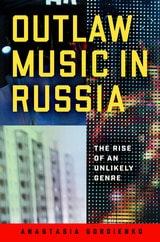
Outlaw Music in Russia
The Rise of an Unlikely GenreAnastasia Gordienko
University of Wisconsin Press, 2023
The Russian shanson can be heard across the country today, on radio and television shows, at mass events like political rallies, and even at the Kremlin. Yet despite its ubiquity, it has attracted almost no scholarly attention. Anastasia Gordienko provides the first full history of the shanson, from its tenuous ties to early modern criminals’ and robbers’ folk songs, through its immediate generic predecessors in the Soviet Union, to its current incarnation as the soundtrack for daily life in Russia. It is difficult to firmly define the shanson or its family of song genres, but they all have some connection, whether explicit or implicit, to the criminal underworld or to groups or activities otherwise considered subversive. Traditionally produced by and popular among criminals and other marginalized groups, and often marked by characters and themes valorizing illegal activities, the songs have undergone censorship since the early nineteenth century. Technically legal only since the collapse of the Soviet Union, the shanson is today not only broadly popular but also legitimized by Vladimir Putin’s open endorsement of the genre.
With careful research and incisive analysis, Gordienko deftly details the shanson’s history, development, and social meanings. Attempts by imperial rulers, and later by Soviet leaders, to repress the songs and the lifestyles they romanticized not only did little to discourage their popularity but occasionally helped the genre flourish. Criminals and liberal intelligentsia mingled in the Gulag system, for instance, and this contact introduced censored songs to an educated, disaffected populace that inscribed its own interpretations and became a major point of wider dissemination after the Gulag camps were closed. Gordienko also investigates the shanson as it exists in popular culture today: not divorced from its criminal undertones (or overtones) but celebrated for them. She argues that the shanson expresses fundamental themes of Russian culture, allowing for the articulation of anxieties, hopes, and dissatisfactions that are discouraged or explicitly forbidden otherwise.
Outlawing Genocide Denial
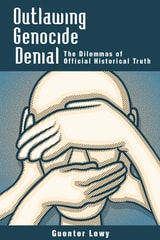
The Dilemmas of Official Historical TruthGuenter Lewy
University of Utah Press, 2014
Holocaust denial can be viewed as another form of hatred against the Jews and preventing it can be understood as a form of warding off hate speech. Germany has made it a crime punishable by law. Other European countries have similar laws. While the rationale for such laws seems reasonable, Lewy asks readers to look again and to consider carefully the dangers that these laws could present. His discussion neither dismisses the ramifications of genocide denial nor justifies it; he instead looks closely at the possible risks of government-enforced interpretations of history.
Outlawing genocide denial sets a precedent of allowing governments to dictate historical truth and how events should be interpreted. Such government restrictions can be counterproductive in a democratic society which values freedom of speech. Lewy examines these and related ideas through the analysis of historical and current examples. He posits his own conclusion but leaves it up to readers to view the evidence and arguments and form their own opinions.
Outside Literary Studies
Black Criticism and the UniversityAndy Hines
University of Chicago Press, 2022
This striking contribution to Black literary studies examines the practices of Black writers in the mid-twentieth century to revise our understanding of the institutionalization of literary studies in America. Andy Hines uncovers a vibrant history of interpretive resistance to university-based New Criticism by Black writers of the American left. These include well-known figures such as Langston Hughes and Lorraine Hansberry as well as still underappreciated writers like Melvin B. Tolson and Doxey Wilkerson. In their critical practice, these and other Black writers levied their critique from “outside” venues: behind the closed doors of the Senate Permanent Subcommittee on Investigations, in the classroom at a communist labor school under FBI surveillance, and in a host of journals. From these vantages, Black writers not only called out the racist assumptions of the New Criticism, but also defined Black literary and interpretive practices to support communist and other radical world-making efforts in the mid-twentieth century. Hines’s book thus offers a number of urgent contributions to literary studies: it spotlights a canon of Black literary texts that belong to an important era of anti-racist struggle, and it fills in the pre-history of the rise of Black studies and of ongoing Black dissent against the neoliberal university.
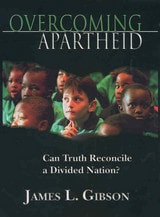
Overcoming Apartheid
Can Truth Reconcile a Divided Nation?James L. Gibson
Russell Sage Foundation, 2004
Overpotential
Fuel Cells, Futurism, and the Making of a Power PanaceaEisler, Matthew
Rutgers University Press, 2012
It sounds so simple. Just combine oxygen and hydrogen in an electrochemical reaction that produces water and electricity, and you’ll have a clean, efficient power source. But scientists have spent decades—and billions of dollars in government and industry funding—developing the fuel cell. There have been successes and serendipitous discoveries along the way, but engineering a fuel cell that is both durable and affordable has proved extraordinarily difficult.
Overpotential charts the twists and turns in the ongoing quest to create the perfect fuel cell. By exploring the gap between the theory and practice of fuel cell power, Matthew N. Eisler opens a window into broader issues in the history of science, technology, and society after the Second World War, including the sociology of laboratory life, the relationship between academe, industry, and government in developing advanced technologies, the role of technology in environmental and pollution politics, and the rise of utopian discourse in science and engineering.

Owners of the Sidewalk
Security and Survival in the Informal CityDaniel M. Goldstein
Duke University Press, 2016
Owning the Olympics
Narratives of the New ChinaMonroe E. Price and Daniel Dayan, Editors
University of Michigan Press, 2008
"A major contribution to the study of global events in times of global media. Owning the Olympics tests the possibilities and limits of the concept of 'media events' by analyzing the mega-event of the information age: the Beijing Olympics. . . . A good read from cover to cover."
—Guobin Yang, Associate Professor, Asian/Middle Eastern Cultures & Sociology, Barnard College, Columbia University
From the moment they were announced, the Beijing Games were a major media event and the focus of intense scrutiny and speculation. In contrast to earlier such events, however, the Beijing Games are also unfolding in a newly volatile global media environment that is no longer monopolized by broadcast media. The dramatic expansion of media outlets and the growth of mobile communications technology have changed the nature of media events, making it significantly more difficult to regulate them or control their meaning. This volatility is reflected in the multiple, well-publicized controversies characterizing the run-up to Beijing 2008. According to many Western commentators, the People's Republic of China seized the Olympics as an opportunity to reinvent itself as the "New China"---a global leader in economics, technology, and environmental issues, with an improving human-rights record. But China's maneuverings have also been hotly contested by diverse global voices, including prominent human-rights advocates, all seeking to displace the official story of the Games.
Bringing together a distinguished group of scholars from Chinese studies, human rights, media studies, law, and other fields, Owning the Olympics reveals how multiple entities---including the Chinese Communist Party itself---seek to influence and control the narratives through which the Beijing Games will be understood.
digitalculturebooks is an imprint of the University of Michigan Press and the Scholarly Publishing Office of the University of Michigan Library dedicated to publishing innovative and accessible work exploring new media and their impact on society, culture, and scholarly communication. Visit the website at www.digitalculture.org.