Results by title
192 books match the query 'Popular music' and 6 start with o
Old Town Road
A Song by Lil Nas X with Billy Ray CyrusChris Molanphy
Duke University Press, 2023
One Nation Under A Groove
Motown and American CultureGerald Early
University of Michigan Press, 2004
How it got to be that way and how it changed the face of American popular culture are the subjects of this concise study of Berry Gordy's phenomenal creation. Author Gerald Early tells the story of the cultural and historical conditions that made Motown Records possible, including the dramatic shifts in American popular music of the time, changes in race relations and racial attitudes, and the rise of a black urban population. Early concentrates in particular on the 1960s and 70s, when Motown had its biggest impact on American musical tastes and styles.
With this revised and expanded edition, the author provides an up-to-date bibliography of the major books that have been written about Motown Records specifically, and black American music generally. Plus, new appendices feature interviews with four of the major creators of the Motown Sound: Berry Gordy, Stevie Wonder, Diana Ross, and Marvin Gaye.
One Night on TV Is Worth Weeks at the Paramount
Popular Music on Early TelevisionMurray Forman
Duke University Press, 2012
Our Own Sweet Sounds
A Celebration of Popular Music in ArkansasRobert Cochran
University of Arkansas Press, 2005
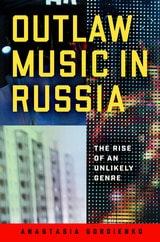
Outlaw Music in Russia
The Rise of an Unlikely GenreAnastasia Gordienko
University of Wisconsin Press, 2023
The Russian shanson can be heard across the country today, on radio and television shows, at mass events like political rallies, and even at the Kremlin. Yet despite its ubiquity, it has attracted almost no scholarly attention. Anastasia Gordienko provides the first full history of the shanson, from its tenuous ties to early modern criminals’ and robbers’ folk songs, through its immediate generic predecessors in the Soviet Union, to its current incarnation as the soundtrack for daily life in Russia. It is difficult to firmly define the shanson or its family of song genres, but they all have some connection, whether explicit or implicit, to the criminal underworld or to groups or activities otherwise considered subversive. Traditionally produced by and popular among criminals and other marginalized groups, and often marked by characters and themes valorizing illegal activities, the songs have undergone censorship since the early nineteenth century. Technically legal only since the collapse of the Soviet Union, the shanson is today not only broadly popular but also legitimized by Vladimir Putin’s open endorsement of the genre.
With careful research and incisive analysis, Gordienko deftly details the shanson’s history, development, and social meanings. Attempts by imperial rulers, and later by Soviet leaders, to repress the songs and the lifestyles they romanticized not only did little to discourage their popularity but occasionally helped the genre flourish. Criminals and liberal intelligentsia mingled in the Gulag system, for instance, and this contact introduced censored songs to an educated, disaffected populace that inscribed its own interpretations and became a major point of wider dissemination after the Gulag camps were closed. Gordienko also investigates the shanson as it exists in popular culture today: not divorced from its criminal undertones (or overtones) but celebrated for them. She argues that the shanson expresses fundamental themes of Russian culture, allowing for the articulation of anxieties, hopes, and dissatisfactions that are discouraged or explicitly forbidden otherwise.
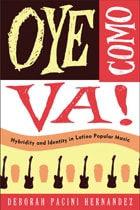
Oye Como Va!
Hybridity and Identity in Latino Popular MusicDeborah Pacini Hernandez
Temple University Press, 2009
Listen Up! When the New York-born Tito Puente composed "Oye Como Va!" in the 1960s, his popular song was called "Latin" even though it was a fusion of Afro-Cuban and New York Latino musical influences. A decade later, Carlos Santana, a Mexican immigrant, blended Puente’s tune with rock and roll, which brought it to the attention of national audiences. Like Puente and Santana, Latino/a musicians have always blended musics from their homelands with other sounds in our multicultural society, challenging ideas of what "Latin" music is or ought to be. Waves of immigrants further complicate the picture as they continue to bring their distinctive musical styles to the U.S.—from merengue and bachata to cumbia and reggaeton.
In Oye Como Va!, Deborah Pacini Hernandez traces the trajectories of various U.S. Latino musical forms in a globalizing world, examining how the blending of Latin music reflects Latino/a American lives connecting across nations. Exploring the simultaneously powerful, vexing, and stimulating relationship between hybridity, music, and identity, Oye Como Va! asserts that this potent combination is a signature of the U.S. Latino/a experience.