Results by title
194 books match the query 'Practice' and 9 start with o
Of Borders And Thresholds
Theatre History, Practice, and TheoryMichal Andrzej Kobialka
University of Minnesota Press, 1999
On Location
Theory and Practice in Classroom-Based Writing Tutoringedited by Candace Spigelman & Laurie Grobman
Utah State University Press, 2005
Classroom-based writing tutoring is a distinct form of writing support, a hybrid instructional method that engages multiple voices and texts within the college classroom. Tutors work on location in the thick of writing instruction and writing activity.
On Location is the first volume to discuss this emerging practice in a methodical way. The essays in this collection integrate theory and practice to highlight the alliances and connections on-location tutoring offers while suggesting strategies for resolving its conflicts. Contributors examine classroom-based tutoring programs located in composition courses as well as in writing intensive courses across the disciplines.
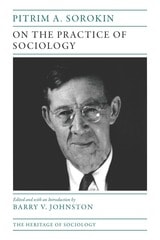
On the Practice of Sociology
Pitirim A. Sorokin
University of Chicago Press, 1998
His early American works opened new vistas in rural sociology, social stratification, and theory. They provided an elegant standard for scientific sociology and won him the founding chairmanship of sociology at Harvard University. A continuous innovator, he next explored the vast expanse of human affairs, and outlined the surfacing crisis of modernity. At the Harvard Research Center for Creative Altruism he developed a blueprint for social reconstruction. Such interests combined with a prophetic and combative style of disagreement drove him to the margins of a discipline hungry for acceptance as a science. In the early1960s, his work was once again recognized, and he became president of the American Sociological Association.
Including essays that range from his early Russian years to his final works in the 60s, this collection provides a much-needed introduction to one of sociology's most controversial thinkers.
Online Deliberation
Design, Research, and PracticeEdited by Todd Davies and Seeta Peña Gangadharan
CSLI, 2009

Open Marxism 2
Theory and PracticeWerner Bonefeld
Pluto Press, 1992
Open to Disruption
Time and Craft in the Practice of Slow SociologyAnita Ilta Garey
Vanderbilt University Press, 2014
Some researchers describe how disruptions prompted them to expand the boundaries of their discipline and invent concepts that could more accurately describe phenomena that previously had no name and no scholarly history. Sometimes scholars themselves caused the disruption as they circled back to work they had considered "done" and allowed the possibility of rethinking earlier findings.
Opera in Theory and Practice, Image and Myth
Edited by Lorenzo Bianconi and Giorgio Pestelli
University of Chicago Press, 2003
This sixth volume in the series centers on the sociological and critical aspects of opera in Italy, considering the art in the context of an Italian literary and cultural canon rarely revealed in English and American studies. In its six chapters, contributors survey critics' changing attitudes toward opera over several centuries, trace the evolution of formal conventions among librettists, explore the historical relationships between opera and Italian literature, and examine opera's place in Italian popular and national culture. In perhaps the volume's most striking contribution, German scholar Carl Dahlouse offers his most important statement on the dramaturgy of opera.
Oratorical Culture in Nineteenth-Century America
Transformations in the Theory and Practice of RhetoricGregory Clark and S. Michael Halloran
Southern Illinois University Press, 1993
Gregory Clark and S. Michael Halloran bring together nine essays that explore change in both the theory and the practice of rhetoric in the nineteenth-century United States.
In their introductory essay, Clark and Halloran argue that at the beginning of the nineteenth century, rhetoric encompassed a neoclassical oratorical culture in which speakers articulated common values to establish consensual moral authority that directed community thought and action. As the century progressed, however, moral authority shifted from the civic realm to the professional, thus expanding participation in the community as it fragmented the community itself. Clark and Halloran argue that this shift was a transformation in which rhetoric was reconceived to meet changing cultural needs.
Part I examines the theories and practices of rhetoric that dominated at the beginning of the century. The essays in this section include "Edward Everett and Neoclassical Oratory in Genteel America" by Ronald F. Reid, "The Oratorical Poetic of Timothy Dwight" by Gregory Clark, "The Sermon as Public Discourse: Austin Phelps and the Conservative Homiletic Tradition in Nineteenth-Century America" by Russel Hirst, and "A Rhetoric of Citizenship in Nineteenth-Century America" by P. Joy Rouse.
Part 2 examines rhetorical changes in the culture that developed during that century. The essays include "The Popularization of Nineteenth-Century Rhetoric: Elocution and the Private Learner" by Nan Johnson, "Rhetorical Power in the Victorian Parlor: Godey’s Lady’s Book and the Gendering of Nineteenth-Century Rhetoric" by Nicole Tonkovich, "Jane Addams and the Social Rhetoric of Democracy" by Catherine Peaden, "The Divergence of Purpose and Practice on the Chatauqua: Keith Vawter’s Self-Defense" by Frederick J.Antczak and Edith Siemers, and "The Rhetoric of Picturesque Scenery: A Nineteenth-Century Epideictic" by S. Michael Halloran.
Overhead Electric Power Lines
Theory and practiceSurajit Chattopadhyay
The Institution of Engineering and Technology, 2021