Results by title
119 books match the query 'Protest movements' and 6 start with o
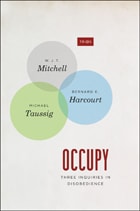
Occupy
Three Inquiries in DisobedienceW. J. T. Mitchell, Bernard E. Harcourt, and Michael Taussig
University of Chicago Press, 2013
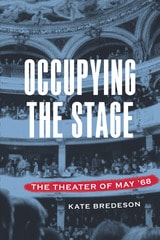
Occupying the Stage
The Theater of May '68Kate Bredeson
Northwestern University Press, 2018
The book shows how French theater artists during this period used a strategy of occupation-occupying buildings, streets, language, words, traditions, and artistic processes-as their central tactic of protest and transformation. It further proposes that the Theater of May '68 has left imprints on contemporary artists and activists, and that this theater offers a scaffolding on which to build a meaningful analysis of contemporary protest and performance in France, North America, and beyond.
At the book's heart is an inquiry into how artists of the period used theater as a way to engage in political work and, concurrently, questioned and overhauled traditional theater practices so their art would better reflect the way they wanted the world to be. Occupying the Stage embraces the utopic vision of May '68 while probing the period's many contradictions. It thus affirms the vital role theater can play in the ongoing work of social change.
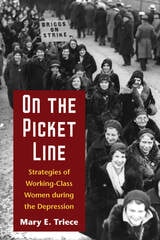
On the Picket Line
Strategies of Working-Class Women during the DepressionMary Triece
University of Illinois Press, 2006
Bonnie Ritter Book Award, National Communication Association's Feminist and Women Studies Division, 2008.
On the Picket Line uncovers the voices of working-class women, particularly those active in the Communist Party, U.S.A., in order to examine how these individuals confronted the tensions between their roles as workers, wives, mothers, and consumers. Combining critical analysis, Marxist and feminist theory, and labor history, Mary E. Triece analyzes the protest tactics employed by working class women to challenge dominant ideologies surrounding domesticity.
She details the rhetorical strategies used by women to argue for their rights as workers in the paid labor force and as caregivers in the home. Their overtly coercive tactics included numerous sit-ins, strikes, and boycotts that won tangible gains for working poor and unemployed women. The book also gives voice to influential figures in the 1930s labor movement (many of whom were members of the Communist Party, U.S.A.), such as Ella Reeve Bloor, Margaret Cowl, Anna Damon, Ann Burlak, and Grace Hutchins. Triece ultimately argues that these confrontational protest tactics of the 1930s remain relevant in today’s fights for more humane workplaces and better living conditions.
Origins of a Spontaneous Revolution
East Germany, 1989Karl-Dieter Opp, Peter Voss, and Christiane Gern
University of Michigan Press, 1995
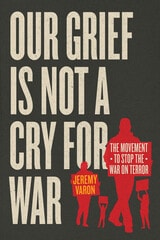
Our Grief Is Not a Cry for War
The Movement to Stop the War on TerrorJeremy Varon
University of Chicago Press, 2025
Just after 9/11, President George W. Bush climbed the rubble where the World Trade Center had stood. Surrounded by shouts of anger, he said, “The people who knocked these buildings down will hear all of us soon!” With these words, Bush ushered in the War on Terror. Quickly, a global protest movement mobilized against it, reshaping the political, moral, and media landscape.
Jeremy Varon’s Our Grief Is Not a Cry for War is the definitive history of that movement. Millions of Americans participated in thousands of acts of protest, from demonstrations to civil disobedience to peace encampments in Iraq. On February 15, 2003, up to 30 million people worldwide took to the streets in the largest protest in human history. But this enormous outcry was not enough to stop the US invasion of Iraq. Varon explores the limits to the movement’s power but also shows how it worked to make opposition to the Iraq War a part of public debate, hastening its end and limiting the broader War on Terror. In the book, you’ll meet the families of the 9/11 victims, Iraq War veterans, and Gold Star families who spoke out against war.
Written with a lively and revelatory voice, Our Grief Is Not a Cry for War illuminates the passion of the peace movement, the mark it made, and the enduring legacies of the War on Terror.
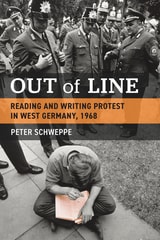
Out of Line
Reading and Writing Protest in West Germany, 1968Peter Schweppe
University of Michigan Press, 2026
By analyzing how protest fused the politics of reading and writing in 1968 West Germany, author Peter Schweppe uncovers the vibrant history of an alternative literary form during a watershed moment of social upheaval. Out of Line interlinks the politics of reading and writing with the verve of Global Sixties’ protest, where fringe books, underground newspapers, incendiary flyers, and furtive graffiti galvanized readers and writers alike. The phrase “out of line” scrutinizes the emerging performative relationship between visual and textual media in the late 1960s as it metamorphosed modes of West German literary production, channeled the agenda of the protest movement, and, in doing so, shaped new kinds of textual meaning. Through its engagement with theories of materiality and “things,” Out of Line interrogates the dynamic ways that protest readers and writers pushed and broke conventional boundaries. Schweppe’s exploration of form discloses how reading and writing out of line implicates a textual and material history of protest and the lessons it offers protest histories to come.