140 books match the query 'Queer theory' and 6 start with o
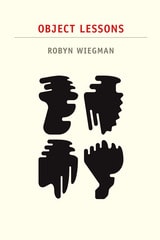
cover of Object Lessons

Object Lessons

Robyn Wiegman

Duke University Press, 2012
No concept has been more central to the emergence and evolution of identity studies than social justice. In historical and theoretical accounts, it crystallizes the progressive politics that have shaped the academic study of race, gender, and sexuality. Yet few scholars have deliberated directly on the political agency that notions of justice confer on critical practice. In Object Lessons, Robyn Wiegman contemplates this lack of attention, offering the first sustained inquiry into the political desire that galvanizes identity fields. In each chapter, she examines a key debate by considering the political aspirations that shape it. Addressing Women's Studies, she traces the ways that "gender" promises to overcome the exclusions of "women." Turning to Ethnic Studies, she examines the deconstruction of "whiteness" as an antiracist methodology. As she explores American Studies, she links internationalization to the broader quest for noncomplicity in contemporary criticism. Her analysis of Queer Studies demonstrates how the commitment to antinormativity normalizes the field. In the penultimate chapter, Wiegman addresses intersectionality as the most coveted theoretical approach to political resolution in all of these fields.
[more]
cover of On Living with Television

On Living with Television

Amy Holdsworth

Duke University Press, 2021
In On Living with Television, Amy Holdsworth examines the characteristics of intimacy, familiarity, repetition, and duration that have come to exemplify the medium of television. Drawing on feminist television studies, queer theory, and disability studies as well as autobiographical life-writing practices, Holdsworth shows how television shapes everyday activities, from eating and sleeping to driving and homemaking. Recounting her own life with television, she offers a sense of the joys and pleasures Disney videos brought to her disabled sister, traces how bedtime television becomes part of a daily routine between child and caregiver, explores her own relationship to binge-eating and binge-viewing, and considers the idea of home through the BBC family drama Last Tango in Halifax. By foregrounding the ways in which television structures our relationships, daily routines, and sense of time, Holdsworth demonstrates how television emerges as a potent vehicle for writing about life.
[more]
cover of On the Inconvenience of Other People

On the Inconvenience of Other People

Lauren Berlant

Duke University Press, 2022
In On the Inconvenience of Other People Lauren Berlant continues to explore our affective engagement with the world. Berlant focuses on the encounter with and the desire for the bother of other people and objects, showing that to be driven toward attachment is to desire to be inconvenienced. Drawing on a range of sources, including Last Tango in Paris, Ralph Waldo Emerson, Claudia Rankine, Christopher Isherwood, Bhanu Kapil, the Occupy movement, and resistance to anti-Black state violence, Berlant poses inconvenience as an affective relation and considers how we might loosen our attachments in ways that allow us to build new forms of life. Collecting strategies for breaking apart a world in need of disturbing, the book’s experiments in thought and writing cement Berlant’s status as one of the most inventive and influential thinkers of our time.
[more]
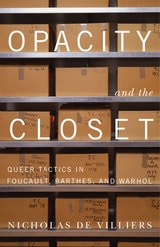
cover of Opacity and the Closet: Queer Tactics in Foucault, Barthes, and Warhol

Opacity and the Closet

Queer Tactics in Foucault, Barthes, and Warhol

Nicholas de Villiers

University of Minnesota Press, 2012

Opacity and the Closet interrogates the viability of the metaphor of “the closet” when applied to three important queer figures in postwar American and French culture: the philosopher Michel Foucault, the literary critic Roland Barthes, and the pop artist Andy Warhol. Nicholas de Villiers proposes a new approach to these cultural icons that accounts for the queerness of their works and public personas.

Rather than reading their self-presentations as “closeted,” de Villiers suggests that they invent and deploy productive strategies of “opacity” that resist the closet and the confessional discourse associated with it. Deconstructing binaries linked with the closet that have continued to influence both gay and straight receptions of these intellectual and pop celebrities, de Villiers illuminates the philosophical implications of this displacement for queer theory and introduces new ways to think about the space they make for queerness.

Using the works of Foucault, Barthes, and Warhol to engage each other while exploring their shared historical context, de Villiers also shows their queer appropriations of the interview, the autobiography, the diary, and the documentary—forms typically linked to truth telling and authenticity.

[more]
cover of Orgasmology

Orgasmology

Annamarie Jagose

Duke University Press, 2013

For all its vaunted attention to sexuality, queer theory has had relatively little to say about sex, the material and psychic practices through which erotic gratification is sought. In Orgasmology, Annamarie Jagose takes orgasm as her queer scholarly object. From simultaneous to fake orgasms, from medical imaging to pornographic visualization, from impersonal sexual publics to domestic erotic intimacies, Jagose traces the career of orgasm across the twentieth century.

Along the way, she examines marriage manuals of the 1920s and 1930s, designed to teach heterosexual couples how to achieve simultaneous orgasms; provides a queer reading of behavioral modification practices of the 1960s and 1970s, aimed at transforming gay men into heterosexuals; and demonstrates how representations of orgasm have shaped ideas about sexuality and sexual identity.

A confident and often counterintuitive engagement with feminist and queer traditions of critical thought, Orgasmology affords fresh perspectives on not just sex, sexual orientation, and histories of sexuality, but also agency, ethics, intimacy, modernity, selfhood, and sociality. As modern subjects, we presume we already know everything there is to know about orgasm. This elegantly argued book suggests that orgasm still has plenty to teach us.
[more]
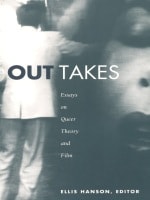
cover of Out Takes: Essays on Queer Theory and Film

Out Takes

Essays on Queer Theory and Film

Ellis Hanson, ed.

Duke University Press, 1999

This collection brings together the work of both film scholars and queer theorists to advance a more sophisticated notion of queer film criticism. While the “politics of representation” has been the focus of much previous gay and lesbian film criticism, the contributors to Out Takes employ the approaches of queer theory to move beyond conventional readings and to reexamine aspects of the cinematic gaze in relation to queer desire and spectatorship.

The essays examine a wide array of films, including Calamity Jane, Rear Window, The Hunger, Heavenly Creatures, and Bound , and discuss such figures as Doris Day, Elizabeth Taylor, and Alfred Hitchcock. Divided into three sections, the first part reconsiders the construction of masculinity and male homoerotic desire—especially with respect to the role of women—in classic cinema of the 1940s and 1950s. The second section offers a deconstructive consideration of lesbian film spectatorship and lesbian representation. Part three looks at the historical trajectory of independent queer cinema, including works by H.D., Kenneth Anger, and Derek Jarman.

By exploring new approaches to the study of sexuality in film, Out Takes will be useful to scholars in gay and lesbian studies, queer theory, and cinema studies.

Contributors. Bonnie Burns, Steven Cohan, Alexander Doty, Lee Edelman, Michelle Elleray, Jim Ellis, Ellis Hanson, D. A. Miller, Eric Savoy, Matthew Tinkcom, Amy Villarejo, Jean Walton

[more]