Results by title
72 books match the query 'Railroads' and 4 start with o
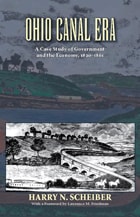
Ohio Canal Era
A Case Study of Government and the Economy, 1820–1861Harry N. Scheiber
Ohio University Press, 2012
Ohio Canal Era, a rich analysis of state policies and their impact in directing economic change, is a classic on the subject of the pre–Civil War transportation revolution. This edition contains a new foreword by scholar Lawrence M. Friedman, Professor of Law, Stanford Law School, and a bibliographic note by the author.
Professor Scheiber explores how Ohio—as a “public enterprise state,” creating state agencies and mobilizing public resources for transport innovation and control—led in the process of economic change before the Civil War. No other historical account of the period provides so full and insightful a portrayal of “law in action.” Scheiber reveals the important roles of American nineteenth-century government in economic policy-making, finance, administration, and entrepreneurial activities in support of economic development.
His study is equally important as an economic history. Scheiber provides a full account of waves of technological innovation and of the transformation of Ohio’s commerce, agriculture, and industrialization in an era of hectic economic change. And he tells the intriguing story of how the earliest railroads of the Old Northwest were built and financed, finally confronting the state-owned canal system with a devastating competitive challenge.
Amid the current debate surrounding “privatization,” “deregulation,” and the appropriate use of “industrial policy” by government to shape and channel the economy. Scheiber’s landmark study gives vital historical context to issues of privatization and deregulation that we confront in new forms today.

Ohio canal era
a case study of government and the economy, 1820-1861Harry N. Scheiber
Ohio University Press, 1987
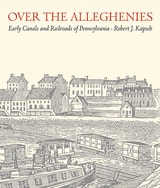
Over the Alleghenies
Early Canals and Railroads of PennsylvaniaRobert J. Kapsch
West Virginia University Press, 2013
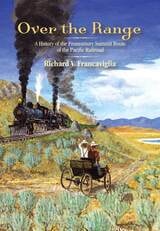
Over the Range
A History of the Promontory Summit Route of the Pacific RailroadRichard V. Francaviglia
Utah State University Press, 2008
Francaviglia looks anew at the geographical-historical context of the driving of the golden spike in May 1869. He gazes outward from the site of the transcontinental railroad's completion—the summit of a remote mountain range that extends south into the Great Salt Lake. The transportation corridor that for the first time linked America's coasts gave this distinctive region significance, but it anchored two centuries of human activity linked to the area's landscape.
Francaviglia brings to that larger story a geographer's perspective on place and society, a railroad enthusiast's knowledge of trains, a cartographic historian's understanding of the knowledge and experience embedded in maps, and a desert lover's appreciation of the striking basin-and-range landscape that borders the Great Salt Lake.