Results by title
1017 books match the query 'Reference' and 18 start with o
Object Lessons
The Novel as a Theory of ReferenceJami Bartlett
University of Chicago Press, 2016

Ocean Yearbook, Volume 16
Edited by Elisabeth Mann Borgese, Aldo Chircop, and Moira L. McConnell
University of Chicago Press, 2002
Selected Documents and Proceedings include:
Report of the International Ocean Institute 1999 - 2000
Oceans and the Law of the Sea Report of the Secretary General, 2000
UN Convention on the Law of the Sea Report
The Hamburg Declaration on the Ocean
The Fiji Declaration on Islands in the New Millennium
The Appendix includes a Directory of Oceans-related Institutions
Since its inception in 1978, the Ocean Yearbook has proven an invaluable research tool to marine biologists, oceanographers, ocean development specialists, students of international law, as well as analysts of foreign policy and international security.
Ocean Yearbook, Volume 17
Edited by Elisabeth Mann Borgese, Aldo Chircop, and Moira L. McConnell
University of Chicago Press, 2003
Ocean Yearbook is a collaborative initiative of the International Ocean Institute and the Marine and Environmental Law Programme at Dalhousie University Law School.
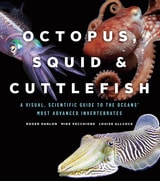
Octopus, Squid, and Cuttlefish
A Visual, Scientific Guide to the Oceans’ Most Advanced InvertebratesRoger Hanlon, Mike Vecchione, and Louise Allcock
University of Chicago Press, 2018
Largely shell-less relatives of clams and snails, the marine mollusks in the class Cephalopoda—Greek for “head-foot”—are colorful creatures of many-armed dexterity, often inky self-defense, and highly evolved cognition. They are capable of learning, of retaining information—and of rapid decision-making to avoid predators and find prey. They have eyes and senses rivaling those of vertebrates like birds and fishes, they morph texture and body shape, and they change color faster than a chameleon. In short, they captivate us.
From the long-armed mimic octopus—able to imitate the appearance of swimming flounders and soles—to the aptly named flamboyant cuttlefish, whose undulating waves of color rival the graphic displays of any LCD screen, there are more than seven hundred species of cephalopod. Featuring a selection of species profiles, Octopus, Squid, and Cuttlefish reveals the evolution, anatomy, life history, behaviors, and relationships of these spellbinding animals. Their existence proves that intelligence can develop in very different ways: not only are cephalopods unusually large-brained invertebrates, they also carry two-thirds of their neurons in their arms.
A treasure trove of scientific fact and visual explanation, this worldwide illustrated guide to cephalopods offers a comprehensive review of these fascinating and mysterious underwater invertebrates—from the lone hunting of the octopus, to the social squid, and the prismatic skin signaling of the cuttlefish.
Off to College
A Guide for ParentsRoger H. Martin
University of Chicago Press, 2015
With Off to College, Roger H. Martin helps parents understand this important period of transition by providing the perfect tour of the first year on today’s campus. Martin, a twenty-year college president and former Harvard dean, spent a year visiting five very different colleges and universities across the United States—public and private, large and small, elite and non-elite—to get an insider’s view of modern college life. He observes an advising session as a student sorts out her schedule, unravels the mysteries of roommate assignments with a residence life director, and patrols campus with a safety officer on a rowdy Saturday night. He gets pointers in freshman English and tips on athletics and physical fitness from coaches. He talks with financial aid officers and health service providers. And he listens to the voices of the first–year students themselves. Martin packs Off to College with the insights and advice he gained and bolsters them with data from a wide variety of sources to deliver a unique and personal view of the current student experience.
The first year is not just the beginning of a student’s college education but also the first big step in becoming an adult. Off to College will help parents understand what to expect whether they’re new to the college experience or reconciling modern campus life with memories of their own college days.
Ohio
A Military HistoryMichael Mangus
Westholme Publishing, 2016
Complete with a list of historical sites and a comprehensive bibliography, Ohio: A Military History is an important reference for those interested in the role of the Buckeye State in our nation’s history.
Westholme State Military History Series
Each state in the United States of America has a unique military history. The volumes in this series seek to provide a portrait of the richness of each state’s military experience, primarily defined by its borders, as well as the important contributions the state has made to the nation’s military history. Written by historians for the general reader, the volumes trace the history of conflict from the original native populations to today. The volumes are well illustrated and include specially commissioned maps, extensive bibliographies, lists of national and state historical sites, and a detailed index.
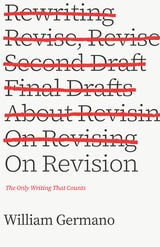
On Revision
The Only Writing That CountsWilliam Germano
University of Chicago Press, 2021
So you’ve just finished writing something? Congratulations! Now revise it. Because revision is about getting from good to better, and it’s only finished when you decide to stop. But where to begin? In On Revision, William Germano shows authors how to take on the most critical stage of writing anything: rewriting it.
For more than twenty years, thousands of writers have turned to Germano for his insider’s take on navigating the world of publishing. A professor, author, and veteran of the book industry, Germano knows what editors want and what writers need to know: Revising is not just correcting typos. Revising is about listening and seeing again. Revising is a rethinking of the principles from the ground up to understand why the writer is doing something, why they’re going somewhere, and why they’re taking the reader along with them.
On Revision steps back to take in the big picture, showing authors how to hear their own writing voice and how to reread their work as if they didn’t write it. On Revision will show you how to know when your writing is actually done—and, until it is, what you need to do to get it there.
On What We Know We Don't Know
Explanation, Theory, Linguistics, and How Questions Shape ThemSylvain Bromberger
University of Chicago Press, 1992

On Your Own
How to Take Care of Yourself in Wild Country, a Manual for Field and Service MenSamuel A. Graham and Earl C. O’Roke
University of Minnesota Press, 1943
On Your Own was first published in 1943. Minnesota Archive Editions uses digital technology to make long-unavailable books once again accessible, and are published unaltered from the original University of Minnesota Press editions.
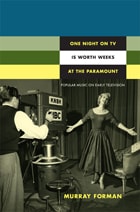
One Night on TV Is Worth Weeks at the Paramount
Popular Music on Early TelevisionMurray Forman
Duke University Press, 2012
Opera Scenes for Class and Stage
Mary Elaine Wallace and Robert Wallace
Southern Illinois University Press, 1979
Musically sound and fully annotated, this new reference work provides ready access to over 700 excerpts from 100 operas, by voice categories, and thus provides information on a wide variety of matters of interest to directors, teachers, and singers. A table of voice categories, coded excerpts (including length and reference to accessible scores), character descriptions (including estimations of degrees of difficulty of the music), summaries of the action of each excerpt, and indexes to titles, composers, and well-known arias and ensembles make this book an indispensable tool.
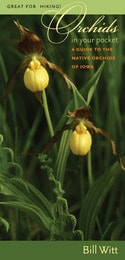
Orchids in Your Pocket
A Guide to the Native Orchids of Iowa (10-pack)Bill Witt
University of Iowa Press, 2006

Origins of New Mexico Families
A Genealogy of the Spanish Colonial PeriodFray Angélico Chávez
Museum of New Mexico Press, 1992
Osiris, Volume 8
Research Schools: Historical ReappraisalsEdited by Gerald L. Geison and Frederic L. Holmes
University of Chicago Press, 1993
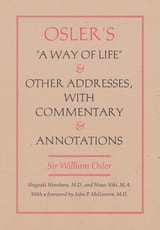
Osler's A Way of Life and Other Addresses, with Commentary and Annotations
Sir William Osler. Edited by Shigeaki Hinohara and Hisae Niki.
Duke University Press, 2001
While Osler’s talks were frequently published during his lifetime and they have been published individually and in different compilations since his death, none contain the over 1500 annotations that appear here, notes that serve to explain the many philosophical, biblical, historical, and literary allusions contained in Osler’s writings.
This thoroughly explicated selection of Sir William Osler’s writings will be cherished by physicians, medical students, nurses, philosophers, theologians, and ethicists in this—and future—generations.
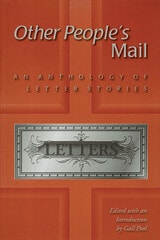
Other People's Mail
An Anthology of Letter StoriesEdited & Intro by Gail Pool
University of Missouri Press, 2000
While the art and craft of letter writing have declined in this century, letter stories have thrived. Cast as love letters and Dear John letters, as thank-you notes and suicide notes, as memos, letters to the editor, and exchanges with the United States Post Office, examples of epistolary fiction have been published by the hundreds, among them the work of many of our most notable authors. Why has this form of fiction writing remained so popular? As Gail Pool answers, "Who, after all, is immune to the seduction of reading other people's mail?"
Although epistolary fiction enjoyed its greatest popularity in the eighteenth and nineteenth centuries, a time when letters were central to daily life, this style of writing has a decidedly postmodern air. Letter stories are about communication, and they are effective in framing our modern concerns: the struggle to find meaningful stories, relationships, and lives amid the social and moral disarray of the era and the blurred boundaries between fact and fiction, artist and audience, private and public domains. These are the themes of our time, and the themes of the stories in Other People's Mail.
Offering seventeen stories written by a culturally diverse group of authors, Other People's Mail represents what letter tales, at their best, can do. They may be written from the Canadian wilderness, a private school in Geneva, a concentration camp, or beyond the grave. They may be comic or satirical, poignant or tragic, but all are united in their distinctive format.
The first collection of its kind, Other People's Mail is a unique and important anthology. Pool's highly informative introduction explores the nature of letter fiction, and her individual preface to each story provides background information on both the author and the tale. A select listing additional letter stories rounds out the anthology. Literature and writing instructors in search of a fresh approach to stories and readers looking for an anthology with a lively theme will enjoy this collection.
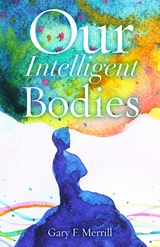
Our Intelligent Bodies
Gary F. Merrill
Rutgers University Press, 2020
In Our Intelligent Bodies, physiology professor Gary F. Merrill takes you on a guided tour through the human body. You’ll learn how our eyes are designed to detect unimaginably small bursts of light and how our ears contain bundles of tiny hairs, each one attuned to different sound frequencies. You’ll also discover how our hearts are smart enough to compensate for skipped beats and irregular rhythms and how our pulmonary system adjusts for low oxygen levels. You’ll even find out why the gut is sometimes called the “second brain,” its reflexes controlled by millions of neurons.
Written in a fun, easy-to-comprehend style and filled with illuminating analogies, Our Intelligent Bodies also brings readers up to date on cutting-edge research into the wonders of human physiology. It will give you a new appreciation for the smart decisions our bodies are making when our brains aren’t paying attention.
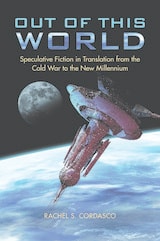
Out of This World
Speculative Fiction in Translation from the Cold War to the New MillenniumRachel S. Cordasco
University of Illinois Press, 2021
An informative and one-of-a-kind guide, Out of This World offers readers and scholars alike a tour of speculative fiction's new globalized era.