Results by title
598 books match the query 'Religious' and 13 start with o
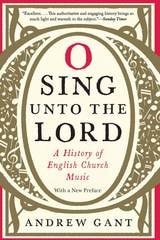
O Sing unto the Lord
A History of English Church MusicAndrew Gant
University of Chicago Press, 2017
The ornate complexity of pre-Reformation Catholic liturgies revealed the exclusive nature of this form of worship. By contrast, simple English psalms, set to well-known folk songs, summed up the aims of the Reformation with its music for everyone. The Enlightenment brought hymns, the Methodists and Victorians a new delight in the beauty and emotion of worship. Today, church music mirrors our multifaceted worldview, embracing the sounds of pop and jazz along with the more traditional music of choir and organ. And reflecting its truly global reach, the influence of English church music can be found in everything from masses sung in Korean to American Sacred Harp singing.
From medieval chorales to “Amazing Grace,” West Gallery music to Christmas carols, English church music has broken through the boundaries of time, place, and denomination to remain familiar and cherished everywhere. Expansive and sure to appeal to all music lovers, O Sing unto the Lord is the biography of a tradition, a book about people, and a celebration of one of the most important sides to our cultural heritage.
Old And New Testaments
Lynn Powell
University of Wisconsin Press, 1995

Old Brick
Charles Chauncy of Boston, 1705-1787Edward M. Griffin
University of Minnesota Press, 1980
Old Brick was first published in 1980. Minnesota Archive Editions uses digital technology to make long-unavailable books once again accessible, and are published unaltered from the original University of Minnesota Press editions.
Charles Chauncy was a powerful and influential figure in his own time, but in historical accounts he has always been overshadowed by his contemporaries Benjamin Franklin and Jonathan Edwards. When he is remembered today, it is usually as Edwards's chief antagonist during the Great Awakening of the 1740s. Yet Chauncy's fellow New Englanders knew that there was more to the man than that.
In the course of his 60-year tenure as a pastor of Boston's First Church (the "Old Brick"), Chauncy involved himself in most of the important intellectual, religious, and political issues of the century. Not only did he aggressively oppose the emotional revivalism of the Great Awakening, but he was also a bold pamphleteer and preacher in support of the American Revolution. In theology Chauncy became, as an old man, the leading advocate probably having scandalized his own forebears, but he insisted that he was true to his Protestant tradition and never abandoned his reliance on Scripture and Puritan discipline in favor of rationalist secularism.
Old Brick,the first full-scale biography of Charles Chauncy, attempts to recover not only Chauncy the spokesman for the ideas of a great many colonial Americans, but also the complex man who struggled with himself and with the events of his time to arrive at those positions. The portrait of Chauncy that emerges is fuller, more comprehensive, and more balanced than the stereotypes and partial portraits that have thus far represented him in history. This biography now makes it possible to consider Chauncy a figure worthy of study in his own right and to take a fresh look at eighteenth-century New England in light of the tradition Chauncy represents.
On Good Ground
The Story of the Sisters of Saint Joseph in St. PaulSister Helen Angela Hurley
University of Minnesota Press, 1951
On Good Ground was first published in 1951. Minnesota Archive Editions uses digital technology to make long-unavailable books once again accessible, and are published unaltered from the original University of Minnesota Press editions.
Besides providing a vivid yet scholarly account of a religious order, this book reflects much of the regional history of the area where the nuns have done their work. The order maintains the College of St. Catherine and numerous other institutions in Minnesota and North Dakota.
On Jewish Learning
Franz Rosenzweig; Edited by N. N. Glatzer
University of Wisconsin Press, 2002
On the Heights of Despair
E. M. Cioran
University of Chicago Press, 1992
On the Heights of Despair shows Cioran's first grappling with themes he would return to in his later, mature works: despair and decay, absurdity and alienation, futility and the irrationality of existence. It also presents Cioran as a connoisseur of apocalypse, a theoretician of despair, for whom writing and philosophy both share the "lyrical virtues" that alone lead to a metaphysical revelation.
On the Mormon Frontier
The Diary of Hosea Stout, 1844-1889Juanita Brooks
University of Utah Press, 2009
This edition of On the Mormon Frontier presents Stout’s diary in a single volume, proving that it continues to be an essential work in the study of Mormon and American history.
Once Out of Nature
Augustine on Time and the BodyAndrea Nightingale
University of Chicago Press, 2011
Once They Had a Country
Two Teenage Refugees in the Second World WarMuriel R. Gillick
University of Alabama Press, 2010
A powerful true story of survival, displacement, and hope in a world at war.
Muriel Gillick draws from a remarkable set of primary source materials, including letters, telegrams, and police records to relate the story of two teenage refugees during World War II. Once They Had a Country conveys well what it was like to establish a new life in a foreign country—over and over again and in constant fear for one’s life. The work tells of the extraordinary experiences of the author’s parents in Europe and demonstrates how citizens and the governments of Belgium, France, Switzerland, Brazil, America, China, and postwar Germany treated refugees. This story also reveals the origins of the Convention Relating to the Status of Refugees, the basis of contemporary international law affecting refugees in many countries today.
In addition to the dramatic human story it tells, this work brings the plight of refugees home to the reader—and with over 8 million refugees worldwide today, the subject of how individuals and nation states respond to these individuals is indeed timely.
One Shaker Life
Isaac Newton Youngs, 1793-1865Glendyne R. Wergland
University of Massachusetts Press, 2006
A member of the United Society of Believers, better known as the Shakers, Isaac Newton Youngs spent most of his life in New Lebanon, New York, home of the society's central Ministry. As both a private diarist and the official village scribe, he kept meticulous records throughout those years of both his own experience and that of the community. All told, more than four thousand pages of Brother Isaac's journals have survived, documenting the history of the Shakers during the period of their greatest success and providing a revealing view of the daily life of a rank-and-file Believer.
In this deeply researched biography, Glendyne R. Wergland draws on Youngs's writings to tell his story and to explore “the tension between desire and discipline” at the center of his life. She follows Youngs from childhood and adolescence to maturity, through years of demanding responsibility into his fatal decline. In each of these stages, he remained a talented and committed yet independent Shaker, one who chose to stay with the community but often struggled to abide by its stringent rules, including the vow of celibacy. Perhaps above all, he was a man who spent most of his waking hours working diligently at a succession of tasks, making clocks, sewing clothes, fixing roofs, writing poetry, chronicling his daily acts and thoughts.
In his journals, Brother Isaac writes at length of his efforts to control his lust as a young man, and he complains repeatedly about overwork as he grows older. He defines the rules of his community and identifies transgressors, while enciphering his critical entries (and those chronicling his own sexual desires) to avoid detection and uphold the demand for conformity. At times he admits doubt, but without ever relinquishing the belief that he is on the straight and narrow path to salvation. What emerges in the end is the complex portrait of an ordinary man striving to live up to the imperatives of his faith.
Open Your Hand
Teaching as a Jew, Teaching as an AmericanIlana M. Blumberg
Rutgers University Press, 2019
Our Primary Expertise
A Future for the Study of ReligionRussell T. McCutcheon
Rutgers University Press, 2026
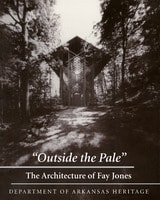
Outside the Pale
The Architecture of Fay JonesUniversity of Arkansas Press, 1999
Honored with the 1990 American Institute of Architects Gold Medal for a lifetime of outstanding achievement, Fay Jones is an Arkansas original. In receiving the medal from Prince Charles of Great Britain, Jones was hailed as a “powerful and special genius who embodies nearly all the qualities we admire in an architect” and as an artist who used his vision to craft “mysterious and magical places” not only in Arkansas but all over the world.
This book accompanied a special museum exhibit of Jones’s life and work at the Old State House in Little Rock. It traces Jones’s development from his early years as a student of Frank Lloyd Wright and Bruce Goff, to the culmination of his ability in such arresting structures as Pinecote Pavilion in Picayune, Mississippi; Thorncrown Chapel in Eureka Springs, Arkansas; and Chapman University Chapel in Orange, California. Through the black-and-white photographs of the homes, chapels, and other buildings that Jones has created and the accompanying captions and interviews of the architect, the reader is allowed a view into this man’s remarkable talent.
Designing structures that fuse architecture and landscape, the organic and the man-made, Jones has created special places which touch their viewers with the power and subtlety of poetry. Herein we learn why.
From the Foreword by Robert Adams Ivy Jr.:
“Fay Jones’s architecture begins in order and ends in mystery. . . . His role can perhaps best be understood as mediator, a human consciousness that has arisen from the Arkansas soil and scoured the cosmos, then spoken through the voices of stone and wood, steel and glass. Art, philosophy, craft, and human aspiration coalesce in his masterworks, transformed from acts of will into harmonies: Jones lets space sing.”