64 books match the query 'Ritual' and 3 start with o
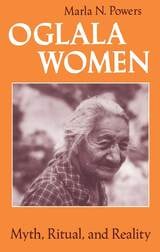
cover of Oglala Women: Myth, Ritual, and Reality

Oglala Women

Myth, Ritual, and Reality

Marla N. Powers

University of Chicago Press, 1986

Based on interviews and life histories collected over more than twenty-five years of study on the Pine Ridge reservation in South Dakota, Marla N. Powers conveys what it means to be an Oglala woman. Despite the myth of the Euramerican that sees Oglala women as inferior to men, and the Lakota myth that seems them as superior, in reality, Powers argues, the roles of male and female emerge as complementary. In fact, she claims, Oglala women have been better able to adapt to the dominant white culture and provide much of the stability and continuity of modern tribal life. This rich ethnographic portrait considers the complete context of Oglala life—religion, economics, medicine, politics, old age—and is enhanced by numerous modern and historical photographs.


"It is a happy event when a fine scholarly work is rendered accessible to the general reader, especially so when none of the complexity of the subject matter is sacrificed. Oglala Women is a long overdue revisionary ethnography of Native American culture."—Penny Skillman, San Francisco Chronicle Review

"Marla N. Powers's fine study introduced me to Oglala women 'portrayed from the perspectives of Indians,' to women who did not pity themselves and want no pity from others. . . . A brave, thorough, and stimulating book."—Melody Graulich, Women's Review of Books

"Powers's new book is an intricate weaving . . . and her synthesis brings all of these pieces into a well-integrated and insightful whole, one which sheds new light on the importance of women and how they have adapted to the circumstances of the last century."—Elizabeth S. Grobsmith, Nebraska History
[more]
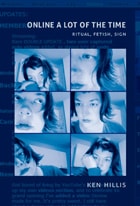
cover of Online a Lot of the Time: Ritual, Fetish, Sign

Online a Lot of the Time

Ritual, Fetish, Sign

Ken Hillis

Duke University Press, 2009

A wedding ceremony in a Web-based virtual world. Online memorials commemorating the dead. A coffee klatch attended by persons thousands of miles apart via webcams. These are just a few of the ritual practices that have developed and are emerging in online settings. Such Web-based rituals depend on the merging of two modes of communication often held distinct by scholars: the use of a device or mechanism to transmit messages between people across space, and a ritual gathering of people in the same place for the performance of activities intended to generate, maintain, repair, and renew social relations. In Online a Lot of the Time, Ken Hillis explores the stakes when rituals that would formerly have required participants to gather in one physical space are reformulated for the Web. In so doing, he develops a theory of how ritual, fetish, and signification translate to online environments and offer new forms of visual and spatial interaction. The online environments Hillis examines reflect the dynamic contradictions at the core of identity and the ways these contradictions get signified.

Hillis analyzes forms of ritual and fetishism made possible through second-generation virtual environments such as Second Life and the popular practice of using webcams to “lifecast” one’s life online twenty-four hours a day, seven days a week. Discussing how people create and identify with their electronic avatars, he shows how the customs of virtual-world chat reinforce modern consumer-based subjectivities, allowing individuals to both identify with and distance themselves from their characters. His consideration of web-cam cultures links the ritual of exposing one’s life online to a politics of visibility. Hillis argues that these new “rituals of transmission” are compelling because they provide a seemingly material trace of the actual person on the other side of the interface.

[more]
cover of Orange Parades: The Politics of Ritual, Tradition and Control

Orange Parades

The Politics of Ritual, Tradition and Control

Dominic Bryan

Pluto Press, 2000

In the first major study of the Protestant Loyalist Orange Order in Northern Ireland, Dominic Bryan provides a detailed ethnographic and historical study of Orange Order parades. He looks at the development of the parades, the history of disputes over the parades, the structure and politics of the Orange Order, the organisation of loyalist bands, the role of social class in Unionist politics – and the anthropology of ritual itself.
[more]