Results by title
150 books match the query 'Rural' and 8 start with o
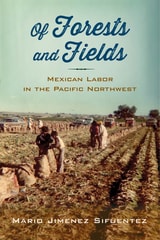
Of Forests and Fields
Mexican Labor in the Pacific NorthwestMario Jimenez Sifuentez
Rutgers University Press, 2016
Just looking at the Pacific Northwest’s many verdant forests and fields, it may be hard to imagine the intense work it took to transform the region into the agricultural powerhouse it is today. Much of this labor was provided by Mexican guest workers, Tejano migrants, and undocumented immigrants, who converged on the region beginning in the mid-1940s. Of Forests and Fields tells the story of these workers, who toiled in the fields, canneries, packing sheds, and forests, turning the Pacific Northwest into one of the most productive agricultural regions in the country.
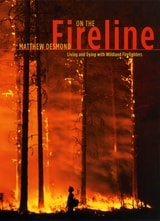
On the Fireline
Living and Dying with Wildland FirefightersMatthew Desmond
University of Chicago Press, 2007
A classic early work by the author of Evicted, a close-up look at the lives of wildland firefighters
In this rugged account of a rugged profession, Matthew Desmond explores the heart and soul of the wildland firefighter. Having joined a firecrew in Northern Arizona as a young man, Desmond relates his experiences with intimate knowledge and native ease, adroitly balancing emotion with analysis and action with insight. On the Fireline shows that these firefighters aren’t the adrenaline junkies or romantic heroes as they’re so often portrayed.
An immersion into a dangerous world, On the Fireline is also a sophisticated analysis of a high-risk profession—and a captivating read.
On the Practice of Sociology
Pitirim A. Sorokin
University of Chicago Press, 1998
His early American works opened new vistas in rural sociology, social stratification, and theory. They provided an elegant standard for scientific sociology and won him the founding chairmanship of sociology at Harvard University. A continuous innovator, he next explored the vast expanse of human affairs, and outlined the surfacing crisis of modernity. At the Harvard Research Center for Creative Altruism he developed a blueprint for social reconstruction. Such interests combined with a prophetic and combative style of disagreement drove him to the margins of a discipline hungry for acceptance as a science. In the early1960s, his work was once again recognized, and he became president of the American Sociological Association.
Including essays that range from his early Russian years to his final works in the 60s, this collection provides a much-needed introduction to one of sociology's most controversial thinkers.
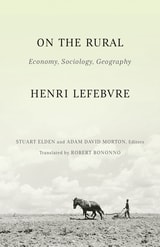
On the Rural
Economy, Sociology, GeographyHenri Lefebvre
University of Minnesota Press, 2022
A collection of previously untranslated writings by Henri Lefebvre on rural sociology, situating his research in relation to wider Marxist work
On the Rural is the first English collection to translate Lefebvre’s crucial but lesser-known writings on rural sociology and political economy, presenting a wide-ranging approach to understanding the historical and rural sociology of precapitalist social forms, their endurance today, and conditions of dispossession and uneven development.
In On the Rural, Stuart Elden and Adam David Morton present Lefebvre’s key works on rural questions, including the first half of his book Du rural à l’urbain and supplementary texts, two of which are largely unknown conference presentations published outside France. On the Rural offers methodological orientations for addressing questions of economy, sociology, and geography by deploying insights from spatial political economy to decipher the rural as a terrain and stake of capitalist transformation. By doing so, it reveals the production of the rural as a key site of capitalist development and as a space of struggle.
This volume delivers a careful translation—supplemented with extensive notes and a substantive introduction—to cement Lefebvre’s central contribution to the political economy of rural sociology and geography.
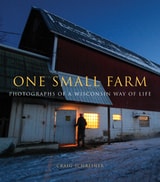
One Small Farm
Photographs of a Wisconsin Way of LifeCraig Schreiner
Wisconsin Historical Society Press, 2013
“People’s lives are written on the fields of old farms. The rows of the fields are like lines on a page, blank and white in winter, filled in with each year’s story of happiness, disappointment, drought, rain, sun, scarcity, plenty. The chapters accumulate, and people enter and leave the narrative. Only the farm goes on.”—From the Introduction
In One Small Farm, Craig Schreiner’s evocative color photographs capture one family as they maintain the rhythms and routines of small farm life near Pine Bluff, Wisconsin. “Milk in the morning and milk at night. Feed the cows and calves. Plant crops. Grind feed. Chop and bale hay. Cut wood. Clean the barn. Spread manure on the fields. Plow snow and split wood in winter. In spring, pick rocks from the fields. Cultivate corn. Pick corn. Harvest oats and barley. Help calves be born. Milk in the morning and milk at night.”
There’s much more to life on the farm than just chores, of course, and Schreiner captures the rhythms and richness of everyday life on the farm in all seasons, evoking both the challenges and the joys and providing viewers a window into a world that is quickly fading. In documenting the Lamberty family’s daily work and life, these thoughtful photos explore larger questions concerning the future of small farm agriculture, Wisconsin cultural traditions, and the rural way of life.

Opening Windows
Embracing New Perspectives and Practices in Natural Resource Social SciencesKate Sherren
Utah State University Press, 2024
This reflexive book is organized around four key themes: diversity and justice, governance and power, engagement and elicitation, and relationships and place. This is not a complacent volume—chapters point to gaps in conventional scholarship and to how much work remains to be done. Power is a central focus, including the role of cultural and economic power in “participatory” approaches to natural resource management and the biases encoded into the very concepts that guide scholarly and practical work. The chapters include robust literature syntheses, conceptual models, and case studies that provide examples of best practices and recommend research directions to improve and transform natural resource social sciences. An unmistakable spirit of hope is exemplified by findings suggesting positive roles for research in the progress ahead.
Bringing fresh perspectives on the assumptions and interests that underlie and entangle scholarship on natural resource decisionmaking and the justness of its outcomes, Opening Windows is significant for scholars, students, natural resource practitioners, managers and decision makers, and policy makers.
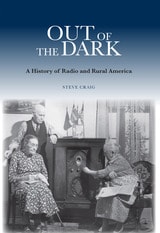
Out of the Dark
A History of Radio and Rural AmericaSteve Craig
University of Alabama Press, 2009
From the Grand Ole Opry to the National Barn Dance, how radio changed life in rural America
Out of the Dark: A History of Radio and Rural America shows how radio—especially clear channel network stations—brought news, markets, weather, religion, and entertainment into isolated farm homes between the 1920s and 1950s, narrowing rural–urban divides while also sustaining distinctly rural tastes (e.g., barn dance music). Craig argues that battery “farm radios,” high power stations, and national networking transformed daily life, work rhythms, consumer habits, and political participation, making radio the central domestic technology of the Depression era and beyond.
Craig blends regulatory and industry milestones, such as the Radio Act of 1927, with sociological studies, USDA extension records, FCC surveys, census tables, and rich case studies including WLS Chicago’s “National Barn Dance,” WSM Nashville’s “Grand Ole Opry,” and others. He mines audience research, diaries, program schedules, and tables that track the spread of radio. The book’s distinctive contributions include detailed charts (ownership by region; clear channel assignments) and vivid narratives of stations, formats, and personalities that connected farm families to national culture while preserving local identity.
The book is ideal for scholars and students of US social, rural, and media history; communication policy and political communication; country and bluegrass music history; agricultural extension; and American studies. It will also engage librarians, curators, and public historians seeking context for rural collections; journalists and podcasters tracing the roots of today’s information ecosystems; and general readers interested in how radio re made community life long before the internet.
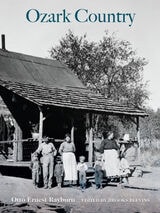
Ozark Country
Otto Ernest Rayburn
University of Arkansas Press, 2021
Published just days before America’s entry into World War II, Ozark Country is Otto Ernest Rayburn’s love letter to his adopted region. One of several chronicles of the Ozarks that garnered national attention during the Depression and war years, when many Americans craved stories about people and places seemingly untouched by the difficulties of the times, Rayburn’s colorful tour takes readers from the fictional village of Woodville into the backcountry of a region teeming with storytellers, ballad singers, superstitions, and home remedies.
Rayburn’s tales—fantastical, fun, and unapologetically romantic—portray a world that had already nearly disappeared by the time they were written. Yet Rayburn’s depiction of the Ozarks resonates with notions of the region that have persisted in the American consciousness ever since.