Results by title
22277 books match the query 'Social Science' and 455 start with o
O'odham Creation and Related Events
As Told to Ruth Benedict in 1927Edited by Donald Bahr; Foreword by Barbara Babcock
University of Arizona Press, 2001
The origin stories of the O’odham (Pima) Indians of Arizona are renowned for their beauty and complexity but have been collected in only a handful of books. This volume—the third full O’odham telling of ancientness to appear in print—brings together dozens of stories collected in 1927 by anthropologist Ruth Benedict during her only visit to the Pimas. Never before published, they helped inspire Benedict to write her groundbreaking book Patterns of Culture.
The Pimas represented a way of life that Benedict at first called “Dionysian” after hearing the stories, narratives, songs, and oratory collected from various tellers during her three-month stay. The oral literature concerns the creation of the world and its transformations over time, the creation of the O’odham people, and other cultural traditions. Featuring a pair of man-gods, a female monster born of woman, and a conquest of Pimas by Pimas, they serve to mark the O’odham as a people distinct from their neighbors near and far.
The present volume contains more stories than any other source of Pima tales, plus more of the songs and orations that accompanied a telling. It includes “The Rafter,” a host of ancillary stories, numerous Coyote tales, and additional speeches tied to the narratives of ancientness. One long story, “The Feud,” found only in this collection, shows similarities to the Maya Popol Vuh.
Donald Bahr, a preeminent authority on the O’odham, has not only clarified the text but has also written an introduction that provides the background to the collection and analyzes Benedict’s probable reasons for never having published it. He has also included a previously unpublished text by Benedict, “Figures of Speech among the Pima.” O’odham Creation and Related Events represents an invaluable sourcebook of a people’s oral literature as well as a tribute to a singular scholar’s dedication and vision.

ON BOARD THE USS MASON
THE WORLD WAR II DIARY OF JAMES A. DUNNMANSEL G. BLACKFORD
The Ohio State University Press, 2016
Dunn kept a day-to-day diary during his spare time on board the Mason. Such diaries are a rarity, for the navy (and other armed services) forbade the keeping of diaries, fearful lest secret information fall into enemy hands. The diary chronicles the Mason’s wartime activities, from the first convoy to the final return to the United States. It captures the feeling and meaning of life on board with an immediacy not fully found in retrospective accounts. The diary accurately records the mortal danger Dunn and his shipmates were in while attacking enemy submarines or dealing with extreme weather conditions in the North Atlantic. It conveys the boredom the men encountered while confined on long, tedious convoys and the joy of shore leaves. Here is the daily life aboard ship—the duties and the pastimes that made shipboard life endurable.
Equally interesting, the diary reveals what it meant to be an African American in a white navy within a segregated American society, the shipboard tensions, and the shipboard cooperation and sense of unity. It also portrays the life of an African American onshore in the United States, Great Britain, and North Africa and the love story that unfolded between James and his wife, Jane.
Supplemented by additional sources, including interviews with Dunn, this diary is a personal view into an important part of American history. Like the Tuskegee airmen, the men of the USS Mason paved the way for desegregation in America’s armed forces, contributing to a civil rights movement that changed the face of a nation.
ON INTIMATE TERMS
The Psychology of Difference in Lesbian RelationshipsBeverly Burch
University of Illinois Press, 1993
"A very thoughtful and thought-provoking piece of work. . . . It will be a strong contribution to the fields of lesbian studies, gender relations, and feminist psychoanalysis." - Diane Ehrensaft, author of Parenting Together: Men and Women Sharing the Care of Their Children
Oases Of Culture
A History Of Public And Academic Libraries In NevadaJames W. Hulse
University of Nevada Press, 2003
The cultural and intellectual history of the Silver State is examined through the creation of its libraries. In Oases of Culture, veteran Nevada historian James W. Hulse recounts the tortuous and often colorful history of Nevada’s libraries and the work of the dedicated librarians, educators, civic leaders, women’s organizations, philanthropists, and politicians who struggled to make the democratic vision of free libraries available to all Nevadans. From the establishment of the State Library in 1865, only one year after statehood, through the creation of tax-supported public libraries after passage of a library law in 1895, to the development of today’s modern university and community college libraries and the public-library information services that serve Nevada’s booming and increasingly diverse population, Hulse recounts the trials and triumphs of Nevada’s libraries. He also examines the role of Nevada librarians in fostering literacy and confronting the First Amendment controversies that have periodically shaken the nation’s cultural foundations.
Oasis and Casbah
Algerian Culture and Personality in ChangeHorace M. Miner and Geoge De Vos
University of Michigan Press, 1960
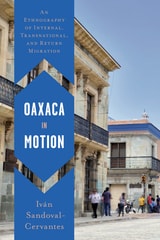
Oaxaca in Motion
An Ethnography of Internal, Transnational, and Return MigrationIván Sandoval-Cervantes
University of Texas Press, 2022
Migration is typically seen as a transnational phenomenon, but it happens within borders, too. Oaxaca in Motion documents a revealing irony in the latter sort: internal migration often is global in character, motivated by foreign affairs and international economic integration, and it is no less transformative than its cross-border analogue.
Iván Sandoval-Cervantes spent nearly two years observing and interviewing migrants from the rural Oaxacan town of Santa Ana Zegache. Many women from the area travel to Mexico City to work as domestics, and men are encouraged to join the Mexican military to fight the US-instigated “war on drugs” or else leave their fields to labor in industries serving global supply chains. Placing these moves in their historical and cultural context, Sandoval-Cervantes discovers that migrants’ experiences dramatically alter their conceptions of gender, upsetting their traditional notions of masculinity and femininity. And some migrants bring their revised views with them when they return home, influencing their families and community of origin. Comparing Oaxacans moving within Mexico to those living along the US West Coast, Sandoval-Cervantes clearly demonstrates the multiplicity of answers to the question, “Who is a migrant?”
Oaxaca
Arqueología de una Región MesoamericanaNelly M. Robles García
University Press of Colorado, 2019
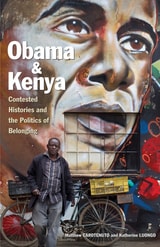
Obama and Kenya
Contested Histories and the Politics of BelongingMatthew Carotenuto
Ohio University Press, 2016
Barack Obama’s political ascendancy has focused considerable global attention on the history of Kenya generally and the history of the Luo community particularly. From politicos populating the blogosphere and bookshelves in the U.S and Kenya, to tourists traipsing through Obama’s ancestral home, a variety of groups have mobilized new readings of Kenya’s past in service of their own ends.
Through narratives placing Obama into a simplified, sweeping narrative of anticolonial barbarism and postcolonial “tribal” violence, the story of the United States president’s nuanced relationship to Kenya has been lost amid stereotypical portrayals of Africa. At the same time, Kenyan state officials have aimed to weave Obama into the contested narrative of Kenyan nationhood.
Matthew Carotenuto and Katherine Luongo argue that efforts to cast Obama as a “son of the soil” of the Lake Victoria basin invite insights into the politicized uses of Kenya’s past. Ideal for classroom use and directed at a general readership interested in global affairs, Obama and Kenya offers an important counterpoint to the many popular but inaccurate texts about Kenya’s history and Obama’s place in it as well as focused, thematic analyses of contemporary debates about ethnic politics, “tribal” identities, postcolonial governance, and U.S. African relations.
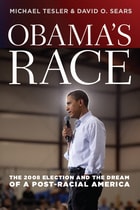
Obama's Race
The 2008 Election and the Dream of a Post-Racial AmericaMichael Tesler and David O. Sears
University of Chicago Press, 2010
Barack Obama’s presidential victory naturally led people to believe that the United States might finally be moving into a post-racial era. Obama’s Race—and its eye-opening account of the role played by race in the election—paints a dramatically different picture.
The authors argue that the 2008 election was more polarized by racial attitudes than any other presidential election on record—and perhaps more significantly, that there were two sides to this racialization: resentful opposition to and racially liberal support for Obama. As Obama’s campaign was given a boost in the primaries from racial liberals that extended well beyond that usually offered to ideologically similar white candidates, Hillary Clinton lost much of her longstanding support and instead became the preferred candidate of Democratic racial conservatives. Time and again, voters’ racial predispositions trumped their ideological preferences as John McCain—seldom described as conservative in matters of race—became the darling of racial conservatives from both parties. Hard-hitting and sure to be controversial, Obama’s Race will be both praised and criticized—but certainly not ignored.
Obeah, Orisa, and Religious Identity in Trinidad, Volume I, Obeah
Africans in the White Colonial Imagination, Volume 1Tracey E. Hucks
Duke University Press, 2022
Obeah, Orisa, and Religious Identity in Trinidad, Volume II, Orisa
Africana Nations and the Power of Black Sacred Imagination, Volume 2Dianne M. Stewart
Duke University Press, 2022
Obedient Sons
The Discourse of Youth and Generations in American Culture, 1630-1860Glenn Wallach
University of Massachusetts Press, 2009
Obesity among Poor Americans
Is Public Assistance the Problem?Patricia K. Smith
Vanderbilt University Press, 2009
This book investigates the controversial claim by welfare critics that public assistance programs like Food Stamps and the National School Lunch programs contribute to obesity among the poor. The author synthesizes empirical evidence from an array of disciplines--anthropology, economics, epidemiology, medicine, nutrition science, marketing, psychology, public health, sociology, and urban planning--to test this claim and to test whether other causal processes are at work.
With a lucid presentation that makes it a model for applying research to questions of social policy, the book lays out the different hypotheses and the possible causal pathways within each. The four central chapters test whether "public assistance causes obesity," "obesity causes public assistance," "poverty causes both public assistance and obesity," and "Factor X causes both." The factors in the last category that may relate to both public assistance and obesity include stress, disability, and physical abuse.
Obesity
Cultural and Biocultural PerspectivesBrewis, Alexandra A
Rutgers University Press, 2010
Grounded in a holistic anthropological approach and using a range of ethnographic and ecological case studies, Obesity shows that the human tendency to become and stay fat makes perfect sense in terms of evolved human inclinations and the physical and social realities of modern life. Drawing on her own fieldwork in the rural United States, Mexico, and the Pacific Islands over the last two decades, Alexandra A. Brewis addresses such critical questions as why obesity is defined as a problem and why some groups are so much more at risk than others. She suggests innovative ways that anthropology and other social sciences can use community-based research to address the serious public health and social justice concerns provoked by the global spread of obesity.
Object Lessons
Robyn Wiegman
Duke University Press, 2012
Object Lessons and the Formation of Knowledge
The University of Michigan Museums, Libraries, and Collections 1817–2017Kerstin Barndt and Carla M. Sinopoli, editors
University of Michigan Press, 2017
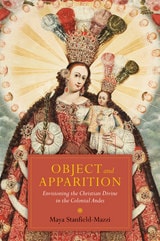
Object and Apparition
Envisioning the Christian Divine in the Colonial AndesMaya Stanfield-Mazzi
University of Arizona Press, 2013
Maya Stanfield-Mazzi demonstrates that among images of the divine there was constant interplay between concrete material objects and ephemeral visions or apparitions. Three-dimensional works of art, specifically large-scale statues of Christ and the Virgin Mary, were key to envisioning the Christian divine, the author contends. She presents in-depth analysis of three surviving statues: the Virgins of Pomata and Copacabana (Lake Titicaca region) and Christ of the Earthquakes from Cusco.
Two-dimensional painted images of those statues emerged later. Such paintings depicted the miracle-working potential of specific statues and thus helped to spread the statues’ fame and attract devotees. “Statue paintings” that depict the statues enshrined on their altars also served the purpose of presenting images of local Andean divinities to believers outside church settings.
Stanfield-Mazzi describes the unique features of Andean Catholicism while illustrating its connections to both Spanish and Andean cultural traditions. Based on thorough archival research combined with stunning visual analysis, Object and Apparition analyzes the range of artworks that gave visual form to Christianity in the Andes and ultimately caused the new religion to flourish.
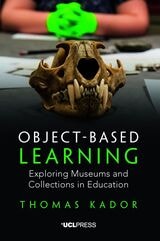
Object-Based Learning
Exploring Museums and Collections in EducationThomas Kador
University College London, 2025
This textbook provides an overview of some of the most important approaches to material culture and object analysis to illustrate broader themes and trends in museum studies and pedagogy. Covering diverse topics related to curatorial practice and exhibiting objects, including accessibility, curatorial ethics, colonialism and museums, audience engagement, and histories of collecting, Object-Based Learning weaves together important historical context and theoretical perspectives with practical case studies and exercises. It also includes discussion of timely issues like the role of digital technologies in teaching with objects, the psychosocial role of objects, and the use of collections in health and wellness.
Object-Oriented Feminism
Katherine Behar
University of Minnesota Press, 2016
The essays in Object-Oriented Feminism explore OOF: a feminist intervention into recent philosophical discourses—like speculative realism, object-oriented ontology (OOO), and new materialism—that take objects, things, stuff, and matter as primary. Object-oriented feminism approaches all objects from the inside-out position of being an object too, with all of its accompanying political and ethical potentials.
This volume places OOF thought in a long history of ongoing feminist work in multiple disciplines. In particular, object-oriented feminism foregrounds three significant aspects of feminist thinking in the philosophy of things: politics, engaging with histories of treating certain humans (women, people of color, and the poor) as objects; erotics, employing humor to foment unseemly entanglements between things; and ethics, refusing to make grand philosophical truth claims, instead staking a modest ethical position that arrives at being “in the right” by being “wrong.”
Seeking not to define object-oriented feminism but rather to enact it, the volume is interdisciplinary in approach, with contributors from a variety of fields, including sociology, anthropology, English, art, and philosophy. Topics are frequently provocative, engaging a wide range of theorists from Heidegger and Levinas to Irigaray and Haraway, and an intriguing diverse array of objects, including the female body as fetish object in Lolita subculture; birds made queer by endocrine disruptors; and truth claims arising in material relations in indigenous fiction and film. Intentionally, each essay can be seen as an “object” in relation to others in this collection.
Contributors: Irina Aristarkhova, University of Michigan; Karen Gregory, University of Edinburgh; Marina Gržinić, Slovenian Academy of Science and Arts; Frenchy Lunning, Minneapolis College of Art and Design; Timothy Morton, Rice University; Anne Pollock, Georgia Tech; Elizabeth A. Povinelli, Columbia University; R. Joshua Scannell, CUNY Graduate Center; Adam Zaretsky, VASTAL.
Objectifying Measures
The Dominance of High-Stakes Testing and the Politics of SchoolingAmanda Walker Johnson
Temple University Press, 2009
In the past twenty years, the number of educational tests with high-stakes consequences—such as promotion to the next grade level or graduating from high school—has increased. At the same time, the difficulty of the tests has also increased. In Texas, a Latina state legislator introduced and lobbied for a bill that would take such factors as teacher recommendations, portfolios of student work, and grades into account for the students—usually students of color—who failed such tests. The bill was defeated.
Using several types of ethnographic study (personal interviews, observations of the Legislature in action, news broadcasts, public documents from the Legislature and Texas Education Agency), Amanda Walker Johnson observed the struggle for the bill’s passage. Through recounting this experience, Objectifying Measures explores the relationship between the cultural production of scientific knowledge (of statistics in particular) and the often intuitive resistance to objectification of those adversely affected by the power of policies underwritten as "scientific."
Objectivity and Diversity
Another Logic of Scientific ResearchSandra Harding
University of Chicago Press, 2015
Sandra Harding is not ready to throw out objectivity quite yet. For all of its problems, she contends that objectivity is too powerful a concept simply to abandon. In Objectivity and Diversity, Harding calls for a science that is both more epistemically adequate and socially just, a science that would ask: How are the lives of the most economically and politically vulnerable groups affected by a particular piece of research? Do they have a say in whether and how the research is done? Should empirically reliable systems of indigenous knowledge count as "real science"? Ultimately, Harding argues for a shift from the ideal of a neutral, disinterested science to one that prizes fairness and responsibility.
Objects and Others
Essays on Museums and Material CultureEdited by George W. Stocking, Jr.
University of Wisconsin Press, 1988
Objects of Empire
The Ceramic Tradition of the Imperial Inca StateTamara L. Bray
University of Texas Press, 2025
A comparative, empire-wide study of the ceramics associated with the imperial Inca state, theorizing the role of these highly recognizable vessel forms in legitimizing Inca rule and establishing imperial identities.
The beautiful polychrome ceramics of the imperial Inca state have long been noted for their seemingly repetitive nature but little considered beyond this basic observation. The widespread distribution and general uniformity of the Inca pottery, however, hints at its larger importance to the imperial project. Moving beyond the pervasive "seen one, seen 'em all" mentality, Objects of Empire brings to light the variability and rich semiotic content of imperial Inca vessels. Taking a comparative, empire-wide approach, Tamara Bray identifies the parameters and significance of this variability, and defines the core elements of the imperial state style. She then investigates where, when, and why differences and deviations from the perceived norm occur.
This study illuminates the strategies of territorial expansion and political control that lay at the heart of the Inca juggernaut, as well as the role of objects in the calculus of would-be rulers and subjects. Based on a unique and extensive database of imperial Inca pottery developed through detailed study of archaeologically recovered and museum-based collections, Objects of Empire reveals how power and legitimacy were produced and reproduced under the Inca through the material culture of everyday life.
Objects of Remembrance
A Memoir of American Opportunities and Viennese DreamsMonroe E. Price
Central European University Press, 2009
This is a memoir about the power of American assimilation and opportunity in the face of persisting refugee realities. Like Isaac Bashevis Singer, Monroe Price recounts the continuing impact of European identities as families, cast from their homes by the rise of Hitler and the Third Reich, struggle to find their way in a new and challenging environment.
In a series of reflections, Price, who was born to a Jewish family in Vienna in 1938 and left when he was seven months old, seeks to create the Vienna of his infancy, including Jewish life, anti-Semitism, the Anschluss, and Kristallnacht (during which his father was arrested). He shifts to scenes of American socialization in the places he moved with his parents:: Macon, Georgia, Cincinnati, Ohio, and the experience of New York City. Through these reflections, Price illuminates ideas about family, religion, friends and schooling as well as deeply personal issues such as home, food and intimacy.
Price’s memoir weaves complicated strands—his Viennese origins, campaigns to distribute Jewish refugees away from New York City, the special qualities of Midwestern Ohio life in the 1950s—and the contrasting patterns of adjustment by different generations in his family in the American landscape. As he traces the particular path of his own life, Price reveals a more universal story of adjustment, and the relationship between a marginal community and the drama of American citizenship.
Objects of Special Devotion
Fetishes and Fetishism in Popular CultureRay B. Browne
University of Wisconsin Press, 1982
This book demonstrates the importance of the study of fetishes and fetishism in the study of popular culture. Some of the essays cover rather "conventional" manifestations in the world today; others demonstrate the fetishistic qualities of some unusual items. But all illustrate without any doubt that, like the icon, the ritual, and many other items in society, fetishes, fetishism and fetishists must be studied and understood before we can begin to understand the complexity of present-day society.
Objects of Survivance
A Material History of the American Indian School ExperienceLindsay M. Montgomery
University Press of Colorado, 2019
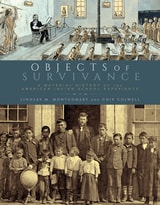
This visual and material archive serves as a lens through which to view a key moment in US history—when Native Americans were sequestered onto reservation lands, forced into unfamiliar labor economies, and attacked for their religious practices. Education, the government hoped, would be the final tool to permanently transform Indigenous bodies through moral instruction in Western dress, foodways, and living habits. Yet Lindsay Montgomery and Chip Colwell posit that Bratley’s collection constitutes “objects of survivance”—things and images that testify not to destruction and loss but to resistance and survival. Interwoven with documents and interviews, Objects of Survivance illuminates how the US government sought to control Native Americans and how Indigenous peoples endured in the face of such oppression.
Rejecting the narrative that such objects preserve dying Native cultures, Objects of Survivance reframes the Bratley Collection, showing how tribal members have reconnected to these items, embracing them as part of their past and reclaiming them as part of their contemporary identities. This unique visual and material record of the early American Indian school experience and story of tribal perseverance will be of value to anyone interested in US history, Native American studies, and social justice.
Co-published with the Denver Museum of Nature & Science
Obliged to Help
Adolphine Fletcher Terry and the Progressive SouthStephanie Bayless
Butler Center for Arkansas Studies, 2011
Obliging Need
Rural Petty Industry in Mexican CapitalismBy Scott Cook and Leigh Binford
University of Texas Press, 1990
For centuries throughout large portions of the globe, petty agriculturalists and industrialists have set their physical and mental energies to work producing products for direct consumption by their households and for exchange. This twofold household reproduction strategy, according to both Marxist and neoclassical approaches to development, should have disappeared from the global economy as labor was transformed into a producer as well as a consumer of capitalist commodities. But in fact, during the twentieth century, only the United States and Britain seem to have approximated this predicted scenario. Tens of millions of households in contemporary Asia, Africa, and Latin America and millions more in industrialized capitalist economies support themselves through petty commodity production alone or in combination with petty industry wage labor.
Obliging Need provides a detailed and comprehensive analysis of small-scale peasant and artisan enterprise in the Oaxaca Valley of Mexico. The authors show how commodity production is organized and operates in different craft industries, as well as the ways in which it combines with other activities such as household chores, agriculture, wage labor, and petty commerce. They demonstrate how—contrary to developmentalist dogma—small-scale capitalism develops from within Mexico's rural economy.
These findings will be important for everyone concerned with improving the lives and economic opportunities of countryfolk in the Third World. As the authors make clear, political mobilization in rural Mexico will succeed only as it addresses the direct producers' multiple needs for land, credit, more jobs, health insurance, and, most importantly, more equitable remuneration for their labor and greater rewards for their enterprise.
Oblivion
Marc Auge
University of Minnesota Press, 2004
“Remembering or forgetting is doing gardener’s work, selecting, pruning. Memories are like plants: there are those that need to be quickly eliminated in order to help the others burgeon, transform, flower.”
For the health of the psyche and the culture, for the individual and the whole society, oblivion is as necessary as memory. One must know how to forget, Marc Augé suggests, not just to live fully in the present but also to comprehend the past.
Renowned as an anthropologist and an innovative social thinker, Augé’s meditation moves from how forgetting the present or recent past enables us to return to earlier pasts, to how forgetting propels us into the present, and finally to how forgetting becomes a necessary part of survival. Oblivion moves with authority and ease among a wide variety of sources—literature, common experience, psychoanalysis, philosophy, ethnography—to illustrate the interplay of memory and forgetting in the stories of life and death told across many cultures and many times. Memory and oblivion, he concludes, cannot be separated: “Memories are crafted by oblivion as the outlines of the shore are created by the sea.”
Obscenity and the Limits of Liberalism
Edited by Loren Glass and Charles Francis Williams
The Ohio State University Press, 2011
Over the course of the nineteenth century in both Europe and the United States, the state usurped the traditional authority of the church in regulating sexual expression and behavior. In the same century philosophers of classical liberalism identified that state function as a threat to individual liberty. Since then, liberalism has provided the framework for debates over obscenity around the globe.
Observers Observed
Essays on Ethnographic FieldworkEdited by George W. Stocking, Jr.
University of Wisconsin Press, 1985
Observing America’s Jews
Marshall Sklare
Brandeis University Press, 1993
Observing America’s Jews
Marshall Sklare
University Press of New England, 2006
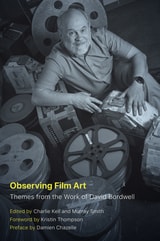
Observing Film Art
Themes from the Work of David BordwellCharlie Keil
Rutgers University Press, 2027
When David Bordwell died in 2024, he left behind a legacy of film scholarship and criticism whose influence is unmatched. Coauthor of a pair of textbooks adopted across the globe and the main force behind a blog read by thousands, Bordwell has influenced generations of film students, filmmakers, and film critics. Observing Film Art examines the breadth of Bordwell’s work through the perspectives of those who knew him best, collaborators, former students, and critics among them. This is the first collection devoted to the work of Bordwell, and it gives equal attention to each facet of his prodigious scholarship, structured to highlight his interest in theory, history, and analysis and criticism. The cornerstones of his approach to film study, including formalism, cognitivism, and historical poetics, are all examined in detail, as are key works, including The Classical Hollywood Cinema (coauthored with Kristin Thompson and Janet Staiger) and Narration in the Fiction Film.
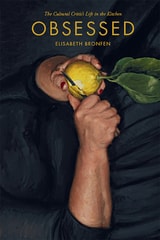
Obsessed
The Cultural Critic’s Life in the KitchenElisabeth Bronfen
Rutgers University Press, 2019
Even the most brilliant minds have to eat. And for some scholars, food preparation is more than just a chore; it’s a passion. In this unique culinary memoir and cookbook, renowned cultural critic Elisabeth Bronfen tells of her lifelong love affair with cooking and demonstrates what she has learned about creating delicious home meals. She recounts her cherished food memories, from meals eaten at the family table in postwar Germany to dinner parties with friends. Yet, in a thoughtful reflection on the pleasures of cooking for one, she also reveals that some of her favorite meals have been consumed alone.
Though it contains more than 250 mouth-watering recipes, Obsessed is anything but a conventional cookbook. As she shares a lifetime of knowledge acquired in the kitchen, Bronfen hopes to empower both novice and experienced home chefs to improvise, giving them hints on how to tweak her recipes to their own tastes. And unlike cookbooks that assume readers have access to an unlimited pantry, this book is grounded in reality, offering practical advice about food storage and reusing leftovers. As Bronfen serves up her personal stories and her culinary wisdom, reading Obsessed is like sitting down to a home-cooked meal with a clever friend.
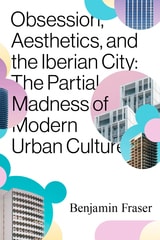
Obsession, Aesthetics, and the Iberian City
The Partial Madness of Modern Urban CultureBenjamin Fraser
Vanderbilt University Press, 2021
This book investigates the social relationships implied in our urban modernity by concentrating on four cities that are in broad strokes representative of the cultural and linguistic heterogeneity of the Iberian peninsula. Each chapter introduces but moves well beyond an identifiable urban area in a given city, noting the cultural obsession implicit in its reconstruction as well as the role of obsession in its artistic representation of the urban environment. These areas are Barcelona’s Eixample district, Madrid’s Linear City, Lisbon’s central Baixa area, and Bilbao’s Seven Streets, or Zazpikaleak. The theme of obsession—which as explored is synonymous with the concept of partial madness—provides a point of departure for understanding the interconnection of both urbanistic and artistic discourses.
Obsession
A HistoryLennard J. Davis
University of Chicago Press, 2008
We live in an age of obsession. Not only are we hopelessly devoted to our work, strangely addicted to our favorite television shows, and desperately impassioned about our cars, we admire obsession in others: we demand that lovers be infatuated with one another in films, we respond to the passion of single-minded musicians, we cheer on driven athletes. To be obsessive is to be American; to be obsessive is to be modern.
But obsession is not only a phenomenon of modern existence: it is a medical category—both a pathology and a goal. Behind this paradox lies a fascinating history, which Lennard J. Davis tells in Obsession. Beginning with the roots of the disease in demonic possession and its secular successors, Davis traces the evolution of obsessive behavior from a social and religious fact of life into a medical and psychiatric problem. From obsessive aspects of professional specialization to obsessive compulsive disorder and nymphomania, no variety of obsession eludes Davis’s graceful analysis.
Obsidian Analyses and Prehistoric Near Eastern Trade 7500 to 3500 B.C.
Gary A. Wright
University of Michigan Press, 1969
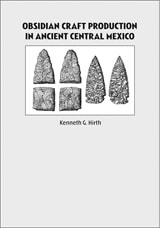
Obsidian Craft Production in Ancient Central Mexico
Kenneth Hirth
University of Utah Press, 2006
The appearance of such craft specialists—who produced large quantities of goods for other households—represented a significant and fundamental change in the structure of prehistoric economies. In central Mexico one particularly important craft specialty was the making of obsidian prismatic blades, the cutting tools of choice.
Unlike most other craft activities, obsidian craft production can be studied using archaeological techniques. Obsidian Craft Production in Ancient Central Mexico examines the obsidian craft industry found at the site of Xochicalco, Morelos, between A.D. 650 and 900, the Gobernador or Epiclassic period when independent city-states appeared throughout central Mexico to fill the political vacuum left by the decline of Teotihuacan. Because the demand for obsidian tools remained constant, author Kenneth Hirth contends that obsidian can serve as a general model for discussing craft production and economic organization on a broader theoretical level.
Obsidian Reflections
Symbolic Dimensions of Obsidian in MesoamericaDavid M. Carballo
University Press of Colorado, 2014
Exploring the materiality of this volcanic glass rather than only its functionality, this book considers the interplay among people, obsidian, and meaning and how these relationships shaped patterns of procurement, exchange, and use. An international group of scholars hailing from Belize, France, Japan, Mexico, and the United States provides a variety of case studies from Mexico, Guatemala, Belize, and Honduras. The authors draw on archaeological, iconographic, ethnographic, and ethnohistoric data to examine obsidian as a touchstone for cultural meaning, including references to sacrificial precepts, powerful deities, landscape, warfare, social relations, and fertility.
Obsidian Reflections underscores the necessity of understanding obsidian from within its cultural context—the perspective of the indigenous people of Mesoamerica. It will be of great interest to Mesoamericanists as well as students and scholars of lithic studies and material culture.
Obsidian, Second Edition
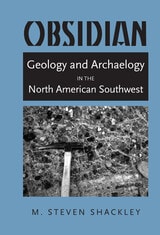
Advances in Geological and Archaeological Obsidian Studies in the North American SouthwestM. Steven Shackley
University of Arizona Press, 2027
Archaeological obsidian studies in the American Southwest and beyond have significantly matured in the last two decades. Like ceramic analysis, obsidian artifact analysis has become a key factor in many archaeological projects because obsidian used to produce chipped stone tools is common across time periods in the Southwest—from Paleoindian through colonial periods. Even today, making stone tools from obsidian is used in teaching.
In the last twenty years, not only have the ways archaeologists use obsidian provenance to address twenty-first-century issues changed, but we now also see geologists and paleontologists using obsidian in ways never before imagined.
In the second edition of Obsidian, author M. Steven Shackley examines the newly discovered sources of archaeological obsidian and other volcanic rocks on both sides of the U.S.-Mexico border. This work has aided in building new inferences concerning exchange, group interaction, and social networks: subjects that were only emerging twenty years ago in obsidian studies.
The field of obsidian provenance studies is truly international, linking archaeologists and geologists in the United States like never before. While the obsidian sources covered in this volume are regionally specific, the applications and methods used in the understanding of source recording, composition issues, and provenance are relevant worldwide.
Obsidian
Geology and Archaeology in the North American SouthwestM. Steven Shackley
University of Arizona Press, 2005

Occupational Mobility in American Business and Industry, 1928-1952
W. Lloyd Warner and James C. Abegglen
University of Minnesota Press, 1955
Occupational Mobility in American Business and Industry, 1928–1952 was first published in 1955. Minnesota Archive Editions uses digital technology to make long-unavailable books once again accessible, and are published unaltered from the original University of Minnesota Press editions.
Is the American occupational system rigid or flexible? How has it changed in the last twenty-five years? What factors help to influence the selection of business leaders? Questions like these are answered in this comprehensive study of occupational mobility, made by two social scientists at the University of Chicago. The study is based on information about 8,000 executives in the largest business firms of America. The rate of movement of men from various occupational backgrounds into positions of business leadership today is compared with that of 1928, as reported in the well-known study of Taussig and Joslyn, American Business Leaders. Warner and Abegglen present their complete research data, many of the findings in tabular form. The research encompasses all kinds of businesses and industries in every part of the country and persons at all levels of top management.
Occupied Refuge
Humanitarian Colonization and the Camp in KenyaHanno Brankamp
Duke University Press, 2026
Ocean Passages
Navigating Pacific Islander and Asian American LiteraturesErin Suzuki
Temple University Press, 2021
In her pathbreaking book, Ocean Passages, Erin Suzuki explores how movement through—and travel across—the ocean mediates the construction of Asian American and Indigenous Pacific subjectivities in the wake of the colonial conflicts that shaped the modern transpacific. Ocean Passages considers how Indigenous Pacific scholars have emphasized the importance of the ocean to Indigenous activism, art, and theories of globalization and how Asian American studies might engage in a deconstructive interrogation of race in conversation with this Indigenous-centered transnationalism.
The ocean passages that Suzuki addresses include the U.S. occupation and militarization of ocean space; refugee passage and the history and experiences of peoples displaced from the Pacific Islands; migratory circuits and the labors required to cross the sea; and the different ways that oceans inform postcolonial and settler colonial nationalisms. She juxtaposes work by Indigenous Pacific and Asian American artists and authors including James George, Maxine Hong Kingston, Kathy Jetñil-Kijiner, lê thi diếm thúy, Ruth Ozeki, and Craig Santos Perez. In Ocean Passages, Suzuki explores what new ideas, alliances, and flashpoints might arise when comparing and contrasting Asian and Pacific Islander passages across a shared sea.
Ocean, as Much as Rain
Stories, Lyrical Prose, and Poems from TibetTsering Woeser. Edited and Translated by Fiona Sze-Lorrain with Dechen Pemba.
Duke University Press, 2026
Oceanic Becoming
The Pacific beneath the PavementsRob Wilson
Duke University Press, 2025
Oceans at Home
Maritime and Domestic Fictions in Nineteenth-Century American Women's WritingMelissa Gniadek
University of Massachusetts Press, 2021
Melissa Gniadek explores the role of the ocean, with particular attention to the Pacific, in a diverse range of literary texts spanning the late 1820s through the mid-1860s from Lydia Maria Child, Caroline Kirkland, Harriet Beecher Stowe, Elizabeth Stoddard, and Harriet Prescott Spofford. Oceans at Home shows that authors employed maritime plots and stories from distant locations to probe contemporary concerns facing the continental United States, ranging from issues of gender restrictions in the domestic sphere to the racial prejudices against indigenous peoples that lay at the heart of settler colonialism.
Odd Couples
Friendships at the Intersection of Gender and Sexual OrientationAnna Muraco
Duke University Press, 2012
Odd Tribes
Toward a Cultural Analysis of White PeopleJohn Hartigan Jr.
Duke University Press, 2005
Odd Tribes engages debates in history, anthropology, sociology, and cultural studies over how race matters. Hartigan tracks the spread of “white trash” from an epithet used only in the South prior to the Civil War to one invoked throughout the country by the early twentieth century. He also recounts how the cultural figure of “white trash” influenced academic and popular writings on the urban poor from the 1880s through the 1990s. Hartigan’s critical reading of the historical uses of degrading images of poor whites to ratify lines of color in this country culminates in an analysis of how contemporary performers such as Eminem and Roseanne Barr challenge stereotypical representations of “white trash” by claiming the identity as their own. Odd Tribes presents a compelling vision of what cultural studies can be when diverse research methodologies and conceptual frameworks are brought to bear on pressing social issues.