Results by title
1214 books match the query 'Subjects & Themes' and 33 start with o
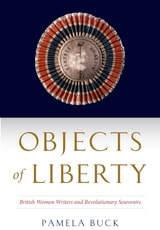
Objects of Liberty
British Women Writers and Revolutionary SouvenirsPamela Buck
University of Delaware Press, 2024
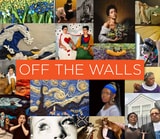
Off the Walls
Inspired Re-Creations of Iconic ArtworksSarah Waldorf
J. Paul Getty Trust, The, 2020
Van Gogh’s Starry Night made out of spaghetti? Cat with a Pearl Earring? Frida Kahlo self-portraits with pets and toilet paper? While the world reeled from the rapid spread of the novel coronavirus (COVID-19), thousands of people around the globe, inspired by challenges from Getty and other museums, raided toy chests, repurposed pantry items, and enlisted family, roommates, and animals to re-create famous works of art at home. Astonishing in their creativity, wit, and ingenuity, these creations remind us of the power of art to unite us and bring joy during troubled times. Off the Walls: Inspired Re-Creations of Iconic Artworks celebrates these imaginative re-creations, bringing highlights from this challenge together in one whimsical, irresistible volume. Getty Publications will donate all profits from the sale of this book to a charity supporting art and artists.
Oh, Touch Me There
Love SonnetsRoger Armbrust
Parkhurst Brothers, Inc., 2013
Witty, humorous and wise reflections on loving
There is a mythic quality to the poetry of Roger Armbrust. Whether his subject is surgery or angels, his language and vision—while expressed in an earthly lexicon—are focused on the life of the spirit.
We constantly heal each other, love, true
to our senses, sharing our secret vaults
of fear and longing, faith and confusion,
doubt and delight.
Armbrust’s love poems are not ethereal, however, but rooted in real bodies…
My poetry honors your architecture’s mystery.
Fanciful, yet rooted in real experience, Armbrust’s one hundred-plus sonnets incite passion and introspection, so that the collection makes an inspired lover’s gift.
Old And New Testaments
Lynn Powell
University of Wisconsin Press, 1995
Olfactory Worldmaking
Hsuan L. Hsu
University of Minnesota Press, 2026
Exploring the power of smell to build connections and transform our world
Smell is a vital, if underappreciated, medium through which we inhabit and imagine the world. In Olfactory Worldmaking, Hsuan L. Hsu traces how olfactory experience communicates across visceral, material, and affective registers to offer new ways of relating, which challenge the extractive logics of racial and colonial capitalism. Blending environmental humanities, sensory studies, and critical ethnic studies, the book highlights how scent animates suppressed histories and marginalized memories.
Hsu theorizes olfaction as a speculative, reparative practice. Examining projects from historical novels, memoirs, and speculative fiction to conceptual art and experimental perfumes, he reveals how these works mobilize scent to imagine alternative ways of sensing, relating, and creating more equitably livable worlds.
Retail e-book files for this title are screen-reader friendly with images accompanied by short alt text and/or extended descriptions.
On Certainty
Karla Kelsey
Omnidawn, 2023
In the poems of On Certainty, an unnamed woman in a strangely familiar dystopia narrates a story of power and decline, where the Tyrant has gained ascendency and the Philosopher is dying. Here, the Tyrant rules over a decimated ecology filled with android deer, burnt towns, and exhausted individuals dependent on virtual reality augmentation. In choosing whether to take the Philosopher’s place in a struggle against the Tyrant, the narrator must consider how her decision may perpetuate the currently existing catastrophic systems.
Weaving together speculative fiction, philosophical aphorism, lyric fragment, and documentary technique, On Certainty echoes the contemporary world that can feel simultaneously quotidian and strange.
On Our Way Home from the Revolution
Reflections on UkraineSonya Bilocerkowycz
The Ohio State University Press, 2019
In 2014 Sonya Bilocerkowycz is a tourist at a deadly revolution. At first she is enamored with the Ukrainians’ idealism, which reminds her of her own patriotic family. But when the romantic revolution melts into a war with Russia, she becomes disillusioned, prompting a return home to the US and the diaspora community that raised her. As the daughter of a man who studies Ukrainian dissidents for a living, the granddaughter of war refugees, and the great-granddaughter of a gulag victim, Bilocerkowycz has inherited a legacy of political oppression. But what does it mean when she discovers a missing page from her family’s survival story—one that raises questions about her own guilt?
In these linked essays, Bilocerkowycz invites readers to meet a swirling cast of post-Soviet characters, including a Russian intelligence officer who finds Osama bin Laden a few weeks after 9/11; a Ukrainian poet whose nose gets broken by Russian separatists; and a long-lost relative who drives a bus into the heart of Chernobyl. On Our Way Home from the Revolution muddles our easy distinctions between innocence and culpability, agency and fate.
Once When Green
PoemsMark Irwin
University of Massachusetts Press, 2025
“We breathe, and then / vanish,” proclaims a speaker in Once When Green, a new collection by accomplished poet Mark Irwin. While deeply personal, the book engages the earth, “gulls, / gray, quarreling air, their ha-ha-ha-ing at our trace / of garbage and carbon,” and addresses mortality as well as the consequences of global warming—how it impacts humans, animals, and the plant life that sustains us all. Poems here accent the lateness of our attempt to control pollution, while interrogating the natural world through myth and the voicings of different creatures, beings displaced or relegated to other spaces, including apes, birds, and an arcade bear that reflects: “I once thought that was freedom— / but how in a receding wilderness no longer mine?”
Sighting those areas where metropolis and wilderness collide, Irwin conveys the tension between the natural and digital world as a speaker laments: “I am so lonely for a river’s one rushing / minute with scuttling crayfish, nymphs, and eddies blurring clouds, not its / imagined thousand pixels changing colors toward forms / on a screen.” These poems remind us how forms of the spirit cannot be bound by technology and capitalism, imploring “how to become explorers, cartographers / again.”
One Hundred Hungers
Lauren Camp
Tupelo Press, 2016
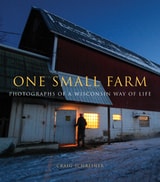
One Small Farm
Photographs of a Wisconsin Way of LifeCraig Schreiner
Wisconsin Historical Society Press, 2013
“People’s lives are written on the fields of old farms. The rows of the fields are like lines on a page, blank and white in winter, filled in with each year’s story of happiness, disappointment, drought, rain, sun, scarcity, plenty. The chapters accumulate, and people enter and leave the narrative. Only the farm goes on.”—From the Introduction
In One Small Farm, Craig Schreiner’s evocative color photographs capture one family as they maintain the rhythms and routines of small farm life near Pine Bluff, Wisconsin. “Milk in the morning and milk at night. Feed the cows and calves. Plant crops. Grind feed. Chop and bale hay. Cut wood. Clean the barn. Spread manure on the fields. Plow snow and split wood in winter. In spring, pick rocks from the fields. Cultivate corn. Pick corn. Harvest oats and barley. Help calves be born. Milk in the morning and milk at night.”
There’s much more to life on the farm than just chores, of course, and Schreiner captures the rhythms and richness of everyday life on the farm in all seasons, evoking both the challenges and the joys and providing viewers a window into a world that is quickly fading. In documenting the Lamberty family’s daily work and life, these thoughtful photos explore larger questions concerning the future of small farm agriculture, Wisconsin cultural traditions, and the rural way of life.
Only
Rebecca Foust
Four Way Books, 2022
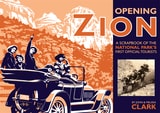
Opening Zion
A Scrapbook of the National Park's First Official TouristsJohn Clark
University of Utah Press, 2010
When Melissa Clark purchased a box of old scrapbooks online, she knew only that she had bought something relating to the University of Utah and Zion Park. What came in the mail was much more than she had expected. Instead of random mementos, two albums arrived full of photographs and newspaper clippings dating to 1920 that document a trip made by six young women from the University of Utah into the newly formed Zion National Park. Part of a promotional campaign developed by the Los Angeles and Salt Lake Railroad to advertise its national park shuttle service, the women entered Zion Canyon as its first offical tourists. When Melissa bought those timeworn scrapbooks she found a forgotten treasure: the opening of Zion.
With text by John Clark, the scrapbooks are now the basis of a one-of-a-kind publication. Part fashion spread, part adventure guide, and all Utah cultural treasure, Opening Zion is a stunning visual record of the park. Remarkably detailed black-and-white photographs show the young adventurers scrambling over rocky outcrops, pondering the dizzying height of Zion's sheer walls, and singing camp songs by the campfire. We are introduced anew to the "gigantic grandeur" of Zion National Park. As one of the women wrote, "One can think only beautiful thoughts amid such splendor."

Opera
Christine Byrne
University of Iowa Press, 2027
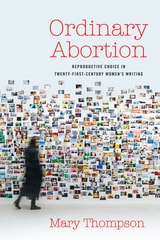
Ordinary Abortion
Reproductive Choice in Twenty-First-Century Women’s WritingMary Thompson
The Ohio State University Press, 2026
The Supreme Court’s Dobbs v. Jackson (2022) decision, which erased the constitutional right to abortion, abruptly redramatized access in the United States. Yet twenty-first-century literature written before Dobbs reflects a landscape in which abortion appears as an undramatic, routine part of women’s lives. In Ordinary Abortion, Mary Thompson argues that many contemporary women writers depict abortion as a commonplace decision intertwined with health, education, career, sexuality, relationships, family-making, and motherhood.
Drawing on American poetry, fiction, nonfiction, memoir, and dystopian writing, Ordinary Abortion examines how ideas about abortion circulate through literature and how literary forms, in turn, shape readers’ understandings of reproduction and politics. Thompson traces new plots, characters, narrative strategies, and genres emerging around birth control, unplanned pregnancy, termination, and family formation. These works reveal renewed thematic attention to abortion’s relationship with motherhood and mother-loss, neoliberal pressures, stratified reproduction, masculinity, violence, care work, and disability.
Ultimately, Ordinary Abortion shows that abortion literature extends far beyond stories centered on crisis or choice. Instead, twenty-first-century women’s writing reveals a quiet, pervasive truth: Abortion has long been woven into everyday American life, normalized in ways that public discourse has often failed to acknowledge.

Ordinary Misfortunes
Emily Yoon
Tupelo Press, 2017
Ore Choir
The Lava on IcelandKaty Didden
Tupelo Press, 2022
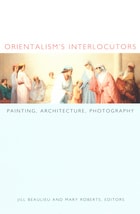
Orientalism's Interlocutors
Painting, Architecture, PhotographyJill Beaulieu and Mary Roberts, eds.
Duke University Press, 2002
Looking at the political significance of cross-cultural encounters refracted through the visual languages of Orientalism, the contributors engage with pressing recent debates about indigenous agency, postcolonial identity, and gendered subjectivities. The very range of artists, styles, and forms discussed in this collection broadens contemporary understandings of Orientalist art. Among the artists considered are the Algerian painters Azouaou Mammeri and Mohammed Racim; Turkish painter Osman Hamdi; British landscape painter Barbara Bodichon; and the French painter Henri Regnault. From the liminal "Third Space" created by mosques in postcolonial Britain to the ways nineteenth-century harem women negotiated their portraits by British artists, the essays in this collection force a rethinking of the Orientalist canon.
This innovative volume will appeal to those interested in art history, theories of gender, and postcolonial studies.
Contributors. Jill Beaulieu, Roger Benjamin, Zeynep Çelik, Deborah Cherry, Hollis Clayson, Mark Crinson, Mary Roberts
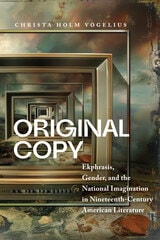
Original Copy
Ekphrasis, Gender, and the National Imagination in Nineteenth-Century American LiteratureChrista Holm Vogelius
University of Massachusetts Press, 2025
When critics of poet Phillis Wheatley, the first African American to publish a collection of poetry, dismiss her work as derivative, they fail to see her writing as part of a new creative pantheon, sitting alongside other works that, like the popular copybooks in antebellum America, are structured as a conversation between artistic allies. Different kinds of copying in this period were distinctly feminized practices, such as artistic copying, pedagogical recitation, and literary imitation. Ekphrasis, the literary description of a work of visual art, reveals a particularly interesting form of copying, as the artwork in question becomes a kind of mediated space between author and reader; this practice, then, becomes the emblematic form of literature as collective production.
Original Copy frames ekphrasis and other forms of literary and visual copy-work as key concepts for understanding the discussions of nationalism, originality, and gender that dominated US literary circles during the first half of the nineteenth century. Christa Holm Vogelius focuses on four major writers of the period—Phillis Wheatley, Margaret Fuller, Sophia Hawthorne, and Henry Longfellow—to offer a narrative of a self-consciously feminine antebellum literary culture that was equally invested in literary nationality and convention. The explicitly feminized forms of the copy between and within media, she argues, became a productive means by which writers across a variety of genres interrogated the ill-defined but ubiquitous idea of an “original” American literature. Original Copy bridges three bodies of scholarship that have remained largely distinct—studies of literary nationalism and transnationalism, scholarship on gender in nineteenth century literary culture, and aesthetic and media theory—to argue for the significance of both imitation and intimate author-reader relations to the development of an American literature.
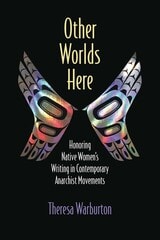
Other Worlds Here
Honoring Native Women’s Writing in Contemporary Anarchist MovementsTheresa Warburton
Northwestern University Press, 2021
All is not lost, however. Rather than centering a critical indictment of contemporary anarchist politics, Other Worlds Here maintains that a defining characteristic of New Anarchism is its ability to adapt and transform. Through close readings of texts by Native women authors, Warburton argues that anarchists must shift the paradigm that another world is possible to one that recognizes other worlds already here: stories, networks, and histories that lay out methods of building reciprocal relationships with the land and its people. Analyzing memoirs, poetry, and novels by writers including Deborah Miranda, Elissa Washuta, Heid E. Erdrich, Janet Rogers, and Leslie Marmon Silko, Other Worlds Here extends the study of Native women’s literatures beyond ethnographic analysis of Native experience to advance a widely applicable, contemporary political critique.
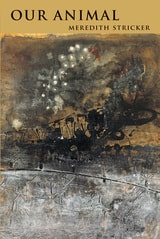
Our Animal
Meredith Stricker
Omnidawn, 2016
Our Animal is the winner of the 2014 Omnidawn Poetry Open Book Contest, selected by Mary Jo Bang.
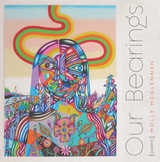
Our Bearings
PoemsMolly McGlennen; Foreword by Ben Burgess
University of Arizona Press, 2020
While working with both traditional and contemporary form, McGlennen’s unique use of space and rhythm creates poetry that is both captivating and accessible. Our Bearings does not attempt to speak for a population; rather it offers vibrant stories and moments that give voice to pieces of a large and complex tapestry of experiences. Through keen observation and a deep understanding of Native life in Minneapolis, McGlennen has created a timely collection that contributes beautifully to the important conversation about contemporary urban Native life in North America and globally.
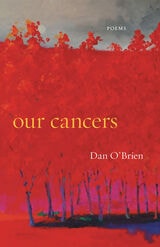
Our Cancers
PoemsDan O'Brien
Acre Books, 2021
On the fourteenth anniversary of 9/11—an event that caused their downtown apartment to become “suffused with the World Trade Center’s carcinogenic dust”—Dan O’Brien’s wife discovers a lump in her breast. Surgery and chemotherapy soon follow, and on the day of his wife’s final infusion, O’Brien learns of his own diagnosis. He has colon cancer and will need to undergo his own intensive treatment over the next nine months.
Our Cancers is a compelling account of illness and commitment, of parenthood and partnership. This spare and powerful sequence creates an intimate mythology that seeks meaning in illness while also celebrating the resilience of sufferers, caregivers, and survivors.
As O’Brien explains in an introduction, “The consecutiveness of our personal disasters, with a daughter not yet two years old at the start of it, was shattering and nearly silencing. At hospital bedsides, in hospital beds myself, and at home through the cyclical assaults of our therapies, these poems came to me in fragments, as if my unconscious were attempting to reassemble our lives, our identities and memories . . . as if I were in some sense learning how to speak again.”
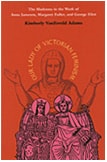
Our Lady Of Victorian Feminism
The Madonna in the Work of Anna Jameson, Margaret Fuller, and George EliotKimberly VanEsveld Adams
Ohio University Press, 2000
Our Lady of Victorian Feminism is about three nineteenth-century women, Protestants by background and feminists by conviction, who are curiously and crucially linked by their extensive use of the Madonna in arguments designed to empower women.
In the field of Victorian studies, few scholars have looked beyond the customary identification of the Christian Madonna with the Victorian feminine ideal—the domestic Madonna or the Angel in the House. Kimberly VanEsveld Adams shows, however, that these three Victorian writers made extensive use of the Madonna in feminist arguments. They were able to see this figure in new ways, freely appropriating the images of independent, powerful, and wise Virgin Mothers.
In addition to contributions in the fields of literary criticism, art history, and religious studies, Our Lady of Victorian Feminism places a needed emphasis on the connections between the intellectuals and the activists of the nineteenth-century women's movement. It also draws attention to an often neglected strain of feminist thought, essentialist feminism, which proclaimed sexual equality as well as difference, enabling the three writers to make one of their most radical arguments, that women and men are made in the image of the Virgin Mother and the Son, the two faces of the divine.
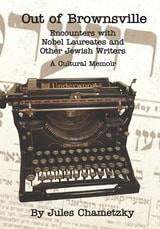
Out of Brownsville
Encounters with Nobel Laureates and Other Jewish Writers: A Cultural MemoirJules Chametzky
University of Massachusetts Press, 2012
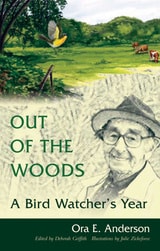
Out of the Woods
A Bird Watcher’s YearOra E. Anderson
Ohio University Press, 2007
Out of the Woods: A Bird Watcher’s Year is a journey through the seasons and a joyous celebration of growing old. In fifty-nine essays and poems, Ora E. Anderson, birder, bird carver, naturalist, and nature writer, reveals the insights and recollections of a keen-eyed observer of nature, both human and avian. The essays follow the rivers and creeks, the highways and little-known byways of Appalachia, and along the way we become nearly as familiar with its numerous bird, plant, and animal species as with the author himself.
These are not the memories of a single year, however, but of a long lifetime spent immersed in the natural world. Out of the Woods, presented with humor and passion, is an account of a well-lived, productive, and satisfying life. The essays offer an intimate portrait of a half century of Anderson's life on his beloved old farm (more nearly a nature preserve), where he lived in harmony with birds and nature and followed the rhythm of the seasons. We are invited to share the joys—and the disappointments and sorrows—inherent in such a life.
Generously illustrated with Julie Zickefoose’s detailed and evocative drawings, this book will delight bird watchers, artists, naturalists, backyard gardeners, and anyone who is ever tempted to take a rutted, overgrown path just to see where it leads.
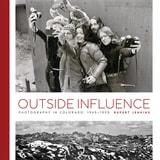
Outside Influence
Photography in Colorado, 1945–1995Rupert Jenkins
University Press of Colorado, 2025
Outside Influence: Photography in Colorado, 1945–1995 is the first detailed account of the state’s history of post–World War II expressive photography. The title “Outside Influence” alludes to the historic presence of the natural landscape as subject and to the transformative impact of out-of-state artists and educators. Their arrival in Colorado beginning in the 1960s galvanized interpretive photography by introducing innovative concepts, nontraditional materials, and emergent digital technologies to students, peers, and their audience-at-large.
Throughout the book’s nine chapters, Rupert Jenkins contextualizes Colorado photography’s postwar development with a social, political, and cultural abstract that encompasses national events and trends, the emerging presence of women and photographers of color, and institutional leadership. Drawing from more than 120 personal interviews, he identifies the medium’s principal in-state creators, mentors, and advocates from the modernist era of film processing to the emergence of interdisciplinary digital practice. Jenkins answers fundamental questions about the people and work of this era: Who generated this significant body of innovative, noncommercial photographic work? Where did they come from? Who inspired them, and who in turn did they inspire?
As Eric Paddock, curator of photography at the Denver Art Museum, discusses in his foreword, by looking at the schools, workshops, galleries, and museums that supported these artists, Jenkins stresses the importance of collaboration and community to any successful venture. Crucially, in examining the lives and careers of photographers like Robert Adams, Walter Chappell, Albert Chong, Cherie Hiser, Barbara Houghton, Winter Prather, Mark Sink, Melanie Walker, Myron Wood, and numerous others, Outside Influence seeks to affirm the medium’s legacy within Colorado’s fine arts canon.
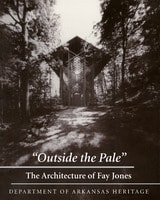
Outside the Pale
The Architecture of Fay JonesUniversity of Arkansas Press, 1999
Honored with the 1990 American Institute of Architects Gold Medal for a lifetime of outstanding achievement, Fay Jones is an Arkansas original. In receiving the medal from Prince Charles of Great Britain, Jones was hailed as a “powerful and special genius who embodies nearly all the qualities we admire in an architect” and as an artist who used his vision to craft “mysterious and magical places” not only in Arkansas but all over the world.
This book accompanied a special museum exhibit of Jones’s life and work at the Old State House in Little Rock. It traces Jones’s development from his early years as a student of Frank Lloyd Wright and Bruce Goff, to the culmination of his ability in such arresting structures as Pinecote Pavilion in Picayune, Mississippi; Thorncrown Chapel in Eureka Springs, Arkansas; and Chapman University Chapel in Orange, California. Through the black-and-white photographs of the homes, chapels, and other buildings that Jones has created and the accompanying captions and interviews of the architect, the reader is allowed a view into this man’s remarkable talent.
Designing structures that fuse architecture and landscape, the organic and the man-made, Jones has created special places which touch their viewers with the power and subtlety of poetry. Herein we learn why.
From the Foreword by Robert Adams Ivy Jr.:
“Fay Jones’s architecture begins in order and ends in mystery. . . . His role can perhaps best be understood as mediator, a human consciousness that has arisen from the Arkansas soil and scoured the cosmos, then spoken through the voices of stone and wood, steel and glass. Art, philosophy, craft, and human aspiration coalesce in his masterworks, transformed from acts of will into harmonies: Jones lets space sing.”
Owl Question
PoemsFaith Shearin
Utah State University Press, 2004
Oyster Saloon
Desirée Alvarez
Omnidawn, 2026
Poetry that considers art, family history, and creativity.
This collection charts the life of an artist and her passion for nature through the making of a painting. Poems revel in the space humans occupy within the natural world, considering ways of living that range from harmonious to extractive. Alvarez reflects on petroleum, plastic, robots, monsters, and a swath of art history and family history—from her Latino father's time working as an artist in Andy Warhol’s Factory to the teachings of Hokusai. Acting asa séance conjuring the voices of the dead as a guide, the book is part elegy to the poet’s mother, who was a painter and gardener. Steeped in the rural New England countryside of the poet’s childhood and the lore of her indigenous ancestral family in Puerto Rico and Mexico, Oyster Saloon straddles contrasting heritage and landscapes and considers what it means to live a creative life.
Ozone Journal
Peter Balakian
University of Chicago Press, 2015
from "Ozone Journal"
Bach’s cantata in B-flat minor in the cassette,
we lounged under the greenhouse-sky, the UVBs hacking
at the acids and oxides and then I could hear the difference
between an oboe and a bassoon
at the river’s edge under cover—
trees breathed in our respiration;
there was something on the other side of the river,
something both of us were itching toward—
radical bonds were broken, history became science.
We were never the same.
The title poem of Peter Balakian's Ozone Journal is a sequence of fifty-four short sections, each a poem in itself, recounting the speaker's memory of excavating the bones of Armenian genocide victims in the Syrian desert with a crew of television journalists in 2009. These memories spark others—the dissolution of his marriage, his life as a young single parent in Manhattan in the nineties, visits and conversations with a cousin dying of AIDS—creating a montage that has the feel of history as lived experience. Bookending this sequence are shorter lyrics that span times and locations, from Nairobi to the Native American villages of New Mexico. In the dynamic, sensual language of these poems, we are reminded that the history of atrocity, trauma, and forgetting is both global and ancient; but we are reminded, too, of the beauty and richness of culture and the resilience of love.

of blue & bone
PoemsMichal 'MJ' Jones
Northwestern University Press, 2027
Winner of the 2026 Cave Canem Angela Jackson Prize
The second collection from acclaimed poet Michal “MJ” Jones, of blue & bone reckons with the Hart family murder-suicide. On March 26, 2018, white wives Jen and Sarah Hart drove themselves and their six adopted Black children—Markis, Hannah, Devonte, Jeremiah, Abigail, and Ciera Rose—off a cliff in Mendocino County, California. Before this tragedy and while the families of origin battled to keep their children, the Harts evaded culpability for over a decade of child abuse, protected under the guise of innocence and privilege. A collection of documentary poetics, of blue & bone engages persona, ode, and lyrical poetry to reflect on the question How could this have happened? Jones carefully studies the nuances and intersections of race, queerness, and class crucial to this question, employing delicate and powerful language to explore a devastating tragedy and attempt to make sense out of monstrous devastation. Vulnerable and raw, this collection cuts deeply through blue and bone.
oh orchid o’clock
Endi Bogue Hartigan
Omnidawn, 2023
This collection speaks the language of the clock as a living instrument, exposing the sensory impacts of our obsession with time. In oh orchid o’clock, lyrics wind through histories like a nervous system through a body. The poems speak to how we let our days become over-clocked, over-transactional, and over-weaponed. With an instrumental sensibility, Endi Bogue Hartigan investigates what it is to be close to time—collective time, with its alarms and brutalities, and bodily time, intricate and familial. She considers how can we be both captured and complicit within systems of measurement, and she invites us to imagine how to break from, create, or become immune to them. Her poems use language to expose the face of the clock to reveal how gears press against interconnecting systems—economic, capitalist, astronomical, medical, governmental, and fantastical.
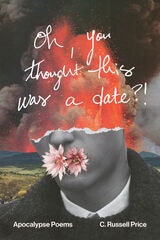
oh, you thought this was a date?!
Apocalypse PoemsC. Russell Price
Northwestern University Press, 2022
Price’s cinematic approach to language and scene is on full display, as well as their dark humor and resilience. Within these pages, the surreal is familiar and grief is a national pastime. If the end is near, who among us would not put on Fleetwood Mac? Who would not clean up their eyeliner just a smidge? This collection pulses with the beat that follows destruction (whether human or natural), the moment the jaw unhinges. These poems are not for pearl clutchers. They are for those who have already felt their private apocalypse.