59 books match the query 'Tragedy' and 3 start with o
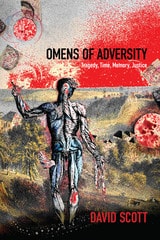
cover of Omens of Adversity: Tragedy, Time, Memory, Justice

Omens of Adversity

Tragedy, Time, Memory, Justice

David Scott

Duke University Press, 2014
Omens of Adversity is a profound critique of the experience of postcolonial, postsocialist temporality. The case study at its core is the demise of the Grenada Revolution (1979–1983), and the repercussions of its collapse. In the Anglophone Caribbean, the Grenada Revolution represented both the possibility of a break from colonial and neocolonial oppression, and hope for egalitarian change and social and political justice. The Revolution's collapse in 1983 was devastating to a revolutionary generation. In hindsight, its demise signaled the end of an era of revolutionary socialist possibility. Omens of Adversity is not a history of the Revolution or its fallout. Instead, by examining related texts and phenomena, David Scott engages with broader, enduring issues of political action and tragedy, generations and memory, liberalism and transitional justice, and the possibility of forgiveness. Ultimately, Scott argues that the palpable sense of the neoliberal present as time stalled, without hope for emancipatory futures, has had far-reaching effects on how we think about the nature of political action and justice.
[more]
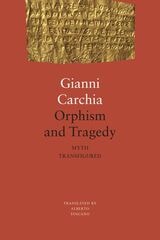
cover of Orphism and Tragedy: Myth Transfigured

Orphism and Tragedy

Myth Transfigured

Gianni Carchia

Seagull Books, 2026

A reimagining of the ancient Greek mystical movement Orphism. 

What does it mean to step outside the civic order through poetry? Ever since it first emerged in Greece around the sixth century BC, Orphic doctrine has marked a powerful rupture with the ancient world. Its salvific practices, closely tied to a belief in the soul’s immortality, its resolute rejection of sacrificial ritual and embrace of vegetarianism, and its distinctive conception of time and memory all defined a way of life, the bios orphikos, that was at once poetic and political.

In this brief yet densely layered text, Gianni Carchia returns to Orphism in all its implications. It becomes clear that, for Carchia, Orphism is not merely a historiographical concern, but an aesthetic and political one. If tragedy constitutes one of the central pillars around which the polis was formed, Orphism represents a radically different path—an alternative to the polis itself—by placing the poetic word, in all its autonomous power, at its core. And if the relationship between philosophy and tragedy has long been a central theme in the history of Western thought, Carchia’s reflections here ask a different question: Is the Orphic path still accessible to us today?
[more]
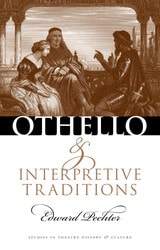
cover of Othello and Interpretive Traditions

Othello and Interpretive Traditions

Edward Pechter

University of Iowa Press, 1999

During the past twenty years or so, Othello has become the Shakespearean tragedy that speaks most powerfully to our contemporary concerns. Focusing on race and gender (and on class, ethnicity, sexuality, and nationality), the play talks about what audiences want to talk about. Yet at the same time, as refracted through Iago, it forces us to hear what we do not want to hear; like the characters in the play, we become trapped in our own prejudicial malice and guilt.
[more]