Results by title
83 books match the query 'Treatment' and 4 start with o
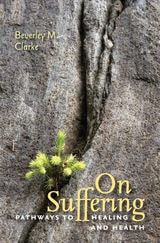
On Suffering
Pathways to Healing and HealthBeverley M. Clarke
Dartmouth College Press, 2011
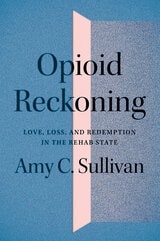
Opioid Reckoning
Love, Loss, and Redemption in the Rehab StateAmy C. Sullivan
University of Minnesota Press, 2021
Examines the complexity and the humanity of the opioid epidemic
America’s opioid epidemic continues to ravage families and communities, despite intense media coverage, federal legislation, criminal prosecutions, and harm reduction efforts to prevent overdose deaths. More than 450,000 Americans have died from opioid overdoses since the late 1990s. In Opioid Reckoning, Amy C. Sullivan explores the complexity of the crisis through firsthand accounts of people grappling with the reverberating effects of stigma, treatment, and recovery.
Nearly everyone in the United States has been touched in some way by the opioid epidemic, including the author and her family. Sullivan uses her own story as a launching point to learn how the opioid epidemic challenged longstanding recovery protocols in Minnesota, a state internationally recognized for pioneering addiction treatment. By centering the voices of many people who have experienced opioid use, treatment, recovery, and loss, Sullivan exposes the devastating effects of a one-size-fits-all approach toward treatment of opioid dependency. Taking a clear-eyed, nonjudgmental perspective of every aspect of these issues—drug use, parenting, harm reduction, medication, abstinence, and stigma—Opioid Reckoning questions current treatment models, healthcare inequities, and the criminal justice system. Sullivan also imagines a future where anyone suffering an opioid-use disorder has access to the individualized care, without judgment, available to those with other health problems.
Opioid Reckoning presents a captivating look at how the state that invented “rehab” addresses the challenges of the opioid epidemic and its overdose deaths while also taking readers into the intimate lives of families, medical and social work professionals, grassroots activists, and many others impacted by the crisis who contribute their insights and potential solutions. In sharing these stories and chronicling their lessons, Sullivan offers a path forward that cultivates empathy, love, and hope for anyone affected by chaotic drug use and its harms.
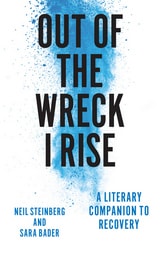
Out of the Wreck I Rise
A Literary Companion to RecoveryNeil Steinberg and Sara Bader
University of Chicago Press, 2016
Addiction is easy to fall into and hard to escape. It destroys the lives of individuals, and has a devastating cost to society. The National Institute of Health estimates seventeen million adults in the United States are alcoholics or have a serious problem with alcohol. At the same time, the country is seeing entire communities brought to their knees because of opioid additions. These scourges affect not only those who drink or use drugs but also their families and friends, who witness the horror of addiction. With Out of the Wreck I Rise, Neil Steinberg and Sara Bader have created a resource like no other—one that harnesses the power of literature, poetry, and creativity to illuminate what alcoholism and addiction are all about, while forging change, deepening understanding, and even saving lives.
Structured to follow the arduous steps to sobriety, the book marshals the wisdom of centuries and explores essential topics, including the importance of time, navigating family and friends, relapse, and what Raymond Carver calls “gravy,” the reward that is recovery. Each chapter begins with advice and commentary followed by a wealth of quotes to inspire and heal. The result is a mosaic of observations and encouragement that draws on writers and artists spanning thousands of years—from Seneca to David Foster Wallace, William Shakespeare to Patti Smith. The ruminations of notorious drinkers like John Cheever, Charles Bukowski, and Ernest Hemingway shed light on the difficult process of becoming sober and remind the reader that while the literary alcoholic is often romanticized, recovery is the true path of the hero.
Along with traditional routes to recovery—Alcoholics Anonymous, out-patient therapy, and intensive rehabilitation programs—this literary companion offers valuable support and inspiration to anyone seeking to fight their addiction or to a struggling loved one.
Featuring Charles Bukowski, John Cheever, Dante, Ricky Gervais, Ernest Hemingway, Billie Holiday, Anne Lamott, John Lennon, Haruki Murakami, Anaïs Nin, Mary Oliver, Samuel Pepys, Rainer Maria Rilke, J. K. Rowling, Patti Smith, Kurt Vonnegut, and many more.
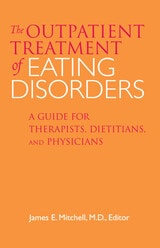
Outpatient Treatment of Eating Disorders
A Guide for Therapists, Dietitians, and PhysiciansJames E. Mitchell, M.D.
University of Minnesota Press, 2001
Over the past decade, there have been substantial and rapidly changing developments in the treatment of eating disorders. Grounded in the most recent literature, The Outpatient Treatment of Eating Disorders balances general and pathology-specific research to emphasize outpatient treatment. The contributors provide an overview of the full range of eating disorders and offer clinical recommendations for a comprehensive treatment plan for patients with these disorders.
These distinguished contributors present case studies and hands-on treatment models based on cognitive behavioral techniques. Using three vignettes-a woman with anorexia nervosa, a woman with bulimia nervosa, and a man with binge eating disorder-the authors offer practical approaches, including extensive nutritional information for dietitians, for treating these three major forms of eating disorders. Designed for all health care workers who deal with eating disorder patients, this indispensable guide will be useful for psychiatrists, other physicians, psychologists, social workers, exercise physiologists, and dietitians as well as those who suffer from eating disorders.
Contributors: David W. Abbott, U of North Dakota; Roslyn Binford, U of Minnesota; Carol Brunzell, Fairview-University Medical Center; Scott Crow, U of Minnesota; Mary Hendrickson-Nelson, HealthPartners of Minnesota; Susan Jack, Fairview-University Medical Center; Pamela K. Keel, Harvard U; Melissa Pederson Mussell, U of St. Thomas; Carol Peterson, U of Minnesota; Claire Pomeroy, U of Kentucky; LeAnn Snow, U of Minnesota; Stephen A. Wonderlich, U of North Dakota; and Martina de Zwaan, University Hospital, Vienna.