Results by title
173 books match the query 'Women in literature' and 4 start with o
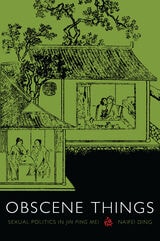
Obscene Things
Sexual Politics in Jin Ping MeiNaifei Ding
Duke University Press, 2002
The story of a seductive bondmaid-concubine, sexual opportunism, domestic intrigue, adultery and death, Jin Ping Mei has often been critiqued based on the coherence of the text itself. Concentrating instead on the processes of reading and on the social meaning of this novel, Ding looks at the various ways the tale has been received since its first dissemination, particularly by critiquing the interpretations offered by seventeenth-century Ming literati and by twentieth-century scholars. Confronting the gender politics of this “pornographic” text, she troubles the boundaries between premodern and modern readings by engaging residual and emergent Chinese gender and hierarchic ideologies.
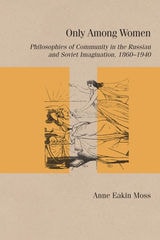
Only Among Women
Philosophies of Community in the Russian and Soviet Imagination, 1860–1940Anne Eakin Moss
Northwestern University Press, 2020
Our Lady Of Victorian Feminism
The Madonna in the Work of Anna Jameson, Margaret Fuller, and George EliotKimberly VanEsveld Adams
Ohio University Press, 2000
Our Lady of Victorian Feminism is about three nineteenth-century women, Protestants by background and feminists by conviction, who are curiously and crucially linked by their extensive use of the Madonna in arguments designed to empower women.
In the field of Victorian studies, few scholars have looked beyond the customary identification of the Christian Madonna with the Victorian feminine ideal—the domestic Madonna or the Angel in the House. Kimberly VanEsveld Adams shows, however, that these three Victorian writers made extensive use of the Madonna in feminist arguments. They were able to see this figure in new ways, freely appropriating the images of independent, powerful, and wise Virgin Mothers.
In addition to contributions in the fields of literary criticism, art history, and religious studies, Our Lady of Victorian Feminism places a needed emphasis on the connections between the intellectuals and the activists of the nineteenth-century women's movement. It also draws attention to an often neglected strain of feminist thought, essentialist feminism, which proclaimed sexual equality as well as difference, enabling the three writers to make one of their most radical arguments, that women and men are made in the image of the Virgin Mother and the Son, the two faces of the divine.
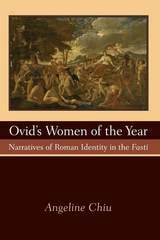
Ovid's Women of the Year
Narratives of Roman Identity in the FastiAngeline Chiu
University of Michigan Press, 2016
Of interest to literary scholars, antiquarians, and those studying the social and political roles of ancient women, Ovid’s Women of the Year offers an intriguing view of an Ovidian poem now coming into its own.