Results by title
3258 books match the query 'Art' and 75 start with o
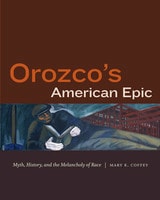
Orozco's American Epic
Myth, History, and the Melancholy of RaceMary K. Coffey
Duke University Press, 2020

Orphan Black
Performance, Gender, BiopoliticsEdited by Andrea Goulet and Robert A. Rushing
Intellect Books, 2018
Contributors come from a range of backgrounds and explore the digital innovations and technical interactions between human and machine that allow the show to challenge conventional notions of performance and identity, address family themes, and Orphan Black’s own textual genealogy within the contexts of science, reproductive technology, and the politics of gender, and extend their inquiry to the broader question of community in a "posthuman" world of biopolitical power. Mobilizing philosophy, history of science, and literary theory, scholars analyze the ways in which Orphan Black depicts resistance to the many forms of power that attempt to capture, monitor, and shape life today.
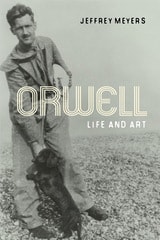
Orwell
Life and ArtJeffrey Meyers
University of Illinois Press, 2010
Oscar Wilde's Decorated Books
Nicholas Frankel
University of Michigan Press, 2000
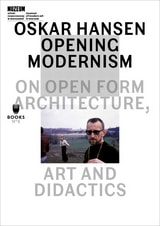
Oskar Hansen - Opening Modernism
On Open Form Architecture, Art and DidacticsM. Christine Boyer, Tomasz Fudala, Jola Gola, Aleksandra Kedziorek, Lukasz Ronduda, Felicity Scott, Karol Sienkiewicz, Mark Wasiuta, et al.
Museum of Modern Art in Warsaw, 2014
Other Criteria
Confrontations with Twentieth-Century ArtLeo Steinberg
University of Chicago Press, 2007
Leo Steinberg’s classic Other Criteria comprises eighteen essays on topics ranging from “Contemporary Art and the Plight of Its Public” and the “flatbed picture plane” to reflections on Picasso, Rauschenberg, Rodin, de Kooning, Pollock, Guston, and Jasper Johns. The latter, which Francine du Plessix Gray called “a tour de force of critical method,” is widely regarded as the most eye-opening analysis of the Johns’s work ever written. This edition includes a new preface and a handful of additional illustrations.
“The art book of the year, if not of the decade and possibly of the century. . . .The significance of this volume lies not so much in the quality of its insights—although the quality is very high and the insights are important—as in the richness, precision, and elegance of its style. . . . A meeting with the mind of Leo Steinberg is one of the most enlightening experiences that contemporary criticism affords.”
“Not only one of the most lucid and independent minds among art critics, but a profound one.”—Robert Motherwell
Other Planes of There
Selected WritingsRenée Green
Duke University Press, 2014
Charting this cosmopolitan artist’s thinking through the decades, Other Planes of There brings essays, film scripts, reviews, and polemics together with reflections on Green's own artistic practice and seminal artworks. It immerses the reader in three decades of contemporary art showcasing the art and thought, the incisive critiques and prescient observations of one of our foremost artists and intellectuals. Sound, cinema, literature, time-based media, and the relationship between art forms and other forms of knowledge are just a few of the matters that Green takes up and thinks through. Sixty-four pages of color plates were selected by the artist for this lavishly illustrated volume.
Other Things
Bill Brown
University of Chicago Press, 2015
The book ranges across the literary, visual, and plastic arts to depict the curious lives of things. Beginning with Achilles’s Shield, then tracking the object/thing distinction as it appears in the work of Martin Heidegger and Jacques Lacan, Bill Brown ultimately focuses on the thingness disclosed by specific literary and artistic works. Combining history and literature, criticism and theory, Other Things provides a new way of understanding the inanimate object world and the place of the human within it, encouraging us to think anew about what we mean by materiality itself.
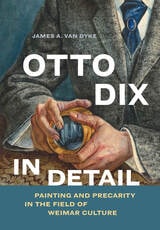
Otto Dix in Detail
Painting and Precarity in the Field of Weimar CultureJames A. van Dyke
University of Chicago Press, 2026
Offering a fresh look at German art during a period of extraordinary transition and precarity, James A. van Dyke focuses on overlooked but critically significant details in works completed by Otto Dix between 1919 and 1936. A small lump of paint, a monogram, an almost invisible self-portrait, the verso of a drawing, a patch of discoloration, and a web of fine cracks—van Dyke reveals such details, hidden in plain sight, as coded dialogue through which Dix addressed audiences and art-world insiders amid the combative world of cultural production in Weimar Germany. Sly, cutting, and provocative, these are the material traces of social relationships between the painter and those who represented threats to his professional ambition: an avant-garde mentor and rival, an increasingly skeptical critic, a prominent bourgeois photographer, and a local Nazi authority.
Proving that small things offer insight into the big picture, this book highlights Dix’s satirical, transgressive work as nuanced and polyvocal, reflecting the complex fields of power and economics in which the field of art is located.
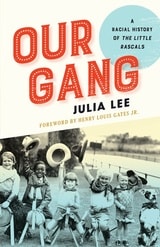
Our Gang
A Racial History of The Little RascalsJulia Lee
University of Minnesota Press, 2015
It was the age of Jim Crow, riddled with racial violence and unrest. But in the world of Our Gang, black and white children happily played and made mischief together. They even had their own black and white version of the KKK, the Cluck Cluck Klams—and the public loved it.
The story of race and Our Gang, or The Little Rascals, is rife with the contradictions and aspirations of the sharply conflicted, changing American society that was its theater. Exposing these connections for the first time, Julia Lee shows us how much this series, from the first silent shorts in 1922 to its television revival in the 1950s, reveals about black and white American culture—on either side of the silver screen. Behind the scenes, we find unconventional men like Hal Roach and his gag writers, whose Rascals tapped into powerful American myths about race and childhood. We meet the four black stars of the series—Ernie “Sunshine Sammy” Morrison, Allen “Farina” Hoskins, Matthew “Stymie” Beard, and Billie “Buckwheat” Thomas—the gang within the Gang, whose personal histories Lee pursues through the passing years and shifting political landscape.
In their checkered lives, and in the tumultuous life of the series, we discover an unexplored story of America, the messy, multiracial nation that found in Our Gang a comic avatar, a slapstick version of democracy itself.
Our Lady Of Victorian Feminism
The Madonna in the Work of Anna Jameson, Margaret Fuller, and George EliotKimberly VanEsveld Adams
Ohio University Press, 2000
Our Lady of Victorian Feminism is about three nineteenth-century women, Protestants by background and feminists by conviction, who are curiously and crucially linked by their extensive use of the Madonna in arguments designed to empower women.
In the field of Victorian studies, few scholars have looked beyond the customary identification of the Christian Madonna with the Victorian feminine ideal—the domestic Madonna or the Angel in the House. Kimberly VanEsveld Adams shows, however, that these three Victorian writers made extensive use of the Madonna in feminist arguments. They were able to see this figure in new ways, freely appropriating the images of independent, powerful, and wise Virgin Mothers.
In addition to contributions in the fields of literary criticism, art history, and religious studies, Our Lady of Victorian Feminism places a needed emphasis on the connections between the intellectuals and the activists of the nineteenth-century women's movement. It also draws attention to an often neglected strain of feminist thought, essentialist feminism, which proclaimed sexual equality as well as difference, enabling the three writers to make one of their most radical arguments, that women and men are made in the image of the Virgin Mother and the Son, the two faces of the divine.
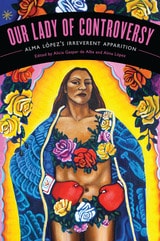
Our Lady of Controversy
Alma López's “Irreverent Apparition”Edited by Alicia Gaspar de Alba and Alma López
University of Texas Press, 2011
Months before Alma López's digital collage Our Lady was shown at the Museum of International Folk Art in 2001, the museum began receiving angry phone calls from community activists and Catholic leaders who demanded that the image not be displayed. Protest rallies, prayer vigils, and death threats ensued, but the provocative image of la Virgen de Guadalupe (hands on hips, clad only in roses, and exalted by a bare-breasted butterfly angel) remained on exhibition.
Highlighting many of the pivotal questions that have haunted the art world since the NEA debacle of 1988, the contributors to Our Lady of Controversy present diverse perspectives, ranging from definitions of art to the artist's intention, feminism, queer theory, colonialism, and Chicano nationalism. Contributors include the exhibition curator, Tey Marianna Nunn; award-winning novelist and Chicana historian Emma Pérez; and Deena González (recognized as one of the fifty most important living women historians in America).
Accompanied by a bonus DVD of Alma López's I Love Lupe video that looks at the Chicana artistic tradition of reimagining la Virgen de Guadalupe, featuring a historic conversation between Yolanda López, Ester Hernández, and Alma López, Our Lady of Controversy promises to ignite important new dialogues.
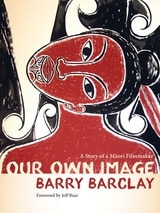
Our Own Image
A Story of a Maori FilmmakerBarry Barclay
University of Minnesota Press, 2015
Acclaimed Maori filmmaker Barry Barclay’s Our Own Image relates the experiences of making his documentaries and his critically acclaimed feature-length film Ngati (1987), widely credited as the first fiction feature by a member of an indigenous community. Barclay details his views on the process of filmmaking within his own Maori community and discusses how his work differed from popular cinema, advocating for indigenous control, participation, and perspectives in media.
Our Own Image gives an in-depth depiction of the changes Barclay’s approach contributed to the field of documentaries, as well as displaying the respect for community Barclay brought to his filming technique. His insistence on letting people speak for themselves demonstrated authenticity to audiences, creating awareness of indigenous cinema in New Zealand and worldwide.
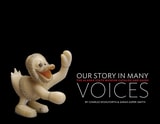
Our Story in Many Voices
The Alaska State Museum Catalog and GuideCharles Wohlforth
University of Alaska Press, 2025
Charles Wohlforth provides three major text sections—an introduction to Alaska, a summary of the museum exhibits, and a history of the exhibit development process—before the catalog of art and artifacts. Richly illustrated and presenting perspectives from Native and non-Native peoples, the book enhances visits to the museum and helps visitors recall and process their experiences, as well as broaden their general understanding of the state.
There is no single history of Alaska. Understanding the place and its peoples can be achieved only by viewing the multiple, complex, and even contradictory ways different people and groups perceive Alaska. Rather than present an official view of the state, Our Story in Many Voices contains independent and critical perspectives that use the extraordinary resources of the museum to consider Alaska’s most challenging cultural issues, reaching toward understanding and reconciliation.
Out of Breath
Vulnerability of Air in Contemporary ArtCaterina Albano
University of Minnesota Press, 2022
Explores the intrinsic relation of life to air, and breathing, through contemporary art
In Out of Breath, Caterina Albano examines the cultural significance of breath and air to a wide array of forces in our midst, including economy, politics, infection, and ecological violence. Through a consideration of recent art practices and projects, including the dance project Breath Catalogue, which makes visible the breathing patterns of dancers, and Forensic Architecture’s Cloud Studies video, which investigates eight different kinds of clouds from airstrikes to herbicides to tear gas, Albano focuses on breath as both an intuitive process and a conveyer of meanings.
Conceived in response to the Covid-19 pandemic and systemic inequalities that it has laid bare, Out of Breath shows the potential of artistic practices to mobilize affect as a form of cultural and political critique.
Forerunners is a thought-in-process series of breakthrough digital works. Written between fresh ideas and finished books, Forerunners draws on scholarly work initiated in notable blogs, social media, conference plenaries, journal articles, and the synergy of academic exchange. This is gray literature publishing: where intense thinking, change, and speculation take place in scholarship.
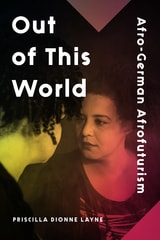
Out of This World
Afro-German AfrofuturismPriscilla Dionne Layne
Northwestern University Press, 2025
Examining Afro-German artists’ use of Afrofuturist tropes to critique German racial history
The term Afrofuturism was first coined in the 1990s to describe African diasporic artists’ use of science fiction, speculative fiction, and fantasy to reimagine the diaspora’s pasts and to counter not only Eurocentric prejudices but also pessimistic narratives. Out of This World: Afro-German Afrofuturism focuses on contemporary Black German Afrofuturist literature and performance that critiques Eurocentrism and, specifically, German racism and colonial history. This young generation has, Priscilla Layne argues, engaged with Afrofuturism to disrupt linear time and imagine alternative worlds, to introduce non-Western technologies into the German cultural milieu, and to consider the possibilities of posthumanism. Their experiments in futurist and speculative narratives offer new tools for breaking with the binary thinking about race, culture, and gender identity that have been enforced by repressive ideological and state apparatuses, such as educational, cultural, and police institutions. Rather than providing escapism or purely imaginary alternatives, however, they have created a space—outer and artistic—in which their lives matter.
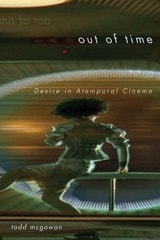
Out of Time
Desire in Atemporal CinemaTodd McGowan
University of Minnesota Press, 2010
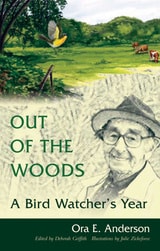
Out of the Woods
A Bird Watcher’s YearOra E. Anderson
Ohio University Press, 2007
Out of the Woods: A Bird Watcher’s Year is a journey through the seasons and a joyous celebration of growing old. In fifty-nine essays and poems, Ora E. Anderson, birder, bird carver, naturalist, and nature writer, reveals the insights and recollections of a keen-eyed observer of nature, both human and avian. The essays follow the rivers and creeks, the highways and little-known byways of Appalachia, and along the way we become nearly as familiar with its numerous bird, plant, and animal species as with the author himself.
These are not the memories of a single year, however, but of a long lifetime spent immersed in the natural world. Out of the Woods, presented with humor and passion, is an account of a well-lived, productive, and satisfying life. The essays offer an intimate portrait of a half century of Anderson's life on his beloved old farm (more nearly a nature preserve), where he lived in harmony with birds and nature and followed the rhythm of the seasons. We are invited to share the joys—and the disappointments and sorrows—inherent in such a life.
Generously illustrated with Julie Zickefoose’s detailed and evocative drawings, this book will delight bird watchers, artists, naturalists, backyard gardeners, and anyone who is ever tempted to take a rutted, overgrown path just to see where it leads.
Outback
Westerns in Australian CinemaBrian McFarlane
Intellect Books, 2026
Focusing on the influence of the cinematic Western in Australian cinema history, Outback explores how the American genre has been adapted to the changing Australian social, political, and cultural contexts of its production, including the shifting emphases in the representation of the Indigenous population.
Brian McFarlane emphasizes the ways film can, without didacticism, provide evidence of changing politics and culture. McFarlane explores Australian history with the genre by analyzing such films as Charles Tait’s 1906 The Story of the Kelly Gang and Justin Kurzel’s 2020 adaptation of Peter Carey’s The True History of the Kelly Gang. He further explores other key matters, including the changing attitudes to and representation of Indigenous peoples and of women's roles in Australian Westerns.
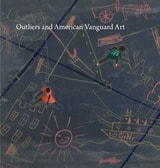
Outliers and American Vanguard Art
Lynne Cooke
University of Chicago Press, 2017
The art works in Outliers and American Vanguard Art come from three distinct periods when the intersections between mainstream and outlier artists were most dynamic and productive, ushering in exhibitions of art based on various degrees of co-existence, inclusion, and assimilation. Works by such diverse artists as Charles Sheeler, Christina Ramberg, and Matt Mullican are set in conversation with a range of works by such self-taught artists as Horace Pippin, Janet Sobel, and Henry Darger. Cooke also examines a recent increase of radically expressive work that challenges what it means to be an outlier today. She reveals how these distinctions have been freighted with a particularly American point of view as she investigates our assumptions about creativity, artistic practice, and the role of the artist in contemporary culture.
Outliers and American Vanguard Art is the most comprehensive show ever to examine outliers in dialogue with their established peers. It is sure to inspire vigorous conversation about how artists and the work they make are represented.
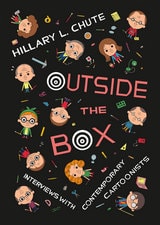
Outside the Box
Interviews with Contemporary CartoonistsHillary L. Chute
University of Chicago Press, 2014
For nearly a decade Hillary L. Chute has been sitting down for extensive interviews with the leading figures in comics, and with Outside the Box she offers fans a chance to share her ringside seat. Chute’s in-depth discussions with twelve of the most prominent and accomplished artists and writers in comics today reveal a creative community that is richly interconnected yet fiercely independent, its members sharing many interests and approaches while working with wildly different styles and themes. Chute’s subjects run the gamut of contemporary comics practice, from underground pioneers like Art Spiegelman and Lynda Barry, to the analytic work of Scott McCloud, the journalism of Joe Sacco, and the extended narratives of Alison Bechdel, Charles Burns, and more. They reflect on their experience and innovations, the influence of peers and mentors, the reception of their art and the growth of critical attention, and the crucial place of print amid the encroachment of the digital age.
Beautifully illustrated in full-color, and featuring three never-before-published interviews—including the first published conversation between Art Spiegelman and Chris Ware—Outside the Box will be a landmark volume, a close-up account of the rise of graphic storytelling and a testament to its vibrant creativity.
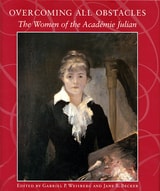
Overcoming All Obstacles
The Women of the Académie JulianBecker, Jane R
Rutgers University Press, 1999
Overcoming All Obstacles: The Women of the Académie Julian is the first book to examine late nineteenth-century Paris's most famous training ground for the leading women artists of the period. The Académie Julian was founded in Paris in 1868, initially to prepare students for entry to the Ecole des Beaux-Arts, the nineteenth-century's preeminent art school. Because women could not study at the Ecole des Beaux-Arts until 1897, Julian itself became an international equivalent for many of the late nineteenth- and early twentieth-century's most important women artists.
Not only does Overcoming All Obstacles introduce the reader to many works by women artists-both famous and lesser known-but the essays offer a cultural and historical context in which to appreciate their art. Gabriel Weisberg's essay concentrates on the rigorous training methods enforced by Rodolphe Julian and the teachers at the Academy. Jane Becker explores the competitive environment of the Julian Academy as it affected the Ukrainian painter Marie Bashkirtseff and the Swiss painter Louise-Catherine Breslau. Essays by Catherine Fehrer, the leading scholar of the Académie Julian, and Tamar Garb, an art historian who focuses on the training of women artists, give us a richer understanding of the Académie Julian's place in the sphere of art education in late nineteenth-century Paris.
Generously illustrated with both color and black-and-white images, this volume includes documentary photographs and caricatures that have never before been reproduced. The core of the book draws on the large collection of the Académie Julian Del Debbio, the Académie Julian's successor institution in Paris. This publication accompanied an exhibition organized by the Dahesh Museum in New York that opened after its exhibition at the Sterling and Francine Clark Art Institute in Williamstown. The exhibition subsequently continued to the Dixon Gallery and Gardens, Memphis.
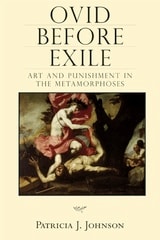
Ovid before Exile
Art and Punishment in the MetamorphosesPatricia J. Johnson
University of Wisconsin Press, 2007
Patricia J. Johnson demonstrates how the production of art—specifically poetry—changed dramatically during the reign of Augustus. By Ovid’s final decade in Rome, the atmosphere for artistic work had transformed, leading to a drop in poetic production of quality. Johnson shows how Ovid, in the episodes of artistic creation that anchor his Metamorphoses, responded to his audience and commented on artistic circumstances in Rome.
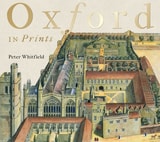
Oxford in Prints
1675-1900Peter Whitfield
Bodleian Library Publishing, 2016
With Oxford in Prints, Peter Whitfield has assembled a rich selection of more than seventy illustrations and prints that offer a portrait of Oxford before it became the modern city it is today. Seventeenth-century prints by David Loggan show the medieval origins of Oxford University already overlaid by Tudor and Stuart buildings. Eighteenth-century editions of the Oxford Almanack depict a city dominated by neoclassical ideas. By the nineteenth-century, illustrations in the Almanack had an increasingly romantic feel, with buildings against a natural background of the river, trees, and sky. Each illustration or print is accompanied by an insightful description, including salient historical features.
Oyvind Fahlstrom
The Art of WritingSergio Bessa
Northwestern University Press, 2008
Fahlstrom (1928-76) created a body of work as profoundly political as it is aesthetic, spanning two tumultuous decades in the avant-garde and comprising concrete poetry, manifestos, plays, performance, filmmaking, paintings, multiple prints, sculpture, and installations. Bessa focuses on how Fahlstrom's early experiments with concrete poetry influenced his later works in the visual arts and offers close readings of his seminal work Bord, his painting series Ade-Ledic-Nander, his interactive painting The Planetarium, and his radio play Birds in Sweden.