Results by title
5550 books match the query 'Biography & Autobiography' and 118 start with o
On the Mormon Frontier
The Diary of Hosea Stout, 1844-1889Juanita Brooks
University of Utah Press, 2009
This edition of On the Mormon Frontier presents Stout’s diary in a single volume, proving that it continues to be an essential work in the study of Mormon and American history.
On the Plains in ’65
The 6th West Virginia Volunteer Cavalry in the WestGeorge H. Holliday
Ohio University Press, 2021
A new scholarly edition of an Ohio boy soldier’s revealing post-Civil War memoir.
This annotated edition of Holliday’s recollections—known primarily among historians of the American West—re-contextualizes his memoir to include his boyhood in southern Ohio and the largely untold story of the hundreds of Buckeyes who crossed the Ohio River to serve their country in Virginia (later West Virginia) regiments, ultimately traveling across Kansas, Nebraska, Colorado, and Wyoming to safeguard mail and stage routes along the celebrated Oregon Trail during a pivotal time in American history.
Glenn Longacre’s extensive research in federal, state, and local archives, manuscript collections, and period newspapers complements his correspondence with the living descendants of Holliday and other soldiers. His research integrates this story deservedly as part of Appalachian history before, during, and after the Civil War. From this perspective it addresses an entirely new audience of Appalachian studies scholars, Civil War and frontier history enthusiasts, students, and general readers.
On the Ragged Edge of Medicine
Doctoring Among the DispossessedPatricia Kullberg
Oregon State University Press, 2017
On the Wandering Paths
Sylvain Tesson
University of Minnesota Press, 2022
A walking journey through France’s vast interior becomes a meditation on both personal recovery and the role of history in the present—more than 425,000 copies sold in France
After a free-climbing accident lands him in a coma and a hospital for four months, the French writer Sylvain Tesson makes a promise to himself: if he’s ever able to walk again, he will traverse the entire country of France on foot.
Part literary adventure, part philosophical reflection on our contemporary consumer culture, On the Wandering Paths takes us deep into the heart of what Tesson terms France’s “hyperrural” zones. Tracing the obscure paths peasants once followed throughout the countryside, Tesson embarks on a three-month journey of solitude and personal contemplation as he walks along vast stretches of mountain ranges and rivers, encountering ancient Roman stone bridges and walkways, the French Foreign Legion, pagan prayer sites, Provençal villages, and the majestic Mont-Saint-Michel. Connecting deeply with the places he visits, his experiences inspire reflection on the essential need to disengage from the digital and immerse oneself in natural beauty.
Rich with humor, historical insight, and literary power, On the Wandering Paths is both a meditation on the act of recovery and a potent recognition of the traces of our past in the present. Asking us to reassess our values and our relationship to the land, Tesson’s exquisite chronicle through landscapes that continue to resist urbanization and technology is a thoughtful—and thought-provoking—glimpse into a poet’s adventurous life. Les Chemins de Pierre, a film based on the book starring Jean Dujardin, is due to release in 2022.
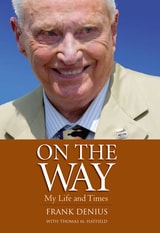
On the Way
My Life and TimesBy Frank Denius
University of Texas Press, 2016
Frank Denius was not yet twenty-one when he fought his way across Europe and was awarded four Silver Stars, a Presidential Unit Citation, and two Purple Hearts. On the Way describes Denius’s formative experiences during World War II in gripping detail and will cause any reader to wonder how he or she might have held up under similar pressure. The powerful opening chapters are followed by a detailed account of Denius’s life and career after the war, assembled into a first-person memoir from conversations between Denius and Thomas Hatfield, and published by the Briscoe Center for American History at the University of Texas at Austin.
Discharged from the army in October 1945, Denius enrolled at the University of Texas within a week. He is a lifelong supporter of the university: as part of the Texas Exes, as a donor to numerous academic programs, and as a fan of Longhorn football. Former UT football coach Mack Brown liked to say, “Frank has been to more practices than I have.”
Denius graduated from the University of Texas School of Law and joined one of Austin’s leading law firms in the late 1940s. Denius recounts how Texas operated in Lyndon Johnson’s prime, observes power plays in the Texas energy industry, and describes his role in building a regional university into a global leader.
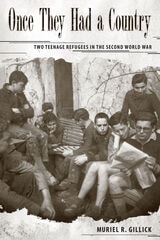
Once They Had a Country
Two Teenage Refugees in the Second World WarMuriel R. Gillick
University of Alabama Press, 2010
A powerful true story of survival, displacement, and hope in a world at war.
Muriel Gillick draws from a remarkable set of primary source materials, including letters, telegrams, and police records to relate the story of two teenage refugees during World War II. Once They Had a Country conveys well what it was like to establish a new life in a foreign country—over and over again and in constant fear for one’s life. The work tells of the extraordinary experiences of the author’s parents in Europe and demonstrates how citizens and the governments of Belgium, France, Switzerland, Brazil, America, China, and postwar Germany treated refugees. This story also reveals the origins of the Convention Relating to the Status of Refugees, the basis of contemporary international law affecting refugees in many countries today.
In addition to the dramatic human story it tells, this work brings the plight of refugees home to the reader—and with over 8 million refugees worldwide today, the subject of how individuals and nation states respond to these individuals is indeed timely.
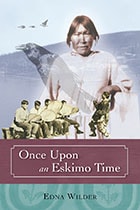
Once Upon an Eskimo Time
Edna Wilder
University of Alaska Press, 2009
Continuing the sacred tradition of her ancestors, in Once Upon an Eskimo Time Edna Wilder retells a year in her Eskimo mother’s life. Wilder eloquently captures the oral storytelling traditions of her people, and she employs descriptions of the weather and harsh climates of Alaska’s Norton Sound to illustrate the hardiness of her mother’s spirit. Family values, subsistence living, and the cycle’s of life form a narrative that captures the now-vanished lifestyle along the Bering Sea.
“Readers of whatever age will enjoy Nedercook’s delightful account of the day-to-day, legends, and beliefs of the ancient Eskimo village of Rocky Point.”—Ames Tribune
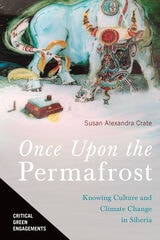
Once Upon the Permafrost
Knowing Culture and Climate Change in SiberiaSusan Alexandra Crate
University of Arizona Press, 2021
The author, anthropologist Susan Alexandra Crate, has spent three decades working with Sakha, the Turkic-speaking horse and cattle agropastoralists of northeastern Siberia, Russia. Crate reveals Sakha’s essential relationship with alaas, the foundational permafrost ecosystem of both their subsistence and cultural identity. Sakha know alaas via an Indigenous knowledge system imbued with spiritual qualities. This counters the scientific definition of alaas as geophysical phenomena of limited range. Climate change now threatens alaas due to thawing permafrost, which, entangled with the rural changes of economic globalization, youth out-migration, and language loss, make prescient the issues of ethnic sovereignty and cultural survival.
Through careful integration of contemporary narratives, on-site observations, and document analysis, Crate argues that local understandings of change and the vernacular knowledge systems they are founded on provide critical information for interdisciplinary collaboration and effective policy prescriptions. Furthermore, she makes her message relevant to a wider audience by clarifying linkages to the global permafrost system found in her comparative research in Mongolia, Arctic Canada, Kiribati, Peru, and Chesapeake Bay, Virginia. This reveals how permafrost provides one of the main structural foundations for Arctic ecosystems, which, in turn, work with the planet’s other ecosystems to maintain planetary balance.
Metaphorically speaking, we all live on permafrost.
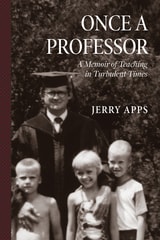
Once a Professor
A Memoir of Teaching in Turbulent TimesJerry Apps
Wisconsin Historical Society Press, 2018
“I never wanted to be a professor,” writes Jerry Apps in the introduction to Once a Professor. Yet a series of unexpected events and unplanned experiences put him on an unlikely path—and led to a thirty-eight-year career at the University of Wisconsin.
In this continuation of the Apps life story begun in his childhood memoir Limping through Life, Wisconsin’s celebrated rural storyteller shares stories from his years at the University of Wisconsin–Madison from 1957 to 1995, when he left the university to lecture and write fulltime. During those years Apps experienced the turmoil of protests and riots at the UW in the 1960s, the struggles of the tenure process and faculty governance, and the ever-present pressure to secure funding for academic research and programs.
Through it all, the award-winning writer honed a personal philosophy of education—one that values critical thinking, nontraditional teaching approaches, and hands-on experiences outside of the classroom. Colorful characters, personal photos, and journal entries from the era enrich this account of an unexpected campus career.
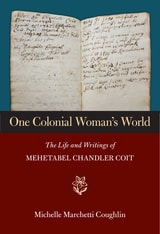
One Colonial Woman's World
The Life and Writings of Mehetabel Chandler CoitMichelle Marchetti Coughlin
University of Massachusetts Press, 2012
Michelle Marchetti Coughlin combs through these writings to create a vivid portrait of a colonial American woman and the world she inhabited. Coughlin documents the activities of daily life as well as dramas occasioned by war, epidemics, and political upheaval. Though Coit's opportunities were circumscribed by gender norms of the day, she led a rich and varied life, not only running a household and raising a family, but reading, writing, traveling, transacting business, and maintaining a widespread network of social and commercial connections. She also took a lively interest in the world around her and played an active role in her community.
Coit's long life covered an eventful period in American history, and this book explores the numerous—and sometimes surprising—ways in which her personal history was linked to broader social and political developments. It also provides insight into the lives of countless other colonial American women whose history remains largely untold.
One Day a Year
2001–2011Christa Wolf
Seagull Books, 2017
The book is both a personal record and a unique document of our times. With her characteristic precision and transparency, Wolf examines the interplay of the private, subjective, and major contemporary historical events. She writes about Germany after 9/11, about her work on her last great book City of Angels, and also about her exhausting confrontation with old age. One Day a Year is a compelling and personal glimpse into the life of one of the world’s greatest writers.
One Hour in Paris
A True Story of Rape and RecoveryKaryn L. Freedman
University of Chicago Press, 2014
At once deeply intimate and terrifyingly universal, One Hour in Paris weaves together Freedman’s personal experience with the latest philosophical, neuroscientific, and psychological insights on what it means to live in a body that has been traumatized. Using her background as a philosopher, she looks at the history of psychological trauma and draws on recent theories of posttraumatic stress disorder and neuroplasticity to show how recovery from horrific experiences is possible. Through frank discussions of sex and intimacy, she explores the consequences of sexual violence for love and relationships, and she illustrates the steep personal cost of sexual violence and the obstacles faced by individual survivors in its aftermath. Freedman’s book is an urgent call to face this fundamental social problem head-on, arguing that we cannot continue to ignore the fact that sexual violence against women is rooted in gender inequalities that exist worldwide—and must be addressed.
One Hour in Paris is essential reading for survivors of sexual violence as well as an invaluable resource for therapists, mental health professionals, and family members and friends of victims.

One Hundred Thousand Hearts
A Surgeon’s MemoirBy Denton A. Cooley
University of Texas Press, 2012
The pioneering surgeon Dr. Denton Cooley performed his first human heart transplant in 1968 and astounded the world in 1969 by conducting the first successful implantation of a totally artificial heart in a human being. Over the course of his career, Cooley and his associates performed thousands of open-heart operations and pioneered the use of new surgical procedures. Of all his achievements, however, Cooley was most proud of the Texas Heart Institute, which he founded in 1962 with a mission to use education, research, and improved patient care to decrease the devastating effects of cardiovascular disease.
In 100,000 Hearts, Cooley tells about his childhood in Houston, his education at the University of Texas, his medical-school training at the University of Texas Medical Branch in Galveston and Johns Hopkins, and his service in the Army Medical Corps. While at Johns Hopkins, Cooley assisted in a groundbreaking operation to correct an infant’s congenital heart defect, which inspired him to specialize in heart surgery.
Cooley’s detailed descriptions of working in the operating room at crucial points in medical history offer a fascinating perspective on the distance medical science traveled in just a few decades.
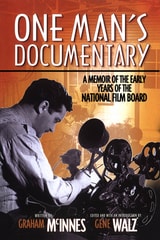
One Man’s Documentary
A Memoir of the Early Years of the National Film BoardGraham McInnes
University of Manitoba Press, 2004
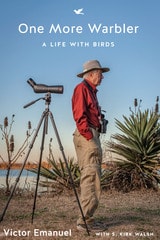
One More Warbler
A Life with BirdsBy Victor Emanuel, with S. Kirk Walsh
University of Texas Press, 2017
Victor Emanuel is widely considered one of America’s leading birders. He has observed more than six thousand species during travels that have taken him to every continent. He founded the largest company in the world specializing in birding tours and one of the most respected ones in ecotourism. Emanuel has received some of birding’s highest honors, including the Roger Tory Peterson Award from the American Birding Association and the Arthur A. Allen Award from the Cornell Laboratory of Ornithology. He also started the first birding camps for young people, which he considers one of his greatest achievements.
In One More Warbler, Emanuel recalls a lifetime of birding adventures—from his childhood sighting of a male Cardinal that ignited his passion for birds to a once-in-a-lifetime journey to Asia to observe all eight species of cranes of that continent. He tells fascinating stories of meeting his mentors who taught him about birds, nature, and conservation, and later, his close circle of friends—Ted Parker, Peter Matthiessen, George Plimpton, Roger Tory Peterson, and others—who he frequently birded and traveled with around the world. Emanuel writes about the sighting of an Eskimo Curlew, thought to be extinct, on Galveston Island; setting an all-time national record during the annual Audubon Christmas Bird Count; attempting to see the Imperial Woodpecker in northwestern Mexico; and birding on the far-flung island of Attu on the Aleutian chain. Over the years, Emanuel became a dedicated mentor himself, teaching hundreds of young people the joys and enrichment of birding. “Birds changed my life,” says Emanuel, and his stories make clear how a deep connection to the natural world can change everyone’s life.
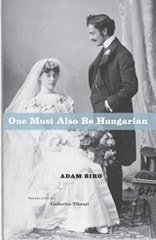
One Must Also Be Hungarian
Adam Biro
University of Chicago Press, 2006
The only country in the world with a line in its national anthem as desperate as “this people has already suffered for its past and its future,” Hungary is a nation defined by poverty, despair, and conflict. Its history, of course, took an even darker and more tragic turn during the Holocaust. But the story of the Jews in Hungary is also one of survival, heroism, and even humor—and that is the one acclaimed author Adam Biro sets out to recover in One Must Also Be Hungarian, an inspiring and altogether poignant look back at the lives of his family members over the past two hundred years.
A Hungarian refugee and celebrated novelist working in Paris, Biro recognizes the enormous sacrifices that his ancestors made to pave the way for his successes and the envious position he occupies as a writer in postwar Europe. Inspired, therefore, to share the story of his family members with his grandson, Biro draws some moving pictures of them here: witty and whimsical vignettes that convey not only their courageous sides, but also their inner fears, angers, jealousies, and weaknesses—traits that lend an indelible humanity to their portraiture. Spanning the turn of the nineteenth century, two destructive world wars, the dramatic rise of communism, and its equally astonishing fall, the stories here convey a particularly Jewish sense of humor and irony throughout—one that made possible their survival amid such enormous adversity possible.
Already published to much acclaim in France, One Must Also Be Hungarian is a wry and compulsively readable book that rescues from oblivion the stories of a long-suffering but likewise remarkable and deservedly proud people.
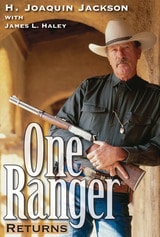
One Ranger Returns
By H. Joaquin Jackson, with James L. Haley
University of Texas Press, 2008
No Texas Ranger memoir has captured the public's imagination like Joaquin Jackson's One Ranger. Readers thrilled to Jackson's stories of catching criminals and keeping the peace across a wide swath of the Texas-Mexico border—and clamored for more. Now in One Ranger Returns, Jackson reopens his case files to tell more unforgettable stories, while also giving readers a deeply personal view of what being a Texas Ranger has meant to him and his family.
Jackson recalls his five-year pursuit of two of America's most notorious serial killers, Henry Lee Lucas and Ottis Toole. He sets the record straight about the role of the Texas Rangers during the United Farm Workers strike in the Rio Grande Valley in 1966-1967. Jackson also describes the frustration of trying to solve a cold case from 1938—the brutal murder of a mother and daughter in the lonely desert east of Van Horn. He presents a rogue's gallery of cattle rustlers, drug smugglers, and a teetotaling bootlegger named Tom Bybee, a modest, likeable man who became an ax murderer. And in an eloquent concluding chapter, Jackson pays tribute to the Rangers who have gone before him, as well as those who keep the peace today.
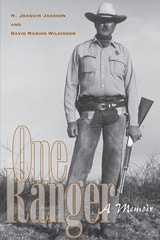
One Ranger
A MemoirBy H. Joaquin Jackson with David Marion Wilkinson
University of Texas Press, 2005
When his picture appeared on the cover of Texas Monthly, Joaquin Jackson became the icon of the modern Texas Rangers. Nick Nolte modeled his character in the movie Extreme Prejudice on him. Jackson even had a speaking part of his own in The Good Old Boys with Tommy Lee Jones. But the role that Jackson has always played the best is that of the man who wears the silver badge cut from a Mexican cinco peso coin—a working Texas Ranger. Legend says that one Ranger is all it takes to put down lawlessness and restore the peace—one riot, one Ranger. In this adventure-filled memoir, Joaquin Jackson recalls what it was like to be the Ranger who responded when riots threatened, violence erupted, and criminals needed to be brought to justice across a wide swath of the Texas-Mexico border from 1966 to 1993.
Jackson has dramatic stories to tell. Defying all stereotypes, he was the one Ranger who ensured a fair election—and an overwhelming win for La Raza Unida party candidates—in Zavala County in 1972. He followed legendary Ranger Captain Alfred Y. Allee Sr. into a shootout at the Carrizo Springs jail that ended a prison revolt—and left him with nightmares. He captured "The See More Kid," an elusive horse thief and burglar who left clean dishes and swept floors in the houses he robbed. He investigated the 1988 shootings in Big Bend's Colorado Canyon and tried to understand the motives of the Mexican teenagers who terrorized three river rafters and killed one. He even helped train Afghan mujahedin warriors to fight the Soviet Union.
Jackson's tenure in the Texas Rangers began when older Rangers still believed that law need not get in the way of maintaining order, and concluded as younger Rangers were turning to computer technology to help solve crimes. Though he insists, "I am only one Ranger. There was only one story that belonged to me," his story is part of the larger story of the Texas Rangers becoming a modern law enforcement agency that serves all the people of the state. It's a story that's as interesting as any of the legends. And yet, Jackson's story confirms the legends, too. With just over a hundred Texas Rangers to cover a state with 267,399 square miles, any one may become the one Ranger who, like Joaquin Jackson in Zavala County in 1972, stops one riot.
One Shaker Life
Isaac Newton Youngs, 1793-1865Glendyne R. Wergland
University of Massachusetts Press, 2006
A member of the United Society of Believers, better known as the Shakers, Isaac Newton Youngs spent most of his life in New Lebanon, New York, home of the society's central Ministry. As both a private diarist and the official village scribe, he kept meticulous records throughout those years of both his own experience and that of the community. All told, more than four thousand pages of Brother Isaac's journals have survived, documenting the history of the Shakers during the period of their greatest success and providing a revealing view of the daily life of a rank-and-file Believer.
In this deeply researched biography, Glendyne R. Wergland draws on Youngs's writings to tell his story and to explore “the tension between desire and discipline” at the center of his life. She follows Youngs from childhood and adolescence to maturity, through years of demanding responsibility into his fatal decline. In each of these stages, he remained a talented and committed yet independent Shaker, one who chose to stay with the community but often struggled to abide by its stringent rules, including the vow of celibacy. Perhaps above all, he was a man who spent most of his waking hours working diligently at a succession of tasks, making clocks, sewing clothes, fixing roofs, writing poetry, chronicling his daily acts and thoughts.
In his journals, Brother Isaac writes at length of his efforts to control his lust as a young man, and he complains repeatedly about overwork as he grows older. He defines the rules of his community and identifies transgressors, while enciphering his critical entries (and those chronicling his own sexual desires) to avoid detection and uphold the demand for conformity. At times he admits doubt, but without ever relinquishing the belief that he is on the straight and narrow path to salvation. What emerges in the end is the complex portrait of an ordinary man striving to live up to the imperatives of his faith.

One Sunny Day
A Child's Memories of HiroshimaHideko Tamura Snider
Oregon State University Press, 2023
Hideko was ten years old when the atomic bomb devastated her home in Hiroshima. In this eloquent and moving narrative, Hideko recalls her life before the bomb, the explosion itself, and the influence of that trauma upon her subsequent life in Japan and the United States. Her years in America have given her unusual insights into the relationship between Japanese and American cultures and the impact of Hiroshima on our lives.
This new edition includes two expanded chapters and revisions throughout. A new epilogue brings the story up to date. This poignant story of courage and resilience remains deeply relevant today, offering a profoundly personal testament against the ongoing threat of nuclear warfare.

One Version of the Facts
My Life in the Ivory TowerHenry E. Duckworth
University of Manitoba Press, 2000
One Voice Rising
The Life of Clifford DuncanClifford Duncan with Linda Sillitoe, Photographs by George R. Janecek
University of Utah Press, 2019
“Everything was Indian then, when I was a boy. They had to explain to us about the white man's side. Now everything is in the white man's world and we teach Indian ways.”
—Clifford Duncan (from the book)
One Woman in a Hundred
Edna Phillips and the Philadelphia OrchestraMary Sue Welsh
University of Illinois Press, 2013
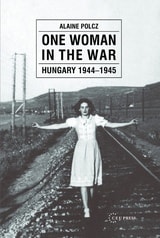
One Woman in the War
Hungary 1944-1945Alaine Polcz
Central European University Press, 2002

One of Us
A Family's Life with AutismMark Osteen
University of Missouri Press, 2010
In 1991, Mark Osteen and his wife, Leslie, were struggling to understand why their son, Cameron, was so different from other kids. At age one, Cam had little interest in toys and was surprisingly fixated on books. He didn’t make baby sounds; he ignored other children. As he grew older, he failed to grasp language, remaining unresponsive even when his parents called his name. When Cam started having screaming anxiety attacks, Mark and Leslie began to grasp that Cam was developmentally delayed. But when Leslie raised the possibility of an autism diagnosis, Mark balked. Autism is so rare, he thought. Might as well worry about being struck by lightning.
Since that time, awareness of autism has grown monumentally. Autism has received extensive coverage in the news media, and it has become a popular subject for film, television, and literature, but the disorder is frequently portrayed and perceived as a set of eccentricities that can be corrected with proper treatment. In reality, autism permanently wrecks many children’s chances for typical lives. Plenty of recent bestsellers have described the hardships of autism, but those memoirs usually focus on the recovery of people who overcome some or all of the challenges of the disorder. And while that plot is uplifting, it’s rare in real life, as few autistic children fully recover. The territory of severe autism—of the child who is debilitated by the condition, who will never be cured—has been largely neglected. One of Us: A Family’s Life with Autism tells that story.
In this book, Mark Osteen chronicles the experience of raising Cam, whose autism causes him aggression, insomnia, compulsions, and physical sickness. In a powerful, deeply personal narrative, Osteen recounts the struggles he and his wife endured in diagnosing, treating, and understanding Cam’s disability, following the family through the years of medical difficulties and emotional wrangling. One of Us thrusts the reader into the life of a child who exists in his own world and describes the immense hardships faced by those who love and care for him. Leslie and Mark's marriage is sorely tested by their son's condition, and the book follows their progress from denial to acceptance while they fight to save their own relationship.
By embracing the little victories of their life with Cam and by learning to love him as he is, Mark takes the reader down a road just as gratifying, and perhaps more moving, than one to recovery. One of Us is not a book about a child who overcomes autism. Instead, it’s the story of a different but equally rare sort of victory—the triumph of love over tremendous adversity.
Open Your Hand
Teaching as a Jew, Teaching as an AmericanIlana M. Blumberg
Rutgers University Press, 2019
Operatic Lives
Alberto Savinio
Northwestern University Press, 1988
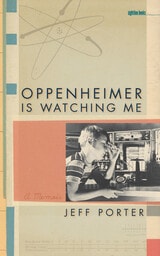
Oppenheimer Is Watching Me
A MemoirJeff Porter
University of Iowa Press, 2007
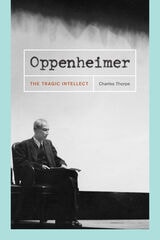
Oppenheimer
The Tragic IntellectCharles Thorpe
University of Chicago Press, 2007
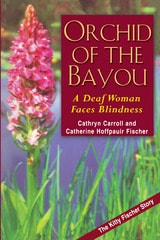
Orchid of the Bayou
A Deaf Woman Faces BlindessCathryn Carroll
Gallaudet University Press, 2001
In graduating from Gallaudet University, finding a job in Washington, D.C., and starting a family with her college sweetheart, Kitty Fischer tacitly abandoned the Louisiana Cajun culture that had exposed her to little more than prejudice and misery as a child. Upon discovering that she suffered from Usher syndrome (a genetic condition that causes both deafness and blindness), however, Fischer began an unlikely journey toward reclaiming her heritage. She and Cathryn Carroll tell the story of her heroic struggle and cultural odyssey in Orchid of the Bayou: A Deaf Woman Faces Blindness.
“By this time Mama knew I was ‘not right,’” Fischer says of her early childhood. “She knew the real words for ‘not right,’ too, though she never said those words. I was deaf and dumb.” Initially Fischer’s parents turned to folk healers to try and “cure” their daughter’s deafness, but an aunt’s fortunate discovery of the Louisiana School for the Deaf would rescue Fischer from misunderstanding and introduce her to sign language and Deaf culture. She weathered the school’'s experiments with oralism and soon rose to the top of her class, ultimately leaving Louisiana for the academic promise of Gallaudet.
While in college, Fischer met and married her future husband, Lance, a Jewish Deaf man from Brooklyn, New York, and each landed jobs close to their alma mater. After the birth of their first child, however, Fischer could no longer ignore her increasing tunnel vision. Doctors quickly confirmed that Fischer had Usher syndrome.
While Fischer struggled to come to terms with her condition, the high incidence of Usher syndrome among Cajun people led her to re-examine her cultural roots. “Could I still be me, Catherine Hoffpauir Fischer, had I not been born of a mix that codes for Usher syndrome?” she asks. “To some extent, the history of my people explains the constitution of my genes and the way my life has unfolded.” Today Fischer prospers, enjoying her time with family and friends and celebrating the Deaf, Cajun, Blind, and Jewish cultures that populate her life. Her lively story will resonate with anyone who recognizes the arduous journey toward claiming an identity.
Ordinary Trauma
A MemoirJennifer Sinor
University of Utah Press, 2017
Finalist for the 15 Bytes Book Award for Creative Nonfiction
Interview with Tom Williams at Access Utah
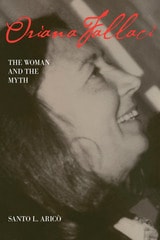
Oriana Fallaci
The Woman and the MythSanto L. Aricò
Southern Illinois University Press, 1998
Internationally acclaimed as a journalist, war correspondent, interviewer, and novelist, Oriana Fallaci’s public persona reached almost mythic proportions. It is a myth Fallaci herself created, according to Santo L. Aricò, who probes the psychological forces that motivated one of the twentieth century’s most famous and successful women writers.
Using his own extensive interviews with the writer, Aricò maps out Fallaci’s journey through life, paying particular attention to her ongoing and painstaking attempts to establish her own mythical status. He first examines her career as a literary journalist, emphasizing the high quality of her writing. From there, he concentrates on how Fallaci’s personal image began to emerge in her writings, as well as the way in which, through her powerful narratives, she catapulted herself into the public eye as her own main character.
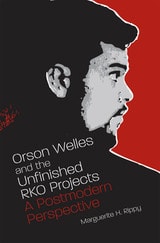
Orson Welles and the Unfinished RKO Projects
A Postmodern PerspectiveMarguerite H. Rippy
Southern Illinois University Press, 2009
Orson Welles and the Unfinished RKO Projects: A Postmodern Perspective traces the impact of legendary director Orson Welles on contemporary mass media entertainment and suggests that, ironically, we can see Welles’s performance genealogy most clearly in his unfinished RKO projects.
Author Marguerite H. Rippy provides the first in-depth examination of early film and radio projects shelved by RKO or by Welles himself. While previous studies of Welles largely fall into the categories of biography or modernist film studies, this book extends the understanding of Welles via postmodern narrative theory and performance analysis, weaving his work into the cultural and commercial background of its production. By identifying the RKO years as a critical moment in performance history, Rippy synthesizes scholarship that until now has been scattered among film studies, narrative theory, feminist critique, American studies, and biography.
Building a bridge between auteur and postmodern theories, Orson Welles and the Unfinished RKO Projects offers a fresh look at Welles in his full complexity. Rippy trains a postmodern lens on Welles’s early projects and reveals four emerging narrative modes that came to define his work: deconstructions of the first-person singular; adaptations of classic texts for mass media; explorations of the self via primitivism; and examinations of the line between reality and fiction. These four narrative styles would greatly influence the development of modern mass media entertainment.
Rippy finds Welles’s legacy alive and well in today’s mockumentaries and reality television. It was in early, unfinished projects where Welles first toyed with fact and fiction, and the pleasure of this interplay still resonates with contemporary culture. As Rippy suggests, the logical conclusion of Welles’s career-long exploration of “truthiness” lies in the laughs of fake news shows. Offering an exciting glimpse of a master early in his career, Orson Welles and the Unfinished RKO Projects documents Welles’s development as a storyteller who would shape culture for decades to come.
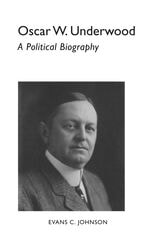
Oscar W. Underwood
A Political BiographyEvans C. Johnson
University of Alabama Press, 2006
Although Oscar W. Underwood was considered a titan of his age, few American political figures have suffered such neglect as he. Except for his candidacy for the Democratic nomination in 1924, his political career is largely forgotten even in Alabama. The one place in which Underwood is well remembered is in the folklore of Congress, where he is widely regarded as a great party leader who had mastered the rules perhaps as thoroughly as any member of Congress. This mastery, together with steady work, personal magnetism, and a willingness to compromise, made him effective as chairman of the Ways and Means Committee in formulating a majority program after the Democrats seized control of the House in 1910. Pat Harrison, Underwood's lieutenant as minority leader, referred to Underwood as the "greatest natural parliamentarian, the greatest leader of a law-making body that I ever saw."
--from the Preface to Oscar W. Underwood: A Political Biography
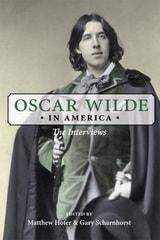
Oscar Wilde in America
The InterviewsEdited by Matthew Hofer and Gary Scharnhorst
University of Illinois Press, 2013
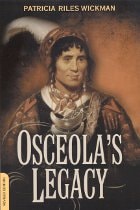
Osceola's Legacy
Patricia Riles Wickman
University of Alabama Press, 2006
A bestselling, re-evaluation of a major Native American resistance leader. Named an Outstanding Book by the Gustavus Myers Center for the Study of Human Rights.
Born in Alabama to a Muscogee/Creek Indian mother and an English father, Osceola, born Billy Powell, came to prominence in the 1830s for resisting the U. S. government's sweep into Florida. He protested the government's Florida Indian removal, killed a pro-emigration Indian leader and then made war on the US government.
Osceola's Legacy draws on a wealth of sources, including letters, diaries, and artifacts to bring this fascinating figure and the central role he played in the Second Seminole War into vivid focus. Of particular interest is a chapter on the forensic report on Osceola's grave as well as descriptions and the illustrations of his personal property at the time of his death.
Osceola's Legacy is significant for its genealogy and archaeological study of this Native American and his interaction with the federal government during the 1800s. The catalog of photographs of Osceola portraits and his personal possessions makes this a worthwhile reference book as well.
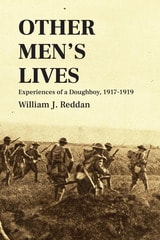
Other Men's Lives
Experiences of a Doughboy, 1917–1919William J. Reddan
Westholme Publishing, 2017
“Who can explain the feelings or thoughts of a soldier during the last few minutes before a battle? He fixes his bayonet, sees that his rifle is working properly, loads it, turns the safety lock, doing a dozen things, automatically from force of training. Just a faint trace of nervousness. . . . A few of us were thinking of a wife and children hoping if it was our turn to ‘Go West,’ that the folks back home would not feel too badly.”—from Other Men’s Lives
Receiving orders in March 1917 to report for active service in the European war, Capt. William J. Reddan and his New Jersey National Guard unit joined the 29th Infantry Division of the U.S. Army. Following training for “Over There,” which included maneuvering under live machine gun and grenade fire and constant bayonet drills, Reddan assumed command of Company B, 114th Infantry—two hundred officers and men. Arriving in France in June 1918, Reddan and his company entered the frontline trenches along the Alsace front in August. Fighting side by side with the French, the 114th conducted patrols in “no man’s land,” repulsed attacks, and endured artillery and chemical barrages. Toward the end of September, the regiment was moved by truck to a new sector: the Argonne Forest. Here, Reddan and his company would be part of the Meuse-Argonne offensive, the largest in the history of the U.S. Army. This final Allied assault would last until the Armistice, November 11, 1918, and claim the most American lives of the war. On October 12, Reddan and the rest of the 114th Infantry were ordered to take a German position that was supposed to offer little resistance; instead, Reddan watched in horror as his company was destroyed: of his two hundred officers and men, only thirteen survived the ordeal. Wounded by both shrapnel and gas, Reddan was evacuated to a field hospital and did not return to his unit until after peace was declared.
Written in 1936, Other Men’s Lives: Experiences of a Doughboy, 1917–1919 recounts the complete story of Reddan’s company in the World War, including the true story of what happened in that tragic October battle as well as the political aftermath that sought to exonerate the upper command who had bungled the operation.

Ottoman Jerusalem
The Living City: 1517-1917 Part 1 & 2Sylvia Auld
Council for British Research in the Levant, 2000
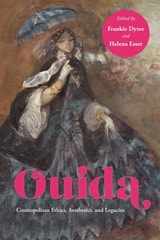
Ouida
Cosmopolitan Ethics, Aesthetics, and LegaciesFrankie Dytor and Helena Esser
Ohio University Press, 0
Outspoken, extravagant, and internationally celebrated in her lifetime, Ouida (Marie Louise de la Ramée, 1839–1908) was one of the nineteenth century’s most successful and controversial writers. Her fiction, essays, and cultural criticism captivated readers across Europe and beyond, yet her polemical politics, cosmopolitan outlook, and opulent style left her at odds with the modernist critical traditions that shaped later literary scholarship. As a result, despite her considerable influence, Ouida has remained on the margins of Victorian literary history. Ouida: Cosmopolitan Ethics, Aesthetics, and Legacies offers the first sustained examination of the ethical and aesthetic commitments that underpin Ouida’s work and its effect on nineteenth-century culture. Bringing together an international group of established and emerging scholars, the collection explores her writing through frameworks including psychogeography, ecocriticism, decadence studies, celebrity studies, and adaptation studies. Contributors reveal how Ouida challenged conventional boundaries of nation, gender, class, and species while shaping contemporary debates about art, politics, and society. Opening with a conversation between Victorian literary scholars Pamela K. Gilbert and Talia Schaffer, the volume traces Ouida’s influence across literary networks, media forms, and historical periods, from her impact on fellow authors and feminist modernists to her afterlives in adaptation, fandom, and participatory culture. Positioning Ouida as a profoundly cosmopolitan thinker and writer, the collection reconsiders the boundaries of Victorian studies itself, demonstrating how nineteenth-century literature can be understood through dynamic exchanges across genres, borders, media, and time. In doing so, it restores Ouida to a central place in literary history while highlighting the enduring relevance of her global legacy. Contributors Katja Anderson Natasha Anderson Joseph Bristow Lorraine Dubuisson Frankie Dytor Jesse R. Erickson Helena Esser Pamela K. Gilbert Andrew King Jane Jordan Crescent Rainwater Talia Schaffer Margaret D. Stetz Joanna Turner
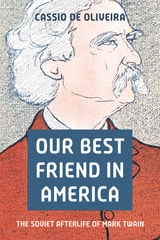
Our Best Friend in America
The Soviet Afterlife of Mark TwainCassio de Oliveira
University of Wisconsin Press, 2027
In 1960, the popular Soviet magazine Krokodil dubbed Mark Twain the USSR’s “American Friend No. 1.” This surprised neither the Kremlin nor the magazine’s readers: Twain and especially his Mississippi novels, The Adventures of Tom Sawyer and The Adventures of Huckleberry Finn, were favorites throughout the Soviet period, with the first translations dating to before the Bolshevik Revolution and film adaptations continuing to appear into the 1980s. Cassio de Oliveira explores why and how such a decidedly American writer came to occupy pride of place in a nation so emphatically opposed to American culture. How exactly did Twain become the Soviet Union’s “best friend in America”? How did that friendship change, and what did it signify, throughout the long and fickle decades of Soviet cultural policy and the Cold War?
What emerges from this complex history is not just the story of a single author’s foreign fortunes but also the history of Soviet literature as well as Soviet–American cultural interactions, which are revealed to have been more multifaceted and variable than might be assumed. Twain’s reception in the USSR also speaks to the largely hidden history of world literature in translation, even during decades of fraught geopolitical confrontation.
Our Deep Gossip
Conversations with Gay Writers on Poetry and DesireChristopher Hennessy; Foreword by Christopher Bram
University of Wisconsin Press, 2013
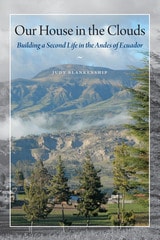
Our House in the Clouds
Building a Second Life in the Andes of EcuadorBy Judy Blankenship
University of Texas Press, 2013
While many baby boomers are downsizing to a simpler retirement lifestyle, photographer and writer Judy Blankenship and her husband Michael Jenkins took a more challenging leap in deciding to build a house on the side of a mountain in southern Ecuador. They now live half the year in Cañar, an indigenous community they came to know in the early nineties when Blankenship taught photography there. They are the only extranjeros (outsiders) in this homely, chilly town at 10,100 feet, where every afternoon a spectacular mass of clouds rolls up from the river valley below and envelopes the town.
In this absorbing memoir, Blankenship tells the interwoven stories of building their house in the clouds and strengthening their ties to the community. Although she and Michael had spent considerable time in Cañar before deciding to move there, they still had much to learn about local customs as they navigated the process of building a house with traditional materials using a local architect and craftspeople. Likewise, fulfilling their obligations as neighbors in a community based on reciprocity presented its own challenges and rewards. Blankenship writes vividly of the rituals of births, baptisms, marriages, festival days, and deaths that counterpoint her and Michael’s solitary pursuits of reading, writing, listening to opera, playing chess, and cooking. Their story will appeal to anyone contemplating a second life, as well as those seeking a deeper understanding of daily life in the developing world.
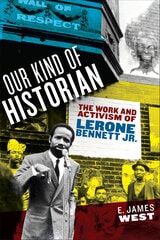
Our Kind of Historian
The Work and Activism of Lerone Bennett Jr.E. James West
University of Massachusetts Press, 2022
Journalist, activist, popular historian, and public intellectual, Lerone Bennett Jr. left an indelible mark on twentieth-century American history and culture. Rooted in his role as senior editor of Ebony magazine, but stretching far beyond the boundaries of the Johnson Publishing headquarters in Chicago, Bennett’s work and activism positioned him as a prominent advocate for Black America and a scholar whose writing reached an unparalleled number of African American readers.
This critical biography—the first in-depth study of Bennett’s life—travels with him from his childhood experiences in Jim Crow Mississippi and his time at Morehouse College in Atlanta to his later participation in a dizzying range of Black intellectual and activist endeavors. Drawing extensively on Bennett’s previously inaccessible archival collections at Emory University and Chicago State, as well as interviews with close relatives, colleagues, and confidantes, Our Kind of Historian celebrates his enormous influence within and unique connection to African American communities across more than half a century of struggle.
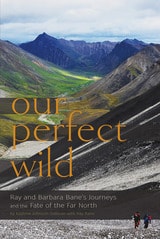
Our Perfect Wild
Ray & Barbara Bane's Journeys and the Fate of Far NorthKaylene Johnson-Sullivan with Ray Bane
University of Alaska Press, 2016
This book tells their story, a tale of dedication and tireless labor in the face of suspicion, resistance, and even violence. At a time when Alaska’s natural bounty remains under threat, Our Perfect Wild shows us an example of the commitment—and love—that will be required to preserve it.
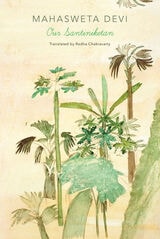
Our Santiniketan
Mahasweta Devi
Seagull Books, 2021
“Like a dazzling feather that has fluttered down from some unknown place. . . . How long will the feather keep its colours, waiting? The ‘feather’ stands for memories of childhood. Memories don’t wait.”
In Our Sanitikentan, the late Mahasweta Devi, one of India’s most celebrated writers, vividly narrates her days as a schoolgirl in the 1930s. As the aging author struggles to recapture vignettes of her childhood, these reminiscences bring to the written page not only her individual sensibility but an entire ethos.
Santiniketan is home to the school and university founded by the foremost literary and cultural icon of India, Rabindranath Tagore. In these pages, a forgotten Santiniketan, seen through the innocent eyes of a young girl, comes to life—the place, its people, flora and fauna, along with its educational environment, culture of free creative expression, vision of harmonious coexistence between natural and human worlds, and the towering presence of Tagore himself. Alongside, we get a glimpse of the private Mahasweta—her inner life, family and associates, and the early experiences that shaped her personality.
A nostalgic journey to a bygone era, harking back to its simple yet profound values—so distant today and so urgent yet again—Our Santiniketan is an invaluable addition to Devi’s rich oeuvre available in English translation.
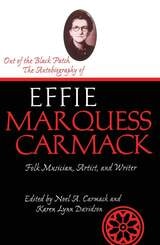
Out Of The Black Patch
Noel Carmack
Utah State University Press, 1999
Effie Marquess Carmack (1885-1974) grew up in the tobacco-growing region of southern Kentucky known as the Black Patch. As an adult she moved to Utah, back to Kentucky, to Arizona, and finally to California. Economic necessity primarily motivated Effie and her husband's moves, but her conversion to the Mormon Church in youth also was a factor. Throughout her life, she was committed to preserving the rural, southern folkways she had experienced as a child. She and other members of her family were folk musicians, at times professionally, and she also became a folk poet and artist, teaching herself to paint. In the 1940s she began writing her autobiography and eventually also completed a verse adaptation of it and an unpublished novel about life in the Black Patch.
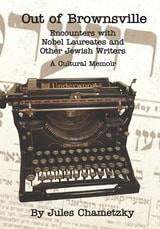
Out of Brownsville
Encounters with Nobel Laureates and Other Jewish Writers: A Cultural MemoirJules Chametzky
University of Massachusetts Press, 2012
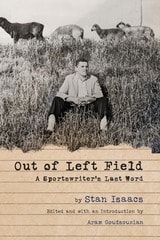
Out of Left Field
A Sportswriter’s Last WordStan Isaacs. Edited and with an Introduction by Aram Goudsouzian
University of Illinois Press, 2024
“Stan Isaacs is directly responsible for my television career--and much of how I approached what I’ve said and whom I’ve said it about.” --Keith Olbermann
Iconoclastic and irreverent, Stan Isaacs was part of a generation that bucked the sports establishment with a skepticism for authority, an appreciation for absurdity, and a gift for placing athletes and events within the context of their tumultuous times. Isaacs draws on his trademark wink-and-a-grin approach to tell the story of the long-ago Brooklyn that formed him and a career that placed him amidst the major sporting events of his era. Mixing reminiscences with column excerpts, Isaacs recalls antics like stealing a Brooklyn Dodgers pennant after the team moved to Los Angeles and his many writings on Paul Revere’s horse. But Isaacs also reveals the crusading and humanist instincts that gave Black athletes like Muhammad Ali a rare forum to express their views and celebrated the oddball, unsung Mets over the straitlaced Yankees.
Insightful and hilarious, Out of Left Field is the long-awaited memoir of the influential sportswriter and his adventures in the era of Jim Brown, Arthur Ashe, and the Amazin’ Mets.
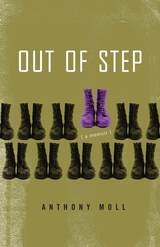
Out of Step
A MemoirAnthony Moll
The Ohio State University Press, 2018
What makes a pink-haired queer raise his hand to enlist in the military just as the nation is charging into war? In his memoir, Out of Step, Anthony Moll tells the story of a working-class bisexual boy running off to join the army in the midst of two wars and the “Don’t Ask, Don’t Tell” era. Set against the backdrop of hypermasculinity and sexual secrecy, Moll weaves a queer coming-of-age story.
Out of Step traces Moll’s development through his military service, recounting how the army both breaks and builds relationships, and what it was like to explore his queer identity while also coming to terms with his role in the nation’s ugly foreign policy. From a punk, nerdy, left-leaning, poor boy in Nevada leaving home for the first time to an adult returning to civilian life and forced to address a world more complicated than he was raised to believe, Moll’s journey isn’t a classic flag-waving memoir or war story—it’s a tale of finding one’s identity in the face of war and changing ideals.
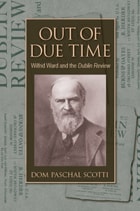
Out of due time
Wilfrid Ward and the Dublin reviewPaschal Scotti
Catholic University of America Press, 2006