Results by title
8642 books match the query '20th century' and 170 start with o
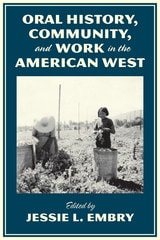
Oral History, Community, and Work in the American West
Edited by Jessie L. Embry
University of Arizona Press, 2013
In many cases occupations brought people together in myriad ways. The Latino workers who picked lemons together in Southern California report that it was baseball and Cinco de Mayo Queen contests that united them. Mormons in Fort Collins, Colorado, say that building a church together bonded them together. In separate essays, African Americans and women describe how they fostered a sense of community in Las Vegas. Native Americans detail the “Indian economy” in Northern California.
As these essays demonstrate, the history of the American West is the story of small towns and big cities, places both isolated and heavily populated. It includes groups whose history has often been neglected. Sometimes, western history has mirrored the history of the nation; at other times, it has diverged in unique ways. Oral history adds a dimension that has often been missing in writing a comprehensive history of the West. Here an array of oral historians—including folklorists, librarians, and public historians—record what they have learned from people who have, in their own ways, made history.

Orange Parades
The Politics of Ritual, Tradition and ControlDominic Bryan
Pluto Press, 2000
Ordinary Enchantments
Magical Realism and the Remystification of NarrativeWendy B. Faris
Vanderbilt University Press, 2004
Faris argues that by combining realistic representation with fantastic elements so that the marvelous seems to grow organically out of the ordinary, magical realism destabilizes the dominant form of realism based on empirical definitions of reality, gives it visionary power, and thus constitutes what might be called a "remystification" of narrative in the West. Noting the radical narrative heterogeneity of magical realism, the author compares its cultural role to that of traditional shamanic performance, which joins the worlds of daily life and that of the spirits. Because of that capacity to bridge different worlds, magical realism has served as an effective decolonizing agent, providing the ground for marginal voices, submerged traditions, and emergent literatures to develop and create masterpieces. At the same time, this process is not limited to postcolonial situations but constitutes a global trend that replenishes realism from within.
In addition to describing what many consider to be the progressive cultural work of magical realism, Faris also confronts the recent accusation that magical realism and its study as a global phenomenon can be seen as a form of commodification and an imposition of cultural homogeneity. And finally, drawing on the narrative innovations and cultural scenarios that magical realism enacts, she extends those principles toward issues of gender and the possibility of a female element within magical realism.
Ordinary Language Criticism
Literary Thinking after Cavell after WittgensteinKenneth Dauber and Walter Jost
Northwestern University Press, 2003
Resisting master formulations and overarching theories, Ordinary Language Criticism does not so much dismiss the excitement of the last two decades of literary theorizing as it reminds us of the excitement of the shared common enterprises to which theory may still contribute. In this, the volume and the model it offers have wide implications for the academy, in which a widespread ersatz-sophistication has shorted the circuit between literary works and the real lives of those reading and teaching them.
With a definitive introduction by editors Kenneth Dauber and Walter Jost, and elaborations and practical examples by major figures such as Cavell himself, Martha Nussbaum, Marjorie Perloff, Anthony Cascardi, and Charles Altieri, among others, this volume clearly shows and explains how ordinary language criticism differs from current trends and what it exactly it can accomplish in theory and practice. These essays prove that by attending more faithfully to what we actually do when we read, we can make reading more productive--can reveal how extraordinary and rich, how really sophisticated, the ordinary actually is.
Ordinary Queerness in American Modernism
Jess Shollenberger
The Ohio State University Press, 2025

Organised Militarism in Interwar Britain
The Navy League and the Air League of the British EmpireRowan Thompson
University of London Press, 2026
While militaristic and patriotic organizations formed an important part of political culture in Edwardian Britain, 1918 often marks a terminus for histories of organized militarism. Taking the end of the First World War as its starting point, this book argues that militarism was able to survive World War I, despite the competing rise of liberal internationalism, pacifism, and anti-war sentiment. Focusing on the ideas, aims, and activities of the Navy League and the Air League of the British Empire—two extra-parliamentary organizations established to promote naval and aerial supremacy—the book examines how the Leagues negotiated the trauma of the First World War and how they contributed to the societal and military preparation for a second global conflict as the clouds of war gathered in the late 1930s.
Drawing on extensive archival research, Organised Militarism in Interwar Britain explains how these Leagues mobilized broad public and political support and what the story of each organization tells us about the impact of war on British society and culture, civil-military relations, political and private activism, military theater and commemoration, youth, and the politics of disarmament, collective security, internationalism, and national defense. In doing so, it demonstrates that martial and militaristic sentiment remained an important part of mainstream British political culture, despite the ravages of war.
Organized Agriculture and the Labor Movement before the UFW
Puerto Rico, Hawai’i, CaliforniaBy Dionicio Nodín Valdés
University of Texas Press, 2011
Puerto Rico, Hawai'i, and California share the experiences of conquest and annexation to the United States in the nineteenth century and mass organizational struggles by rural workers in the twentieth. Organized Agriculture and the Labor Movement before the UFW offers a comparative examination of those struggles, which were the era's longest and most protracted campaigns by agricultural workers, supported by organized labor, to establish a collective presence and realize the fruits of democracy.
Dionicio Nodín Valdés examines critical links between the earlier conquests and the later organizing campaigns while he corrects a number of popular misconceptions about agriculture, farmworkers, and organized labor. He shows that agricultural workers have engaged in continuous efforts to gain a place in the institutional life of the nation, that unions succeeded before the United Farm Workers and César Chávez, and that the labor movement played a major role in those efforts. He also offers a window into understanding crucial limitations of institutional democracy in the United States, and demonstrates that the widespread lack of participation in the nation's institutions by agricultural workers has not been due to a lack of volition, but rather to employers' continuous efforts to prevent worker empowerment.
Organized Agriculture and the Labor Movement before the UFW demonstrates how employers benefitted not only from power and wealth, but also from imperialism in both its domestic and international manifestations. It also demonstrates how workers at times successfully overcame growers' advantages, although they were ultimately unable to sustain movements and gain a permanent institutional presence in Puerto Rico and California.
Organizing Women
Home, Work, and the Institutional Infrastructure of Print in Twentieth-Century AmericaChristine Pawley
University of Massachusetts Press, 2022
In the first decades of the twentieth century, print-centered organizations spread rapidly across the United States, providing more women than ever before with opportunities to participate in public life. While most organizations at the time were run by and for white men, women—both Black and white—were able to reshape their lives and their social worlds through their participation in these institutions.
Organizing Women traces the histories of middle-class women—rural and urban, white and Black, married and unmarried—who used public and private institutions of print to tell their stories, expand their horizons, and further their ambitions. Drawing from a diverse range of examples, Christine Pawley introduces readers to women who ran branch libraries and library schools in Chicago and Madison, built radio empires from their midwestern farms, formed reading clubs, and published newsletters. In the process, we learn about the organizations themselves, from libraries and universities to the USDA extension service and the YWCA, and the ways in which women confronted gender discrimination and racial segregation in the course of their work.

Organizing for Equality
The Evolution of Women's and Racial-Ethnic Organizations in America, 1955-1985Minkoff, Debra C
Rutgers University Press, 1995
Women and racial-ethnic minorities have had long histories of mobilizing for equality in U.S. society, but recent decades have witnessed an unprecedented expansion in the number and visibility of voluntary and activist organizations committed to challenging gender and racial-ethnic discrimination. What conditions have encouraged this growth? Going beyond more familiar accounts of social movement development, Debra Minkoff uses multivariate techniques to demonstrate that there is an ecology of organizational evolution that has shaped the formation and survival of national women's, African-American, Asian American, and Latino social and political organizations. Changes in the environment for action during the 1960s promoted the creation of a niche for women's and minority organizational activity, and this sector continued to expand even as the climate for social action became increasingly conservative during the 1970s and 1980s. Drawing on recent advances in both social movement and organizational theory and research, Minkoff offers an organizational analysis of the evolution of the women's and racial-ethnic social change sector since the mid-1950s. She provides an original synthesis of social movement and organizational theory, and unique analysis of the development of these women's and minority organizations from the civil rights era to the present.
Organizing for Foreign Policy Crises
Presidents, Advisers, and the Management of Decision MakingPatrick J. Haney
University of Michigan Press, 2002
Organizing the Lakota
The Political Economy of the New Deal on the Pine Ridge and Rosebud ReservationsThomas Biolsi
University of Arizona Press, 1992
Biolsi pays particular attention to the administrative means by which the OIA retained the power to design and implement tribal "self-government" as well as the power to control the flow of critical resources—rations, relief employment, credit—to the reservations. He also shows how this imbalance of power between the tribes and the federal bureaucracy influenced politics on the reservations, and argues that the crisis of authority faced by the Lakota tribal governments among their own would-be constituents—most dramatically demonstrated by the 1973 Wounded Knee occupation—is a direct result of their disempowerment by the United States.
Oriental Neighbors
Middle Eastern Jews and Arabs in Mandatory PalestineAbigail Jacobson and Moshe Naor
Brandeis University Press, 2016
Orientalism and Identity in Latin America
Fashioning Self and Other from the (Post)Colonial MarginEdited by Erik Camayd-Freixas
University of Arizona Press, 2013
Orientalism and Modernism
The Legacy of China in Pound and WilliamsZhaoming Qian
Duke University Press, 1995
Consulting rare and unpublished materials, Qian traces Pound’s and Williams’s remarkable dialogues with the great Chinese poets—Qu Yuan, Li Bo, Wang Wei, and Bo Juyi—between 1913 and 1923. His investigation reveals that these exchanges contributed more than topical and thematic ideas to the Americans’ work and suggests that their progressively modernist style is directly linked to a steadily growing contact and affinity for similar Chinese styles. He demonstrates, for example, how such influences as the ethics of pictorial representation, the style of ellipsis, allusion, and juxtaposition, and the Taoist/Zen–Buddhist notion of nonbeing/being made their way into Pound’s pre-Fenollosan Chinese adaptations, Cathay, Lustra, and the Early Cantos, as well as Williams’s Sour Grapes and Spring and All. Developing a new interpretation of important work by Pound and Williams, Orientalism and Modernism fills a significant gap in accounts of American Modernism, which can be seen here for the first time in its truly multicultural character.

Orphan/Agent
A Korean Adoptee Life in Cold War AmericaElizabeth Lawrence
Lever Press, 2027
Roger Paul Clow, an orphaned refugee of the Korean War, was sent to America as a child in 1953. Seventy years later, his historian daughter grapples with the meaning of her father’s life while grieving his death.
Orphan/Agent is a personal narrative that doubles as an accessible introduction to key issues in transpacific history and Asian American studies. As the book follows Roger from a childhood in wartime Korea, to student years in the continental US, to a career in Hawai‘i, it reckons with the lasting consequences of war and challenges mythic narratives of the American Dream, the model minority, and American exceptionalism.
Blending family stories and historical analysis, Orphan/Agent models historical thinking for students. Readers may well be inspired to revisit their own family stories, with new questions, respect for their sources, and love.
Orphic Bend
Music and Innovative PoeticsRobert L. Zamsky
University of Alabama Press, 2021
WINNER OF THE ELIZABETH AGEE PRIZE IN AMERICAN LITERATURE
Exploring how music reshapes the possibilities of poetry.
Orphic Bend: Music and Innovative Poetics explores the impact of music on recent pioneering literary practices in the United States. Adopting the myth of Orpheus as its framework, Robert L. Zamsky argues that works by Charles Bernstein, Robert Creeley, John Taggart, Tracie Morris, and Nathaniel Mackey restage ancient debates over the relationship between poetry and music even as they develop work that often sharply diverges from traditional literary forms. Opening each chapter with a consideration of the orphic roots of lyric, Zamsky integrates contemporary debates over the prospects and limitations of humanism, the meaningfulness of gesture and performance, and the nature of knowledge with the poetics of the writers under consideration, grounding his analysis in close readings of their work.
The myth of Orpheus is used as a lens throughout the book, its different facets illuminating sometimes dramatically different aspects of the shared framework of poetry and music. In the case of Bernstein, for instance, Zamsky highlights Ezra Pound’s meditations on the relationship between poetry and music (the ground upon which Pound seeks to recapture the lost possibilities of the Renaissance) and Bernstein’s incisive critique of Pound. For her part, Morris emphasizes the performative power of spoken language, foregrounding the fact that all spoken language bears cultural, communal, and personal marks of the speaker, improving an ensemble self even within the most elemental features of language. Meanwhile, in Mackey’s work, the orphic voice of the poet powerfully reaches toward an order of knowledge in which poetry and music are nearly indecipherable from one another. In this sense, music and the musicality of poetic language are the gateways for Mackey’s Gnosticism, the mechanisms of initiation into a realm, not of secrets to be learned, but of visionary knowing that continuously unfolds.
The text explores a range of musical influences on the writers under consideration, from opera to different iterations of jazz, and underscores the variety of ways in which music informs their work. Many of these writers effectively present a theory of music in their invocations of it as an inspiration for, or as an analog to, poetic practice. Zamsky’s focus on poetry and music echoes important interdisciplinary studies on literary modernism, a period for which the importance of music to literary practice is well established and extends that discussion to the contemporary context. In doing so, Orphic Bend provides an important opportunity to consider both the specific legacy of modernism, and to situate contemporary writers in broader historical contexts.
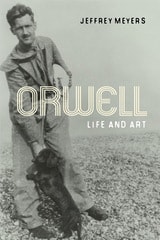
Orwell
Life and ArtJeffrey Meyers
University of Illinois Press, 2010
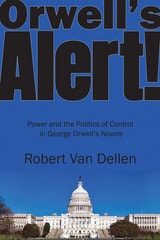
Orwell’s Alert!
Power and the Politics of Control in George Orwell’s NovelsROBERT VAN DELLEN
Parkhurst Brothers, Inc., 2026
A college professor and former college president reveals the political underpinnings of George Orwell as expressed in his novels, with special emphasis on the author’s last two novels, Animal Farm and 1984. The growth of Orwell’s disdain for colonialism, as well as his concern for the quality of life under various political systems, undergirds the analysis. While flaws in Orwell’s analyses are acknowledged, the author believes readers can learn important lessons from the study, lessons that can be applied to the individual’s relationship to the state in our time.
Other Criteria
Confrontations with Twentieth-Century ArtLeo Steinberg
University of Chicago Press, 2007
Leo Steinberg’s classic Other Criteria comprises eighteen essays on topics ranging from “Contemporary Art and the Plight of Its Public” and the “flatbed picture plane” to reflections on Picasso, Rauschenberg, Rodin, de Kooning, Pollock, Guston, and Jasper Johns. The latter, which Francine du Plessix Gray called “a tour de force of critical method,” is widely regarded as the most eye-opening analysis of the Johns’s work ever written. This edition includes a new preface and a handful of additional illustrations.
“The art book of the year, if not of the decade and possibly of the century. . . .The significance of this volume lies not so much in the quality of its insights—although the quality is very high and the insights are important—as in the richness, precision, and elegance of its style. . . . A meeting with the mind of Leo Steinberg is one of the most enlightening experiences that contemporary criticism affords.”
“Not only one of the most lucid and independent minds among art critics, but a profound one.”—Robert Motherwell
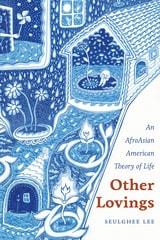
Other Lovings
An AfroAsian American Theory of LifeSeulghee Lee
The Ohio State University Press, 2025
In Other Lovings, Seulghee Lee traces the presence and plenitude of love embedded in Black and Asian American literatures and cultures to reveal their irreducible power to cohere minoritarian social life. Bringing together Black studies, Asian American studies, affect theory, critical theory, and queer of color critique, Lee examines the bonds of love in works by Amiri Baraka, Audre Lorde, David Henry Hwang, Gayl Jones, Fred Moten, Adrian Tomine, and Charles Yu. He attends to the ontological force of love in popular culture, investigating Asian American hip-hop and sport through readings of G Yamazawa, Year of the Ox, and Jeremy Lin, as well as in Black public culture through bell hooks, Martin Luther King Jr., and Cornel West.
By assessing love’s positive function in these works, Lee argues against critical regimes, such as Afropessimism and racial melancholia, that center negativity. In revealing what Black and Asian American traditions share in their positive configurations of being and collectivity, and in their responses to the overarching logic of white supremacy, Other Lovings suggests possibilities for thinking beyond sociological opposition and historical difference and toward political coalition and cultural affinity. Ultimately, Other Lovings argues for a counter-ontology of love—its felt presence, its relational possibilities, and its lived practices.
Other People's Colleges
The Origins of American Higher Education ReformEthan W. Ris
University of Chicago Press, 2022
For well over one hundred years, people have been attempting to make American colleges and universities more efficient and more accountable. Indeed, Ethan Ris argues in Other People’s Colleges, the reform impulse is baked into American higher education, the result of generations of elite reformers who have called for sweeping changes in the sector and raised existential questions about its sustainability. When that reform is beneficial, offering major rewards for minor changes, colleges and universities know how to assimilate it. When it is hostile, attacking autonomy or values, they know how to resist it. The result is a sector that has learned to accept top-down reform as part of its existence.
In the early twentieth century, the “academic engineers,” a cadre of elite, external reformers from foundations, businesses, and government, worked to reshape and reorganize the vast base of the higher education pyramid. Their reform efforts were largely directed at the lower tiers of higher education, but those efforts fell short, despite the wealth and power of their backers, leaving a legacy of successful resistance that affects every college and university in the United States. Today, another coalition of business leaders, philanthropists, and politicians is again demanding efficiency, accountability, and utility from American higher education. But, as Ris argues, top-down design is not destiny. Drawing on extensive and original archival research, Other People’s Colleges offers an account of higher education that sheds light on today’s reform agenda.
Other Planes of There
Selected WritingsRenée Green
Duke University Press, 2014
Charting this cosmopolitan artist’s thinking through the decades, Other Planes of There brings essays, film scripts, reviews, and polemics together with reflections on Green's own artistic practice and seminal artworks. It immerses the reader in three decades of contemporary art showcasing the art and thought, the incisive critiques and prescient observations of one of our foremost artists and intellectuals. Sound, cinema, literature, time-based media, and the relationship between art forms and other forms of knowledge are just a few of the matters that Green takes up and thinks through. Sixty-four pages of color plates were selected by the artist for this lavishly illustrated volume.

Other Sisterhoods
LITERARY THEORY AND U.S. WOMEN OF COLOREdited by Sandra Kumamoto Stanley
University of Illinois Press, 1998
The fifteen contributors to Other Sisterhoods: Literary Theory and
U.S. Women of Color examine the ways that women writers of color have
contributed to the discourse of literary and cultural theory. They focus
on the impact of key issues, such as social construction and identity
politics, on the works of women writers of color, as well as on the ways
these women deal with differences relating to gender, class, race/ethnicity,
and sexuality. The book also explores the ways women writers of color
have created their own ethnopoetics within the arena of literary and cultural
theory, helping to redefine the nature of theory itself.
"A sophisticated resource that will do much to carry us through
to the next century. Great work!" -- Alvina E. Quintana, author of
Home Girls: Chicana Literary Voices
CONTRIBUTORS:Sandra Kumamoto Stanley, AnaLouise Keating, Dionne
Espinoza, Kimberly N. Brown, Marilyn Edelstein, Tomo Hattori, Robin Riley
Fast, King-Kok Cheung, Timothy Libretti, Renae Moore Bredin, Jennifer
Browdy de Hernandez, Kimberly M. Blaeser, Kathryn Bond Stockton, Eun Kyung
Min, Cecilia Rodriguez Milanes
Other Worlds Here
Honoring Native Women’s Writing in Contemporary Anarchist MovementsTheresa Warburton
Northwestern University Press, 2021
All is not lost, however. Rather than centering a critical indictment of contemporary anarchist politics, Other Worlds Here maintains that a defining characteristic of New Anarchism is its ability to adapt and transform. Through close readings of texts by Native women authors, Warburton argues that anarchists must shift the paradigm that another world is possible to one that recognizes other worlds already here: stories, networks, and histories that lay out methods of building reciprocal relationships with the land and its people. Analyzing memoirs, poetry, and novels by writers including Deborah Miranda, Elissa Washuta, Heid E. Erdrich, Janet Rogers, and Leslie Marmon Silko, Other Worlds Here extends the study of Native women’s literatures beyond ethnographic analysis of Native experience to advance a widely applicable, contemporary political critique.
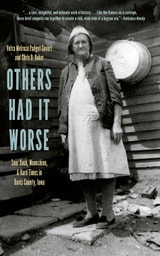
Others Had It Worse
Sour Dock, Moonshine, and Hard Times in Davis County, IowaVetra Melrose Padget Covert and Chris D. Baker
University of Iowa Press, 2013
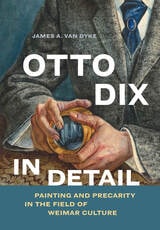
Otto Dix in Detail
Painting and Precarity in the Field of Weimar CultureJames A. van Dyke
University of Chicago Press, 2026
Offering a fresh look at German art during a period of extraordinary transition and precarity, James A. van Dyke focuses on overlooked but critically significant details in works completed by Otto Dix between 1919 and 1936. A small lump of paint, a monogram, an almost invisible self-portrait, the verso of a drawing, a patch of discoloration, and a web of fine cracks—van Dyke reveals such details, hidden in plain sight, as coded dialogue through which Dix addressed audiences and art-world insiders amid the combative world of cultural production in Weimar Germany. Sly, cutting, and provocative, these are the material traces of social relationships between the painter and those who represented threats to his professional ambition: an avant-garde mentor and rival, an increasingly skeptical critic, a prominent bourgeois photographer, and a local Nazi authority.
Proving that small things offer insight into the big picture, this book highlights Dix’s satirical, transgressive work as nuanced and polyvocal, reflecting the complex fields of power and economics in which the field of art is located.
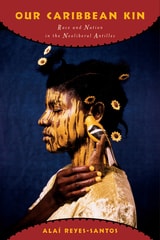
Our Caribbean Kin
Race and Nation in the Neoliberal AntillesReyes-Santos, Alaí
Rutgers University Press, 2015
Our Caribbean Kin considers three key moments in the region’s history: the nineteenth century, when the antillanismo movement sought to throw off the yoke of colonial occupation; the 1930s, at the height of the region’s struggles with US imperialism; and the past thirty years, as neoliberal economic and social policies have encroached upon the islands. At each moment, the book demonstrates, specific tropes of brotherhood, marriage, and lineage have been mobilized to construct political kinship among Antilleans, while racist and xenophobic discourses have made it difficult for them to imagine themselves as part of one big family.
Our Caribbean
A Gathering of Lesbian and Gay Writing from the AntillesThomas Glave, ed.
Duke University Press, 2008
The thirty-seven authors hail from the Bahamas, Barbados, Cuba, the Dominican Republic, Grenada, Guyana, Haiti, Jamaica, Panama, Puerto Rico, St. Vincent, St. Kitts, Suriname, and Trinidad. Many have lived outside the Caribbean, and their writing depicts histories of voluntary migration as well as exile from repressive governments, communities, and families. Many pieces have a political urgency that reflects their authors’ work as activists, teachers, community organizers, and performers. Desire commingles with ostracism and alienation throughout: in the evocative portrayals of same-sex love and longing, and in the selections addressing religion, family, race, and class. From the poem “Saturday Night in San Juan with the Right Sailors” to the poignant narrative “We Came All the Way from Cuba So You Could Dress Like This?” to an eloquent call for the embrace of difference that appeared in the Nassau Daily Tribune on the eve of an anti-gay protest, Our Caribbean is a brave and necessary book.
Contributors: José Alcántara Almánzar, Aldo Alvarez, Reinaldo Arenas, Rane Arroyo, Jesús J. Barquet, Marilyn Bobes, Dionne Brand, Timothy S. Chin, Michelle Cliff, Wesley E. A. Crichlow,
Mabel Rodríguez Cuesta, Ochy Curiel, Faizal Deen, Pedro de Jesús, R. Erica Doyle, Thomas Glave,
Rosamond S. King, Helen Klonaris, Lawrence La Fountain-Stokes, Audre Lorde, Shani Mootoo,
Anton Nimblett, Achy Obejas, Leonardo Padura Fuentes, Virgilio Piñera, Patricia Powell, Kevin Everod Quashie, Juanita Ramos, Colin Robinson, Assotto Saint, Andrew Salkey, Lawrence Scott,
Makeda Silvera, H. Nigel Thomas, Rinaldo Walcott, Gloria Wekker, Lawson Williams
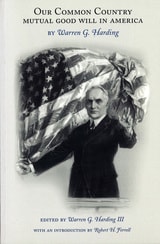
Our Common Country
Mutual Good Will in AmericaWarren G. Harding, Edited by Warren G. Harding, III, & Intro by Robert H. Ferrell
University of Missouri Press, 2003
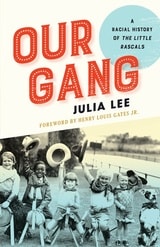
Our Gang
A Racial History of The Little RascalsJulia Lee
University of Minnesota Press, 2015
It was the age of Jim Crow, riddled with racial violence and unrest. But in the world of Our Gang, black and white children happily played and made mischief together. They even had their own black and white version of the KKK, the Cluck Cluck Klams—and the public loved it.
The story of race and Our Gang, or The Little Rascals, is rife with the contradictions and aspirations of the sharply conflicted, changing American society that was its theater. Exposing these connections for the first time, Julia Lee shows us how much this series, from the first silent shorts in 1922 to its television revival in the 1950s, reveals about black and white American culture—on either side of the silver screen. Behind the scenes, we find unconventional men like Hal Roach and his gag writers, whose Rascals tapped into powerful American myths about race and childhood. We meet the four black stars of the series—Ernie “Sunshine Sammy” Morrison, Allen “Farina” Hoskins, Matthew “Stymie” Beard, and Billie “Buckwheat” Thomas—the gang within the Gang, whose personal histories Lee pursues through the passing years and shifting political landscape.
In their checkered lives, and in the tumultuous life of the series, we discover an unexplored story of America, the messy, multiracial nation that found in Our Gang a comic avatar, a slapstick version of democracy itself.
Our Joyce
From Outcast to IconBy Joseph Kelly
University of Texas Press, 1997
James Joyce began his literary career as an Irishman writing to protest the deplorable conditions of his native country. Today, he is an icon in a field known as "Joyce studies." Our Joyce explores this amazing transformation of a literary reputation, offering a frank look into how and for whose benefit literary reputations are constructed.
Joseph Kelly looks at five defining moments in Joyce's reputation. Before 1914, when Joyce was most in control of his own reputation, he considered himself an Irish writer speaking to the Dublin middle classes. When T. S. Eliot and Ezra Pound began promoting Joyce in 1914, however, they initiated a cult of genius that transformed Joyce into a prototype of the "egoist," a writer talking only to other writers.
This view served the purposes of Morris Ernst in the 1930s, when he defended Ulysses against obscenity charges by arguing that geniuses were incapable of obscenity and that they wrote only for elite readers. That view of Joyce solidified in Richard Ellmann's award-winning 1950s biography, which portrayed Joyce as a self-centered genius who cared little for his readers and less for the world at war around him. The biography, in turn, led to Joyce's canonization by the academy, where a "Joyce industry" now flourishes within English departments.
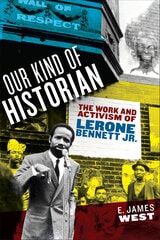
Our Kind of Historian
The Work and Activism of Lerone Bennett Jr.E. James West
University of Massachusetts Press, 2022
Journalist, activist, popular historian, and public intellectual, Lerone Bennett Jr. left an indelible mark on twentieth-century American history and culture. Rooted in his role as senior editor of Ebony magazine, but stretching far beyond the boundaries of the Johnson Publishing headquarters in Chicago, Bennett’s work and activism positioned him as a prominent advocate for Black America and a scholar whose writing reached an unparalleled number of African American readers.
This critical biography—the first in-depth study of Bennett’s life—travels with him from his childhood experiences in Jim Crow Mississippi and his time at Morehouse College in Atlanta to his later participation in a dizzying range of Black intellectual and activist endeavors. Drawing extensively on Bennett’s previously inaccessible archival collections at Emory University and Chicago State, as well as interviews with close relatives, colleagues, and confidantes, Our Kind of Historian celebrates his enormous influence within and unique connection to African American communities across more than half a century of struggle.
Our Land is Made of Courage and Glory
Nationalist Performance of Nicaragua and GuatemelaE. J. Westlake
Southern Illinois University Press, 2005
Our Land Is Made of Courage and Glory: Nationalist Performance of Nicaragua and Guatemala adds to a growing and timely body of work on nationalist drama. Examining important twentieth-century plays that few people have written about in English, E. J. Westlake analyzes the phenomenon of nation as performance by focusing on the definition of a people, national metaphors, and the uses of national history.
Westlake discerns the common characteristics that constitute nationalist plays, a genre that seeks to legitimate the nature of a nation by defining its boundaries, race, language, citizens, and history. Particularly relevant in an era influenced by imperialism, migration, and globalization, the volume probes the concepts of nation and nationalism in the context of postcolonial literary and performance theory.
Our Land Is Made of Courage and Glory covers the political and theatrical history of Nicaragua and Guatemala. Westlake examines how the blending of races factors into nationalism with a look at the play El tren amarillo by Manuel Galich and uses Nobel laureate Miguel Ángel Asturias’s Soluna to show how nationalists appropriate Mayan culture to create a sense of the Guatemalan people and culture. She discusses the mapping of history as a linear progression in Alan Bolt’s Banana republic and as a cycle of patricide in Por los caminos van los campesinos by Pablo Cuadra. Westlake also suggests that Rolando Steiner’s La noche de Wiwilí, a play taken from an eyewitness account, acts as a site of official national memory, and she examines as well the canonizing of the folk ballet El Güegüence to further explore the notion of sites of memory versus lived memory.
Raising essential questions about the future of nationalism and nationalist performance, Our Land Is Made of Courage and Glory will be of interest to scholars and students in drama, Latin American theatre studies, political science, and history.
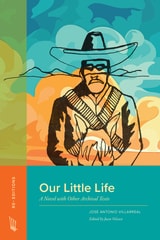
Our Little Life
A Novel with Other Archival TextsBy José Antonio Villarreal, edited by Juan Velasco
Lever Press, 2025
Our Little Life offers a much longer version of the Pocho story that extends a further 100 pages into the postwar period and follows Richard Rubio’s return from war and the changing shape of Mexican-American life in the 1940s. This newly discovered manuscript reveals Villarreal’s attention to Rubio’s struggles with PTSD and his efforts to depict a community and a family’s struggles with identity, belonging, and survival in postwar California. Our Little Life is an important work of archival recovery that sheds new light on Villarreal’s authorship and his place not only in Mexican-American literature but in the twentieth-century American literary canon.
This first publication of Our Little Life includes a scholarly introduction that places this unpublished novel in the landscape of contemporary Mexican-American literary studies and offers a brilliant examination of how novels grow and change. The volume also includes materials from the Villarreal Special Collection that recontextualize the writer’s vision, editing, and marketing of this and later novels. Our Little Life will be of interest not only to everyone in Mexican-American literary studies, but also to scholars of postwar America, women and gender studies, LGBTQ studies, ethnic studies, and migration and border studies.
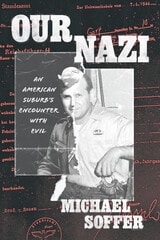
Our Nazi
An American Suburb’s Encounter with EvilMichael Soffer
University of Chicago Press, 2024
Reinhold Kulle seemed like the perfect school employee. But in 1982, as his retirement neared, his long-concealed secret came to light. The chief custodian at Oak Park and River Forest High School outside Chicago had been a Nazi, a member of the SS, and a guard at a brutal slave labor camp during World War II.
Similar revelations stunned communities across the country. Hundreds of Reinhold Kulles were gradually discovered: men who had patrolled concentration camps, selected Jews for execution, and participated in mass shootings—and who were now living ordinary suburban lives. As the Office of Special Investigations raced to uncover Hitler’s men in the United States, neighbors had to reconcile horrific accusations with the helpful, kind, and soft-spoken neighbors they thought they knew. Though Nazis loomed in the American consciousness as evil epitomized, in Oak Park—a Chicago suburb renowned for its liberalism—people rose to defend Reinhold Kulle, a war criminal.
Drawing on archival research and insider interviews, Oak Park and River Forest High School teacher Michael Soffer digs into his community’s tumultuous response to the Kulle affair. He explores the uncomfortable truths of how and why onetime Nazis found allies in American communities after their gruesome pasts were uncovered.
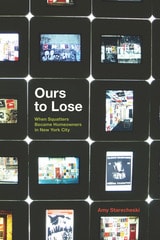
Ours to Lose
When Squatters Became Homeowners in New York CityAmy Starecheski
University of Chicago Press, 2016
Those decades of strife, however, also gave the Lower East Side something unusual: a radical movement that blended urban homesteading and European-style squatting in a way never before seen in the United States. Ours to Lose tells the oral history of that movement through a close look at a diverse group of Lower East Side squatters who occupied abandoned city-owned buildings in the 1980s, fought to keep them for decades, and eventually began a long, complicated process to turn their illegal occupancy into legal cooperative ownership. Amy Starecheski here not only tells a little-known New York story, she also shows how property shapes our sense of ourselves as social beings and explores the ethics of homeownership and debt in post-recession America.
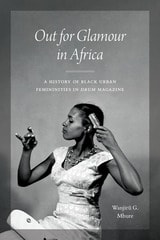
Out for Glamour in Africa
A History of Black Urban Femininities in Drum MagazineWanjiru G. Mbure
University of Michigan Press, 2026
Out for Glamour in Africa critically reflects on how Black women utilized Drum magazine, a leading publication in Africa during the era of independence, for political empowerment and constructing notions of Black femininity. Wanjirũ G. Mbure terms the concept of femme urbAfricana, a model of Black femininity depicted as urban, political, fashionable, paradoxically Afrocentric, heteronormative, and transnational. Foregrounding stories of the women who embodied these traits and the social, political, and economic forces that shaped their presence in Drum, Mbure argues that these representations of Black women from Africa, the Caribbean, Europe, and the United States produced a novel form of Black urban femininity. Utilizing a breadth of archival materials from cover girl photographs, advertisements, and columns, to readers’ comments, Mbure reveals the complex relationship between the Black urban woman and the era’s contested ideals within a transnational matrix.
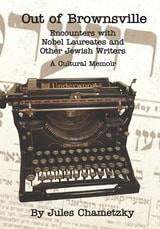
Out of Brownsville
Encounters with Nobel Laureates and Other Jewish Writers: A Cultural MemoirJules Chametzky
University of Massachusetts Press, 2012
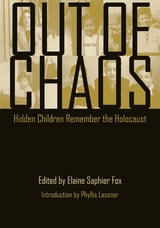
Out of Chaos
Hidden Children Remember the HolocaustElaine Saphier Fox
Northwestern University Press, 2013
The writers recall being on the run between different countries, escaping over mountains, hiding and even sometimes forgetting their Jewish identities in convents and rescuers’ homes and hovels, basements and attics. Some were left on their own; others found themselves embroiled in rescuer family conflicts. Some writers chose to write story clusters, each one capturing a moment or incident and often disconnected by memory or temporal and spatial divides.
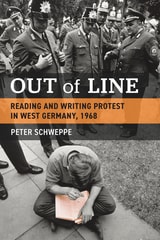
Out of Line
Reading and Writing Protest in West Germany, 1968Peter Schweppe
University of Michigan Press, 2026
By analyzing how protest fused the politics of reading and writing in 1968 West Germany, author Peter Schweppe uncovers the vibrant history of an alternative literary form during a watershed moment of social upheaval. Out of Line interlinks the politics of reading and writing with the verve of Global Sixties’ protest, where fringe books, underground newspapers, incendiary flyers, and furtive graffiti galvanized readers and writers alike. The phrase “out of line” scrutinizes the emerging performative relationship between visual and textual media in the late 1960s as it metamorphosed modes of West German literary production, channeled the agenda of the protest movement, and, in doing so, shaped new kinds of textual meaning. Through its engagement with theories of materiality and “things,” Out of Line interrogates the dynamic ways that protest readers and writers pushed and broke conventional boundaries. Schweppe’s exploration of form discloses how reading and writing out of line implicates a textual and material history of protest and the lessons it offers protest histories to come.
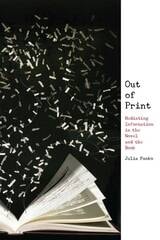
Out of Print
Mediating Information in the Novel and the BookJulia Panko
University of Massachusetts Press, 2020
This innovative study chronicles how the print book has fared as both novelists and the burgeoning profession of information science have grappled with unprecedented quantities of data across the twentieth and twenty-first centuries. As the novel's archival project took a critical turn from realism to an investigation of the structures, possibilities, and ideologies of information media, novelists have considered ideas about how data can best be collected and stored. Julia Panko pairs case studies from information history with close readings of modernist works such as James Joyce's Ulysses and Virginia Woolf's Orlando and contemporary novels from Jonathan Safran Foer, Stephen King, and Mark Z. Danielewski that emphasize their own informational qualities and experiment with the aesthetic potential of the print book.
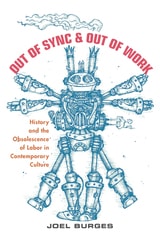
Out of Sync & Out of Work
History and the Obsolescence of Labor in Contemporary CultureBurges, Joel
Rutgers University Press, 2018
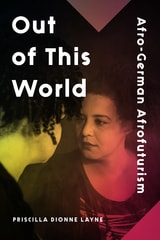
Out of This World
Afro-German AfrofuturismPriscilla Dionne Layne
Northwestern University Press, 2025
Examining Afro-German artists’ use of Afrofuturist tropes to critique German racial history
The term Afrofuturism was first coined in the 1990s to describe African diasporic artists’ use of science fiction, speculative fiction, and fantasy to reimagine the diaspora’s pasts and to counter not only Eurocentric prejudices but also pessimistic narratives. Out of This World: Afro-German Afrofuturism focuses on contemporary Black German Afrofuturist literature and performance that critiques Eurocentrism and, specifically, German racism and colonial history. This young generation has, Priscilla Layne argues, engaged with Afrofuturism to disrupt linear time and imagine alternative worlds, to introduce non-Western technologies into the German cultural milieu, and to consider the possibilities of posthumanism. Their experiments in futurist and speculative narratives offer new tools for breaking with the binary thinking about race, culture, and gender identity that have been enforced by repressive ideological and state apparatuses, such as educational, cultural, and police institutions. Rather than providing escapism or purely imaginary alternatives, however, they have created a space—outer and artistic—in which their lives matter.
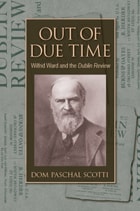
Out of due time
Wilfrid Ward and the Dublin reviewPaschal Scotti
Catholic University of America Press, 2006

Out of the Attic
Inventing Antiques in Twentieth-Century New EnglandBriann G. Greenfield
University of Massachusetts Press, 2009
In this era of Antiques Roadshow and eBay, it is hard to imagine a time when Americans did not treasure the home furnishings of elite early American families. But as this book demonstrates, antiquing—particularly the practice of valuing old things for their aesthetic qualities—is a relatively recent invention whose origins can be found in the early years of the twentieth century. Although nineteenth-century Americans did appreciate heirlooms, they saw them as memory markers, tangible representations of honored ancestors or local history.
In Out of the Attic, Briann G. Greenfield traces the transformation of antiques from family keepsakes to valuable artistic objects, examining the role of collectors, dealers, and museum makers in the construction of a new tradition based on the aesthetic qualities of early American furnishings. While recognizing the significance of antiques as symbols of an enduring American culture, Greenfield also delves behind popular rhetoric to examine the development of a retail structure specifically designed to facilitate the buying and selling of old wares. With antique shops proliferating all over New England, pickers going door-to-door in search of “finds,” and forgers taking illicit advantage of growing demand, antique owners and collectors found themselves trying to navigate a retail market characterized by escalating prices and high stakes purchases. In this sense, antiques functioned as more than remnants of a treasured past; they became modern consumer goods.
The book is divided into a series of case studies, each intended to illuminate some aspect of “the dynamic of consumer history.” One chapter examines the role of Jewish dealers in promoting American antiques; another profiles Jessie Baker Gardner, a small-time collector and would-be museum maker from Providence, Rhode Island. Greenfield also looks at the institutionalization of antiques, with chapters focusing on Henry Flynt of Deerfield, Massachusetts, who embraced the “aestheticization of antiques” in the 1940s and 1950s, and on Smithsonian curator C. Malcolm Watkins, who challenged the decorative art market during the 1950s and 1960s by purchasing old tools and crude furniture for the nation's museum.
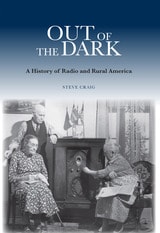
Out of the Dark
A History of Radio and Rural AmericaSteve Craig
University of Alabama Press, 2009
From the Grand Ole Opry to the National Barn Dance, how radio changed life in rural America
Out of the Dark: A History of Radio and Rural America shows how radio—especially clear channel network stations—brought news, markets, weather, religion, and entertainment into isolated farm homes between the 1920s and 1950s, narrowing rural–urban divides while also sustaining distinctly rural tastes (e.g., barn dance music). Craig argues that battery “farm radios,” high power stations, and national networking transformed daily life, work rhythms, consumer habits, and political participation, making radio the central domestic technology of the Depression era and beyond.
Craig blends regulatory and industry milestones, such as the Radio Act of 1927, with sociological studies, USDA extension records, FCC surveys, census tables, and rich case studies including WLS Chicago’s “National Barn Dance,” WSM Nashville’s “Grand Ole Opry,” and others. He mines audience research, diaries, program schedules, and tables that track the spread of radio. The book’s distinctive contributions include detailed charts (ownership by region; clear channel assignments) and vivid narratives of stations, formats, and personalities that connected farm families to national culture while preserving local identity.
The book is ideal for scholars and students of US social, rural, and media history; communication policy and political communication; country and bluegrass music history; agricultural extension; and American studies. It will also engage librarians, curators, and public historians seeking context for rural collections; journalists and podcasters tracing the roots of today’s information ecosystems; and general readers interested in how radio re made community life long before the internet.
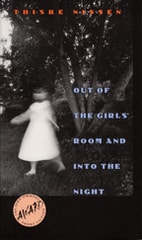
Out of the Girls' Room and into the Night
Thisbe Nissen
University of Iowa Press, 1999
Out of the Girls' Room and into the Night is a spirited, offbeat collection of stories, elongated riffs on that thing we call …love. All manner of love stories: thwarted love stories, imaginary love stories, love stories offhand and obsessive, philosophical love stories, erudite and amusing love stories.
“People don't meet because they both like Burmese food,” says one character, “or because someone's sister has a friend who's single and new in town, or because Billy's nose happened to crook just slightly to the left at an angle that made me want to weep…People don't fall in love with each other …they just fall into love.”
Everyone does it: women of fierce independence, men of thin character, rambling Deadheads, gay teenage girls, despondent Peace Corps volunteers, anorexic Broadway theatre dancers, the eager, the grieving, the uncommunicative. Even the confused do it. And they don't just fall in love with each other—they fall in love with certain moments and familiar places, with things as ephemeral as gestures and as evanescent as sunlight.
Quirky, real, idealistic, deluded, bohemian, and true, these are people who can—and often do—fall in love with a pair of ears, August afternoons, saucers of vitamins, New Age carpenters, and dead bumblebees. And if there's something they can teach us, it's how to conceive of alternative worlds and the terror and the exhilaration of venturing outside the confines of the lives we know and making our way into a dark, glittering unknown.
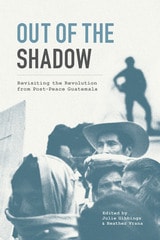
Out of the Shadow
Revisiting the Revolution from Post-Peace GuatemalaEdited by Julie Gibbings and Heather Vrana
University of Texas Press, 2020
Guatemala’s “Ten Years of Spring” (1944–1954) began when citizens overthrew a military dictatorship and ushered in a remarkable period of social reform. This decade of progressive policies ended abruptly when a coup d’état, backed by the United States at the urging of the United Fruit Company, deposed a democratically elected president and set the stage for a period of systematic human rights abuses that endured for generations. Presenting the research of diverse anthropologists and historians, Out of the Shadow offers a new examination of this pivotal chapter in Latin American history.
Marshaling information on regions that have been neglected by other scholars, such as coastlines dominated by people of African descent, the contributors describe an era when Guatemalan peasants, Maya and non-Maya alike, embraced change, became landowners themselves, diversified agricultural production, and fully engaged in electoral democracy. Yet this volume also sheds light on the period’s atrocities, such as the US Public Health Service’s medical experimentation on Guatemalans between 1946 and 1948. Rethinking institutional memories of the Cold War, the book concludes by considering the process of translating memory into possibility among present-day urban activists.
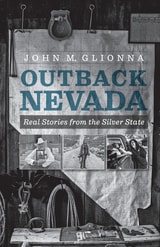
Outback Nevada
Real Stories from the Silver StateJohn M Glionna
University of Nevada Press, 2022
Glionna’s interest in Nevada’s rugged, isolated landscape and the people who choose to live in this often-harsh environment was born of his own wanderings into the “outback.” Through his stories, he shares intimate portraits of rural and small-town lifestyles not many understand. Readers meet men with names like Flash and Mr. Cool; will listen to a cowboy minister preach the word of God to his parishioners; will walk with an antiques dealer from Genoa as he hunts for denim in Nevada’s abandoned nineteenth-century mine shafts; and will learn from an ex-paramedic– turned–coffee-shop–owner who provides Boulder City with a true sense of community. Full of humor, eccentricities, and compassion, these stories reveal the state’s true nature and extend an invitation to get lost “somewhere out there” in the real Nevada.
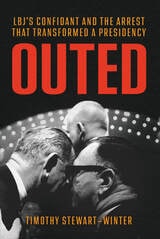
Outed
LBJ’s Confidant and the Arrest That Transformed a PresidencyTimothy Stewart-Winter
University of Chicago Press, 2026
The story of the scandal in the LBJ administration that first brought queer life into the national political conversation in the 1960s.
In 1964, Lyndon B. Johnson’s longest-serving and most trusted advisor, Walter Jenkins, was arrested for soliciting sex in a YMCA bathroom near the White House. The scandal blasted across the front pages of major US newspapers, was dissected and analyzed by the FBI, and became a watershed in making straight America aware of queer life. In Outed, historian Timothy Stewart-Winter reveals that the effects of antigay policing were felt not only by the men but by their colleagues, families, and, in this case, the First Family.
Walter Jenkins’s political banishment had long-ranging effects, from how Johnson conducted the remainder of his presidency to how media coverage of political and sexual scandals became more explicit and salacious. Stewart-Winter reveals Jenkins’s influence and legacy, encompassing but also looking beyond the scandal. Jenkins had a significant impact on Johnson’s career and how it is remembered, including both his signal accomplishment—the programs and laws that constituted the Great Society—and his signal failure: his catastrophic judgment, after Jenkins’s exile, regarding the Vietnam War.
Drawing on Jenkins’s previously unexamined personal papers, including hundreds of letters he received in the aftermath from ordinary Americans and government officials alike, Stewart-Winter shows how antigay policies and the revelations around them continue to reverberate today.