Results by title
342 books match the query '16th century' and 15 start with p
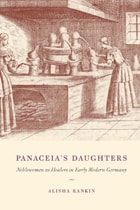
Panaceia's Daughters
Noblewomen as Healers in Early Modern GermanyAlisha Rankin
University of Chicago Press, 2013
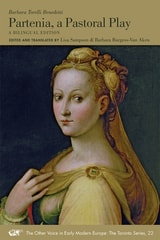
Partenia, A Pastoral Play
A Bilingual EditionBarbara Torelli Benedetti
Iter Press, 2013
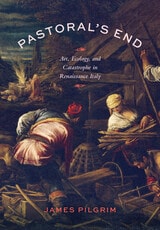
Pastoral’s End
Art, Ecology, and Catastrophe in Renaissance ItalyJames Pilgrim
University of Chicago Press, 2026
In the sixteenth century, Italian artist Jacopo Bassano painted pictures of herdsmen and animals moving through dark and muddy landscapes. But he also participated in the agricultural development of the region in which he lived, producing topographical maps of local mountains and forests, inventing new methods of drainage and irrigation, and studying the latest techniques of crop rotation and fertilization. The relationship between Bassano’s rustic art and his participation in environmental transformation has, however, never been explored.
One of the first studies of Italian Renaissance art to grapple with the connections between visual culture and the environment, Pastoral’s End explores this crucial, formative relationship. James Pilgrim looks at Bassano’s career holistically, demonstrating how his involvement in a world marked by agricultural expansion, industrialization, resource extraction, environmental degradation, social transformation, and radical philosophical development informed his paintings of country life. Introducing new archival and visual evidence of Bassano’s knowledge of hydrology, agronomy, husbandry, and architecture, Pastoral’s End argues that he transformed the more placid rustic imagery of previous Renaissance artists into visions of dangerous ecological instability.
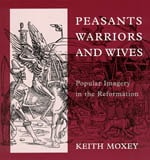
Peasants, Warriors, and Wives
Popular Imagery in the ReformationKeith Moxey
University of Chicago Press, 2004
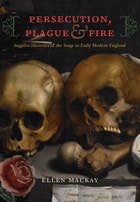
Persecution, Plague, and Fire
Fugitive Histories of the Stage in Early Modern EnglandEllen MacKay
University of Chicago Press, 2011
The theater of early modern England was a disastrous affair. The scant record of its performance demonstrates as much, for what we tend to remember today of the Shakespearean stage and its history are landmark moments of dissolution: the burning down of the Globe, the forced closure of playhouses during outbreaks of the plague, and the abolition of the theater by its Cromwellian opponents.
Persecution, Plague, and Fire is a study of these catastrophes and the theory of performance they convey. Ellen MacKay argues that the various disasters that afflicted the English theater during its golden age were no accident but the promised end of a practice built on disappearance and erasure—a kind of fatal performance that left nothing behind but its self-effacing poetics. Bringing together dramatic theory, performance studies, and theatrical, religious, and cultural history, MacKay reveals the period’s radical take on the history and the future of the stage to show just how critical the relation was between early modern English theater and its public.
Philosophy in the Renaissance
An AnthologyPaul Richard Blum
Catholic University of America Press, 2022
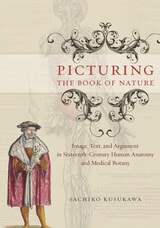
Picturing the Book of Nature
Image, Text, and Argument in Sixteenth-Century Human Anatomy and Medical BotanySachiko Kusukawa
University of Chicago Press, 2012
Because of their spectacular, naturalistic pictures of plants and the human body, Leonhart Fuchs’s De historia stirpium and Andreas Vesalius’s De humani corporis fabrica are landmark publications in the history of the printed book. But as Picturing the Book of Nature makes clear, they do more than bear witness to the development of book publishing during the Renaissance and to the prominence attained by the fields of medical botany and anatomy in European medicine. Sachiko Kusukawa examines these texts, as well as Conrad Gessner’s unpublished Historia plantarum, and demonstrates how their illustrations were integral to the emergence of a new type of argument during this period—a visual argument for the scientific study of nature.
Pierio Valeriano on the Ill Fortune of Learned Men
A Renaissance Humanist and His WorldJulia Haig Gaisser
University of Michigan Press, 1999

Pilgram Marpeck
His Life and Social TheologyStephen B. Boyd
Duke University Press, 1992
Drawing on extensive archival data documenting Marpeck’s professional life, as well as on his numerous published and unpublished writings on theology and religious reform, Stephen B. Boyd traces Marpeck’s unconventional transition from mining magistrate to Anabaptist leader, establishes his connections with various radical social and religious groups, and articulates aspects of his social theology. Marpeck’s distinctive and eclectic theology, Boyd demonstrates, focused on the need for personal, uncoerced conversion, rejected state interference in the affairs of the church, denied the need for a monastic withdrawal from the secular world, and called for the Christian’s active pursuit of justice before God and among human beings.
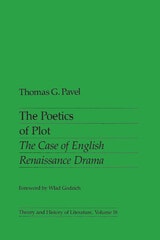
Poetics Of Plot
The Case of English Renaissance DramaThomas Pavel
University of Minnesota Press, 1985
Thomas Pavel has written extensively on poetics, linguistics, and narratology. In this book he proposes an original theory and methodology of plot analysis—a reading that draws upon the most fruitful aspects of literary structuralism and upon contemporary linguistic models (specifically generative grammar). Theorists have tended to use formal plot analysis to examine relatively simple literary artifacts, like folk tales and short stories; Pavel, however, applies his model to a group of English Renaissance tragedies and demonstrates that plot analysis can make a major contribution to the understanding of sophisticated literary texts.
Pavel leads the reader through step-by-step analyses of increasingly complex plot structures as he explicates Marlowe’s Tamburlaine I, the Jew of Malta, Doctor Faustus and Edward the Second; Kyd’s Spanish Tragedy; The Arden Feversham; and, finally, Shakespeare’s King Lear. He has chosen these plays for their chronological proximity, yet their diversity allows for contrasts and typological considerations. The inclusion of most of Marlowe’s tragedies enables Pavel to gain new insights into a single writer’s strategies of plot construction.The Poetics of Plot moves beyond the establishment and application of a new theory of plot to address broader issues in cultural studies: the role of linguistic models in literary studies, the nature and function of agency in plot advancement and history, the universal features of plot organization, and the relation of plot patterns to period styles and dominant modes of organized knowledge. In his foreword to The Poetics of Plot, Wlad Godzich sketches the historical context in which Pavel’s discussion of plot appears and makes explicit the way that the study of plot challenges both the presuppositions of linguistic analysis and the status of action in philosophical thought.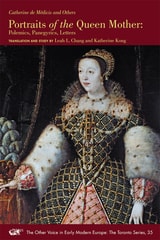
Portraits of the Queen Mother
Polemics, Panegyrics, LettersCatherine de Médicis and Others
Iter Press, 2014
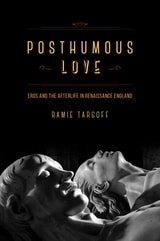
Posthumous Love
Eros and the Afterlife in Renaissance EnglandRamie Targoff
University of Chicago Press, 2014
Targoff shows that medieval notions of the somewhat flexible boundaries between love in this world and in the next were hardened by Protestant reformers, who envisioned a total break between the two. Tracing the narrative of this rupture, she focuses on central episodes in poetic history in which poets developed rich and compelling compensations for the lack of posthumous love—from Thomas Wyatt’s translations of Petrarch’s love sonnets and the Elizabethan sonnet series of Shakespeare and Spencer to the carpe diem poems of the seventeenth century. Targoff’s centerpiece is Romeo and Juliet, where she considers how Shakespeare’s reworking of the Italian story stripped away any expectation that the doomed teenagers would reunite in heaven. Casting new light on these familiar works of poetry and drama, this book ultimately demonstrates that the negation of posthumous love brought forth a new mode of poetics that derived its emotional and aesthetic power from its insistence upon love’s mortal limits.
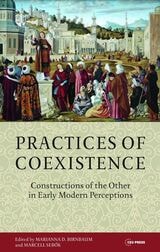
Practices of Coexistence
Constructions of the Other in Early Modern PerceptionsMarianna D. Birnbaum
Central European University Press, 2017
Print, Manuscript, and Performance
THE CHANGING RELATIONS OF THE MEDIA IN EARLY MODERN ENGLANDArthur F. Marotti and Michael D. Bristol
The Ohio State University Press, 2000
Although canonical literary writers such as Shakespeare, Jonson, and Rochester are discussed, the field of writing examined is a broad one, embracing political speeches, coterie manuscript poetry, popular pamphlets, parochially targeted martyrdom accounts, and news reports. Setting writers, audiences, and texts in their specific historical context, the contributors focus on a period in early modern England, from the late sixteenth through the late seventeenth century, when the shift from orality and manuscript communication to print was part of large-scale cultural change. Arthur F. Marotti’s and Michael D. Bristol’s introduction analyzes some of the sociocultural issues implicit in the collection and relates the essays to contemporary work in textual studies, bibliography, and publication history.
Publishing Women
Salons, the Presses, and the Counter-Reformation in Sixteenth-Century ItalyDiana Robin
University of Chicago Press, 2007
Even the most comprehensive Renaissance histories have neglected the vibrant groups of women writers that emerged in cities across Italy during the mid-1500s—and the thriving network of printers, publishers, and agents that specialized in producing and selling their books. In Publishing Women, Diana Robin finally brings to life this story of women’s cultural and intellectual leadership in early modern Italy, illuminating the factors behind—and the significance of—their sudden dominance.
Focusing on the collective publication process, Robin portrays communities in Naples, Venice, Rome, Siena, and Florence, where women engaged in activities that ranged from establishing literary salons to promoting religious reform. Her innovative cultural history considers the significant roles these women played in tandem with men, rather than separated from them. In doing so, it collapses the borders between women’s history, Renaissance and Reformation studies, and book history to evoke a historical moment that catapulted women’s writings and women-sponsored books into the public sphere for the first time anywhere in Europe.