Results by title
163 books match the query '1945-1989' and 13 start with p

Paying Calls in Shangri-La
Scenes from a Woman’s Life in American DiplomacyJudith M. Heimann
Ohio University Press, 2016
Judith M. Heimann entered the diplomatic life in 1958 to join her husband, John, in Jakarta, Indonesia, at his American Embassy post. This, her first time out of the United States, would set her on a path across the continents as she mastered the fine points of diplomatic culture. She did so first as a spouse, then as a diplomat herself, thus becoming part of one of the Foreign Service’s first tandem couples.
Heimann’s lively recollections of her life in Africa, Asia, and Europe show us that when it comes to reconciling our government’s requirements with the other government’s wants, shuttle diplomacy, Skype, and email cannot match on-the-ground interaction. The ability to gauge and finesse gesture, tone of voice, and unspoken assumptions became her stock-in-trade as she navigated, time and again, remarkably delicate situations.
This insightful and witty memoir gives us a behind-the-scenes look at a rarely explored experience: that of one of the very first married female diplomats, who played an unsung but significant role in some of the important international events of the past fifty years. To those who know something of today’s world of diplomacy, Paying Calls in Shangri-La will be an enlightening tour through the way it used to be—and for aspiring Foreign Service officers and students, it will be an inspiration.
Published in association with ADST-DACOR Diplomats and Diplomacy Series
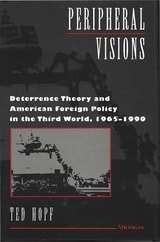
Peripheral Visions
Deterrence Theory and American Foreign Policy in the Third World, 1965-1990Ted Hopf
University of Michigan Press, 1994
Policy & Politics Japan
T. Pempel
Temple University Press, 1982

Policy Dynamics
Edited by Frank R. Baumgartner and Bryan D. Jones
University of Chicago Press, 2002
To investigate these questions, Policy Dynamics draws on the most extensive data set yet compiled for public policy issues in the United States. Spanning the past half-century, these data make it possible to trace policies and legislation, public and media attention to them, and governmental decisions over time and across institutions. Some chapters analyze particular policy areas, such as health care, national security, and immigration, while others focus on institutional questions such as congressional procedures and agendas and the differing responses by Congress and the Supreme Court to new issues.
Policy Dynamics presents a radical vision of how the federal government evolves in response to new challenges-and the research tools that others may use to critique or extend that vision.

Politics for People
Finding a Responsible Public VoiceDavid Mathews
University of Illinois Press, 1999

Post-Military Society
Militarism, Demilitarization and War at the End of the Twentieth CenturyMartin Shaw
Temple University Press, 1991
With the collapse of the Cold War following the Eastern European revolutions and the ongoing democratization of the Soviet republics, optimism about peace has transformed the international political climate. Incidents such as the Gulf War, however, have tempered this optimism and cast doubts on the prospects for demilitarization. In this book, Martin Shaw examines some of the developments that lie behind the recent momentous changes and argues that, despite the Gulf War and other regional wars, militarism is in decisive retreat.
Writing from a broadly sociological perspective, Shaw examines the roles of war and military institutions in human society and the ways in which preoccupation with war has affected domestic, regional, and international politics in the twentieth century. In doing so, he asks: When does the post-war era end? How have nuclear weapons altered the perception of war by society? What is the relationship between industrialism and militarism?
The author contends that, despite the militarism of some Third World countries, societies in the advanced industrial world (especially in Europe) have been undergoing a profound demilitarization. These societies have become politically insulated from war preparation, have recognized the effect of social movements on inter-state relations, and are experiencing a "revolution of rising expectations."
Offering evidence of "post-military citizenship," Shaw describes the increasing resistance to military conscription throughout the Western world, the replacement of blind obedience with demand for accountability in Eastern bloc countries, and the simultaneous rise of nationalism and communitarianism among common market members. And, in light of the collapse of Stalinist militarism in Europe and the USSR, Shaw suggests some of the changes that face Soviet society.
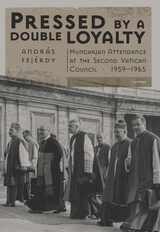
Pressed by a Double Loyalty
Hungarian Attendance at the Second Vatican Council, 1959-1965András Fejérdy
Central European University Press, 2017
Promises of 1968
Crisis, Illusion and UtopiaVladimir Tismaneanu
Central European University Press, 2011
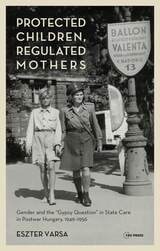
Protected Children, Regulated Mothers
Gender and the "Gypsy Question" in State Care in Postwar Hungary, 1949–1956Eszter Varsa
Central European University Press, 2021
Protected Children, Regulated Mothers examines child protection in Stalinist Hungary as a part of twentieth-century East Central, Eastern, and Southeastern European history. Across the communist bloc, the prewar foster care system was increasingly replaced after 1945 by institutionalization in residential homes. This shift was often interpreted as a further attempt to establish totalitarian control. However, this study—based on hundreds of children's case files and interviews with institution leaders, teachers, and people formerly in state care—provides a new perspective. Rather than being merely a tool of political repression, state care in postwar Hungary was often shaped by the efforts of policy actors and educators to address the myriad of problems engendered by the social and economic transformations that emerged after World War II. This response built on, rather than broke with, earlier models of reform and reformatory education. Yet child protection went beyond safeguarding and educating children; it also focused on parents, particularly lone mothers, regulating not only their entrance to paid work but also their sexuality. In so doing, children's homes both reinforced and changed existing cultural and social patterns, whether about gendered division of work or the assimilation of minorities. Indeed, a major finding of the book is that state socialist child protection continued a centuries-long national project of seeking a “solution to the Gypsy question,” rooted in efforts to eliminate the perceived “workshyness” of Roma.

Proxmire
Bulldog of the SenateJonathan Kasparek
Wisconsin Historical Society Press, 2019
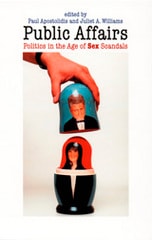
Public Affairs
Politics in the Age of Sex ScandalsPaul Apostolidis and Juliet A. Williams, eds.
Duke University Press, 2004
The essays in Public Affairs reflect on a number of sex scandals while emphasizing the Clinton/Lewinsky affair, certainly the most avidly followed and momentous sex scandal in American political history. Leading scholars situate contemporary public affairs in the context not only of earlier sex scandals in American politics (such as Thomas Jefferson’s and Sally Hemings’s affair), but also of more purely political scandals (including Teapot Dome and Watergate) and sex scandals centered around public figures other than politicians (such as the actor Hugh Grant and the minister Jimmy Swaggart). Some essays consider the Clinton affair in light of feminist and anti-racist politics, while others discuss the dynamics of scandals as major media events. By charting a critical path through the muck of scandal rather than around it, Public Affairs illuminates why sex scandals have become such a prominent feature of American public life.
Contributors. Paul Apostolidis, Jodi Dean, Joshua Gamson, Theodore J. Lowi, Joshua D. Rothman, George Shulman, Anna Marie Smith, Jeremy Varon, Juliet A. Williams
Public Opinion and American Foreign Policy
Ole R. Holsti
University of Michigan Press, 1996
Public Opinion and American Foreign Policy, Revised Edition
Ole R. Holsti
University of Michigan Press, 2004
Thoroughly revised edition of an essential text, incorporating a wealth of new material on American foreign policy since 9/11.
The second edition of this concise masterwork includes vast amounts of new material on American foreign policy in the post-9/11 era, including the war in Iraq. Holsti explores the poorly understood role of public opinion in international affairs, looking at Americans' capacity to make informed judgments about issues far removed from their personal experience.
"Impressively comprehensive and current: an excellent revision of a book by the #1 authority on the topic. This new edition will remain at the forefront for consultation and textbook adoption on the topic for years to come."
-Bruce Russett, Yale University
"I thought the first edition was the best single treatment of the subject-so, apparently, did the student who 'borrowed' my copy-and this is a worthy successor. The new edition almost flawlessly accomplishes the goal Holsti sets for himself: an update of his landmark book in light of emerging research and the dramatically changed state of the world that confronts U.S. foreign policy."
-Randy Siverson, University of California, Davis
"For those who are curious about the impact of 9/11 on American public opinion, for serious students of the relationship between foreign policy and public opinion, for anyone who wants to understand contemporary American opinion about the United States' place in the world, and for citizens tired of conventional wisdom about a difficult and important subject, Holsti's study is not only interesting and topical, it is essential."
-Maxine Isaacs, Kennedy School of Government, Harvard University
"In an age of almost weekly polling on foreign policy, Holsti's insights are indispensable. He delivers double tour de force in this new edition, providing his own current and historical research along with a comprehensive synthesis of the existing literature. His analysis of the relationships between public opinion and foreign policy since 9/11 will prove particularly valuable for students and scholars alike."
-Richard Eichenberg, Tufts University
"Holsti combines a vast knowledge of political history and a mastery of the relevant scholarship with up-to-date empirical data to address the question of what role the general public can play in shaping foreign policy. This revised edition is a remarkable achievement."
-Shoon Murray, School of International Service, American University