81 books match the query '1980-' and 4 start with p
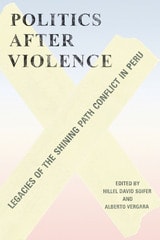
cover of Politics after Violence: Legacies of the Shining Path Conflict in Peru

Politics after Violence

Legacies of the Shining Path Conflict in Peru

Edited by Hillel David Soifer and Alberto Vergara

University of Texas Press, 2019

Between 1980 and 1994, Peru endured a bloody internal armed conflict, with some 69,000 people killed in clashes involving two insurgent movements, state forces, and local armed groups. In 2003, a government-sponsored “Truth and Reconciliation Committee” reported that the conflict lasted longer, affected broader swaths of the national territory, and inflicted higher costs in both human and economic terms than any other conflict in Peru’s history. Of those killed, 75 percent were speakers of an indigenous language, and almost 40 percent were among the poorest and most rural members of Peruvian society. These unequal impacts of the violence on the Peruvian people revealed deep and historical disparities within the country.

This collection of original essays by leading international experts on Peruvian politics, society, and institutions explores the political and institutional consequences of Peru’s internal armed conflict in the long 1980s. The essays are grouped into sections that cover the conflict itself in historical, comparative, and theoretical perspectives; its consequences for Peru’s political institutions; its effects on political parties across the ideological spectrum; and its impact on public opinion and civil society. This research provides the first systematic and nuanced investigation of the extent to which recent and contemporary Peruvian politics, civil society, and institutions have been shaped by the country’s 1980s violence.
[more]
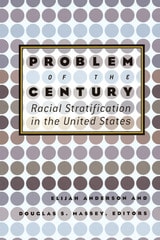
cover of Problem of the Century: Racial Stratification in the United States

Problem of the Century

Racial Stratification in the United States

Elijah Anderson

Russell Sage Foundation, 2001
In 1899 the great African American scholar, W.E.B. DuBois, published The Philadelphia Negro, the first systematic case study of an African American community and one of the foundations of American sociology. DuBois prophesied that the color line would be the problem of the twentieth century. One hundred years later, Problem of the Century reflects upon his prophecy, exploring the ways in which the color line is still visible in the labor market, the housing market, education, family structure, and many other aspects of life at the turn of a new century. The book opens with a theoretical discussion of the way racial identity is constructed and institutionalized. When the government classifies races and confers group rights upon them, is it subtly reenforcing damaging racial divisions, or redressing the group privileges that whites monopolized for so long? The book also delineates the social dynamics that underpin racial inequality. The contributors explore the causes and consequences of high rates of mortality and low rates of marriage in black communities, as well as the way race affects a person's chances of economic success. African Americans may soon lose their historical position as America's majority minority, and the book also examines how race plays out in the sometimes fractious relations between blacks and immigrants. The final part of the book shows how the color line manifests itself at work and in schools. Contributors find racial issues at play on both ends of the occupational ladder—among absentee fathers paying child support from their meager earnings and among black executives prospering in the corporate world. In the schools, the book explores how race defines a student's peer group and how peer pressure affects a student's grades. Problem of the Century draws upon the distinguished faculty of sociologists at the University of Pennsylvania, where DuBois conducted his research for The Philadelphia Negro. The contributors combine a scrupulous commitment to empirical inquiry with an eclectic openness to different methods and approaches. Problem of the Century blends ethnographies and surveys, statistics and content analyses, census data and historical records, to provide a far-reaching examination of racial inequality in all its contemporary manifestations.
[more]
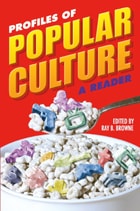
cover of Profiles of Popular Culture: A Reader

Profiles of Popular Culture

A Reader

Edited by Ray B. Browne

University of Wisconsin Press, 2005
From Hank Williams to hip hop, Aunt Jemima to the Energizer Bunny, scrap-booking to NASCAR racing, Profiles of Popular Culture cuts a generous swath across what is perhaps the fastest growing discipline of the past several decades.  Edited by a pioneer in the field, this volume invites readers to reflect on a diverse sampling of modern myths, icons, archetypes, rituals, and pastimes.  Adopting an inclusive approach, editor Ray B. Browne has mined both scholarly and mainstream media to bring together penetrating essays on fads and fashions, sports fandom, the shaping of body image, aesthetic surgery, the marketing of food, vacationing and sightseeing, toys and games, genre fiction, post-9/11 entertainment, and much more.  Like Jack Nachbar and Kevin Lause's Popular Culture: An Introductory Text, this book opens critical doors into the study of popular culture-and does so within a fresh context that includes points of reference both established and new.
[more]
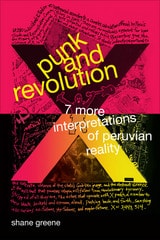
cover of Punk and Revolution: Seven More Interpretations of Peruvian Reality

Punk and Revolution

Seven More Interpretations of Peruvian Reality

Shane Greene

Duke University Press, 2016

In Punk and Revolution Shane Greene radically uproots punk from its iconic place in First World urban culture, Anglo popular music, and the Euro-American avant-garde, situating it instead as a crucial element in Peru's culture of subversive militancy and political violence. Inspired by José Carlos Mariátegui's Seven Interpretive Essays on Peruvian Reality, Greene explores punk's political aspirations and subcultural possibilities while complicating the dominant narratives of the war between the Shining Path and the Peruvian state. In these seven essays, Greene experiments with style and content, bends the ethnographic genre, and juxtaposes the textual and visual. He theorizes punk in Lima as a mode of aesthetic and material underproduction, rants at canonical cultural studies for its failure to acknowledge punk's potential for generating revolutionary politics, and uncovers the intersections of gender, ethnicity, class, and authenticity in the Lima punk scene. Following the theoretical interventions of Debord, Benjamin, and Bakhtin, Greene fundamentally redefines how we might think about the creative contours of punk subculture and the politics of anarchist praxis.
[more]