168 books match the query '1989-' and 15 start with p
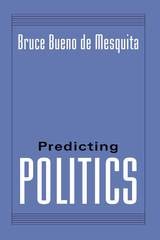
cover of PREDICTING POLITICS

PREDICTING POLITICS

Bruce Bueno de Mesquita

The Ohio State University Press, 2002

To predict likely policy developments around the world over the next thirty years, Bruce Bueno de Mesquita uses game theoretic models as described in Predicting Politics. The tools used in this book have found wide application in business and in the development of significant American foreign policy initiatives over the years. The author uses data from 1948 to show the ability of models to predict the end of the Cold War. He then turns to data from 1980 for about one hundred countries and simulates future states of the world, especially with regard to further democratization. In the process he shows strong evidence that the burst of democratization that occurred at the end of the 1980s and the beginning of the 1990s was predictable based on replicable data known in 1980. While delving into rather gloomy predictions about likely developments in Russia and China’s domestic affairs, he offers a novel explanation for the failure of Russia to attract more investment and to achieve the higher growth rates commonly associated with democratic government. Although Russia is certainly more democratic in an absolute sense today than it was in 1980, it has fallen farther behind the rest of the world in terms of democratization and so lacks the comparative advantages of property rights, rule of law, and transparent governance that are essential for attracting investment. Bueno de Mesquita shows how policy situations and game theoretical analyses can explain the past, illuminate the present and forecast future events. At the same time he provides the tools necessary for others to create their own rigorous estimates of future foreign policies.
[more]
cover of Paradoxes of Nostalgia: Cold War Triumphalism and Global Disorder since 1989

Paradoxes of Nostalgia

Cold War Triumphalism and Global Disorder since 1989

Penny M. Von Eschen

Duke University Press, 2022

In Paradoxes of Nostalgia Penny M. Von Eschen offers a sweeping examination of the cold war’s afterlife and the lingering shadows it casts over geopolitics, journalism, and popular culture. She shows how myriad forms of nostalgia across the globe—from those that posit a mythic national past to those critical of neoliberalism that remember a time when people believed in the possibility of a collective good—indelibly shape the post-cold war era. When Western triumphalism moved into the global South and former Eastern bloc spaces, many articulated a powerful sense of loss and a longing for stability. Innovatively bringing together diplomatic archives, museums, films, and video games, Von Eschen shows that as the United States continuously sought new enemies for its unipolar world, cold war triumphalism fueled the ascendancy of xenophobic right-wing nationalism and the embrace of authoritarian sensibilities in the United States and beyond. Ultimately, she demonstrates that triumphalist claims that capitalism and military might won the cold war distort the past and disfigure the present, undermining democratic values and institutions.
[more]
cover of Pax Americana: Hegemony Or Decline?

Pax Americana

Hegemony Or Decline?

Jochen Hippler

Pluto Press, 1994

[more]
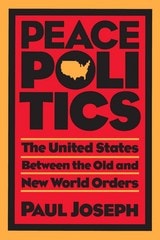
cover of Peace Politics: The United States Between Old and New World Orders

Peace Politics

The United States Between Old and New World Orders

Paul Joseph

Temple University Press, 1993
"Joseph's book is especially valuable and distinctive for its freshly mapped avenues into the sometimes dense field of international relations. His sophisticated analysis of 20th century U.S. peace movements is richly textured and analytically revealing." --Cynthia Enloe, Clark University, and author of Bananas, Beaches, and Bases The end of the Cold War promises a new era of global peace in which domestic reform could be achieved. Yet armed conflict persists throughout the world. Economic inequality, declining public services, environmental degradation, and other forms of domestic decay threaten the quality of life in the U.S. In Peace Politics, Paul Joseph develops a systematic comparison of the "old" and "new" world orders that links foreign and domestic affairs. By examining the issues that are central to any realignment of American politics, he offers a sweeping account of the possibilities and obstacles for progressive change over the 1990s. Acknowledging that all nations and people have a right to security, he argues for a global attack against a broad range of shared threats, including human rights violations, nuclear devastation, poverty and despair, politically repressive governments, and environmental threats. Joseph also addresses the links between the militarism in the U.S. and deforestation of the Amazon, the uncertain victory of the Gulf War, the effect of public opinion on security issues, the impact of peace movements, nuclear weapons policy, and the need for a peace dividend. Linking war and peace issues with environmental renewal, stronger democracy, economic justice, and citizen activism, Peace Politics is a rallying cry for rationality, genuine security, and mutual survival. "Paul Joseph offers a much needed, coherent, progressive U.S. foreign policy, based on an analysis of the emerging world and the realities of American society." --Louis Kriesberg, Director, Program on the Analysis and Resolution of Conflicts, Syracuse University "Peace Politics is the first book that I have found that fully and systematically explores the implications of the dramatic shift in the international system that we have witnessed in the past few years." --William A. Gamson, Professor of Sociology, Boston College "This book is a tour de force. Joseph has packed an enormous amount of material and thoughtful analyses in a very readable presentation. The book is comprehensive, balanced, and wise." --S.M. Miller, Visiting Professor, Boston College and Senior Fellow, Commonwealth Institute
[more]
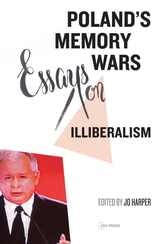
cover of Poland's Memory Wars: Essays on Illiberalism

Poland's Memory Wars

Essays on Illiberalism

Jo Harper

Central European University Press, 2018

This volume of essays and interviews by Polish, British, and American academics and journalists provides an overview of current Polish politics for both informed and non-specialist readers. The essays consider why and how PiS, Law and Justice, the party of Jarosław Kaczynski, returned to power, and the why and how of its policies while in power. They help to make sense of how “history” plays a key role in Polish public life and politics.

The descriptions of PiS in Western media tend to rework old stereotypes about Eastern Europe that had lain dormant for some time. The book addresses the underlying question whether PiS was simply successful in understanding its electorate, and just helped Poland to revert to its normal state. This new Normal seems quite similar to the old one: insular, conservative, xenophobic, and statist.

The book looks at the current struggle between one ‘Poland’ and another; between a Western-looking Poland and an inward-looking Poland, the former more interested in opening to the world, competing in open markets, and working within the EU, and the latter more concerned with holding onto tradition.

The question of illiberalism has gone from an ‘Eastern’ problem (Russia, Turkey, Hungary, etc.) to a global one (Brexit and the U.S. elections). This makes the very specific analysis of Poland’s illiberalism applicable on a broader scale.
[more]
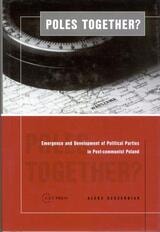
cover of Poles Together?: The Emergence and Development of Political Parties in Postcommunist Poland

Poles Together?

The Emergence and Development of Political Parties in Postcommunist Poland

Aleks Szczerbiak

Central European University Press, 2001

This book fills a gap in the existing literature on how parties and party systems are developing in the new democracies of post-communist Central and Eastern Europe. It provides the first detailed, empirically based examination from a structural and organizational perspective of the new parties and political groupings that have emerged in Poland since the collapse of communism in 1989.

The author develops his argument on the basis of an analysis of five key structural and organizational variables: the internal distribution of power and modes of representation within the parties; the role of the party bureaucracy; the relationship between parties and their electorates; the development of parties as membership organizations; and the relationship between parties and the state.

As the first in-depth, empirically grounded single-country study of party structure and organization in post-communist Eastern Europe, the book provides an opportunity to draw broader conclusions about the process of Central and East European party development and will contribute significantly towards the development of a post-communist political party model. Szczerbiak sheds light on an important aspect of the more general process of post-communist democratization in the region and provides a major contribution to one of the least-explored areas of transition.

[more]
cover of Policy Dynamics

Policy Dynamics

Edited by Frank R. Baumgartner and Bryan D. Jones

University of Chicago Press, 2002

While governmental policies and institutions may remain more or less the same for years, they can also change suddenly and unpredictably in response to new political agendas and crises. What causes stability or change in the political system? What role do political institutions play in this process?

To investigate these questions, Policy Dynamics draws on the most extensive data set yet compiled for public policy issues in the United States. Spanning the past half-century, these data make it possible to trace policies and legislation, public and media attention to them, and governmental decisions over time and across institutions. Some chapters analyze particular policy areas, such as health care, national security, and immigration, while others focus on institutional questions such as congressional procedures and agendas and the differing responses by Congress and the Supreme Court to new issues.

Policy Dynamics presents a radical vision of how the federal government evolves in response to new challenges-and the research tools that others may use to critique or extend that vision.
[more]
cover of Post-Communism: An Introduction

Post-Communism

An Introduction

Leslie Holmes

Duke University Press, 1997
[more]
cover of Post-Communist Mafia State: The Case of Hungary

Post-Communist Mafia State

The Case of Hungary

Bálint Magyar

Central European University Press, 2016
In an article in 2001 the author analyzed the way Fidesz, the party on government for the first time then, was eliminating the institutional system of the rule of law. At that time, many readers doubted the legitimacy of the new approach, whose key categories were the 'organized over-world', the 'state employing mafia methods' and the 'adopted political family'. Critics considered these categories metaphors rather than elements of a coherent conceptual framework. Ten years later Fidesz won a two-third majority in Parliament at the 2010 elections: the institutional obstacles of exerting power were thus largely removed. Just like the party, the state itself was placed under the control of a single individual, who since then has applied the techniques used within his party to enforce submission and obedience onto society as a whole. While in many post-communist systems a segment of the party and secret service became the elite in possession of not only political power but also of wealth, Fidesz, as a late-coming new political predator, was able to occupy this position through an aggressive change of elite. The actions of the post-communist mafia state model are led by the logic of power and wealth concentration in the hands of the clan. But while the classical mafia channeled wealth and economic players into its spheres of interest by means of direct coercion, the mafia state does the same by means of parliamentary legislation, legal prosecution, tax authority, police forces and secret service. The new conceptual framework is important and timely not only for Hungary, but also for other post-communist countries subjected to autocratic rules.
[more]
cover of Post-Realism: The Rhetorical Turn in International Relations

Post-Realism

The Rhetorical Turn in International Relations

Francis A. Beer

Michigan State University Press, 1996

The end of the Cold War encourages new perspectives on international relations. Beer and Hariman provide a comprehensive set of essays that challenge and reinterpret the tradition of realism which has dominated the thinking of academics and foreign policy makers. Post-Realism: The Rhetorical Turn in International Relations systematically discusses the major realist writers of the Post-War era, the foundational concepts of international politics, and representative case studies of foreign policy discourse.

These essays demonstrate how realism operates rhetorically and point the way toward a richer understanding of world politics.

[more]
cover of Precarious Japan

Precarious Japan

Anne Allison

Duke University Press, 2013
In an era of irregular labor, nagging recession, nuclear contamination, and a shrinking population, Japan is facing precarious times. How the Japanese experience insecurity in their daily and social lives is the subject of Precarious Japan. Tacking between the structural conditions of socioeconomic life and the ways people are making do, or not, Anne Allison chronicles the loss of home affecting many Japanese, not only in the literal sense but also in the figurative sense of not belonging. Until the collapse of Japan's economic bubble in 1991, lifelong employment and a secure income were within reach of most Japanese men, enabling them to maintain their families in a comfortable middle-class lifestyle. Now, as fewer and fewer people are able to find full-time work, hope turns to hopelessness and security gives way to a pervasive unease. Yet some Japanese are getting by, partly by reconceiving notions of home, family, and togetherness.
[more]
cover of Projections of Power: Framing News, Public Opinion, and U.S. Foreign Policy

Projections of Power

Framing News, Public Opinion, and U.S. Foreign Policy

Robert M. Entman

University of Chicago Press, 2003

To succeed in foreign policy, U.S. presidents have to sell their versions or framings of political events to the news media and to the public. But since the end of the Cold War, journalists have increasingly resisted presidential views, even offering their own spin on events. What, then, determines whether the media will accept or reject the White House perspective? And what consequences does this new media environment have for policymaking and public opinion?

To answer these questions, Robert M. Entman develops a powerful new model of how media framing works—a model that allows him to explain why the media cheered American victories over small-time dictators in Grenada and Panama but barely noticed the success of far more difficult missions in Haiti and Kosovo. Discussing the practical implications of his model, Entman also suggests ways to more effectively encourage the exchange of ideas between the government and the media and between the media and the public. His book will be an essential guide for political scientists, students of the media, and anyone interested in the increasingly influential role of the media in foreign policy.
[more]
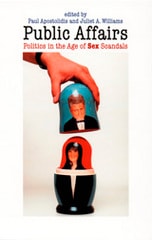
cover of Public Affairs: Politics in the Age of Sex Scandals

Public Affairs

Politics in the Age of Sex Scandals

Paul Apostolidis and Juliet A. Williams, eds.

Duke University Press, 2004

Public affairs—or sex scandals—involving prominent politicians are as revealing of American culture as they are of individual peccadillos. Implicated in their unfolding are a broad range of institutions, trends, questions, and struggles, including political parties, Hollywood, the Christian right, new communications technologies, the restructuring of corporate media, feminist and civil rights debates, and the meaning of public life in the “society of the spectacle.” The contributors to Public Affairs examine, from a variety of perspectives, how political sex scandals take shape, gain momentum, and alter the U.S. political and cultural landscape.

The essays in Public Affairs reflect on a number of sex scandals while emphasizing the Clinton/Lewinsky affair, certainly the most avidly followed and momentous sex scandal in American political history. Leading scholars situate contemporary public affairs in the context not only of earlier sex scandals in American politics (such as Thomas Jefferson’s and Sally Hemings’s affair), but also of more purely political scandals (including Teapot Dome and Watergate) and sex scandals centered around public figures other than politicians (such as the actor Hugh Grant and the minister Jimmy Swaggart). Some essays consider the Clinton affair in light of feminist and anti-racist politics, while others discuss the dynamics of scandals as major media events. By charting a critical path through the muck of scandal rather than around it, Public Affairs illuminates why sex scandals have become such a prominent feature of American public life.

Contributors. Paul Apostolidis, Jodi Dean, Joshua Gamson, Theodore J. Lowi, Joshua D. Rothman, George Shulman, Anna Marie Smith, Jeremy Varon, Juliet A. Williams
[more]
cover of Public Opinion and American Foreign Policy

Public Opinion and American Foreign Policy

Ole R. Holsti

University of Michigan Press, 1996

One of the central issues in democratic theory is the proper role of public opinion in the conduct of international affairs. The capacity of the public to make informed judgments about these complex issues which are often far removed from their experience has been questioned. In addition, the impact of public opinion on foreign policy-making has been debated. In Public Opinion and American Foreign Policy Ole Holsti addresses these crucial issues using extensive data on public attitudes and preferences on international affairs. Holsti concludes that although the American public is not well informed about many aspects of foreign affairs, its opinions are usually stable and reasonable reactions to real world events, are not lacking in structure, and can often have an important impact on foreign policies. Holsti surveys changing perceptions of the effect of public opinion on foreign policy since World War I. According to Holsti, this war transformed the issue of public participation in foreign affairs from a theoretical into a practical one that many postwar leaders had to confront. World War II and its immediate aftermath are equally significant. The Vietnam War stimulated a new wave of theory and research that challenged many aspects of the post-World War II view of public opinion. The author assesses the hypothesis that the bipartisan foreign policy consensus of the post-World War II period has, during the past two decades, given way to sharp partisan cleavages, reinforced by ideological differences. The end of the Cold War has also raised new questions about public opinion and foreign policy. Holsti explores the determinants of public opinion on foreign policy, the impact of gender, generation, education, religion, and race on foreign policy attitudes, and the relationship of the opinions of the general public to the opinions of leaders. This book will be of interest to political scientists, historians, political psychologists, and anyone with an interest in American foreign policy and the domestic factors that may affect its formulation and implementation.
[more]
cover of Public Opinion and American Foreign Policy, Revised Edition

Public Opinion and American Foreign Policy, Revised Edition

Ole R. Holsti

University of Michigan Press, 2004


Thoroughly revised edition of an essential text, incorporating a wealth of new material on American foreign policy since 9/11.

The second edition of this concise masterwork includes vast amounts of new material on American foreign policy in the post-9/11 era, including the war in Iraq. Holsti explores the poorly understood role of public opinion in international affairs, looking at Americans' capacity to make informed judgments about issues far removed from their personal experience.


"Impressively comprehensive and current: an excellent revision of a book by the #1 authority on the topic. This new edition will remain at the forefront for consultation and textbook adoption on the topic for years to come."
-Bruce Russett, Yale University

"I thought the first edition was the best single treatment of the subject-so, apparently, did the student who 'borrowed' my copy-and this is a worthy successor. The new edition almost flawlessly accomplishes the goal Holsti sets for himself: an update of his landmark book in light of emerging research and the dramatically changed state of the world that confronts U.S. foreign policy."
-Randy Siverson, University of California, Davis

"For those who are curious about the impact of 9/11 on American public opinion, for serious students of the relationship between foreign policy and public opinion, for anyone who wants to understand contemporary American opinion about the United States' place in the world, and for citizens tired of conventional wisdom about a difficult and important subject, Holsti's study is not only interesting and topical, it is essential."
-Maxine Isaacs, Kennedy School of Government, Harvard University

"In an age of almost weekly polling on foreign policy, Holsti's insights are indispensable. He delivers double tour de force in this new edition, providing his own current and historical research along with a comprehensive synthesis of the existing literature. His analysis of the relationships between public opinion and foreign policy since 9/11 will prove particularly valuable for students and scholars alike."
-Richard Eichenberg, Tufts University

"Holsti combines a vast knowledge of political history and a mastery of the relevant scholarship with up-to-date empirical data to address the question of what role the general public can play in shaping foreign policy. This revised edition is a remarkable achievement."
-Shoon Murray, School of International Service, American University
[more]