Results by title
8642 books match the query '20th century' and 449 start with p
PADRES
The National Chicano Priest MovementBy Richard Edward Martínez
University of Texas Press, 2005
From the 1848 Treaty of Guadalupe Hidalgo to the 1960s, Mexican American Catholics experienced racism and discrimination within the U.S. Catholic church, as white priests and bishops maintained a racial divide in all areas of the church's ministry. To oppose this religious apartheid and challenge the church to minister fairly to all of its faithful, a group of Chicano priests formed PADRES (Padres Asociados para Derechos Religiosos, Educativos y Sociales, or Priests Associated for Religious, Educational, and Social Rights) in 1969. Over the next twenty years of its existence, PADRES became a powerful force for change within the Catholic church and for social justice within American society.
This book offers the first history of the founding, activism, victories, and defeats of PADRES. At the heart of the book are oral history interviews with the founders of PADRES, who describe how their ministries in poor Mexican American parishes, as well as their own experiences of racism and discrimination within and outside the church, galvanized them into starting and sustaining the movement. Richard Martínez traces the ways in which PADRES was inspired by the Chicano movement and other civil rights struggles of the 1960s and also probes its linkages with liberation theology in Latin America. He uses a combination of social movement theory and organizational theory to explain why the group emerged, flourished, and eventually disbanded in 1989.

PCE 1604 Series, Frigate Panter
Henk Visser
Amsterdam University Press, 2023
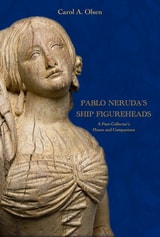
Pablo Neruda's Ship Figureheads
A Poet-Collector's Muses and CompanionsCarol A. Olsen, Foreword by Fernando Sáez Garcia
University of Alabama Press, 2025
Unlock the stories of Pablo Neruda’s rare nineteenth-century carved-wood ship figurehead collection in Chile, why they mattered in his tumultuous life, and how we benefit from them now.
Poet Pablo Neruda’s nineteenth-century ship figurehead collection in Chile is one of the most significant in the world. Containing carved wood images of dramatically postured men and women, these figures are now better understood due to years of research, a willingness to challenge Neruda’s ever-changing stories about them, and a realization that the names Neruda chose for his figureheads perhaps had more to do with his life than theirs. The rhythm and beauty of Neruda’s worn wood figures is counterpoint to his own tumultuous life as an author, politician, and communist dissident.
Collecting ship figureheads was central to Neruda’s passion for owning things made of wood, a material he said was his best friend, and for standing out among others as he gradually built the public persona that helped move him toward winning the Nobel Prize in Literature. With his choir of immobilized figureheads stationed upright in his living room and facing the Pacific Ocean, Neruda was surrounded by dramatic images from the sea that ignited his most powerful feelings.
The nineteenth century saw figureheads on the bows of ships of sail and steam, yet when a figurehead was lost or removed, its history soon disappeared. The significant ship figureheads that Neruda avidly collected preserve that history and reveal new dimensions concerning his life and work. Each year, his collection is viewed by thousands of visitors to the Pablo Neruda Foundation’s house museum at Isla Negra.
Pachucas and Pachucos in Tucson
Situated Border LivesLaura L. Cummings
University of Arizona Press, 2009
This innovative study examines the pachuco phenomenon in a new way. Exploring its growth in Tucson, Arizona, the book combines ethnography, history, and sociolinguistics to contextualize the early years of the phenomenon, its diverse cultural roots, and its language development in Tucson.
Unlike other studies, it features first-person research with men and women who—despite a wide span of ages—self-identify as pachucos and pachucas. Through these interviews and her archival research, the author finds that pachuco culture has deep roots in Tucson and the Southwest. And she discovers the importance of the pachuco/caló language variety to a shared sense of pachuquismo. Further, she identifies previously neglected pachuco ties to indigenous Indian languages and cultures in Mexico and the United States.
Cummings stresses that the great majority of people conversant with the culture and language do not subscribe to the dynamics of contemporary hardcore gangs, but while zoot suits are no longer the rage today, the pachuco language and sensibilities do live on in Mexican American communities across the Southwest and throughout the United States.
Pacific Apostle
The 1920-21 Diary of David O. McKay in the Latter-day Saint Island MissionsDavid O. McKay, Edited by Reid L. Neilson and Carson V. Teuscher
University of Illinois Press, 2020
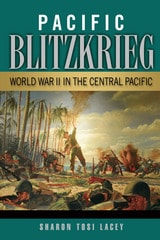
Pacific Blitzkrieg
World War II in the Central PacificSharon Tosi Lacey
University of North Texas Press, 2013
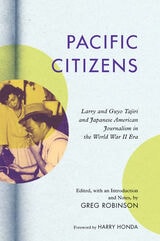
Pacific Citizens
Larry and Guyo Tajiri and Japanese American Journalism in the World War II EraEdited, with and Introduction and Notes, by Greg Robinson: Foreword by Harry Honda
University of Illinois Press, 2012

Pacific Northwest Women, 1815-1925
Lives, Memories, and WritingsJean M. Ward
Oregon State University Press, 1995
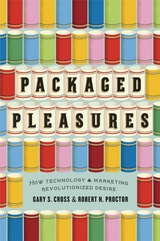
Packaged Pleasures
How Technology and Marketing Revolutionized DesireGary S. Cross and Robert N. Proctor
University of Chicago Press, 2014
In Packaged Pleasures, Gary S. Cross and Robert N. Proctor delve into an uncharted chapter of American history, shedding new light on the origins of modern consumer culture and how technologies have transformed human sensory experience. In the space of only a few decades, junk foods, cigarettes, movies, recorded sound, and thrill rides brought about a revolution in what it means to taste, smell, see, hear, and touch. New techniques of boxing, labeling, and tubing gave consumers virtually unlimited access to pleasures they could simply unwrap and enjoy. Manufacturers generated a seemingly endless stream of sugar-filled, high-fat foods that were delicious but detrimental to health. Mechanically rolled cigarettes entered the market and quickly addicted millions. And many other packaged pleasures dulled or displaced natural and social delights. Yet many of these same new technologies also offered convenient and effective medicines, unprecedented opportunities to enjoy music and the visual arts, and more hygienic, varied, and nutritious food and drink. For better or for worse, sensation became mechanized, commercialized, and, to a large extent, democratized by being made cheap and accessible. Cross and Proctor have delivered an ingeniously constructed history of consumerism and consumer technology that will make us all rethink some of our favorite things.
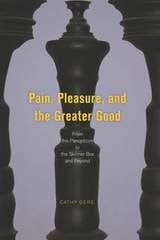
Pain, Pleasure, and the Greater Good
From the Panopticon to the Skinner Box and BeyondCathy Gere
University of Chicago Press, 2017
These are questions that have bedeviled scientists, doctors, and ethicists for decades, and in Pain, Pleasure, and the Greater Good, Cathy Gere presents the gripping story of how we have addressed them over time. Today, we are horrified at the idea that a medical experiment could be performed on someone without consent. But, as Gere shows, that represents a relatively recent shift: for more than two centuries, from the birth of utilitarianism in the eighteenth century, the doctrine of the greater good held sway. If a researcher believed his work would benefit humanity, then inflicting pain, or even death, on unwitting or captive subjects was considered ethically acceptable. It was only in the wake of World War II, and the revelations of Nazi medical atrocities, that public and medical opinion began to change, culminating in the National Research Act of 1974, which mandated informed consent. Showing that utilitarianism is based in the idea that humans are motivated only by pain and pleasure, Gere cautions that that greater good thinking is on the upswing again today and that the lesson of history is in imminent danger of being lost.
Rooted in the experiences of real people, and with major consequences for how we think about ourselves and our rights, Pain, Pleasure, and the Greater Good is a dazzling, ambitious history.
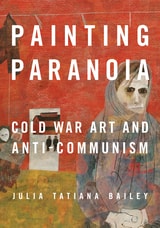
Painting Paranoia
Cold War Art and Anti-CommunismJulia Tatiana Bailey
University of Illinois Press, 2026
Based on extensive archival research conducted in the United States and Russia, this manuscript contributes to the political history of twentieth-century American art and the revisionist history of cultural diplomacy in the Cold War by charting the politicization of myths of Soviet art. It reveals how those with control over the reception of art in the United States built and sustained a strategy of othering towards Socialist Realism, presents the rhetoric of Soviet artistic otherness in the context of debates surrounding the concept of American art, and reclaims the post-war history of American Social Realism.
Painting in Excess
Kyiv's Art Revival, 1985-1993Olena Martynyuk
Rutgers University Press, 2022
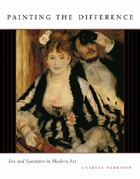
Painting the Difference
Sex and Spectator in Modern ArtCharles Harrison
University of Chicago Press, 2005
Arguing that the representation of women in art was crucial to the character of modernity, Harrison traces the history of female subjects as they began to gaze out of the picture to confront and engage their viewers. Combining sweeping conceptual history with telling investigations into the details of particular paintings, Painting the Difference deciphers the implications of sexual difference for the development of nineteenth- and twentieth-century art. Harrison shows how artists, reflecting the underlying anxieties of the time about gender, used female subjects' gazes both to create a sexualized relationship between these subjects and their viewers, and to simultaneously question that relationship. In considering works by artists such as Renoir, Manet, Degas, Cézanne, Picasso, and Matisse, as well as Rothko, Warhol, Cindy Sherman, and many more, Harrison incorporates elements of cultural criticism and social history into his arguments, and generous color illustrations permit the reader to test Harrison's claims against the works on which they are based. Rich with detail and compelling analysis, Painting the Difference offers cutting-edge interpretation grounded in the reality of magnificent works of art.
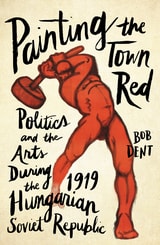
Painting the Town Red
Politics and the Arts During the 1919 Hungarian Soviet RepublicBob Dent
Pluto Press, 2018
Palace Politics
How the Ruling Party Brought Crisis to MexicoBy Jonathan Schlefer
University of Texas Press, 2008
Bringing rare interviews and meticulous research to the cloaked world of Mexican politics in the mid-twentieth century, Palace Politics provides a captivating look at the authoritarian Mexican state—one of the longest-lived regimes of its kind in recent history—as well as the origins of political instability itself, with revelations that can be applied to a variety of contemporary political situations around the globe.
Culling a trove of remarkable firsthand accounts from former Mexican presidents, finance ministers, interior ministers, and other high officials from the 1950s through the 1980s, Jonathan Schlefer describes a world in which elite politics planted the seeds of a mammoth socioeconomic crisis. Palace Politics outlines the process by which political infighting among small rival factions of high officials drove Mexico to precarious situations at all levels of government. Schlefer also demonstrates how, earlier on, elite cooperation among these factions had helped sustain one of the most stable growth economies in Latin America, until all-or-nothing struggles began to tear the Mexican ruling party apart in the 1970s.
A vivid, seamlessly narrated history, Palace Politics is essential reading for anyone seeking to better understand not only the nation next door but also the workings of elite politics in general.
Palestine between Politics and Terror, 1945–1947
Motti Golani
Brandeis University Press, 2013
Palestinian Cinema in the Days of Revolution
By Nadia Yaqub
University of Texas Press, 2018
Palestinian cinema arose during the political cinema movements of the late 1960s and early 1970s, yet it was unique as an institutionalized, though modest, film effort within the national liberation campaign of a stateless people. Filmmakers working within the Palestinian Liberation Organization (PLO) and through other channels filmed the revolution as it unfolded, including the Israeli bombings of Palestinian refugee camps, the Jordanian and Lebanese civil wars, and Palestinian life under Israeli occupation, attempting to create a cinematic language consonant with the revolution and its needs. They experimented with form both to make effective use of limited material and to process violent events and loss as a means of sustaining active engagement in the Palestinian political project.
Palestinian Cinema in the Days of Revolution presents an in-depth study of films made between 1968 and 1982, the filmmakers and their practices, the political and cultural contexts in which the films were created and seen, and their afterlives among Palestinian refugees and young filmmakers in the twenty-first century. Nadia Yaqub discusses how early Palestinian cinema operated within emerging public-sector cinema industries in the Arab world, as well as through coproductions and solidarity networks. Her findings aid in understanding the development of alternative cinema in the Arab world. Yaqub also demonstrates that Palestinian filmmaking, as a cinema movement created and sustained under conditions of extraordinary precarity, offers important lessons on the nature and possibilities of political filmmaking more generally.

Palestra Pandemonium
A History Of The Big 5Robert Lyons
Temple University Press, 2002
Robert Lyons offers the story of the Big Five from its very beginnings in 1955. At that time, many of the Big Five schools -- La Salle University, University of Pennsylvania, St. Joseph's University, Temple University, and Villanova University -- weren't even talking to each other, and everyone predicted the tournament would end before it began. Conducting interviews with coaches and players -- including famed Temple coach Harry Litwack's last interview before his death -- Lyons offers the play-by-play on how the Big Five became an institution, and how it was ultimately undone by college basketball's own success.
Lavishly illustrated with photographs of players, teams, coaches, and the Palestra itself, Palestra Pandemonium is an immediate classic, offering a chronicle of the most monumental college basketball tournament. Anywhere.
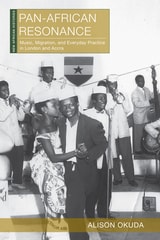
Pan-African Resonance
Music, Migration, and Everyday Practice in London and AccraAlison Okuda
Ohio University Press, 2026
As African and Caribbean nations gained independence from Britain in the 1950s and 1960s, many young musicians, students, and professionals crossed the Atlantic in search of new opportunities and built vibrant communities. Pan-African Resonance: Music, Migration, and Everyday Practice in London and Accra traces these journeys from Ghana, Trinidad and Tobago, Jamaica, Saint Lucia, Barbados, and Guyana, exploring how migrants practiced pan-Africanism through music across continents and generations. Drawing on musical recordings, newspapers, oral histories, and government documents from six countries, Alison Okuda demonstrates that pan-African solidarity thrived through the everyday creation and enjoyment of popular music. The book unfolds in two parts. Starting in the 1950s, it examines how Ghanaian highlife and Trinidadian calypso brought together musicians and young members of the independence generation, first in London and later in Accra. Even amid cultural tensions, Ghanaian and Caribbean communities expressed aspirations for freedom and unity in nightclubs, recording studios, private homes, and public streets. Before Ghana’s 1966 coup d’état, Ghanaians and diasporic Africans collaborated to shape an independent African-Atlantic world. Although the coup disrupted formal Pan-Africanist organizing, in the second part of the book Okuda shows that in the 1970s a new generation sustained dynamic networks of solidarity through highlife, reggae, and other popular styles—heard in recordings, radio broadcasts, live performances, and community events. Influenced by generational change and musical fluidity, African diasporic unity has remained central to popular music, migration, and politics in Ghana and the wider African-Atlantic world into the twenty-first century. Offering a rich interdisciplinary approach, Pan-African Resonance will appeal to readers interested in popular culture, transnational history, diaspora studies, and modern African history.
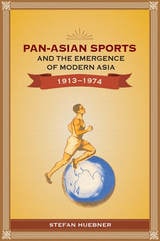
Pan-Asian Sports and the Emergence of Modern Asia, 1913-1974
Stefan Huebner
National University of Singapore Press, 2016
Based on a vast range of archival materials and spanning sixty years and three continents, Sports and the Emergence of Modern Asia shows how pan-Asian sporting events helped shape anti-colonial sentiments, Asian nationalisms, and pan-Asian aspirations in places as diverse as Japan and Iran, and across the span of countries lying between them.
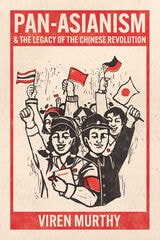
Pan-Asianism and the Legacy of the Chinese Revolution
Viren Murthy
University of Chicago Press, 2023
Recent proposals to revive the ancient Silk Road for the contemporary era and ongoing Western interest in China’s growth and development have led to increased attention to the concept of pan-Asianism. Most of that discussion, however, lacks any historical grounding in the thought of influential twentieth-century pan-Asianists. In this book, Viren Murthy offers an intellectual history of the writings of theorists, intellectuals, and activists—spanning leftist, conservative, and right-wing thinkers—who proposed new ways of thinking about Asia in their own historical and political contexts. Tracing pan-Asianist discourse across the twentieth century, Murthy reveals a stronger tradition of resistance and alternative visions than the contemporary discourse on pan-Asianism would suggest. At the heart of pan-Asianist thinking, Murthy shows, were the notions of a unity of Asian nations, of weak nations becoming powerful, and of the Third World confronting the “advanced world” on equal terms—an idea that grew to include non-Asian countries into the global community of Asian nations. But pan-Asianists also had larger aims, imagining a future beyond both imperialism and capitalism. The fact that the resurgence of pan-Asianist discourse has emerged alongside the dominance of capitalism, Murthy argues, signals a profound misunderstanding of its roots, history, and potential.
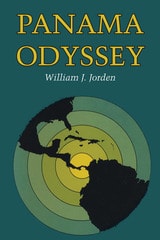
Panama Odyssey
By William J. Jorden
University of Texas Press, 1984
The Panama Canal Treaties of 1977 were the most significant foreign policy achievement of the Carter administration. Most Latin American nations had regarded the 1903 treaty and its later minor modifications as vestiges of "American colonialism" and obstacles to any long-term, stable relationship with the United States. Hence, at a time when conflicts were mushrooming in Central America, the significance of the new Panama treaties cannot be overestimated.
Former Ambassador to Panama William J. Jorden has provided the definitive account of the long and often contentious negotiations that produced those treaties. It is a vividly written reconstruction of the complicated process that began in 1964 and ended with ratification of the new pacts in 1978. Based on his personal involvement behind the scenes in the White House (1972–1974) and in the United States Embassy in Panama (1974–1978), Jorden has produced a unique living history. Access to documents and the personalities of both governments and, equally important, Jorden's personal recollections of participants on both sides make this historical study an incomparable document of U. S. foreign relations.
Beyond the singular story of the treaties themselves—and how diplomats negotiate in the modern world—is the rare description of how the United States deals with a major foreign policy problem. How does a superpower cope with a tiny nation that happens to occupy a strategically critical position? And how does the U. S. Senate face up to its constitutionally assigned power to "advise and consent"? Once treaties are approved, does the House of Representatives help or hinder? Panama Odyssey also deals with another crucial element in the shaping of policy—public opinion: how is it informed or led astray?
In sum, this is a history, a handbook on diplomacy, a course in government, and a revelation of foreign policy in action, all based on a fascinating and controversial episode in the U. S. experience.
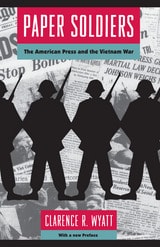
Paper Soldiers
The American Press and the Vietnam WarClarence R. Wyatt
University of Chicago Press, 1994
"Wyatt makes the Diem period in Saigon come to life—the primitive communications, the police crackdowns, the quarrels within the news organizations between the pessimists in Saigon and the optimists in Washington and New York."—Peter Braestrup, Washington Times
"An important, readable study of the Vietnam press corps—the most maligned group of journalists in modern American history. Clarence Wyatt's insights and assessments are particularly valuable now that the media is rapidly growing in its influence on domestic and international affairs."—Peter Arnett, CNN foreign correspondent
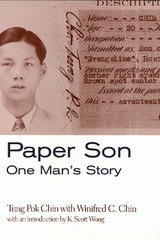
Paper Son
One Man's StoryTung Chin
Temple University Press, 2000
Chin's story begins in the early 1930s, when he followed the example of his father and countless other Chinese who bought documents that falsely identified them as children of Chinese Americans. Arriving in Boston and later moving to New York City, he worked and lived in laundries. Chin was determined to fit into American life and dedicated himself to learning English. But he also became an active member of key organizations -- a church, the Chinese Hand Laundrymen's Alliance, and the Chinese Consolidated Benevolent Association -- that anchored him in the community. A self-reflective and expressive man, Chin wrote poetry commenting on life in China and the hardships of being an immigrant in the United States. His work was regularly published in the China Daily News and brought him to the attention of the FBI, then intent on ferreting out communists and illegal immigrants. His vigorous narrative speaks to the day-to-day anxieties of living as a Paper Son as well as the more universal immigrant experiences of raising a family in modest circumstances and bridging cultures.
Historian K. Scott Wong introduces Chin's memoir, discussing the limitations on immigration from China and what is known about Exclusion-era Chinese American communities. Set in historical context, Tung Pok Chin's unique story offers and engaging account of a twentieth-century Paper Son.
Paper, Ink, and Achievement
Gabriel Hornstein and the Revival of Eighteenth-Century ScholarshipKevin L. Cope
Bucknell University Press, 2021
Published by Bucknell University Press. Distributed worldwide by Rutgers University Press.
Para Power
How Paraprofessional Labor Changed EducationNick Juravich
University of Illinois Press, 2024
Understanding paras as key players in Black and Latino struggles for jobs and freedom, Nick Juravich details how the first generation of paras in New York City transformed work in public schools and the relationships between schools and the communities they served. Paraprofessional programs created hundreds of thousands of jobs in working-class Black and Latino neighborhoods. These programs became an important pipeline for the training of Black and Latino teachers in the1970s and early 1980s while paras’ organizing helped drive the expansion and integration of public sector unions.
An engaging portrait of an invisible profession, Para Power examines the lives and practices of the first generation of paraprofessional educators against the backdrop of struggles for justice, equality, and self-determination.
Para-Sites
A Casebook against Cynical ReasonEdited by George E. Marcus
University of Chicago Press, 2000
These cases challenge the condition of cynicism that has been the favored mode of characterizing the mind-set of intellectuals and professionals, comfortable in their lives of middle-class consumption and work. In their effort to establish para-sites of critical awareness parallel to the levels of political and economic power at which they function, these subjects suggest that those who lead ordinary lives of modest power and privilege might not be parasites in relation to the systems they serve, but may be creating unique and independent critical perspectives.
ParaSpheres
Edited by Ken E. Keegan and Rusty Morrison
Omnidawn, 2006
With Fabulist and New Wave Fabulist stories by 44 Literary and Genre authors, this anthology follows in the footsteps of Conjunctions 39 (from Bard College, New York), the Fall 2002 issue, which focused on New Wave Fabulist writers.
Paracritical Hinge
Essay, Talks, Notes, InterviewsNathaniel Mackey
University of Iowa Press, 2018
Paracritical Hinge is a collection of varied yet interrelated pieces highlighting Nathaniel Mackey’s multifaceted work as writer and critic. It embraces topics ranging from Walt Whitman’s interest in phrenology to the marginalization of African American experimental writing; from Kamau Brathwaite’s “calibanistic” language practices to Federico García Lorca’s flamenco aesthetic of duende and its continuing repercussions; from H. D.’s desert measure and coastal way of knowing to the altered spatial disposition of Miles Davis’s trumpet sound; from Robert Duncan’s serial poetics to diasporic syncretism; from the lyric poem’s present-day predicaments to gnosticism. Offering illuminating commentary on these and other artists including Amiri Baraka, Mississippi Fred McDowell, Wilson Harris, Jack Spicer, John Coltrane, Jay Wright, and Bob Kaufman, Paracritical Hinge also sheds light on Mackey’s own work as a poet, fiction writer, and editor.
Paradigms of Paranoia
The Culture of Conspiracy in Contemporary American FictionSamuel Chase Coale
University of Alabama Press, 2005
Tracing paranoia as a defining pattern of modern American literature.
The recent popularity of The DaVinci Code and The Matrix trilogy exemplifies the fascination Americans have with conspiracy-driven subjects. Though scholars have suggested that in modern times the JFK assassination initiated an industry of conspiracy (i.e., Vietnam and the Pentagon Papers, Area 51, Iran-Contra Affair), Samuel Chase Coale reminds us in this book that conspiracy is foundational in American culture—from the apocalyptic Biblical narratives in early Calvinist households to the fear of Mormon, Catholic, Jewish, and immigrant populations in the 19th century.
Coale argues that contemporary culture—a landscape characterized by doubt, ambiguity, fragmentation, information overload, and mistrust—has fostered a radical skepticism so pervasive that the tendency to envision or construct conspiracies often provides the best explanation for the chaos that surrounds us.
Conspiracy as embodied in narrative form provides a fertile field for explorations of the anxiety lying at the heart of the postmodern experience. Thomas Pynchon's The Crying of Lot 49, Don DeLillo's Underworld, Toni Morrison's Jazz and Paradise, Joan Didion's Democracy, Tim O'Brien's In the Lake of the Woods, and Paul Auster's New York City Trilogy are some of the texts Coale examines for their representations of isolated individuals at the center of massive, anonymous master plots that lay beyond their control. These narratives remind us that our historical sense of national identity has often been based on the demonizing of others and that American fiction arose and still flourishes with apocalyptic visions.
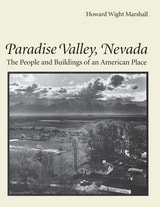
Paradise Valley, Nevada
The People and Buildings of an American PlaceHoward Wight Marshall
University of Arizona Press, 1995
Paradise and Method
Poetry and PraxisBruce Andrews
Northwestern University Press, 1996
Addressing poetics from a poet's perspective, Andrews focuses on the ways in which meaning is produced and challenged. His essays aim "to map out opportunities for making sense (or making noise)--both in reading and writing contemporary literature. At the center has been a desire to explore language, as up close as possible, as a material and social medium for restagings of meaning and power." Andrews analyzes poetics and the production of meaning; alternative traditions and canons; and innovative contemporary poetry, particularly its break with many of the premises and constraints of even the most forward-looking modernisms.
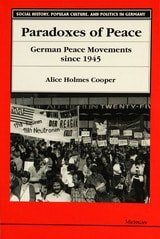
Paradoxes of Peace
German Peace Movements Since 1945Alice Holmes Cooper
University of Michigan Press, 1996
Paraliterary
The Making of Bad Readers in Postwar AmericaMerve Emre
University of Chicago Press, 2017
We should, Emre argues, think of such readers not as non-literary but as paraliterary—thriving outside the institutions we take as central to the literary world. She traces this phenomenon to the postwar period, when literature played a key role in the rise of American power. At the same time as American universities were producing good readers by the hundreds, many more thousands of bad readers were learning elsewhere to be disciplined public communicators, whether in diplomatic and ambassadorial missions, private and public cultural exchange programs, multinational corporations, or global activist groups. As we grapple with literature’s diminished role in the public sphere, Paraliterary suggests a new way to think about literature, its audience, and its potential, one that looks at the civic institutions that have long engaged readers ignored by the academy.
Parcels
Memories of Salvadoran MigrationMike Anastario
Rutgers University Press, 2019
Parents and Schools
The 150-Year Struggle for Control in American EducationWilliam W. Cutler III
University of Chicago Press, 2000
Cutler shows how in the 1920s and 1930s schools expanded their responsibility for children's well-being outside the classroom. These efforts sowed the seeds for later conflict as schools came to be held accountable for solving society's problems. Finally, he brings the reader into recent decades, in which a breakdown of trust, racial tension, and "parents' rights" have taken the story full circle, with parents and schools once again at odds.
Cutler's book is an invaluable guide to understanding how parent-teacher cooperation, which is essential for our children's educational success, might be achieved.
Paris Blues
African American Music and French Popular Culture, 1920-1960Andy Fry
University of Chicago Press, 2014
In Paris Blues, Andy Fry provides an alternative history of African American music and musicians in France, one that looks beyond familiar personalities and well-rehearsed stories. He pinpoints key issues of race and nation in France’s complicated jazz history from the 1920s through the 1950s. While he deals with many of the traditional icons—such as Josephine Baker, Django Reinhardt, and Sidney Bechet, among others—what he asks is how they came to be so iconic, and what their stories hide as well as what they preserve. Fry focuses throughout on early jazz and swing but includes its re-creation—reinvention—in the 1950s. Along the way, he pays tribute to forgotten traditions such as black musical theater, white show bands, and French wartime swing. Paris Blues provides a nuanced account of the French reception of African Americans and their music and contributes greatly to a growing literature on jazz, race, and nation in France.
Paris and the Art of Transposition
Early Twentieth Century Sino-French EncountersAngie Chau
University of Michigan Press, 2023
While previous studies of Chinese modernism have focused on how Western modernist aesthetics were adapted or translated to the Chinese context, Angie Chau does the opposite by turning to Paris in the Chinese imaginary and discussing the literary and visual artwork of five artists who moved between France and China: the painter Chang Yu, the poet Li Jinfa, the art critic Fu Lei, the painter Pan Yuliang, and the writer Xu Xu. Chau draws the idea of transposition from music theory where it refers to shifting music from one key or clef to another, or to adapting a song originally composed for one instrument to be played by another. Transposing transposition to the study of art and literature, Chau uses the term to describe a fluid and strategic art practice that depends on the tension between foreign and familiar, new and old, celebrating both novelty and recognition—a process that occurs when a text gets placed into a fresh context.
Parish Boundaries
The Catholic Encounter with Race in the Twentieth-Century Urban NorthJohn T. McGreevy
University of Chicago Press, 1996
"Parish Boundaries can take its place in the front ranks of the literature of urban race relations."—Jonathan Dorfman, Washington Post Book Review
"A prodigiously researched, gracefully written book distinguished especially by its seamless treatment of social and intellectual history."—Robert Orsi, American Historical Review
"Parish Boundaries will fascinate historians and anyone interested in the historic connection between parish and race."—Ed Marciniak, Chicago Tribune
"The history that remains to be written will rest on the firm foundation of Mr. McGreevy's remarkable book."—Richard Wightman Fox, New York Times Book Review
Parish behind God's Back
The Changing Culture of Rural BarbadosGeorge Gmelch and Sharon Bohn Gmelch
University of Michigan Press, 1997
Parlor Ponds
The Cultural Work of the American Home Aquarium, 1850 - 1970Judith Hamera
University of Michigan Press, 2012
Parlor Ponds: The Cultural Work of the American Home Aquarium, 1850–1970 examines the myriad cultural meanings of the American home aquarium during the nineteenth and twentieth centuries and argues that the home aquarium provided its enthusiasts with a potent tool for managing the challenges of historical change, from urbanization to globalization. The tank could be a window to an alien world, a theater for domestic melodrama, or a vehicle in a fantastical undersea journey. Its residents were seen as inscrutable and wholly disposable “its,” as deeply loved and charismatic individuals, and as alter egos by aquarists themselves.
Parlor Ponds fills a gap in the growing field of animal studies by showing that the tank is an emblematic product of modernity, one using elements of exploration, technology, science, and a commitment to rigorous observation to contain anxieties spawned by industrialization, urbanization, changing gender roles, and imperial entanglements. Judith Hamera engages advertisements, images, memoirs, public aquarium programs, and enthusiast publications to show how the history of the aquarium illuminates complex cultural attitudes toward nature and domestication, science and religion, gender and alterity, and national conquest and environmental stewardship with an emphasis on the ways it illuminates American public discourse on colonial and postcolonial expansion.
Participatory Composition
Video Culture, Writing, and ElectracySarah J. Arroyo
Southern Illinois University Press, 2013
Like. Share. Comment. Subscribe. Embed. Upload. Check in. The commands of the modern online world relentlessly prompt participation and encourage collaboration, connecting people in ways not possible even five years ago. This connectedness no doubt influences college writing courses in both form and content, creating possibilities for investigating new forms of writing and student participation. In this innovative volume, Sarah J. Arroyo argues for a “participatory composition,” inspired by the culture of online video sharing and framed by theorist Gregory Ulmer’s concept of electracy.
Electracy, according to Ulmer, “is to digital media what literacy is to alphabetic writing.” Although electracy can be compared to digital literacy, it is not something shut on and off with the power buttons on computers or mobile devices. Rather, electracy encompasses the cultural, institutional, pedagogical, and ideological implications inherent in the transition from a culture of print literacy to a culture saturated with electronic media, regardless of the presence of actual machines.
Arroyo explores the apparatus of electracy in many of its manifestations while focusing on the participatory practices found in online video culture, particularly on YouTube. Chapters are devoted to questions of subjectivity, definition, authorship, and pedagogy. Utilizing theory and incorporating practical examples from YouTube, classrooms, and other social sites, Arroyo presents accessible and practical approaches for writing instruction. Additionally, she outlines the concept of participatory composition by highlighting how it manifests in online video culture, offers student examples of engagement with the concept, and advocates participatory approaches throughout the book.
Arroyo presents accessible and practical possibilities for teaching and learning that will benefit scholars of rhetoric and composition, media studies, and anyone interested in the cultural and instructional implications of the digital age.
Parties and Leaders in the Postreform House
David W. Rohde
University of Chicago Press, 1991
Offering a concise and compelling explanation of the causes of this resurgence, David W. Rohde argues that a realignment of electoral forces led to a reduction of sectional divisions within the parties—particularly between the northern and southern Democrats—and to increased divergence between the parties on many important issues. He challenges previous findings by asserting that congressional reform contributed to, rather than restrained, the increase of partisanship. Among the Democrats, reforms siphoned power away from conservative and autocratic committee chairs and put control of those committees in the hands of Democratic committee caucuses, strengthening party leaders and making both party and committee leaders responsible to rank-and-file Democrats. Electoral changes increased the homogeneity of House Democrats while institutional reforms reduced the influence of dissident members on a consensus in the majority party. Rohde's accessible analysis provides a detailed discussion of the goals of the congressional reformers, the increased consensus among Democrats and its reinforcement by their caucus, the Democratic leadership's use of expanded powers to shape the legislative agenda, and the responses of House Republicans. He also addresses the changes in the relationship between the House majority and the president during the Carter and Reagan administrations and analyzes the legislative consequences of the partisan resurgence.
A readable, systematic synthesis of the many complex factors that fueled the recent resurgence of partisanship, Parties and Leaders in the Postreform House is ideal for course use.
Partisans and Partners
The Politics of the Post-Keynesian SocietyJosh Pacewicz
University of Chicago Press, 2016
Wheels-down in Iowa—that most important of primary states—Pacewicz looks to two cities, one traditionally Democratic, the other traditionally Republican, and finds that younger voters are rejecting older-timers’ strict political affiliations. A paradox is emerging—as the dividing lines between America’s political parties have sharpened, Americans are at the same time growing distrustful of traditional party politics in favor of becoming apolitical or embracing outside-the-beltway candidates. Pacewicz sees this change coming not from politicians and voters, but from the fundamental reorganization of the community institutions in which political parties have traditionally been rooted. Weaving together major themes in American political history—including globalization, the decline of organized labor, loss of locally owned industries, uneven economic development, and the emergence of grassroots populist movements—Partisans and Partners is a timely and comprehensive analysis of American politics as it happens on the ground.
Partition
How and Why Ireland was DividedIvan Gibbons
Haus Publishing, 2022
The Partition of Ireland in 1921, which established Northern Ireland and saw it incorporated into the United Kingdom, sparked immediate civil war and a century of unrest. Today, the Partition remains the single most contentious issue in Irish politics, but its origins—how and why the British divided the island—remain obscured by decades of ensuing struggle.
Cutting through the partisan divide, Partition takes readers back to the first days of the twentieth century to uncover the concerns at the heart of the original conflict. Drawing on extensive primary research, Ivan Gibbons reveals how the idea to divide Ireland came about and gained popular support as well as why its implementation proved so controversial and left a century of troubles in its wake.
Partitioning Bazaar Art
Popular Visual Culture of India and Pakistan around 1947Yousuf Saeed
Seagull Books, 2023
How did inexpensive posters influence nationalism in the decades leading up to and succeeding the Partition of the Indian subcontinent in 1947? If mechanically reproduced images that occupy public spaces reflect the aesthetics of the “masses,” what can a critical interpretation of subcontinental popular visual culture in the mid-twentieth century reveal about the formation of communal identities?
In this essay, Yousuf Saeed studies the selective deification of leaders fighting for Indian independence. He highlights the biased representation within the domain of “patriotic” posters of the time and the evolving portrayal of religious minority communities in India’s popular print culture over subsequent decades. Also charts the turn popular print culture took in post-Partition Pakistan, Saeed focuses on the country’s thriving industry of Sufi-saint posters. Partitioning Bazaar Art is a timely exploration of how nationalism can be defined through popular imagery.
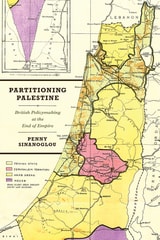
Partitioning Palestine
British Policymaking at the End of EmpirePenny Sinanoglou
University of Chicago Press, 2019
Partners in Conflict
The Politics of Gender, Sexuality, and Labor in the Chilean Agrarian Reform, 1950–1973Heidi Tinsman
Duke University Press, 2002
Tinsman restores women to a scholarly narrative that has been almost exclusively about men, recounting the centrality of women’s labor to the pre-Agrarian Reform world of the hacienda during the 1950s and recovering women’s critical roles in union struggles and land occupations during the Agrarian Reform itself. Providing a theoretical framework for understanding why the Agrarian Reform ultimately empowered men more than women, Tinsman argues that women were marginalized not because the Agrarian Reform ignored women but because, under both the Frei and Allende governments, it promoted the male-headed household as the cornerstone of a new society. Although this emphasis on gender cooperation stressed that men should have more respect for their wives and funneled unprecedented amounts of resources into women’s hands, the reform defined men as its protagonists and affirmed their authority over women.
This is the first monographic social history of Chile’s Agrarian Reform in either English or Spanish, and the first historical work to make sexuality and gender central to the analysis of the reforms.
Partners in Science
Foundations and Natural Scientists, 1900-1945Robert E. Kohler
University of Chicago Press, 1991
"This book is a rich historical tapestry of people, institutions and scientific ideas. It will stand for a long time as a source of precise and detailed information about an important aspect of the scientific enterprise. . .It also contains many valuable lessons for the coming years."—John Ziman, Times Higher Education Supplement
Pasolini Requiem
Second EditionBarth David Schwartz
University of Chicago Press, 2017
Based on extensive interviews with those who knew Pasolini, both friends and enemies, admirers and detractors, Pasolini Requiem chronicles his growth from poet in the provinces to Italy’s leading “civil poet”; his flight to Rome in 1950; the scandalous success of his two novels and political writing; and his transition to film, where he started as a contributor to the golden age of Italian cinema and ended with the shocking Salò, or the 120 Days of Sodom. Pasolini’s tragic and still unsolved murder has remained a subject of contentious debate for four decades. The enduring fascination with who committed the crime—and why—reflects his vital stature in Italy’s political and social history.
Updated throughout and with a new afterword covering the efforts to reopen the investigation—and the legal maelstrom surrounding Pasolini’s demise—this edition of Pasolini Requiem is a riveting account of one of the twentieth century’s most controversial, ever-present iconoclasts.