Results by title
1713 books match the query '21st century' and 81 start with p
Pan–African American Literature
Signifyin(g) Immigrants in the Twenty-First CenturyLi, Stephanie
Rutgers University Press, 2018
The twenty-first century is witnessing a dynamic broadening of how blackness signifies both in the U.S. and abroad. Literary writers of the new African diaspora are at the forefront of exploring these exciting approaches to what black subjectivity means. Pan-African American Literature is dedicated to charting the contours of literature by African born or identified authors centered around life in the United States. The texts examined here deliberately signify on the African American literary canon to encompass new experiences of immigration, assimilation and identification that challenge how blackness has been previously conceived. Though race often alienates and frustrates immigrants who are accustomed to living in all-black environments, Stephanie Li holds that it can also be a powerful form of community and political mobilization.
Paper Electronic Literature
An Archaeology of Born-Digital MaterialsRichard Hughes Gibson
University of Massachusetts Press, 2021
Paper Electronic Literature attests that digital literature's old media elements have much to teach us about the cultural and physical conditions in which we compute; the creativity that new media artists have shown in their dealings with old media; and the distinctively electronic issues that confront digital artists. Moving between avant-garde works and popular ones, fiction writing and poetry generation, Richard Hughes Gibson reveals the diverse ways in which paper has served as a component within electronic literature, particularly in facilitating interactive experiences for users. This important study develops a new critical paradigm for appreciating the multifaceted material innovation that has long marked digital literature.
Parties and Prejudice
The Normalization of Antiminority Rhetoric in US PoliticsManeesh Arora
University of Chicago Press, 2025
An essential guide to how the interactions between social norms, party politics, and expressions of prejudice are driving contemporary politics.
Antiminority rhetoric in American politics has grown more overt. What were once fringe comments on Stormfront have now become typical campaign appeals from many mainstream politicians. If there was ever a doubt, this is a poignant reminder that the boundaries of what is “acceptable” and “unacceptable” to say and do are fluid and socially enforced.
In Parties and Prejudice, Maneesh Arora offers a broad framework for understanding this new political terrain. Arora argues that the interaction between social norms and party politics determines what the political consequence of prejudicial speech will be. He illuminates this nuanced relationship by showing that norms vary based on the targeted minority group and the intended audience.
Drawing on experiments, survey data, news coverage, and real-world examples, Parties and Prejudice examines the distinctive ways that egalitarian/inegalitarian norms have developed—within each party—for Black, Muslim, and LGBTQ+ Americans. It is essential reading for understanding Donald Trump’s rise to power, the modern conservative agenda (including opposition to critical race theory and transgender rights), and threats to the development of a multiracial democracy.
Partisan Nation
The Dangerous New Logic of American Politics in a Nationalized EraPaul Pierson and Eric Schickler
University of Chicago Press, 2024
A provocative exploration of how America’s democratic crisis is rooted in a dangerous mismatch between our Constitution and today’s nationalized, partisan politics.
The ground beneath American political institutions has moved, with national politics subsuming and transforming the local. As a result, American democracy is in trouble.
In this paradigm-shifting book, political scientists Paul Pierson and Eric Schickler bring a sharp new perspective to today’s challenges. Attentive to the different coalitions, interests, and incentives that define the Democratic and Republican parties, they show how contemporary polarization emerged in a rapidly nationalizing country and how it differs from polarization in past eras. In earlier periods, three key features of the political landscape—state parties, interest groups, and media—varied locally and reinforced the nation’s stark regional diversity. But this began to change in the 1960s as the two parties assumed clearer ideological identities and the power of the national government expanded, raising the stakes of conflict. Together with technological and economic change, these developments have reconfigured state parties, interest groups, and media in self-reinforcing ways. The result is that today’s polarization is self-perpetuating—and intensifying.
Partisan Nation offers a powerful caution. As a result of this polarization, America’s political system is distinctly and acutely vulnerable to an authoritarian movement emerging in the contemporary Republican Party, which has both the motive and the means to exploit America’s unusual Constitutional design. Combining the precision and acuity characteristic of their earlier work, Pierson and Schickler explain what these developments mean for American governance and democracy.
Partisans and Partners
The Politics of the Post-Keynesian SocietyJosh Pacewicz
University of Chicago Press, 2016
Wheels-down in Iowa—that most important of primary states—Pacewicz looks to two cities, one traditionally Democratic, the other traditionally Republican, and finds that younger voters are rejecting older-timers’ strict political affiliations. A paradox is emerging—as the dividing lines between America’s political parties have sharpened, Americans are at the same time growing distrustful of traditional party politics in favor of becoming apolitical or embracing outside-the-beltway candidates. Pacewicz sees this change coming not from politicians and voters, but from the fundamental reorganization of the community institutions in which political parties have traditionally been rooted. Weaving together major themes in American political history—including globalization, the decline of organized labor, loss of locally owned industries, uneven economic development, and the emergence of grassroots populist movements—Partisans and Partners is a timely and comprehensive analysis of American politics as it happens on the ground.
Patchwork Apartheid
Private Restriction, Racial Segregation, and Urban InequalityColin Gordon
Russell Sage Foundation, 2023
Gordon also explores the role of other policies and practices in sustaining segregation. Enforcement of private racial restrictions was held unconstitutional in 1948, and such agreements were prohibited outright in 1968. But their premises and assumptions, and the segregation they had accomplished, were accommodated by local zoning and federal housing policies. Explicit racial restrictions were replaced by the deceptive business practices of real estate agents and developers, who characterized certain neighborhoods as white and desirable and others as black and undesirable, thereby hiding segregation behind the promotion of sound property investments, safe neighborhoods, and good schools. These practices were in turn replaced by local zoning, which systematically protected white neighborhoods while targeting “blighted” black neighborhoods for commercial and industrial redevelopment, and by a tangle of federal policies that reliably deferred to local and private interests with deep investments in local segregation. Private race restriction was thus a key element in the original segregation of American cities and a source of durable inequalities in housing wealth, housing opportunity, and economic mobility.
Patchwork Apartheid exhaustively documents the history of private restriction in urban settings and demonstrates its crucial role in the ideas and assumptions that have sustained racial segregation in the United States into the twenty-first century.
Paying for the Party
How Fundraising Demands Lead to Less Productive and Less Representative LegislaturesMichael R. Kistner
University of Chicago Press, 2026
A revealing, data-rich exploration of how American legislators transformed from active policymakers into party fundraisers.
Lawmakers in Congress and state legislatures across the United States spend enormous amounts of time and effort fundraising, not just for their own seats but for the party. Whether dialing for dollars or hosting high-priced fundraising events, the pursuit of campaign funds is now a massive part of the American legislator’s job description. What explains this transformation, and what are the consequences for public policy?
In Paying for the Party, Michael Kistner uses new theory and new data to answer these questions. He shows that state legislative party organizations—Democratic and Republican caucuses in capitols across the country—are responsible for turning their members into single-minded seekers of money. Parties reward legislators who contribute the most with powerful leadership and committee positions. Consequently, the members who now hold these agenda-setting positions are increasingly neither the most productive nor knowledgeable lawmakers, but rather those who can raise the most money. And when legislators are asked to raise more money, they skip committee hearings for fundraising events, enacting fewer substantive policies as a result. Paying for the Party shows that parties in contemporary American legislatures have hollowed out the policymaking capacity of their institutions and empowered a decidedly non-representative set of legislators.
Pelevin and Unfreedom
Poetics, Politics, MetaphysicsSofya Khagi
Northwestern University Press, 2021
Sofya Khagi’s Pelevin and Unfreedom: Poetics, Politics, Metaphysics is the first book-length English-language study of Victor Pelevin, one of the most significant and popular Russian authors of the post-Soviet era. The text explores Pelevin’s sustained Dostoevskian reflections on the philosophical question of freedom and his complex oeuvre and worldview, shaped by the idea that contemporary social conditions pervert that very notion.
Khagi shows that Pelevin uses provocative and imaginative prose to model different systems of unfreedom, vividly illustrating how the present world deploys hyper-commodification and technological manipulation to promote human degradation and social deadlock. Rather than rehearse Cold War–era platitudes about totalitarianism, Pelevin holds up a mirror to show how social control (now covert, yet far more efficient) masquerades as freedom and how eagerly we accept, even welcome, control under the techno-consumer system. He reflects on how commonplace discursive markers of freedom (like the free market) are in fact misleading and disempowering. Under this comfortably self-occluding bondage, the subject loses all power of self-determination, free will, and ethical judgment. In his work, Pelevin highlights the unprecedented subversion of human society by the techno-consumer machine. Yet, Khagi argues, however circumscribed and ironically qualified, he holds onto the emancipatory potential of ethics and even an emancipatory humanism.

Penumbra
The Premier Stage for African American DramaMacelle Mahala
University of Minnesota Press, 2013
Penumbra Theatre Company was founded in 1976 by Lou Bellamy as a venue for African American voices within the Twin Cities theatre scene and has stood for more than thirty-five years at the intersection of art, culture, politics, and local community engagement. It has helped launch the careers of many internationally respected theatre artists and has been repeatedly recognized for its artistic excellence as the nation’s foremost African American theatre.
Penumbra is the first-ever history of this barrier-breaking institution. Based on extensive interviews with actors, directors, playwrights, producers, funders, and critics, Macelle Mahala’s book offers a multifaceted view of the theatre and its evolution. Penumbra follows the company’s emergence from the influential Black Arts and settlement house movements; the pivotal role Penumbra played in the development of August Wilson’s career and, in turn, how Wilson became an avid supporter and advocate throughout his life; the annual production of Black Nativity as a community-building performance; and the difficult economics of African American theatre production and how Penumbra has faced these challenges for nearly four decades.
Penumbra is a testament to how a theatre can respond to and thrive within changing political and cultural realities while contributing on a national scale to the African American presence on the American stage. It is a celebration of theatre as a means of social and cultural involvement—both local and national—and ultimately, of Penumbra’s continuing legacy of theatre that is vibrant, diverse, and vital.
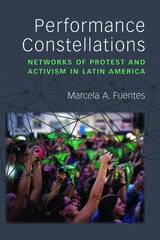
Performance Constellations
Networks of Protest and Activism in Latin AmericaMarcela A. Fuentes
University of Michigan Press, 2019
Performance, Transparency, and the Cultures of Surveillance
James M. Harding
University of Michigan Press, 2018
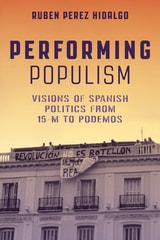
Performing Populism
Visions of Spanish Politics from 15-M to PodemosRuben Perez Hidalgo
Vanderbilt University Press, 2023
The book's first part examines how the 15-M movement created a new way of seeing that in turn led to a new way of doing politics in Spain. Part Two focuses on the multiple ramifications of that new vision once the people stopped marching and the movement became less visible.
From electoral posters to fiction films, documentaries, and internet memes, Performing Populism traces the ways that collective Spanish identities evolved from a period when "the people" seemed to have been willingly subsumed under the apathetic ideation of the middle-class consumer to the moment in 2011 when a crisis of representation forced many into political consciousness. This rude awakening kickstarted the reconstruction of a Spanish "us" that staged exhibitions of popular will on par with and parallel to the Arab Spring, but in a European register that embraced the countercultural through art that disremembered its political past but could not escape the ghostly shadow of its history.

Performing Violence
Literary and Theatrical Experiments of New Russian DramaBirgit Beumers and Mark Lipovetsky
Intellect Books, 2009
The so-called “New Russian Drama” emerged at the end of the twentieth century, following a long period of decline in dramatic writing in the late Soviet and post-Soviet era. In Performing Violence, Birgit Beumers and Mark Lipovetsky examine the representation of violence in these new dramatic works by young Russian playwrights. Reflecting the disappointment in Yeltsin’s democratic reforms and Putin’s neoconservative politics, the plays focus on political and social representations of violence, its performances, and its justifications.
As the first English-language study of Russian drama and theatre in the twenty-first century, Performing Violence seeks a vantage point for the analysis of brutality in post-Soviet culture. While previous generations had preferred poetry and prose, this new breed of authors—the Presnyakov brothers, Evgeni Grishkovets, and Vasili Sigarev among them—have garnered international recognition for their fierce plays. This book investigates the violent portrayal of the identity crisis of a generation as represented in their theatrical works, and will be a key text for students and scholars of drama, Russian studies, and literature.
Performing Whitely in the Postcolony
Afrikaners in South African Theatrical and Public LifeMegan Lewis
University of Iowa Press, 2016
Performing Whitely examines the multiple speech acts, political acts, and theatrical acts of the Afrikaner volk or nation in theatrical and public life, including pageants, museum sites, film, and popular music as well as theatrical productions. Lewis explores the diverse ways in which Afrikaners perform whitely, and the tactics they use, including nostalgia, melodrama, queering, abjection, and kitsch. She first investigates the way that apartheid’s architects leveraged whiteness in support of their nation-building efforts in the early twentieth century. In addition to re-enacting national pilgrimages of colonial-era migrations and building massive monuments at home, Afrikaner nationalists took their show to the United States, staging critical events of the Boer War at the 1904 St. Louis Exposition. A case study of the South African experience, Performing Whitely also offers parables for global whitenesses in the postcolonial era.
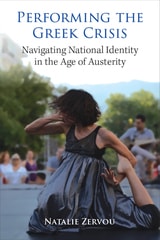
Performing the Greek Crisis
Navigating National Identity in the Age of AusterityNatalie Zervou
University of Michigan Press, 2024
Winner of the 2025 Dance Studies Association de la Torre Bueno Book Prize
Performing the Greek Crisis explores the impact of the Greek financial crisis (2009–19) on the performing arts sector in Greece, and especially on contemporary concert dance. When Greece became the first European Union member to be threatened with default, the resulting budget cuts pushed dance to develop in unprecedented directions. The book examines the repercussions that the crisis had on artists’ daily lives and experiences, weaving the personal with the political to humanize a phenomenon that, to date, had been examined chiefly through economic and statistical lenses. Informed by the author’s experience of growing up in Greece and including interviews and rich descriptions of performances, the book offers a glimpse into a pivotal moment in Greek history.
In Greece, dance (and, by extension, the body) has historically held a central role in the process of national identity construction. When the crisis broke out, artists had to navigate through a precariously fluctuating landscape, with their bodies as their only stable referent. By centering the analysis of the Greek crisis on the dancing bodies, Performing the Greek Crisis is able to examine the various ways that artists reconceptualized their history and reframed ideas of national belonging, race, citizenship, and immigration.
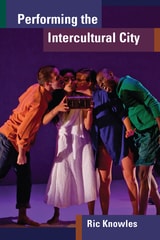
Performing the Intercultural City
Ric Knowles
University of Michigan Press, 2017
Periodizing Jameson
Dialectics, the University, and the Desire for NarrativePhillip E. Wegner
Northwestern University Press, 2014
For a half century, the American intellectual Fredric Jameson has been a driving force in literary and cultural theory. In Periodizing Jameson, Phillip E. Wegner builds upon Jameson’s unique dialectical method to demonstrate the value of Jameson’s tools—periodization, the fourfold hermeneutic, and the Greimasian semiotic square, among others—and to develop virtuoso readings of Jameson’s own work and the history of the contemporary American university in which it unfolds.
Wegner shows how Jameson’s work intervenes in particular social, cultural, and political situations, using his scholarship both to develop original explorations of nineteenth-century fiction, popular films, and other promiment theorists, and to examine the changing fortunes of theory itself. In this way, Periodizing Jameson casts new light on the potential of and challenges to humanist intellectual work in the present.
Phenomenal Reading
Essays on Modern and Contemporary PoeticsBrian M. Reed
University of Alabama Press, 2012
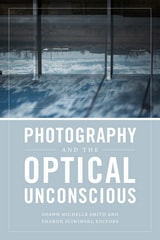
Photography and the Optical Unconscious
Shawn Michelle Smith and Sharon Sliwinski, editors
Duke University Press, 2017
Contributors. Mary Bergstein, Jonathan Fardy, Kristan Horton, Terri Kapsalis, Sarah Kofman, Elisabeth Lebovici, Zoe Leonard, Gabrielle Moser, Mignon Nixon, Thy Phu, Mark Reinhardt, Shawn Michelle Smith, Sharon Sliwinski, Laura Wexler, Kelly Wood, Andrés Mario Zervigón
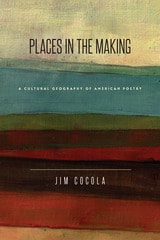
Places in the Making
A Cultural Geography of American PoetryJim Cocola
University of Iowa Press, 2016
Positing place as a pivotal axis of identification and heralding emplacement as a crucial model for cultural, intellectual, and political activity in a period marked and imperiled by a tendency toward dislocation, the critical vocabulary of this project centers upon the work of place-making. It attends to a poetics that extends beyond epic and lyric modes while relying simultaneously on auditory and visual effects and proceeding in the interests of environmental advocacy and social justice, often in contrast to the more orthodox concerns of literary modernism, global capitalism, and print culture. Focusing on poets of international reputation, such as Elizabeth Bishop, Pablo Neruda, Charles Olson, and William Carlos Williams, Places in the Making also considers work by more recent figures, including Kamau Brathwaite, Joy Harjo, Myung Mi Kim, and Craig Santos Perez. In its larger comparative, multiethnic, and transnational emphases, this book addresses questions of particular moment in American literary and cultural studies and aspires to serve as a catalyst for further interdisciplinary work connecting geography and the humanities.

Plagues and Pencils
A Year of Pandemic SketchesEdward Carey, with a foreword by Max Porter
University of Texas Press, 2022
Honorable Mention, 2022 Nonfiction Prize, Writers' League of Texas
A remarkable collection of words and illustrations documenting the first year of the pandemic.
In March 2020, as lockdowns were imposed around the world, author and illustrator Edward Carey raced home to Austin, Texas. The next day, he published on social media a sketch of “A Very Determined Young Man.” The day after, he posted another drawing. One year and one hundred and fifty Tombow B pencil stubs later, he was still drawing.
Carey’s pencil fills the page with the marvelous and intriguing, picturing people, characters, animals, monsters, and his favorite bird to draw, the grackle. He reaches into history and fiction to escape grim reality through flights of vivid imagination—until events demand the drawings “look straight on.”
Breonna Taylor, the Brontë sisters, John Lewis, King Lear, and even the portraits that mark the progress of the year for the Very Determined Young Man combine into a remarkable document of the pandemic and its politics. For Carey, though, trapped inside a home he loves, these portraits are something more, a way to chart time, an artist’s way of creating connection in isolation. With an introduction by Max Porter, this exceptional collection from the acclaimed author of Little marks a year of a man trapped with his pencil, determined to find solace amid uncertainty.
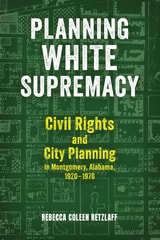
Planning White Supremacy
Civil Rights and City Planning in Montgomery, Alabama, 1920–1970Rebecca Coleen Retzlaff
University of Alabama Press, 2026
An unflinching account of how city planning was deployed to enforce white supremacy in Montgomery, Alabama—the birthplace of the Civil Rights Movement—and how Black activists fought back, block by neighborhood block.
At the heart of the Civil Rights Movement was a city meticulously designed to enforce inequality. In Planning White Supremacy: Civil Rights and City Planning in Montgomery, Alabama, 1920–1970, Rebecca Coleen Retzlaff traces how city officials used the tools of modern planning—zoning, infrastructure, housing codes, public investment, and highway construction—to suppress political power, economic opportunity, and spatial freedom for Black citizens.
As the birthplace of the Civil Rights Movement, Montgomery became a battleground where urban planning and direct-action protest collided, shaping the city’s culture in ways that still resonate today. Retzlaff’s analysis exposes the calculated use of municipal power to control land use, displace Black communities, keep schools and neighborhoods segregated, and preserve white political dominance. By placing urban planning at the center of Montgomery’s story, this groundbreaking work reframes the movement not only as a fight for voting rights and legal equality, but as a struggle for space, housing, mobility, education, and the right to live with dignity. Retzlaff also highlights the resilience and joy of the close-knit Black neighborhoods that nurtured the civil rights activists who changed history.
Retzlaff reveals how urban planning decisions systematically targeted Black neighborhoods, reinforcing racial inequality under the guise of modernization. With historical depth and critical insight, Planning White Supremacy situates Montgomery within the broader context of American urban history—offering a vital perspective on the intersection of race, space, and power. Essential for scholars of urban planning, history, and racial justice, this book also provides urgent insight into how these legacies continue to shape cities and Black socioeconomic opportunities today.
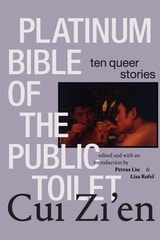
Platinum Bible of the Public Toilet
Ten Queer StoriesCui Zi'en. Edited and with an introduction by Petrus Liu and Lisa Rofel
Duke University Press, 2024
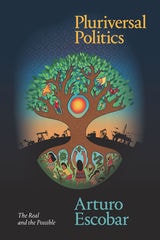
Pluriversal Politics
The Real and the PossibleArturo Escobar
Duke University Press, 2020
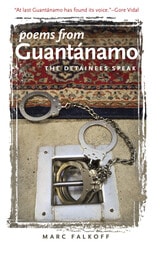
Poems from Guantanamo
The Detainees SpeakMarc Falkoff
University of Iowa Press, 2007
Since 2002, at least 775 men have been held in the U.S. detention center at Guantánamo Bay, Cuba. According to Department of Defense data, fewer than half of them are accused of committing any hostile act against the United States or its allies. In hundreds of cases, even the circumstances of their initial detainment are questionable.
This collection gives voice to the men held at Guantánamo. Available only because of the tireless efforts of pro bono attorneys who submitted each line to Pentagon scrutiny, Poems from Guantánamo brings together twenty-two poems by seventeen detainees, most still at Guantánamo, in legal limbo.
If, in the words of Audre Lorde, poetry “forms the quality of light within which we predicate our hopes and dreams toward survival and change,” these verses—some originally written in toothpaste, others scratched onto foam drinking cups with pebbles and furtively handed to attorneys—are the most basic form of the art.
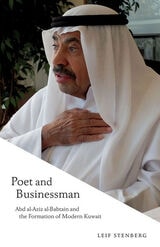
Poet and Businessman
Abd al-Aziz al-Babtain and the Formation of Modern KuwaitLeif Stenberg
Gingko, 2022
This book reviews and analyzes the modern history of Kuwait through the life of Abd al-Aziz Sa‘ud al-Babtain, a wealthy businessman, philanthropist, and poet. He is the head of a large, influential international cultural foundation based in Kuwait City. Abd al-Aziz’s life story tightly interweaves with modern discussions on the history of the state of Kuwait. There are very few books taking a collective grip on the history of the state of Kuwait. Likewise, there are very few studies about the generation of Gulf individuals who experienced, benefitted from, and even suffered from the discovery of oil, and who has been a crucial part of socioeconomic and cultural developments in countries like Kuwait in recent history. By constructing a cohesive overview of the modern history of Kuwait enriched by the life of an individual that has lived through the better part of that particular history, this book fills a lacuna in contemporary scholarship on the Middle East, and especially the Arabian or the Persian Gulf.
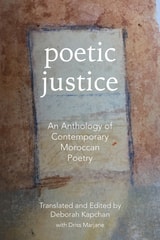
Poetic Justice
An Anthology of Contemporary Moroccan PoetryBy Deborah Kapchan
University of Texas Press, 2019
Poetic Justice is the first anthology of contemporary Moroccan poetry in English. The work is primarily composed of poets who began writing after Moroccan independence in 1956 and includes work written in Moroccan Arabic (darija), classical Arabic, French, and Tamazight.
Why Poetic Justice? Moroccan poetry (and especially zajal, oral poetry now written in Moroccan Arabic) is often published in newspapers and journals and is thus a vibrant form of social commentary; what’s more, there is a law, a justice, in the aesthetic act that speaks back to the law of the land. Poetic Justice because literature has the power to shape the cultural and moral imagination in profound and just ways.
Reading this oeuvre from independence until the new millennium and beyond, it is clear that what poet Driss Mesnaoui calls the “letters of time” have long been in the hands of Moroccan poets, as they write their ethics, their aesthetics, as well as their gendered and political lives into poetic being.
Poetics and Praxis 'After' Objectivism
W. Scott Howard and Broc Rossell
University of Iowa Press, 2018
Poetics and Praxis ‘After’ Objectivismexamines late twentieth-and early twenty-first-century poetics and praxis within and against the dynamic, disparate legacy of Objectivism and the Objectivists. This is the first volume in the field to investigate the continuing relevance of the Objectivist ethos to poetic praxis in our time. The book argues for a reconfiguration of Objectivism, adding contingency to its historical values of sincerity and objectification, within the context of the movement’s development and disjunctions from 1931 to the present.
Essays and conversations from emerging and established poets and scholars engage a network of communities in the U.S., Canada, and the U.K., shaped by contemporaneous oppositions as well as genealogical (albeit discontinuous) historicisms. This book articulates Objectivism as an inclusively local, international, and interdisciplinary ethos, and reclaims Objectivist poetics and praxis as modalities for contemporary writers concerned with radical integrations of aesthetics, lyric subjectivities, contingent disruption, historical materialism, and social activism. The chapter authors and roundtable contributors reexamine foundational notions about Objectivism—who the Objectivists were and are, what Objectivism has been, now is, and what it might become—delivering critiques of aesthetics and politics; of race, class, and gender; and of the literary and cultural history of the movement’s development and disjunctions from 1931 to the present.
Contributors: Rae Armantrout, Julie Carr, Amy De’Ath, Jeff Derksen, Rachel Blau DuPlessis, Graham Foust, Alan Golding, Jeanne Heuving, Ruth Jennison, David Lau, Steve McCaffery, Mark McMorris, Chris Nealon, Jenny Penberthy, Robert Sheppard

Poetics of Visibility in the Contemporary Arab American Novel
Mazen Naous
The Ohio State University Press, 2020
Naous’s book offers analyses of Diana Abu-Jaber’s Arabian Jazz and Crescent, Rabih Alameddine’s Koolaids: The Art of War, Laila Halaby’s Once in a Promised Land, and Mohja Kahf’s The Girl in the Tangerine Scarf as ways to answer this question. Naous explores how these novels negotiate queer desire, music, Western and Middle Eastern art, gender, and relationships between other minorities. These poetics enable readers to see the nuance and richness of Arab American experience. Naous ultimately argues that fiction creates crucial spaces for reimagining and redefining intercultural relationships.
Poetry Matters
Neoliberalism, Affect, and the Posthuman in Twenty-First Century North American Feminist PoeticsHeather Milne
University of Iowa Press, 2018
Poetry Matters explores poetry written by women from the United States and Canada, which documents the social and political turmoil of the early twenty-first century and places this poetry in dialogue with recent currents of feminist theory including new materialism, affect theory, posthumanism, and feminist engagements with neoliberalism and capitalism. Central to this project is the conviction that a poetics that explores the political dimensions of affect; demonstrates an understanding of subjectivity as posthuman and transcorporeal; critically reflects on the impact of capitalism on queer, racialized, and female bodies; and develops an ethical vocabulary for reimagining the nation state and critically engaging with issues of democracy and citizenship is now more urgent than ever before.
Milne focuses on poetry published after 2001 by writers who mostly began writing after the feminist writing movements of the 1980s, but who have inherited and built upon their political and aesthetic legacies. The poets discussed in this book—including Jennifer Scappettone, Margaret Christakos, Larissa Lai, Rita Wong, Nikki Reimer, Rachel Zolf, Yedda Morrison, Marcella Durand, Evelyn Reilly, Juliana Spahr, Claudia Rankine, Dionne Brand, Jena Osman, and Jen Benka—bring a sense of political agency to poetry. These voices seek new vocabularies and dissenting critical and aesthetic frameworks for thinking across issues of gender, materiality, capitalism, the toxic convergences of nationalism and racism, and the decline of democratic institutions. This is poetry that matters—both in its political urgency and in its attentiveness to the world as “matter”—as a material entity under siege. It could not be more timely or more relevant.
Poetry and Its Others
News, Prayer, Song, and the Dialogue of GenresJahan Ramazani
University of Chicago Press, 2013
Poetry's Afterlife
Verse in the Digital AgeKevin Stein
University of Michigan Press, 2010
"The great pleasure of this book is the writing itself. Not only is it free of academic and ‘lit-crit' jargon, it is lively prose, often deliciously witty or humorous, and utterly contemporary. Poetry's Afterlife has terrific classroom potential, from elementary school teachers seeking to inspire creativity in their students, to graduate students in MFA programs, to working poets who struggle with the aesthetic dilemmas Stein elucidates, and to teachers of poetry on any level."
--- Beckian Fritz Goldberg, Arizona State University
"Kevin Stein is the most astute poet-critic of his generation, and this is a crucial book, confronting the most vexing issues which poetry faces in a new century."
---David Wojahn, Virginia Commonwealth University
At a time when most commentators fixate on American poetry's supposed "death," Kevin Stein's Poetry's Afterlife instead proposes the vitality of its aesthetic hereafter. The essays of Poetry's Afterlife blend memoir, scholarship, and personal essay to survey the current poetry scene, trace how we arrived here, and suggest where poetry is headed in our increasingly digital culture. The result is a book both fetchingly insightful and accessible. Poetry's spirited afterlife has come despite, or perhaps because of, two decades of commentary diagnosing American poetry as moribund if not already deceased. With his 2003 appointment as Illinois Poet Laureate and his forays into public libraries and schools, Stein has discovered that poetry has not given up its literary ghost. For a fated art supposedly pushing up aesthetic daisies, poetry these days is up and about in the streets, schools, and universities, and online in new and compelling digital forms. It flourishes among the people in a lively if curious underground existence largely overlooked by national media. It's this second life, or better, Poetry's Afterlife, that his book examines and celebrates.
Kevin Stein is Caterpillar Professor of English and Director of the Creative Writing Program at Bradley University and has served as Illinois Poet Laureate since 2003, having assumed the position formerly held by Gwendolyn Brooks and Carl Sandburg. He is the author of numerous books of poetry and criticism.
digitalculturebooksis an imprint of the University of Michigan Press and the Scholarly Publishing Office of the University of Michigan Library dedicated to publishing innovative and accessible work exploring new media and their impact on society, culture, and scholarly communication. Visit the website at www.digitalculture.org.

Poets Beyond the Barricade
Rhetoric, Citizenship, and Dissent after 1960Dale M. Smith
University of Alabama Press, 2012
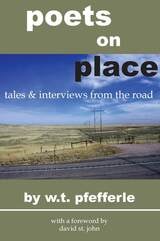
Poets On Place
W. T. Pfefferle
Utah State University Press, 2005
Out to see America and satisfy his travel bug, W. T. Pfefferle resigned from his position as director of the writing program at Johns Hopkins University and hit the road to interview sixty-two poets about the significance of place in their work. The lively conversations that resulted may surprise with the potential meanings of a seemingly simple concept. This gathering of voices and ideas is illustrated with photo and word portraits from the road and represented with suitable poems.
The poets are James Harms, David Citino, Martha Collins, Linda Gregerson, Richard Tillinghast, Orlando Ricardo Menes, Mark Strand, Karen Volkman, Lisa Samuels, Marvin Bell, Michael Dennis Browne, David Allan Evans, David Romtvedt, Sandra Alcosser, Robert Wrigley, Nance Van Winckel, Christopher Howell, Mark Halperin, Jana Harris, Sam Hamill, Barbara Drake, Floyd Skloot, Ralph Angel, Carol Muske-Dukes, David St. John, Sharon Bryan, Donald Revell, Claudia Keelan, Alberto Rios, Richard Shelton, Jane Miller, William Wenthe, Naomi Shihab Nye, Peter Cooley, Miller Williams, Beth Ann Fennelly, Natasha Trethewey, Denise Duhamel, Campbell McGrath, Terrance Hayes, Alan Shapiro, Nikki Giovanni, Charles Wright, Rita Dove, Henry Taylor, Dave Smith, Nicole Cooley, David Lehman, Lucie Brock-Broido, Michael S. Harper, C. D. Wright, Mark Wunderlich, James Cummins, Frederick Smock, Mark Jarman, Carl Phillips, Scott Cairns, Elizabeth Dodd, Jonathan Holden, Bin Ramke, Kenneth Brewer, and Paisley Rekdal.
Polarization and Democracy in Latin America
Legacies of the Left TurnSantiago Anria and Kenneth M. Roberts
University of Chicago Press, 2026
An insightful examination of Latin America’s contemporary democratic landscape and how it is marked by patterns of polarization and volatility.
Although Latin American democracies have shown considerable resilience, today they face new forms of political polarization and instability. These challenges are closely connected to the legacies of the region’s “left turn,” which sought to transform entrenched inequalities and social hierarchies in the early twenty-first century. Unprecedented in its scope and duration, the left turn reflected an underlying realignment of political contestation in a highly unequal region. Yet despite notable achievements in addressing social needs, leftist parties struggled to deepen democracy by empowering popular majorities, and they faced powerful elite backlashes.
Through a comparative analysis of seven South American countries, Santiago Anria and Kenneth M. Roberts trace the different origins and trajectories in power of the populist and social democratic currents that emerged within the left turn. Anria and Roberts argue that today’s democratic orders face intensifying polarization and institutional fragility, even where social democratic parties made explicit efforts to build broad coalitions and temper political conflict. They show how activist networks and social movements on the left and the right triggered latent political conflicts and are now reshaping democratic competition and the terms of social inclusion in South American politics.
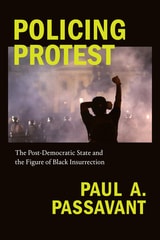
Policing Protest
The Post-Democratic State and the Figure of Black InsurrectionPaul A. Passavant
Duke University Press, 2021
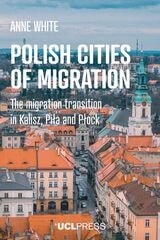
Polish Cities of Migration
The Migration Transition in Kalisz, Pila and PlockAnne White
University College London, 2024
Polish Cities of Migration analyzes Poland’s transition to become a “country of immigration.” Incorporating in-depth interviews with thirty-seven Polish returned migrants, seventy Ukrainians, and seventeen foreigners living in Kalisz, Plock, and Pila, the book explores two interconnected puzzles: how Poland’s migration transition is influenced by its current status as an emigration country, and why migrants are spreading out beyond the metropolises. It argues that migrants’ feelings of comfort in such locations are explained by network and lifestyle considerations, as well as the social acceptance of migration by former migrant Poles.
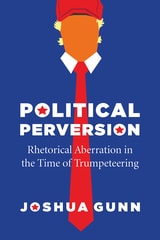
Political Perversion
Rhetorical Aberration in the Time of TrumpeteeringJoshua Gunn
University of Chicago Press, 2020
Drawing on insights from critical theory, media ecology, and psychoanalysis, Gunn argues that perverse rhetorics dominate not only the political sphere but also our daily interactions with others, in person and online. From sexting to campaign rhetoric, Gunn advances a new way to interpret our contemporary political context that explains why so many of us have difficulty deciphering the appeal of aberrant public figures. In this book, Trump is only the tip of a sinister, rapidly growing iceberg, one to which we ourselves unwittingly contribute on a daily basis.
Political Trust in China
Lianjiang Li
University of Michigan Press, 2025
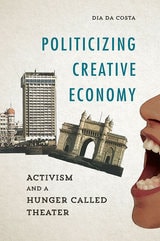
Politicizing Creative Economy
Activism and a Hunger Called TheaterDia Da Costa
University of Illinois Press, 2016
As Da Costa shows, commodification, heritage, and management discussions inevitably creep into performance. Yet the ability of performance to undermine such subtle invasions make activist theater a crucial site for considering what counts as creativity in the cultural politics of creative economy. Da Costa explores the precarious lives, livelihoods, and ideologies at the intersection of heritage projects, planning discourse, and activist performance. By analyzing the creators, performers, and activists involved--individuals at the margins of creative economy as well as society--Da Costa builds a provocative argument. Their creative economy practices may survive, challenge, and even reinforce the economies of death, displacement, and divisiveness used by the urban poor to survive.
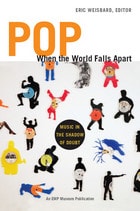
Pop When the World Falls Apart
Music in the Shadow of DoubtEric Weisbard, ed.
Duke University Press, 2012
Drawn from presentations at the annual Experience Music Project Pop Conference—hailed by Robert Christgau as “the best thing that’s ever happened to serious consideration of pop music”—the essays in this book include inquiries into the sonic dimension of war in Iraq; the cultural life of jazz in post-Katrina New Orleans; Isaac Hayes’s reappropriation of a country song, “By the Time I Get to Phoenix,” as a symbol of black nationalism; and punk rock pranks played on record execs looking for the next big thing in central Virginia. Offering a diverse range of voices, perspectives, and approaches, this volume mirrors the eclecticism of pop itself.
Contributors: Larry Blumenfeld , Austin Bunn, Nate Chinen, J. Martin Daughtry, Brian Goedde, Michelle Habell-Pallán, Jonathan Lethem, Eric Lott, Kembrew McLeod, Elena Passarello, Diane Pecknold, David Ritz, Carlo Rotella, Scott Seward, Tom Smucker, Greg Tate, Karen Tongson, Alexandra T. Vazquez, Oliver Wang, Eric Weisbard, Carl Wilson

Pope.L
Showing Up to WithholdThe Renaissance Society at the University of Chicago
University of Chicago Press, 2014
Published to accompany his wonderfully inscrutable exhibition Forlesen at the Renaissance Society at the University of Chicago, Pope.L: Showing Up to Withhold is simultaneously an artist’s book and a monograph. In addition to reproductions of a number of his most recent artworks, it includes images of significant works from the past decade, and presents a forum for reflection and analysis on art making today with contributions by renowned critics and scholars, including Lawrie Balfour, Nick Bastis, Lauren Berlant, and K. Silem Mohammad.
Population Trends in New Jersey
James W. Hughes
Rutgers University Press, 2022
The authors also highlight key trends that will continue to transform the state: domestic migration out of the state and immigration into it; increasing diversity; slower overall population growth; contracting fertility; the household revolution and changing living arrangements; generational disruptions; and suburbanization versus re-urbanization. All of these factors help place in context the result of the 2020 decennial U.S. Census.
While the book focuses on New Jersey, the Garden State is a template of demographic, economic, social, and other forces characterizing the United States in the twenty-first century.
Populism and Performance in the Bolivarian Revolution of Venezuela
Angela Marino
Northwestern University Press, 2018
Based on ethnographic and archival research, Marino focuses on performances of the devil figure, tracing this beloved trickster through religious fiestas, mid-century theater and film, and other media as it both antagonizes and unifies a movement against dictatorship and neoliberalism. She then demonstrates that performance became a vehicle through which cultural producers negotiated boundaries of inclusion and exclusion in ways that overcame the simplistic logic of good versus evil, us versus them. The result is a nuanced insight into the process of building political mobilization out of crisis and through monumental times of change.
The book will interest readers of Latin American politics, cultural studies, political science, and performance studies by providing a vital record of the revolution, with valuable insights into its internal dynamics and lessons towards building a populist movement of the left in contentious times.

Portable Borders
Performance Art and Politics on the U.S. Frontera since 1984By Ila Nicole Sheren
University of Texas Press, 2015
After World War II, the concept of borders became unsettled, especially after the rise of subaltern and multicultural studies in the 1980s. Art at the U.S.-Mexico border came to a turning point at the beginning of that decade with the election of U.S. President Ronald Reagan. Beginning with a political history of the border, with an emphasis on the Chicano movement and its art production, Ila Sheren explores the forces behind the shift in thinking about the border in the late twentieth century.
Particularly in the world of visual art, borders have come to represent a space of performance rather than a geographical boundary, a cultural terrain meant to be negotiated rather than a physical line. From 1980 forward, Sheren argues, the border became portable through performance and conceptual work. This dematerialization of the physical border after the 1980s worked in two opposite directions—the movement of border thinking to the rest of the world, as well as the importation of ideas to the border itself. Beginning with site-specific conceptual artwork of the 1980s, particularly the performances of the Border Art Workshop/Taller de Arte Fronterizo, Sheren shows how these works reconfigured the border as an active site. Sheren moves on to examine artists such as Guillermo Gómez-Peña, Coco Fusco, and Marcos Ramirez “ERRE.” Although Sheren places emphasis on the Chicano movement and its art production, this groundbreaking book suggests possibilities for the expansion of the concept of portability to contemporary art projects beyond the region.
Portable Postsocialisms
New Cuban Mediascapes after the End of HistoryPaloma Duong
University of Texas Press, 2024
2025 Honorable Mention, Bryce Wood Book Award, Latin American Studies Association
A study of Cuban culture and media in the twenty-first century as both a global phenomenon and a local reality, at a time when the declared death of socialism coexists in tension with emerging anticapitalist movements worldwide.
Why does Cuban socialism endure as an object of international political desire, while images of capitalist markets consume Cuba’s national imagination? This bold new study argues that Cuba’s changing media cultures are key to our understanding of the global postsocialist condition and its competing political imaginaries.
Portable Postsocialisms calls on a vast multimedia archive to offer a groundbreaking cultural interpretation of Cuban postsocialism. Paloma Duong examines songs, artworks, advertisements, memes, literature, jokes, and networks that refuse exceptionalist and exoticizing visions of Cuba. Expanding postsocialist critical theory to read this complex mediascape, Duong argues that a materialist critique of Cuba’s revolutionary legacy must account for Cubans’ everyday demands for agency and self-representation. This long overdue reassessment of Cuba’s place in Latin American and post-Marxist studies shows Cuban postsocialism to be an urgent and indispensable referent for core debates on the politics of participatory cultures in new media studies. Portable Postsocialisms performs the crucial task of redefining how we envision imaginaries of social change in Latin America and the Caribbean.

Post-Anarchism
A ReaderEdited by Duane Rousselle and Sureyyya Evren
Pluto Press, 2011
Post-anarchism has been of considerable importance in the discussions of radical intellectuals across the globe in the last decade. In its most popular form, it demonstrates a desire to blend the most promising aspects of traditional anarchist theory with developments in post-structuralist and post-modernist thought. Post-Anarchism: A Reader includes the most comprehensive collection of essays about this emergent body of thought, making it an essential and accessible resource for academics, intellectuals, activists and anarchists interested in radical philosophy.
Many of the chapters have been formative to the development of a distinctly 'post-anarchist' approach to politics, aesthetics, and philosophy. Others respond to the so-called 'post-anarchist turn' with caution and scepticism. The book also includes original contributions from several of today's 'post-anarchists', inviting further debate and new ways of conceiving post-anarchism across a number of disciplines.
Post-Borderlandia
Chicana Literature and Gender Variant CritiqueCuevas, T. Jackie
Rutgers University Press, 2018
2019 Lambda Literary Awards Finalist
Bringing Chicana/o studies into conversation with queer theory and transgender studies, Post-Borderlandia examines why gender variance is such a core theme in contemporary Chicana and Chicanx narratives. It considers how Chicana butch lesbians and Chicanx trans people are not only challenging heteropatriarchal norms, but also departing from mainstream conceptions of queerness and gender identification.
Expanding on Gloria Anzaldúa’s classic formulation of the Chicana as transformer of the “borderlands,” Jackie Cuevas explores how a new generation of Chicanx writers, performers, and filmmakers are imagining a “post-borderlands” subjectivity, where shifting national, racial, class, sexual, and gender identifications produce complex power dynamics. In addition, Cuevas offers fresh archival analysis of the Chicana feminist canon to reveal how queer gender variance has always been crucial to this literary tradition.
Post-Communist Mafia State
The Case of HungaryBálint Magyar
Central European University Press, 2016

Post-Postmodernist Fiction and the Rise of Digital Epitexts
Virginia Pignagnoli
The Ohio State University Press, 2023