Results by title
87 books match the query 'AIDS (Disease)' and 8 start with p
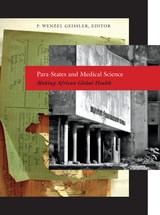
Para-States and Medical Science
Making African Global HealthP. Wenzel Geissler, editor
Duke University Press, 2015
Contributors. Uli Beisel, Didier Fassin, P. Wenzel Geissler, Rene Gerrets, Ann Kelly, Guillaume Lachenal, John Manton, Lotte Meinert, Vinh-Kim Nguyen, Branwyn Poleykett, Susan Reynolds Whyte
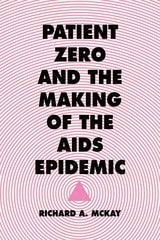
Patient Zero and the Making of the AIDS Epidemic
Richard A. McKay
University of Chicago Press, 2017
The search for a “patient zero”—popularly understood to be the first person infected in an epidemic—has been key to media coverage of major infectious disease outbreaks for more than three decades. Yet the term itself did not exist before the emergence of the HIV/AIDS epidemic in the 1980s. How did this idea so swiftly come to exert such a strong grip on the scientific, media, and popular consciousness? In Patient Zero, Richard A. McKay interprets a wealth of archival sources and interviews to demonstrate how this seemingly new concept drew upon centuries-old ideas—and fears—about contagion and social disorder.
McKay presents a carefully documented and sensitively written account of the life of Gaétan Dugas, a gay man whose skin cancer diagnosis in 1980 took on very different meanings as the HIV/AIDS epidemic developed—and who received widespread posthumous infamy when he was incorrectly identified as patient zero of the North American outbreak. McKay shows how investigators from the US Centers for Disease Control inadvertently created the term amid their early research into the emerging health crisis; how an ambitious journalist dramatically amplified the idea in his determination to reframe national debates about AIDS; and how many individuals grappled with the notion of patient zero—adopting, challenging and redirecting its powerful meanings—as they tried to make sense of and respond to the first fifteen years of an unfolding epidemic. With important insights for our interconnected age, Patient Zero untangles the complex process by which individuals and groups create meaning and allocate blame when faced with new disease threats. What McKay gives us here is myth-smashing revisionist history at its best.

Piecing the Puzzle
The Genesis of AIDS Research in AfricaLarry Krotz
University of Manitoba Press, 2012
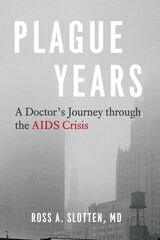
Plague Years
A Doctor’s Journey through the AIDS CrisisRoss A. Slotten, MD
University of Chicago Press, 2020
Plague Years is an unprecedented first-person account of that epidemic, spanning not just the city of Chicago but four continents as well. Slotten provides an intimate yet comprehensive view of the disease’s spread alongside heartfelt portraits of his patients and his own conflicted feelings as a medical professional, drawn from more than thirty years of personal notebooks. In telling the story of someone who was as much a potential patient as a doctor, Plague Years sheds light on the darkest hours in the history of the LGBT community in ways that no previous medical memoir has.
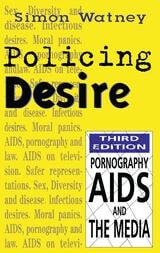
Policing Desire
Pornography, AIDS and the MediaSimon Watney
University of Minnesota Press, 1997
An updated edition of this essential work.
Since its initial publication, Policing Desire has proved to be an unparalleled analysis of “the cacophony of voices which sounds through every institution of our society on the subject of AIDS.” For the third edition Simon Watney has provided a new preface, a compelling new concluding essay, and a directory for AIDS information that includes electronic resources.
“A far-reaching analysis of images of AIDS and homosexuality in the media. . . . In Policing Desire, Simon Watney called the media on its own game, and the media actually changed its coverage of AIDS and queer issues.” Voice Literary Supplement“Simon Watney’s Policing Desire is essential reading for anyone who wants to press the question of how the media represents AIDS . . . it will stand as a great work of criticism written from the trenches.” New York Native“A landmark work in AIDS analysis because of the combination of emotional urgency and analytical insight that it manifests.” American Book ReviewWinner of the Gustavus Myers Prize for the Study of Human RightsISBN 0-8166-3024-0 Cloth $39.95xx CUSAISBN 0-8166-3025-9 Paper $16.95x CUSA000 pages 0 x 0 MarchMedia Studies/Social TheoryPolicing DesirePornography, AIDS and the MediaThird EditionSimon WatneyAn updated edition of this essential work. Since its initial publication, Policing Desire has proved to be an unparalleled analysis of “the cacophony of voices which sounds through every institution of our society on the subject of AIDS.” For the third edition Simon Watney has provided a new preface, a compelling new concluding essay, and a directory for AIDS information that includes electronic resources.“A far-reaching analysis of images of AIDS and homosexuality in the media. . . . In Policing Desire, Simon Watney called the media on its own game, and the media actually changed its coverage of AIDS and queer issues.” Voice Literary Supplement“Simon Watney’s Policing Desire is essential reading for anyone who wants to press the question of how the media represents AIDS . . . it will stand as a great work of criticism written from the trenches.” New York Native“A landmark work in AIDS analysis because of the combination of emotional urgency and analytical insight that it manifests.” American Book ReviewSimon Watney is the director of the Red Hot AIDS Charitable Trust, which distributes funds internationally for HIV/AIDS prevention and education. Watney lives in London, England.
Practices of Freedom
Selected Writings on HIV/AIDSSimon Watney
Duke University Press, 1994
Watney’s voice—neither neutral nor detached—is that of an active and influential participant in the fight against AIDS. He offers a unique view of the ways in which gay men working in community-based organizations have attempted to provide reliable and up-to-date services and information regarding AIDS treatment and health. A leader in insisting on gay men’s entitlements to education, care, and services, Watney was among the first to challenge the "de-gaying" of AIDS service organizations in the late eighties. He also devotes his attention to HIV/AIDS prevention work, research and treatment issues, and the wider cultural politics of the disease, including the role of language, television, and cinema. His analysis of the epidemic as it has unfolded provides a history of many of the major medical and political debates that have defined the course and extent of the crisis.
Practices of Freedom demonstrates the failure of national institutions, from the government to the press, to understand and effectively fight this epidemic, and directs attention to the most urgent needs in American and international AIDS work. It will be an important primary resource, particularly in the United States, where effective community-based HIV/AIDS education tragically has often been neglected.
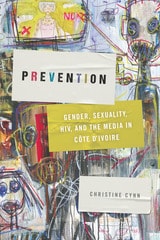
Prevention
Gender, Sexuality, HIV, and the Media in Côte d'IvoireChristine Cynn
The Ohio State University Press, 2018
More specifically, Cynn argues that through the bolstering of normative conceptions of gendered sexualities and families, HIV prevention media campaigns seek to actively create proper subjects, a goal corresponding with nation-building projects and reproducing their terms of belonging. During periods of increasingly virulent political and economic struggles in Côte d’Ivoire, such HIV prevention messages have lent support to lender- and state-mandated structural adjustment policies and to the exclusionary logic that casts some—such as those suffering from AIDS-related illnesses, those labeled as “homosexual,” sex workers, intravenous drug users, and the HIV-positive child—as implicitly unassimilable to the community and nation. Deeply interdisciplinary, Prevention brings to light new forms of exclusion and expands scholarship on gender and sexual normativities as it intersects with that on public health, neoliberalism, and film and media.

Private Acts, Social Consequences
Bayer, Ronald
Rutgers University Press, 1991
Bayer, staff member of a policy studies center in New York State, here reviews the record of public agencies in dealing with AIDS-created biological, social and political problems, including resolution of conflicts between privacy and the public good. He notes the contradiction between Centers for Disease Control recommendations of counseling, education and broad-scale voluntary testing of all Americans at risk, and federal policies that favor mandatory testing of the military, marriage applicants, hospital workers, patients and prostitutes, among others, and quarantine of AIDS carriers advocated by some states. Bayer recommends restraint by individuals in sexual matters and drug use, accompanied by an assault on the economic and social problems that underlie the epidemic, especially as regards the newborn and teenagers. In the growing body of AIDS literature, this is a valuable fact-finding study that should interest a lay as well as professional audience.
From Library Journal
Bayer's topic is the politically charged dilemma AIDS presents to public health officials and policymakers. What steps can be taken which will not only protect society at large, but also safeguard the privacy and civil liberties of individuals? The author ably traces the political history of AIDS. He suggests a responsible but nonauthoritarian approach, combining education; health care access for IV users; promotion of anonymous, confidential screening; defense of victims' rights; appropriate contact notification programs; and moderate laws protecting society from malicious individuals. This work is well-documented and cogently argued. Highly recommended for all academic collections and larger public libraries.