Results by title
244 books match the query 'Arkansas' and 4 start with p

Pea Ridge and Prairie Grove
Scenes and Incidents fo the War in ArkansasWilliam Baxter
University of Arkansas Press, 2000
With the goal of sketching “at least some of the bright lights and dark shadows of the war;” William Baxter authored his regional classic, Pea Ridge and Prairie Grove, in 1864, before the actual end of the Civil War.
Primarily focusing on the civilians of the region, Baxter vividly describes their precarious and vulnerable positions during the advances and retreats of armies as Confederate and Federal forces marched across their homeland. In his account, Baxter describes skirmishes and cavalry charges outside his front door, the “firing” of his town’s buildings during a Confederate retreat, clashes between secessionist and Unionist neighbors, the feeding of hungry soldiers and the forceful appropriation of his remaining food supply, and the sickening sight of the wounded emerging from the Prairie Grove battlefield.
Since its original printing, this firsthand account has only been reprinted once, in 1957, and both editions are considered collectors’ items today. Of interest to Civil War scholars and general readers alike, Baxter’s compelling social history is rendered even more comprehensive by William Shea’s introduction. Pea Ridge and Prairie Grove is a valuable personal account of the Civil War in the Trans-Mississippi West which enables us to better comprehend the conflict as a whole and its devastating effect on the general populace of the war-torn portions of the country.
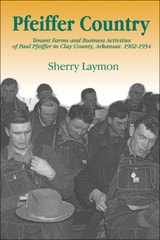
Pfeiffer Country
The Tenant Farms and Business Activities of Paul Pfeiffer in Clay County, Arkansas, 1902-1954Sherry Laymon
Butler Center for Arkansas Studies, 2009

Preface to the Presidency
Selected Speeches of Bill Clinton 1974-1992Stephen Smith
University of Arkansas Press, 1996
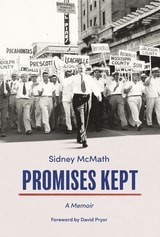
Promises Kept
A MemoirSidney S. McMath
University of Arkansas Press, 2003
Winner of the 2006 Booker Worthen Literary Prize and the 2004 Ragsdale Award
A dominating spirit of public service animated the life of Sidney Sanders McMath (1912–2003), the thirty-fourth governor of Arkansas. Promises Kept, completed and published when McMath was in his nineties, tells his story in his own words—from the piney hills of South Arkansas to the battlefields of World War II; through the human dramas of the courtroom to the marbled corridors of the State Capitol.
In Promises Kept, McMath recounts a rural upbringing that grounded him in the concerns of everyday Arkansans. He tells his life story through key milestones, including distinguished military service and a dramatic political rise to governor of Arkansas. During his four years in office, he pursued reform and modernization by expanding roads and electricity to rural areas, fighting the poll tax, building the state’s first medical center, opening Democratic primaries to Black voters, and standing with President Harry Truman in resisting the segregationist Dixiecrats. McMath’s political career ended amid unproven allegations tied to the highway program—charges he addresses directly here—and concludes with his return to the law, where landmark cases earned him honors.
Throughout, McMath reveals the excitement and the hard choices of real democracy, offering compelling human stories and a crucial perspective of a pivotal time in Arkansas history.