133 books match the query 'Artists' and 6 start with p
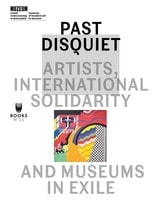
cover of Past Disquiet: Artists, International Solidarity and Museums in Exile

Past Disquiet

Artists, International Solidarity and Museums in Exile

Edited by Kristine Khouri and Rasha Salti

Museum of Modern Art in Warsaw, 2018
The International Art Exhibition for Palestine took place in Beirut in 1978 and mobilized international networks of artists in solidarity with anti-imperialist movements of the 1960s and ’70s. In that era, individual artists and artist collectives assembled collections; organized touring exhibitions, public interventions and actions; and collaborated with institutions and political movements. Their aim was to lend support and bring artistic engagement to protests against the ongoing war in Vietnam, the Pinochet dictatorship in Chile, and the apartheid regime in South Africa, and they were aligned in international solidarity for anti-colonial struggles. Past Disquiet brings together contributions from scholars, curators and writers who reflect on these marginalized histories and undertakings that took place in Baghdad, Beirut, Belgrade, Damascus, Paris, Rabat, Tokyo, and Warsaw. The book also offers translations of primary texts and recent interviews with some of the artists involved.
[more]
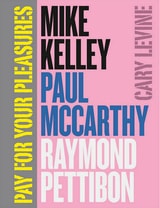
cover of Pay for Your Pleasures: Mike Kelley, Paul McCarthy, Raymond Pettibon

Pay for Your Pleasures

Mike Kelley, Paul McCarthy, Raymond Pettibon

Cary Levine

University of Chicago Press, 2013
Mike Kelley, Paul McCarthy, and Raymond Pettibon—these Southern California artists formed a “bad boy” trifecta. Early purveyors of abject art, the trio produced work ranging from sculptures of feces to copulating stuffed animals, and gained notoriety from being perverse. Showing how their work rethinks transgressive art practices in the wake of the 1960s, Pay for Your Pleasures argues that their collaborations as well as their individual enterprises make them among the most compelling artists in the Los Angeles area in recent years.
 
Cary Levine focuses on Kelley’s, McCarthy’s, and Pettibon’s work from the 1970s through the 1990s, plotting the circuitous routes they took in their artistic development. Drawing on extensive interviews with each artist, he identifies the diverse forces that had a crucial bearing on their development—such as McCarthy’s experiences at the University of Utah, Kelley’s interest in the Detroit-based White Panther movement, Pettibon’s study of economics, and how all three participated in burgeoning subcultural music scenes. Levine discovers a common political strategy underlying their art that critiques both nostalgia for the 1960s counterculture and Reagan-era conservatism. He shows how this strategy led each artist to create strange and unseemly images that test the limits of not only art but also gender roles, sex, acceptable behavior, poor taste, and even the gag reflex that separates pleasure from disgust. As a result, their work places viewers in uncomfortable situations that challenge them to reassess their own values.
 
The first substantial analysis of Kelley, McCarthy, and Pettibon, Pay for Your Pleasures shines new light on three artists whose work continues to resonate in the world of art and politics.
[more]
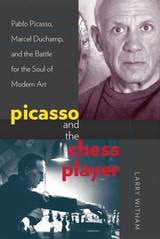
cover of Picasso and the Chess Player: Pablo Picasso, Marcel Duchamp, and the Battle for the Soul of Modern Art

Picasso and the Chess Player

Pablo Picasso, Marcel Duchamp, and the Battle for the Soul of Modern Art

Larry Witham

University Press of New England, 2013
In the fateful year of 1913, events in New York and Paris launched a great public rivalry between the two most consequential artists of the twentieth century, Pablo Picasso and Marcel Duchamp. The New York Armory Show art exhibition unveiled Duchamp’s Nude Descending a Staircase, a “sensation of sensations” that prompted Americans to declare Duchamp the leader of cubism, the voice of modern art. In Paris, however, the cubist revolution was reaching its peak around Picasso. In retrospect, these events form a crossroads in art history, a moment when two young bohemians adopted entirely opposite views of the artist, giving birth to the two opposing agendas that would shape all of modern art. Today, the museum-going public views Pablo Picasso as the greatest figure in modern art. Over his long lifetime, Picasso pioneered several new styles as the last great painter in the Western tradition. In the rarefied world of artists, critics, and collectors, however, the most influential artist of the last century was not Picasso, but Marcel Duchamp: chess player, prankster, and a forefather of idea-driven dada, surrealism, and pop art. Picasso and the Chess Player is the story of how Picasso and Duchamp came to define the epochal debate between modern and conceptual art—a drama that features a who’s who of twentieth-century art and culture, including Henri Matisse, Gertrude Stein, André Breton, Salvador Dalí, and Andy Warhol. In telling the story, Larry Witham weaves two great art biographies into one tumultuous century.
[more]
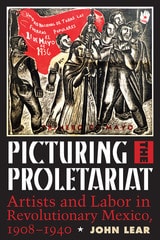
cover of Picturing the Proletariat: Artists and Labor in Revolutionary Mexico, 1908–1940

Picturing the Proletariat

Artists and Labor in Revolutionary Mexico, 1908–1940

By John Lear

University of Texas Press, 2017

Thomas McGann Memorial Prize, Rocky Mountain Council on Latin American Studies, 2017
Runner-up, Humanities Book Prize, Mexico Section of the Latin American Studies Association, 2018

In the wake of Mexico’s revolution, artists played a fundamental role in constructing a national identity centered on working people and were hailed for their contributions to modern art. Picturing the Proletariat examines three aspects of this artistic legacy: the parallel paths of organized labor and artists’ collectives, the relations among these groups and the state, and visual narratives of the worker. Showcasing forgotten works and neglected media, John Lear explores how artists and labor unions participated in a cycle of revolutionary transformation from 1908 through the presidency of Lázaro Cárdenas (1934–1940). Lear shows how middle-class artists, radicalized by the revolution and the Communist Party, fortified the legacy of the prerevolutionary print artisan José Guadalupe Posada by incorporating modernist, avant-garde, and nationalist elements in ways that supported and challenged unions and the state. By 1940, the state undermined the autonomy of radical artists and unions, while preserving the image of both as partners of the “institutionalized revolution.”

This interdisciplinary book explores the gendered representations of workers; the interplay of prints, photographs, and murals in journals, in posters, and on walls; the role of labor leaders; and the discursive impact of the Spanish Civil War. It considers “los tres grandes”—Rivera, Siquieros, and Orozco—while featuring lesser-known artists and their collectives, including Saturnino Herrán, Leopoldo Méndez, Santos Balmori, and the League of Revolutionary Writers and Artists (LEAR). The result is a new perspective on the art and politics of the revolution.
[more]
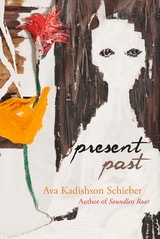
cover of Present Past

Present Past

Ava Kadishson Schieber

Northwestern University Press, 2016

Present Past is a collection of stories, artwork, and poetry by Ava Kadishson Schieber. Like her debut work, Soundless Roar, this multi-genre collection creates rich and varied pathways for readers to approach Schieber as well as the absorbing events and transformations in her life as a Holocaust survivor.

The focus of Present Past is her life after the Shoah. Rejecting stereotypes of survivors as traumatized or broken, Schieber is stark yet exuberant, formidable yet nuanced. The woman who emerges in Schieber’s Present Past is a multifaceted, heterogeneous figure—poet, artist, and survivor. In it, she plays the passionate observer who dispassionately curates the kaleidoscopic memories of her tumultuous personal and professional life in Belgrade, Prague, Tel Aviv, New York, and Chicago.

Organized into thirteen chapters, each a blend of images, poems, and narrative, this moving new work offers myriad points of entry to readers of these genres, those fascinated in the relationship between the Holocaust and art, as well as readers interested in memory and survivorship.
[more]
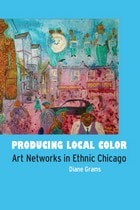
cover of Producing Local Color: Art Networks in Ethnic Chicago

Producing Local Color

Art Networks in Ethnic Chicago

Diane Grams

University of Chicago Press, 2010

In big cities, major museums and elite galleries tend to dominate our idea of the art world. But beyond the cultural core ruled by these moneyed institutions and their patrons are vibrant, local communities of artists and art lovers operating beneath the high-culture radar. Producing Local Color is a guided tour of three such alternative worlds that thrive in the Chicago neighborhoods of Bronzeville, Pilsen, and Rogers Park.

These three neighborhoods are, respectively, historically African American, predominantly Mexican American, and proudly ethnically mixed. Drawing on her ethnographic research in each place, Diane Grams presents and analyzes the different kinds of networks of interest and support that sustain the making of art outside of the limelight. And she introduces us to the various individuals—from cutting-edge artists to collectors to municipal planners—who work together to develop their communities, honor their history, and enrich the experiences of their neighbors through art. Along with its novel insights into these little examined art worlds, Producing Local Color also provides a thought-provoking account of how urban neighborhoods change and grow.

[more]