Results by title
435 books match the query 'Asian American & Pacific Islander Studies' and 17 start with p
Pacific Citizens
Larry and Guyo Tajiri and Japanese American Journalism in the World War II EraEdited, with and Introduction and Notes, by Greg Robinson: Foreword by Harry Honda
University of Illinois Press, 2012
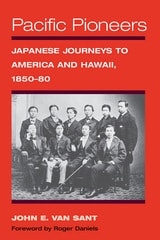
Pacific Pioneers
Japanese Journeys to America and Hawaii, 1850-80John E. Van Sant
University of Illinois Press, 2019
Although Japanese immigrants did not start arriving in substantial numbers in the West until after 1880, in the previous thirty years a handful of key encounters helped shape relations between Japan and the United States. John E. Van Sant explores the motivations and accomplishments of these resourceful, sometimes visionary individuals who made important inroads into a culture quite different from their own and paved the way for the Issei and Nisei.
Pacific Pioneers presents detailed biographical sketches of Japanese such as Joseph Heco, Niijima Jo, and the converts to the Brotherhood of the New Life and introduces the American benefactors, such as William Griffis, David Murray, and Thomas Lake Harris, who built relationships with their foreign visitors. Van Sant also examines the uneasy relations between Japanese laborers and sugar cane plantation magnates in Hawaii during this period and the shortlived Wakamatsu colony of Japanese tea and silk producers in California.
A valuable addition to the literature, Pacific Pioneers brings to life a cast of colorful, long-forgotten characters while forging a critical link between Asian and Asian American studies.
Panthers, Hulks and Ironhearts
Marvel, Diversity and the 21st Century SuperheroJeffrey A. Brown
Rutgers University Press, 2021
Panthers, Hulks, and Ironhearts offers the first comprehensive study of how Marvel has reimagined what a superhero might look like in the twenty-first century. It examines how they have revitalized older characters like Black Panther and Luke Cage, while creating new ones like Latina superhero Miss America. Furthermore, it considers the mixed fan responses to Marvel’s recasting of certain “legacy heroes,” including a Pakistani-American Ms. Marvel, a Korean-American Hulk, and a whole rainbow of multiverse Spidermen.
If the superhero comic is a quintessentially American creation, then how might the increasing diversification of Marvel’s superhero lineup reveal a fundamental shift in our understanding of American identity? This timely study answers those questions and considers what Marvel’s comics, TV series, and films might teach us about stereotyping, Orientalism, repatriation, whitewashing, and identification.
Paper Families
Identity, Immigration Administration, and Chinese ExclusionEstelle T. Lau
Duke University Press, 2006
Drawing on these documents as well as immigration case files, legislative materials, and transcripts of interviews and court proceedings, Lau reveals immigration as an interactive process. Chinese immigrants and their U.S. families were subject to regulation and surveillance, but they also manipulated and thwarted those regulations, forcing the U.S. government to adapt its practices and policies. Lau points out that the Exclusion Acts and the pseudo-familial structures that emerged in response have had lasting effects on Chinese American identity. She concludes with a look at exclusion’s legacy, including the Confession Program of the 1960s that coerced people into divulging the names of paper family members and efforts made by Chinese American communities to recover their lost family histories.
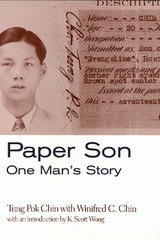
Paper Son
One Man's StoryTung Chin
Temple University Press, 2000
Chin's story begins in the early 1930s, when he followed the example of his father and countless other Chinese who bought documents that falsely identified them as children of Chinese Americans. Arriving in Boston and later moving to New York City, he worked and lived in laundries. Chin was determined to fit into American life and dedicated himself to learning English. But he also became an active member of key organizations -- a church, the Chinese Hand Laundrymen's Alliance, and the Chinese Consolidated Benevolent Association -- that anchored him in the community. A self-reflective and expressive man, Chin wrote poetry commenting on life in China and the hardships of being an immigrant in the United States. His work was regularly published in the China Daily News and brought him to the attention of the FBI, then intent on ferreting out communists and illegal immigrants. His vigorous narrative speaks to the day-to-day anxieties of living as a Paper Son as well as the more universal immigrant experiences of raising a family in modest circumstances and bridging cultures.
Historian K. Scott Wong introduces Chin's memoir, discussing the limitations on immigration from China and what is known about Exclusion-era Chinese American communities. Set in historical context, Tung Pok Chin's unique story offers and engaging account of a twentieth-century Paper Son.
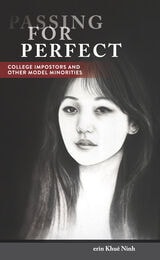
Passing for Perfect
College Impostors and Other Model Minoritieserin Khuê Ninh
Temple University Press, 2021
In her engaging study, Passing for Perfect,erin Khuê Ninh considers the factors that drove college imposters such as Azia Kim—who pretended to be a Stanford freshman—and Jennifer Pan—who hired a hitman to kill her parents before they found out she had never received her high school diploma—to extreme lengths to appear successful. Why would someone make such an illogical choice? And how do they stage these lies so convincingly, and for so long?
These outlier examples prompt Ninh to address the larger issue of the pressures and difficulties of striving to be model minority, where failure is too ruinous to admit. Passing for Perfect insists that being a “model minority” is not a “myth,” but coded into one’s programming as an identity—a set of convictions and aspirations, regardless of present socioeconomic status or future attainability—and that the true cost of turning children into high-achieving professionals may be higher than anyone can bear.
Ninh’s book codifies for readers the difference between imposters who are con artists or shysters and those who don’t know how to stop passing for perfect.
Pedagogies of Woundedness
Illness, Memoir, and the Ends of the Model MinorityJames Kyung-Jin Lee
Temple University Press, 2022
The pressures Asian Americans feel to be socially and economically exceptional include an unspoken mandate to always be healthy. Nowhere is this more evident than in the expectation for Asian Americans to enter the field of medicine, principally as providers of care rather than those who require care. Pedagogies of Woundedness explores what happens when those considered model minorities critically engage with illness and medicine whether as patients or physicians.
James Kyung-Jin Lee considers how popular culture often positions Asian Americans as medical authorities and what that racial characterization means. Addressing the recent trend of writing about sickness, disability, and death, Lee shows how this investment in Asian American health via the model minority is itself a response to older racial forms that characterize Asian American bodies as diseased. Moreover, he pays attention to what happens when academics get sick and how illness becomes both methodology and an archive for scholars.
Pedagogies of Woundedness also explores the limits of biomedical “care,” the rise of physician chaplaincy, and the impact of COVID. Throughout his book and these case studies, Lee shows the social, ethical, and political consequences of these common (mis)conceptions that often define Asian Americans in regard to health and illness.
Performing Asian America
Race and Ethnicity on the Contemporary StageJosephine Lee
Temple University Press, 1998
For instance, some Asian American playwrights critique the separation of issues of race and ethnicity from those of economics and class, or they see ethnic identity as a voluntary choice of lifestyle rather than an impetus for concerted political action. Others deal with the problem of cultural stereotypes and how to reappropriate their power. Lee is attuned to the complexities and contradictions of such performances, and her trenchant thinking about the criticisms lobbed at Asian American playwrights -- for their choices in form, perpetuation of stereotype, or apparent sexism or homophobia -- leads her to question how the presentation of Asian American identity in the theater parallels problems and possibilities of identity offstage as well.
Discussed are better-known plays such as Frank Chin's The Chickencoop Chinaman, David Henry Hwang's M. Butterfly, and Velina Hasu Houston's Tea, and new works like Jeannie Barroga's Walls and Wakako Yamauchi's 12-1-a.
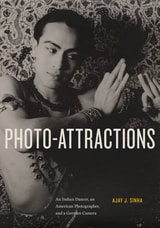
Photo-Attractions
An Indian Dancer, an American Photographer, and a German CameraAjay Sinha
Rutgers University Press, 2022
Art historian Ajay Sinha uses these hitherto unpublished photographs and archival research to raise provocative and important questions about photographic technology, colonial histories, race, sexuality and transcultural desires. Challenging the assumption that Gopal was merely objectified by Van Vechten’s Orientalist gaze, he explores the ways in which the Indian dancer co-authored the photos. In Sinha’s reading, Van Vechten’s New York studio becomes a promiscuous contact zone between world cultures, where a “photo-erotic” triangle is formed between the American photographer, Indian dancer, and German camera.
A groundbreaking study of global modernity, Photo-Attractions brings scholarship on American photography, literature, race and sexual economies into conversation with work on South Asian visual culture, dance, and gender. In these remarkable historical documents, it locates the pleasure taken in cultural difference that still resonates today.
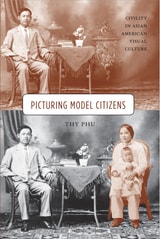
Picturing Model Citizens
Civility in Asian American Visual CultureThy Phu
Temple University Press, 2012
At the heart of the model minority myth—often associated with Asian Americans—is the concept of civility. In this groundbreaking book, Picturing Model Citizens, Thy Phu exposes the complex links between civility and citizenship, and argues that civility plays a crucial role in constructing Asian American citizenship.
Featuring works by Arnold Genthe, Carl Iwasaki, Toyo Miyatake, Nick Ut, and others, Picturing Model Citizens traces the trope of civility from the nineteenth to the twenty-first centuries. Through an examination of photographs of Chinese immigrants, Japanese internment camps, the Hiroshima Maidens project, napalm victims, and the SARS epidemic, Phu explores civility's unexpected appearance in images that draw on discourses of intimacy, cultivation, apology, and hygiene. She reveals how Asian American visual culture illustrates not only cultural ideas of civility, but also contests the contradictions of state-defined citizenship.
Pinoy Capital
The Filipino Nation in Daly CityBenito M. Vergara, Jr.
Temple University Press, 2009
Home to 33,000 Filipino American residents, Daly City, California, located just outside of San Francisco, has been dubbed “the Pinoy Capital of the United States.” In this fascinating ethnographic study of the lives of Daly City residents, Benito Vergara shows how Daly City has become a magnet for the growing Filipino American community.
Vergara challenges rooted notions of colonialism here, addressing the immigrants’ identities, connections and loyalties. Using the lens of transnationalism, he looks at the “double lives” of both recent and established Filipino Americans. Vergara explores how first-generation Pinoys experience homesickness precisely because Daly City is filled with reminders of their homeland’s culture, like newspapers, shops and festivals. Vergara probes into the complicated, ambivalent feelings these immigrants have—toward the Philippines and the United States—and the conflicting obligations they have presented by belonging to a thriving community and yet possessing nostalgia for the homeland and people they left behind.
Poison in the Ivy
Race Relations and the Reproduction of Inequality on Elite College CampusesByrd, W. Carson
Rutgers University Press, 2017
Poison in the Ivy challenges popular beliefs about the importance of cross-racial interactions as an antidote to racism in the increasingly diverse United States. He shows that it is the context and framing of such interactions on college campuses that plays an important role in shaping students’ beliefs about race and inequality in everyday life for the future political and professional leaders of the nation. Poison in the Ivy is an eye-opening look at race on elite college campuses, and offers lessons for anyone involved in modern American higher education.
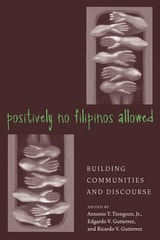
Positively No Filipinos Allowed
Building Communities and Discourseedited by Antonio T. Tiongson, Jr., Edgardo V. Gutierrez and Ricardo V. Gutierrez, foreword by Lisa Lowe
Temple University Press, 2006
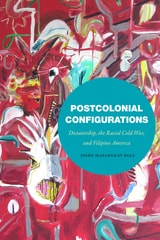
Postcolonial Configurations
Dictatorship, the Racial Cold War, and Filipino AmericaJosen Masangkay Diaz
Duke University Press, 2023
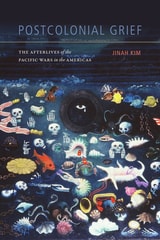
Postcolonial Grief
The Afterlives of the Pacific Wars in the AmericasJinah Kim
Duke University Press, 2019
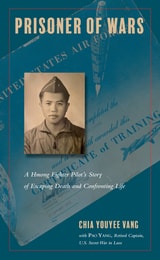
Prisoner of Wars
A Hmong Fighter Pilot's Story of Escaping Death and Confronting LifeChia Youyee Vang
Temple University Press, 2021
Retired Captain Pao Yang was a Hmong airman trained by the U.S. Air Force and CIA to fly T-28D aircraft for the U.S. Secret War in Laos. However, his plane was shot down during a mission in June 1972. Yang survived, but enemy forces captured him and sent him to a POW camp in northeastern Laos. He remained imprisoned for four years after the United States withdrew from Vietnam because he fought on the American side of the war.
Prisoner of Wars shows the impact the U.S Secret War in Laos had on Hmong combatants and their families. Chia Vang uses oral histories thatpoignantly recount Yang’s story and the deeply personal struggles his loved ones—who feared he had died—experienced in both Southeast Asia and the United States. As Yang eventually rebuilt his life in America, he grappled with issues of freedom and trauma.
Yang’s life provides a unique lens through which to better understand the lasting impact of the wars in Southeast Asia and the diverse journeys that migrants from Asia made over the last two centuries. Prisoner of Wars makes visible an aspect of the collateral damage that has been left out of dominant Vietnam War narratives.
Prisons and Patriots
Japanese American Wartime Citizenship, Civil Disobedience, and Historical MemoryCherstin Lyon
Temple University Press, 2011
Prisons and Patriots provides a detailed account of forty-one Nisei (second-generation Japanese Americans), known as the Tucsonians, who were imprisoned for resisting the draft during WWII. Cherstin Lyon parallels their courage as resisters with that of civil rights hero Gordon Hirabayashi, well known for his legal battle against curfew and internment, who also resisted the draft. These dual stories highlight the intrinsic relationship between the rights and the obligations of citizenship, particularly salient in times of war.
Lyon considers how wartime civil disobedience has been remembered through history—how soldiers have been celebrated for their valor while resisters have been demonized as unpatriotic. Using archival research and interviews, she presents a complex picture of loyalty and conflict among first-generation Issei and Nisei. Lyon contends that the success of the redress movement has made room for a narrative that neither reduces the wartime confinement to a source of shame nor proffers an uncritical account of heroic individuals.