Results by title
51 books match the query 'Atrocities' and 2 start with p
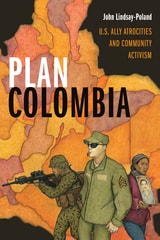
Plan Colombia
U.S. Ally Atrocities and Community ActivismJohn Lindsay-Poland
Duke University Press, 2018
For more than fifty years, the United States supported the Colombian military in a war that cost over 200,000 lives. During a single period of heightened U.S. assistance known as Plan Colombia, the Colombian military killed more than 5,000 civilians. In Plan Colombia John Lindsay-Poland narrates a 2005 massacre in the San José de Apartadó Peace Community and the subsequent investigation, official cover-up, and response from the international community. He examines how the multibillion-dollar U.S. military aid and official indifference contributed to the Colombian military's atrocities. Drawing on his human rights activism and interviews with military officers, community members, and human rights defenders, Lindsay-Poland describes grassroots initiatives in Colombia and the United States that resisted militarized policy and created alternatives to war. Although they had few resources, these initiatives offered models for constructing just and peaceful relationships between the United States and other nations. Yet, despite the civilian death toll and documented atrocities, Washington, DC, considered Plan Colombia's counterinsurgency campaign to be so successful that it became the dominant blueprint for U.S. military intervention around the world.
[more]
Post-Ethical Society
The Iraq War, Abu Ghraib, and the Moral Failure of the SecularDouglas V. Porpora, Alexander G. Nikolaev, Julia Hagemann May, and Alexander Jenkins
University of Chicago Press, 2013
We’ve all seen the images from Abu Ghraib: stress positions, US soldiers kneeling on the heads of prisoners, and dehumanizing pyramids formed from black-hooded bodies. We have watched officials elected to our highest offices defend enhanced interrogation in terms of efficacy and justify drone strikes in terms of retribution and deterrence. But the mainstream secular media rarely addresses the morality of these choices, leaving us to ask individually: Is this right?
In this singular examination of the American discourse over war and torture, Douglas V. Porpora, Alexander Nikolaev, Julia Hagemann May, and Alexander Jenkins investigate the opinion pages of American newspapers, television commentary, and online discussion groups to offer the first empirical study of the national conversation about the 2003 invasion of Iraq and the revelations of prisoner abuse at Abu Ghraib a year later. Post-Ethical Society is not just another shot fired in the ongoing culture war between conservatives and liberals, but a pensive and ethically engaged reflection of America’s feelings about itself and our actions as a nation. And while many writers and commentators have opined about our moral place in the world, the vast amount of empirical data amassed in Post-Ethical Society sets it apart—and makes its findings that much more damning.
In this singular examination of the American discourse over war and torture, Douglas V. Porpora, Alexander Nikolaev, Julia Hagemann May, and Alexander Jenkins investigate the opinion pages of American newspapers, television commentary, and online discussion groups to offer the first empirical study of the national conversation about the 2003 invasion of Iraq and the revelations of prisoner abuse at Abu Ghraib a year later. Post-Ethical Society is not just another shot fired in the ongoing culture war between conservatives and liberals, but a pensive and ethically engaged reflection of America’s feelings about itself and our actions as a nation. And while many writers and commentators have opined about our moral place in the world, the vast amount of empirical data amassed in Post-Ethical Society sets it apart—and makes its findings that much more damning.
[more]