Results by title
67 books match the query 'Austria' and 3 start with p
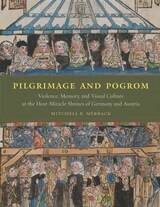
Pilgrimage and Pogrom
Violence, Memory, and Visual Culture at the Host-Miracle Shrines of Germany and AustriaMitchell B. Merback
University of Chicago Press, 2013
In the late Middle Ages, Europe saw the rise of one of its most virulent myths: that Jews abused the eucharistic bread as a form of anti-Christian blasphemy, causing it to bleed miraculously. The allegation fostered tensions between Christians and Jews that would explode into violence across Germany and Austria. And pilgrimage shrines were built on the sites where supposed desecrations had led to miracles or to anti-Semitic persecutions. Exploring the legends, cult forms, imagery, and architecture of these host-miracle shrines, Pilgrimage and Pogrom reveals how they not only reflected but also actively shaped Christian anti-Judaism in the two centuries before the Reformation.
[more]
Political Radicalism in Late Imperial Vienna
Origins of the Christian Social Movement, 1848-1897John W. Boyer
University of Chicago Press, 1995
John Boyer offers a meticulously researched examination of the social and political atmosphere of late imperial Vienna. He traces the demise of Vienna's liberal culture and the burgeoning of a new radicalism, exemplified by the rise of Karl Lueger and the Christian Socialist Party during the latter half of the nineteenth century. This important study paves the way for new readings of fin de siecle Viennese politics and their broader European significance.
"Offers a comprehensive, multicausal study of the rise of Christian Socialism in Vienna, that phenomenon which was experienced nowhere else in urban Central Europe and which culminated in the famous clash between the Austrian establishment and the colourful, domineering lead of the movement, Karl, Lueger."—R.J.W. Evans, History
"Boyer's analysis is masterful in terms of research, exposition, and organization. His use of available economic data is judicious, and his sense of the social structure of late nineteenth-century Vienna is formidable."—William A. Jenks, American Historical Review
"To understand Viennese and even imperial politics in the latter half of the nineteenth century, Boyer's book is absolutely essential.""—Robert Wegs, Review of Politics
[more]
Politicizing Islam in Austria
The Far-Right Impact in the Twenty-First CenturyFarid Hafez
Rutgers University Press, 2024
Among its Continental peers, Austria has stood out for its longstanding state recognition of the Muslim community as early as 1912. A shift has occurred more recently, however, as populist far-right voices within the Austrian government have redirected public discourse and put into question Islam’s previously accepted autonomous status within the country.
Politicizing Islam in Austria examines this anti-Muslim swerve in Austrian politics through a comprehensive analysis of government policies and regulations, as well as party and public discourses. In their innovative study, Hafez and Heinisch show how the far-right Austrian Freedom Party (FPÖ) adapted anti-Muslim discourse to their political purposes and how that discourse was then appropriated by the conservative center-right Austrian People’s Party (ÖVP). This reconfiguration of the political landscape prepared the way for a right-wing coalition government between conservatives and far-right actors that would subsequently institutionalize anti-Muslim political demands and change the shape of the civic conditions and public perceptions of Islam and the Muslim community in the republic.
Politicizing Islam in Austria examines this anti-Muslim swerve in Austrian politics through a comprehensive analysis of government policies and regulations, as well as party and public discourses. In their innovative study, Hafez and Heinisch show how the far-right Austrian Freedom Party (FPÖ) adapted anti-Muslim discourse to their political purposes and how that discourse was then appropriated by the conservative center-right Austrian People’s Party (ÖVP). This reconfiguration of the political landscape prepared the way for a right-wing coalition government between conservatives and far-right actors that would subsequently institutionalize anti-Muslim political demands and change the shape of the civic conditions and public perceptions of Islam and the Muslim community in the republic.
[more]