Results by title
70 books match the query 'Authority' and 5 start with p
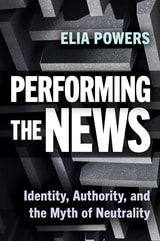
Performing the News
Identity, Authority, and the Myth of NeutralityElia Powers
Rutgers University Press, 2024
Performing the News: Identity, Authority, and the Myth of Neutrality explores how journalists from historically marginalized groups have long felt pressure to conform when performing for audiences. Many speak with a flat, “neutral” accent, modify their delivery to hide distinctive vocal attributes, dress conventionally to appeal to the “average” viewer, and maintain a consistent appearance to avoid unwanted attention. Their aim is what author Elia Powers refers to as performance neutrality—presentation that is deemed unobjectionable, reveals little about journalists’ social identity, and supposedly does not detract from their message. Increasingly, journalists are challenging restrictive, purportedly neutral forms of self-presentation. This book argues that performance neutrality is a myth that reinforces the status quo, limits on-air diversity, and hinders efforts to make newsrooms more inclusive. Through in-depth interviews with journalists in broadcasting and podcasting, and those who shape their performance, the author suggests ways to make journalism more inclusive and representative of diverse audiences.
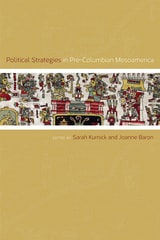
Political Strategies in Pre-Columbian Mesoamerica
Sarah Kurnick
University Press of Colorado, 2020
Political authority contains an inherent contradiction. Rulers must reinforce social inequality and bolster their own unique position at the top of the sociopolitical hierarchy, yet simultaneously emphasize social similarities and the commonalities shared by all. Political Strategies in Pre-Columbian Mesoamerica explores the different and complex ways that those who exercised authority in the region confronted this contradiction.
New data from a variety of well-known scholars in Mesoamerican archaeology reveal the creation, perpetuation, and contestation of politically authoritative relationships between rulers and subjects and between nobles and commoners. The contributions span the geographic breadth and temporal extent of pre-Columbian Mesoamerica—from Preclassic Oaxaca to the Classic Petén region of Guatemala to the Postclassic Michoacán—and the contributors weave together archaeological, epigraphic, and ethnohistoric data.
Grappling with the questions of how those exercising authority convince others to follow and why individuals often choose to recognize and comply with authority, Political Strategies in Pre-Columbian Mesoamerica discusses why the study of political authority is both timely and significant, reviews how scholars have historically understood the operation of political authority, and proposes a new analytical framework to understand how rulers rule.
Contributors include Sarah B. Barber, Joanne Baron, Christopher S. Beekman, Jeffrey Brzezinski, Bryce Davenport, Charles Golden, Takeshi Inomata, Arthur A. Joyce, Sarah Kurnick, Carlo J. Lucido, Simon Martin, Tatsuya Murakami, Helen Perlstein Pollard, and Víctor Salazar Chávez.
Politics and Ambiguity
William E. Connolly
University of Wisconsin Press, 1987
In a series of stimulating essays, William E. Connolly explores the element of ambiguity in politics. He argues that democratic politics in a modern society requires, if it is to flourish, an appreciation of the ambiguous character of the standards and principles we cherish the most. Connolly’s work, lucidly, presented and intellectually challenging, will be of interest to students and scholars of political science, philosophy, rhetoric, and law, and to all whose interests include the connections between contemporary epistemological arguments and politics and, more broadly, between thought and language.
Connolly criticizes the ways in which contemporary politics extends normalization into various areas of modern existence. He argues, against this trend, for an approach that would provide relief from the rigid identity formations that result from normalization.
In supporting his thesis, Connolly shows how the imperative for growth must be relaxed if normalizing pressures are to be obviated. His, however, is not the familiar antigrowth argument; rather, he ties his thesis to his general antinormalization argument, asking how one could create an ethic that would sustain itself when the growth imperatives are relaxed. Connolly’s chapters on the work of other thinkers (including Michel Foucault, Jürgen Habermas, Richard Rorty, and Charles Taylor) are linked with his main theme, as he shows how various tendencies in the philosophy of the social sciences and in political theory aid and abed the normalizing tendency.
His analyses of Rorty and Taylor are especially important. Connolly shows the significance of antifoundationalism (Rorty’s contribution to the debate on epistemology), while providing a compelling critique both of Rorty’s stance and Taylor's alternative to it.
Especially important to Connolly’s thesis is the ontology on which it rests. He shows how the endorsement of an ontology of discordance within concord—a view that all systems of meaning impose order on that which was not designed to fit neatly within them—can support a more democratizing process. His final chapter, “Where the Word Breaks Off,” vindicates the ontology of discordance, which has governed the argument throughout the text.
Throughout these essays, Connolly builds a consistent argument for the politicalization of normalization, disclosing forms of normalization where others have seen unproblematic modes of communication and problem solving. Original in concept and bold in presentation, Connolly’s work will form the basis for considerable debate in the several disciplines it serves.
Politics as Leadership
Revised EditionRobert C. Tucker
University of Missouri Press, 1995
Robert C. Tucker begins this invaluable book with an analytical look at politics, leadership, and the effect each has on the other. Aligning himself with Plato's view of politics as leadership, Tucker argues that politics is more usefully defined from this perspective than from the more familiar stance of the exercise of power. He maintains leaders must define collective problems, prescribe actions or policies, and finally seek support for their diagnoses and policy prescriptions.
Tucker contends that political science must take account not only of leadership by those in state authority, but also of sociopolitical movements for change as vehicles of attempted leadership of political communities. Dividing such movements into those for reform and those for revolution, he illustrates this distinction with examples, including Martin Luther King Jr. as a reform leader and Lenin as a revolutionary one.
Finally, Tucker raises a central question of his study: how can leadership save humankind from itself in the troubled world of today? In an insightful and moving discussion of what he calls the "crisis syndrome," Tucker analyzes problems such as population growth, resource depletion, and environmental degradation with respect to leadership. He argues that the current political process has focused on the immediate present while ignoring crises with far-reaching implications that require tough solutions.
In the epilogue to this revised edition, Tucker draws on his expertise as a Russian specialist, extending the book's discussion of leadership by viewing Mikhail Gorbachev as a reform leader in Soviet Russia and Boris Yeltsin as a post-Soviet Russian leader. Tucker also readdresses the "crisis syndrome" by examining leaders' responses in the 1980s and early 1990s.
Tucker's incisive reasoning, original insights, and commentary on the theory and practice of politics should make this revised edition of Politics as Leadership equally valuable and fascinating for experts in the field of political science and for concerned citizens.
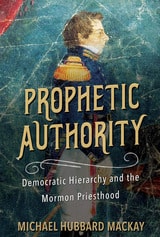
Prophetic Authority
Democratic Hierarchy and the Mormon PriesthoodMichael Hubbard MacKay
University of Illinois Press, 2020
Michael Hubbard MacKay traces the Church of Jesus Christ of Latter-day Saints' claim to religious authority and sets it within the context of its times. Delving into the evolution of the concept of prophetic authority, MacKay shows how the Church emerged as a hierarchical democracy with power diffused among leaders Smith chose. At the same time, Smith's settled place atop the hierarchy granted him an authority that spared early Mormonism the internal conflict that doomed other religious movements. Though Smith faced challenges from other leaders, the nascent Church repeatedly turned to him to decide civic plans and define the order of both the cosmos and the priesthood.