478 books match the query 'Bible' and 24 start with p
cover of Patristic Exegesis in Context: Exploring the Genres of Early Christian Biblical Interpretation

Patristic Exegesis in Context

Exploring the Genres of Early Christian Biblical Interpretation

Miriam De Cock

Catholic University of America Press, 2023
The essays of Patristic Exegesis in Context examine the biblical exegesis of early Christians beyond the formal genre of biblical commentary. The past couple of decades have seen a broadening of perspective on the study of patristic exegesis; the phenomenon is increasingly situated within its various literary contexts and genres, and the definition of what counts as patristic exegesis is therefore widened. This volume thus situates itself within this emerging scholarly tradition, which aims not to give an account of exegetical strategies and methodologies as found primarily in exegetical commentaries and homilies, but to demonstrate the highly sophisticated nature of biblical exegesis in other genres, and the manifold uses to which this exegesis was put. Ancient Christian authors lived and breathed scripture; it served as their primary source of theological and liturgical vocabulary, their way of processing the world, their social ethic, and their mode of constructing self and communal identity. Scripture therefore permeates all ancient Christian literature, regardless of genre, and the various contexts in which interpretation of scripture took place resulted in a wide variety of uses of the church’s authoritative texts. The essays in this volume demonstrate the interpretive skill, creativity, and sophistication of early Christian authors in a myriad of other early Christian genres, such as poetry, paraphrase, hymns, martyr accounts, homilies, prophetic vision accounts, monastic writings, argumentative treatises, encomia, apocalypses, and catenae. Accordingly, the volume aims to help the modern person, who is used to hearing the Bible explained in explicitly expository situations (for example, in academic commentaries or religious sermons) to become more habituated to ancient ways of interacting with and expounding the biblical text. These essays attempt to contextualize various types of patristic exegesis, in order for us to glimpse the complex and diverse uses of the Bible in this period.
[more]
cover of Paul and Scripture: Extending the Conversation

Paul and Scripture

Extending the Conversation

Christopher D. Stanley

SBL Press, 2012

This book, which grew out of the Society of Biblical Literature’s Paul and Scripture Seminar, explores some of the methodological problems that have arisen during the last few decades of scholarly research on the apostle Paul’s engagement with his ancestral Scriptures. Essays explore the historical backgrounds of Paul’s interpretive practices, the question of Paul’s “faithfulness” to the context of his biblical references, the presence of Scripture in letters other than the Hauptbriefe, and the role of Scripture in Paul’s theology. All of the essays look at old questions through new lenses in an effort to break through scholarly impasses and advance the debate in new directions. The contributors are Matthew W. Bates, Linda L. Belleville, Roy E. Ciampa, Bruce N. Fisk, Stephen E. Fowl, Leonard Greenspoon, E. Elizabeth Johnson, Mitchell M. Kim, Steve Moyise, Jeremy Punt, Christopher D. Stanley, and Jerry L. Sumney.
[more]
cover of Paul and the Resurrected Body: Social Identity and Ethical Practice

Paul and the Resurrected Body

Social Identity and Ethical Practice

Matt O'Reilly

SBL Press, 2020

A new reading of Pauline theology, ethics, and eschatology grounded in social-identity theory and sociorhetorical criticism

Readers often think of Paul’s attitude toward the resurrection of the body in individual terms: a single body raised as the climax of an individual’s salvation. In Paul and the Resurrected Body: Social Identity and Ethical Practice, Matt O’Reilly makes the case that, for Paul, the social dimension of future bodily resurrection is just as important, if not more so. Through a close reading of key texts in the letters to the Corinthians, Romans, and Philippians, O’Reilly argues that resurrection is integral to Paul’s understanding of Christian social identity. In Paul’s theological reasoning, a believer’s hope for the future depends on being identified as part of the people of God who will be resurrected.

Features

  • A clarification of the eschatological basis for Paul’s ethical expectations
  • Exploration of the social significance of Paul’s theological reasoning
  • An integration of ancient rhetorical theory with contemporary social-identity theory
[more]
cover of Paul as Infant and Nursing Mother: Metaphor, Rhetoric, and Identity in 1 Thessa

Paul as Infant and Nursing Mother

Metaphor, Rhetoric, and Identity in 1 Thessa

Jennifer Houston McNeel

SBL Press, 2014

Explore the significance of maternal metaphors in the writings of a first-century male missionary and theologian

Paul employed metaphors of childbirth or breastfeeding in four out of the seven undisputed epistles. In this book, McNeel uses cognitive metaphor theory and social identity analysis to examine the meaning and function of these maternal metaphors. She asserts that metaphors carry cognitive content and that they are central to how humans process information, construct reality, and shape group identity.

Features:

  • A focus on “identity” as the way in which people understand themselves in relation to one another, to society, and to those perceived as outsiders
  • Examination of metaphor as part of Paul’s rhetorical strategy
  • Integration of the work of philosopher Max Black with the work of cognitive linguists George Lakoff and Mark Johnson
[more]
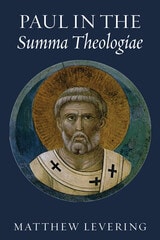
cover of Paul in the Summa Theologiae

Paul in the Summa Theologiae

Matthew Levering

Catholic University of America Press, 2014
Aquinas's commentaries on St. Paul are well known and have received significant attention in the past few years. It is widely known, too, that Aquinas quotes Paul often in the Summa theologiae. This aspect of the Summa, however, has not been studied in detail. This book seeks to fill that lacuna in scholarship.
[more]
cover of Peter Comestor's Lectures on the Glossed Gospel of John: A Study with a Critical Edition and Translation

Peter Comestor's Lectures on the Glossed Gospel of John

A Study with a Critical Edition and Translation

Peter Comestor

Catholic University of America Press, 2023

This monograph encompasses the first critical edition, translation, and historical study of a series of lectures from the cathedral school of Notre-Dame, Peter Comestor’s Glosses on the Glossed Gospel of John. Delivered in Paris in the mid-1150s, Comestor’s expansive lecture course on the Glossa ordinaria on the Gospel of John has survived in no fewer than seventeen manuscript witnesses, being preserved in the form of continuous transcripts taken in shorthand by a student-reporter (reportationes). The editor has selected the fifteen best witnesses to produce a critical edition and translation of the first chapter of Comestor’s lectures on the Gospel of John. In addition to the text of the original lectures, the edition includes appendices containing accretions to the lecture materials added by Comestor and his students, as well as the corresponding text of the Glossa ordinaria from which Comestor lectured. The Latin text and translation of Peter Comestor’s lectures are preceded by a wide-ranging critical study of the historical and intellectual context of Peter Comestor’s biblical teaching. This study begins with an outline of Comestor’s scholastic career and known works, with a detailed introduction to his Gospel lectures and the relevant historiography. Subsequently, a survey is made of the intellectual landscape of Comestor’s lectures: namely, the tradition of biblical teaching originating at the School of Laon, preserved in the Glossa ordinaria, and developed in the classroom by Peter Lombard and a succession of Parisian masters, notably Comestor himself. The following section examines the portion of the lectures presented in this book, encompassing an overview of its contents and structure, a description of Comestor’s teaching method and scholastic setting, a study of the text’s sources, and a consideration of Comestor’s participation and reception in the scholastic tradition. The final chapters contain a careful description of the manuscripts and editorial principles adopted in the Latin edition and translation.
[more]
cover of Piercing the Clouds: Lectio Divina and the Preparation for Ministry

Piercing the Clouds

Lectio Divina and the Preparation for Ministry

Kevin Zilverberg

Saint Paul Seminary Press, 2021
This book’s six essays pertain to the “piercing of the clouds,” or the experience of heavenly mysteries, which characterizes lectio divina practiced well. Moreover, these peer-reviewed essays give special attention to the practice of lectio divina during preparation for ministry, especially the ministry of Catholic priests. That being said, any current or prospective Bible-reader may profit from this book; most of its content applies to Catholic seminarians and literate Christians alike. Here follow brief descriptions of each chapter. Laurence Kriegshauser, OSB, begins the book with a chapter on the Western monastic tradition of lectio divina and seminary formation, including an historical survey of lectio divina, a description of its characteristics, and reflections on its practice in seminaries. Michael Magee reflects upon the implications of exegetical method for lectio divina, with a comparison and critique of three commentaries’ treatments of John 6. Konrad Schaefer, OSB, advocates for fostering growth and formation through lectio divina, beginning his chapter with a description of its theological underpinnings and then taking up some practical considerations for students. Marcin Kowalski focuses on meditatio of lectio divina following upon exegesis-informed lectio, with an examination of Romans 7:7–25 as a test case. Daniel Keating examines oratio and contemplatio (and actio) of lectio divina, giving attention to theologians from twelfth-century Carthusian Prior Guigo II to Pope Benedict XVI. Anthony Giambrone, OP, contributes the final essay, on searching the Scriptures and the mystery of preaching. For him, exquisitio (intellectual engagement) leads to supplicatio (prayerful supplication), which culminates in praedicatio (preaching).
[more]
cover of Plant Metaphors in Prophetic Condemnations of Israel and Judah

Plant Metaphors in Prophetic Condemnations of Israel and Judah

Tina M. Sherman

SBL Press, 2023

Tina M. Sherman offers a first-of-its-kind, detailed analysis of prophetic passages that depict people as plants—from grasses and grains to fruit trees and grapevines—examining how the biblical authors exploited these metaphors to portray the condemnation and punishment of Israel and Judah in terms of the everyday work of crop farming and plant husbandry. Additionally, she explores how the prophetic authors employed plant imagery to construct national identities that emphasize the people’s collective responsibility for the kingdoms’ fate. Plant Metaphors in Prophetic Condemnations of Israel and Judah demonstrates the usefulness of combining conceptual metaphor theory with aspects of frame semantics in the analysis of patterns of thought and expression in biblical metaphor.
[more]
cover of Plant Metaphors in the Old Greek of Isaiah

Plant Metaphors in the Old Greek of Isaiah

Benjamin M. Austin

SBL Press, 2019

A thorough analysis of metaphor translation techniques used in Isaiah

In this study Benjamin M. Austin analyzes all the plant metaphors in Isaiah and classifies them according to the metaphor translation techniques used by the Septuagint translator. Austin illustrates how the translator took the context of each metaphor into account and demonstrates how the natural features of the plants under discussion at times influenced their translation. He argues that the translator tried to render metaphors vividly and with clarity, sometimes adjusting them to match the experience of his audience living in Egypt. Austin also examines metaphors in terms of their vehicles (the objects of comparison), so that the translation of similar metaphors can be compared.

Features

  • A comparison of the Masoretic Text to the Septuagint and Targum
  • A classification of metaphor translation strategies
  • An introduction to the Hellenistic and the Jewish conception of metaphors
[more]
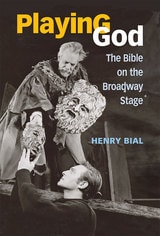
cover of Playing God: The Bible on the Broadway Stage

Playing God

The Bible on the Broadway Stage

Henry Bial

University of Michigan Press, 2015
Biblical texts have inspired more than 100 Broadway plays and musicals, ranging from early spectacles like Ben-Hur (1899) to more familiar works such as Godspell and Jesus Christ Superstar. What happens when a culture’s most sacred text enters its most commercial performance venue? Playing God focuses on eleven successful productions, as well as a few notable flops that highlight the difficulties in adapting the Old and New Testaments for the stage. The book is informed by both performance studies and theater history, combining analysis of play scripts with archival research into the actual circumstances of production and reception. Biblical plays, Henry Bial argues, balance religious and commercial considerations through a complex blend of spectacle, authenticity, sincerity, and irony. Though there is no magic formula for a successful adaptation, these four analytical lenses help explain why some biblical plays thrive while others have not.

[more]
cover of Postclassical Greek and Septuagint Lexicography

Postclassical Greek and Septuagint Lexicography

William A. Ross

SBL Press, 2022
A long-standing tradition within biblical scholarship sets the Greek text of the Septuagint constantly in relationship with its supposed Hebrew or Aramaic Vorlage, examining the two together in terms of their grammatical alignment as a standard. Yet another tradition frames the discussion in different terms, preferring instead to address the Septuagint first of all in light of its contemporary Greek linguistic environment and only then attempting to describe its language and style as a text. It is this latter approach that William A. Ross employs in this textually based study of the Greek versions of Judges, a so-called double text in the textual history of the Septuagint. The results of his study offer a window into the Old Greek translation and its later revision, two distinct stages of Greek Judges with numerous instances of divergent vocabulary choices that reflect deliberateness in both the original selection and the subsequent change within the textual development of the book. Ross’s study illustrates the practicalities and payoff of a Greek-oriented lexicographical method that situates the language of the Septuagint squarely within its contemporary historical and linguistic context.

[more]
cover of Postcolonial Perspectives in African Biblical Interpretations

Postcolonial Perspectives in African Biblical Interpretations

Musa W. Dube

SBL Press, 2012
This volume foregrounds biblical interpretation within the African history of colonial contact, from North Atlantic slavery to the current era of globalization. It reads of the prolonged struggle for justice and of hybrid identities from multifaceted contexts, where the Bible co-exists with African Indigenous Religions, Islam, and other religions. Showcasing the dynamic and creative approaches of an emerging and thriving community of biblical scholarship from the African continent and African diaspora, the volume critically examines the interaction of biblical texts with African people and their cultures within a postcolonial framework. While employing feminist/womanist, postcolonial, Afrocentric, social engagement, creative writing, reconstruction, and HIV/AIDS perspectives, the authors all engage with empire in their own ways: in specific times, forms, and geography. This volume is an important addition to postcolonial and empires studies in biblical scholarship. The contributors are David Tuesday Adamo, Lynn Darden, H. J. M. (Hans) van Deventer, Musa W. Dube, John D. K. Ekem, Ernest M. Ezeogu, Elelwani B. Farisani, Sylvester A. Johnson, Emmanuel Katongole, Malebogo Kgalemang, Temba L. J. Mafico, Madipoane Masenya (ngwan’a Mphahlele), Andrew M. Mbuvi, Sarojini Nadar, Elivered Nasambu-Mulongo, Jeremy Punt, Gerrie Snyman, Lovemore Togarasei, Sam Tshehla, Robert Wafawanaka, Robert Wafula, Gerald West, Alice Y. Yafeh-Deigh, and Gosnell L. Yorke.
[more]
cover of Postcolonialism and the Hebrew Bible:The Next Step

Postcolonialism and the Hebrew Bible

The Next Step

Roland Boer

SBL Press, 2013

This volume returns to where initial interest in postcolonial biblical criticism began: the Hebrew Bible. It does so not to celebrate the significant achievements of postcolonial analysis over the last few decades but to ask what the next step might be. In these essays, established and newer scholars, many from the interstices of global scholarship, discuss specific texts, neo/post/colonial situations, and theoretical issues. Moving from the Caribbean to Greenland, from Ezra-Nehemiah to the Gibeonites, this collection seeks out new territory, new questions, and possibly some new answers. The contributors are Roland Boer, Steed Davidson, Richard Horsley, Uriah Y. Kim, Judith McKinlay, Johnny Miles, Althea Spencer-Miller, Leo Perdue, Christina Petterson, Joerg Rieger, and Gerald West.
[more]
cover of Poverty, Law, and Divine Justice in Persian and Hellenistic Judah

Poverty, Law, and Divine Justice in Persian and Hellenistic Judah

Johannes Unsok Ro

SBL Press, 2018

A view of Persian and Hellenistic Judean communities through theological and socioeconomic lenses

Johannes Unsok Ro employs philological, historical, and sociological approaches to investigate the close connections between socioeconomic structures, social inequality, and theological developments in the Judean communities in Persian- and Hellenistic-era Palestine. Ro contends that competing points of view from communities of lay returnees, priestly returnees, and communities of resident Judeans and Samaritans were juxtaposed within the Hebrew Bible, which took shape during the postexilic period. By exploring issues such as the relationship between the shaping of the canon and literacy in the Judean community, the term strangers in the biblical law codes, the socioeconomic structures of Judean communities reflected in the biblical law codes, the development of the theological concept of divine punitive justice, the piety of the poor in certain psalms, and the concept of poverty in the Dead Sea Scrolls, Ro illustrates that the communities behind each text and its redactions can be ascertained through sociological and theological lenses.

Features

  • Demonstration that a theology of the poor materialized orally among the poor but found written expression among Levites
  • Insight into the socioeconomic and theological concerns of the authorial groups behind various biblical law codes
  • A case that biblical “poverty” sometimes refers to humility and a theologically reflected consciousness of lowliness toward God
[more]
cover of Prayers and the Construction of Israelite Identity

Prayers and the Construction of Israelite Identity

Susanne Gillmayr-Bucher

SBL Press, 2019

Substantial insights into various identity discourses reflected in the biblical prayers

This collection of essays from an international group of scholars focuses on how biblical prayers of the Persian and early Hellenistic periods shaped identity, evoked a sense of belonging to specific groups, and added emotional significance to this affiliation. Contributors draw examples from different biblical texts, including Genesis, Samuel, Kings, Chronicles, Ezra and Nehemiah, Psalms, Jonah, and Daniel.

Features

  • Thorough study of prayers that play a key role for a biblical book’s (re)construction of the people’s history and identity
  • An examination of ways biblical figures are remodeled by their prayers by introducing other, sometimes even contradictory, discourses on identity
  • An exploration of different ways in which psalms from postexilic times shaped, reflected, and modified identity discourses
[more]
cover of Praying Legally

Praying Legally

Shalom E. Holtz

SBL Press, 2019

Explore the lengthy history of legal metaphors in ancient prayer

In biblical and other ancient Near Eastern sources, prayer is an opportunity to make one’s case before divine judges. Prayers were formulated using courtroom or trial language, including demands for judgment, confessions, and accusations. The presence of these legal concepts reveals ancient Near Eastern thoughts about what takes place when one prays. Holtz highlights legal concepts that appear in prayers, including the motif of the speakers' oppression in Psalms the possibility of countersuit against God through prayer, and divine attention and inattention as legal responses. By reading ancient prayers together with legal texts, this book shows how speakers took advantage of prayer as an opportunity to have their day in the divine court and even sue against divine injustice.

Features

  • Identification of legal vocabulary and concepts that appear in ancient prayers
  • Analysis of legal metaphors in prayer examples in Akkadian and postbiblical rabbinic texts
  • Interpretations of trial records and texts from Psalms and Lamentations
[more]
cover of Predicting the Past in the Ancient Near East: Mantic Historiography in Ancient Mesopotamia, Judah, and the Mediterranean World

Predicting the Past in the Ancient Near East

Mantic Historiography in Ancient Mesopotamia, Judah, and the Mediterranean World

Matthew Neujahr

SBL Press, 2012

This work provides an in-depth investigation of after-the-fact predictions in ancient Near Eastern texts from roughly 1200 B.C.E.–70 C.E. It argues that the Akkadian, Aramaic, Hebrew, and Greek works discussed are all part of a developing scribal discourse of “mantic historiography” by which scribes blend their local traditions of history writing and predictive texts to produce a new mode of historiographic expression. This in turn calls into question the use and usefulness of traditional literary categories such as “apocalypse” to analyze such works.
[more]
cover of Priests and Cults in the Book of the Twelve

Priests and Cults in the Book of the Twelve

Lena-Sofia Tiemeyer

SBL Press, 2016

Key essays that explore a range of attitudes toward clergy and ritual

This book discusses the depictions of the cult and its personnel in the twelve prophetic books commonly referred to as the Book of the Twelve or the Minor Prophets. The articles in the volume explore the following questions: How did these prophetic writers envision the priests and the Levites? What did they think about the ritual aspects of ancient Israelite faith, including not only the official temple cult in Jerusalem but also cultic expressions outside the capital? What, in their views, characterized a faithful priest and what should the relationship be between his cultic performance and the ways in which he lived his life? How does the message of each individual author fit in with the wider Israelite traditions? Finally, who were these prophetic authors, in which historical contexts did they live and work, and what stylistic tools did they use to communicate their message?

Features:
  • Essays investigate the ways in which key texts in the Book of the Twelve endorse, criticize, seek to reform, or seek to abolish the cult and clergy
  • Articles focus on the books of Hosea, Joel, Amos, Zephaniah, Zechariah, and Malachi, but include other texts
  • Exploration of how the attitudes towards cult and clergy in these key texts tie in with the attitudes found elsewhere in the Book of the Twelve
  • [more]
    cover of Profaning Paul

    Profaning Paul

    Cavan W. Concannon

    University of Chicago Press, 2021

    A critical reconsideration of the repeated use of the biblical letters of Paul.
     
    The letters of Paul have been used to support and condone a host of evils over the span of more than two millennia: racism, slavery, imperialism, misogyny, and anti-Semitism, to name a few. Despite, or in some cases because of, this history, readers of Paul have felt compelled to reappropriate his letters to fit liberal or radical politics, seeking to set right the evils done in Paul’s name. Starting with the language of excrement, refuse, and waste in Paul’s letters, Profaning Paul looks at how Paul’s “shit” is recycled and reconfigured. It asks why readers, from liberal Christians to academic biblical scholars to political theorists and philosophers, feel compelled to make Paul into a hero, mining his words for wisdom. Following the lead of feminist, queer, and minoritized scholarship, Profaning Paul asks what would happen if we stopped recycling Paul’s writings. By profaning the status of his letters as sacred texts, we might open up new avenues for imagining political figurations to meet our current and coming political, economic, and ecological challenges.
     
    [more]
    cover of Prophets Male and Female: Gender and Prophecy in the Hebrew Bible, the Eastern Mediterranean, and the

    Prophets Male and Female

    Gender and Prophecy in the Hebrew Bible, the Eastern Mediterranean, and the

    Jonathan Stökl

    SBL Press, 2013

    Because gender is an essential component of societies of all times and places, it is no surprise that every prophetic expression in the ancient social world was a gendered one. In this volume scholars of the biblical literature and of the ancient Mediterranean consider a wide array of prophetic phenomena. In addition to prophetic texts of the Hebrew Bible, the essays also look at prophecy in ancient Mesopotamia and early Christianity. Using the most current theoretical categories, the volume demonstrates how essential a broad definition of gender is for understanding its connection to both the delivery and the content of ancient prophecy. Attention to gender dynamics will continue to reveal the fluidity of prophetic gender performance and to open up the ancient contexts of prophetic texts. The contributors are Roland Boer, Corrine Carvalho, Lester L. Grabbe, Anselm C. Hagedorn, Esther J. Hamori, Dale Launderville, Antti Marjanen, Martti Nissinen, Jonathan Stökl, Hanna Tervanotko, and Ilona Zsolnay.
    [more]
    cover of Proverbs: An Eclectic Edition with Introduction and Textual Commentary

    Proverbs

    An Eclectic Edition with Introduction and Textual Commentary

    Michael V. Fox

    SBL Press, 2015

    A new critical text for Proverbs drawing from many manuscripts

    This first volume of The Hebrew Bible: A Critical Edition series, features a critical text of Proverbs with extensive text-critical introductions and commentaries. This and future HBCE volumes bring together a scholar’s critical decisions into a single text. construct an eclectic text, drawing from many manuscripts or placing entirely variant texts side by side. A common approach for critical editions of other ancient books, including the New Testament, the eclectic approach and scope used in the HBCE is a first of its kind for the Hebrew Bible.

    Features:

    • Emendations set in context rather than singly and marginally
    • Introduction that sets out the method and purpose of the volume
    • Extensive list of abbreviations and sigla
    [more]
    cover of Psalm Studies, Volume 1

    Psalm Studies, Volume 1

    Sigmund Mowinckel

    SBL Press, 2014

    Sigmund Mowinckel is widely recognized as one of the leading forces in Psalms research during the twentieth century. Indeed, the culmination of Mowinckel’s thought and work, The Psalms in Israel’s Worship, continues to play a significant role in Psalms scholarship today. Not as well known are the seminal studies that prepared the ground for Mowinckel’s later work, the six Psalmenstudien that are translated here into English for the first time. In these studies Mowinckel explores with care and in detail such topics as: “'Awen and the Psalms of Individual Lament”; “YHWH’s Enthronement Festival and the Origin of Eschatology”; “Cultic Prophecy and Prophetic Psalms”; “The Technical Terms in the Psalm Superscriptions”; “Blessing and Curse in Israel’s Cult and Psalmody”; and “The Psalmists.” Anyone interested in Psalms study, especially the possible role of the New Year’s enthronement festival within Israel’s cult and its relation to the Psalter, will find much to consider in these classic works.
    [more]
    cover of Psalm Studies, Volume 2

    Psalm Studies, Volume 2

    Sigmund Mowinckel

    SBL Press, 2014

    Sigmund Mowinckel is widely recognized as one of the leading forces in Psalms research during the twentieth century. Indeed, the culmination of Mowinckel’s thought and work, The Psalms in Israel’s Worship, continues to play a significant role in Psalms scholarship today. Not as well known are the seminal studies that prepared the ground for Mowinckel’s later work, the six Psalmenstudien that are translated here into English for the first time. In these studies Mowinckel explores with care and in detail such topics as: “'Awen and the Psalms of Individual Lament”; “YHWH’s Enthronement Festival and the Origin of Eschatology”; “Cultic Prophecy and Prophetic Psalms”; “The Technical Terms in the Psalm Superscriptions”; “Blessing and Curse in Israel’s Cult and Psalmody”; and “The Psalmists.” Anyone interested in Psalms study, especially the possible role of the New Year’s enthronement festival within Israel’s cult and its relation to the Psalter, will find much to consider in these classic works.
    [more]
    cover of Psychoanalytic Mediations between Marxist and Postcolonial Reading of the Bible

    Psychoanalytic Mediations between Marxist and Postcolonial Reading of the Bible

    Tat-siong Benny Liew

    SBL Press, 2016

    The first sustained conversation between Marxism, postcolonialism, and psychoanalysis in biblical studies

    This volume pursues critical readings of the Bible that put psychoanalysis into conversation with Marxist and postcolonial criticism. In these essays psychoanalysis provides a way to mediate between Marxism's materialist groundings and postcolonialism's resistance against empire. The essays in the volume illuminate the way empire has shaped the biblical text by looking at the biblical texts' silences, ruptures, oversights, over-emphases, and inexplicable elements. These details are read as symptoms of a set of oppressive material relations that shaped and continue to haunt the text in the ascendancy of the text in the name of the West.

    Features:

    • Essays and responses from multiple perspectives and geographical locations, including Africa, Australia, Oceania, Latin America, and North America
    • Psychoanalysis that considers how the traumas of colonialism manifest both materially and psychically
    • Close readings of biblical texts
    [more]