Results by title
72 books match the query 'Blues' and 3 start with p
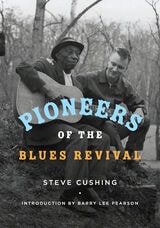
Pioneers of the Blues Revival
Steve Cushing
University of Illinois Press, 2014
Opinionated and territorial, the American, British, and French interviewees provide fascinating first-hand accounts of the era and movement. Experts including Paul Oliver, Gayle Dean Wardlow, Sam Charters, Ray Flerledge, Paul Oliver, Richard K. Spottswood, and Pete Whelan chronicle in their own words their obsessive early efforts at cataloging blues recordings and retrace lifetimes spent loving, finding, collecting, reissuing, and producing records. They and nearly a dozen others recount relationships with blues musicians, including the discoveries of prewar bluesmen Mississippi John Hurt, Son House, Skip James, and Bukka White, and the reintroduction of these musicians and many others to new generations of listeners. The accounts describe fieldwork in the South, renew lively debates, and tell of rehearsals in Muddy Waters's basement and randomly finding Lightning Hopkins's guitar in a pawn shop.
Blues scholar Barry Lee Pearson provides a critical and historical framework for the interviews in an introduction.
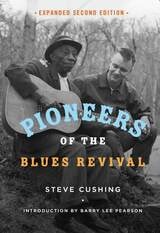
Pioneers of the Blues Revival
Steve Cushing
University of Illinois Press, 2018
Preacher Woman Sings the Blues
The Autobiographies of Nineteenth-Century African American EvangelistsRichard J. Douglass-Chin
University of Missouri Press, 2001
In this thorough and detailed study, Richard Douglass-Chin examines collectively for the first time the autobiographies of nineteenth-century African American women evangelists, along with their eighteenth-century forerunner "Belinda." By studying how black women evangelists employed dialogue created by socioeconomic conditions, the author shows how their writings form the groundwork for a contemporary womanist literature rooted in spirituality. Arguing that the writings have their own unique figurations and forms that develop and alter over time, Douglass-Chin claims that the changing black female spiritual narrative traces an important line in the ongoing traditions of black women's writing, a line that has only now begun to be reclaimed and validated. Through references to the writings of black male autobiographers Frederick Douglass, Richard Allen, Daniel Payne, and John Jea as well as the works of white female autobiographers Harriet Livermore and Phoebe Palmer, Douglass-Chin is able to make valuable comparisons.
Preacher Woman Sings the Blues begins with the study of black evangelists Belinda, Jarena Lee, and Zilpha Elaw, continuing with Rebecca Cox Jackson, Sojourner Truth, Julia Foote, Amanda Smith, Elizabeth, and Virginia Broughton. The author's discussion of Zora Neale Hurston focuses on how Hurston operates as a connection between early black women evangelist writers and black women writing in America today. He ends with the works of Alice Walker, Toni Morrison, and Toni Cade Bambara.
By examining the early traditions prefiguring contemporary African American women's texts and the impact that race and gender have on them, Douglass-Chin shows how the nineteenth-century black women's works are still of utmost importance to many African American women writers today. Preacher Woman Sings the Blues makes a valuable contribution to literary criticism and theoretical analysis and will be welcomed by scholars and students alike.