Results by title
235 books match the query 'Books and reading' and 9 start with p
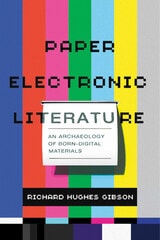
Paper Electronic Literature
An Archaeology of Born-Digital MaterialsRichard Hughes Gibson
University of Massachusetts Press, 2021
Paper Electronic Literature attests that digital literature's old media elements have much to teach us about the cultural and physical conditions in which we compute; the creativity that new media artists have shown in their dealings with old media; and the distinctively electronic issues that confront digital artists. Moving between avant-garde works and popular ones, fiction writing and poetry generation, Richard Hughes Gibson reveals the diverse ways in which paper has served as a component within electronic literature, particularly in facilitating interactive experiences for users. This important study develops a new critical paradigm for appreciating the multifaceted material innovation that has long marked digital literature.
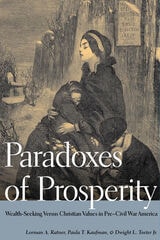
Paradoxes of Prosperity
Wealth Seeking in Pre-Civil War AmericaLorman A. Ratner, Paula T. Kaufman and Dwight L. Teeter Jr.
University of Illinois Press, 2008
At the same time, the United States felt the influence of the rise of popular mass-circulation newspapers and magazines and the surge in American book publishing. Concern over living correctly as well as prosperously was commonly discussed by leading authors and journalists, who were now writing for ever-expanding regional and national audiences. Women became more important as authors and editors, giving advice and building huge markets for women readers, with the magazine Godey's Lady's Book and novels by Susan Warner, Maria Cummins, and Harriet Beecher Stowe expressing women's views about the troubled state of society. Best-selling male writers--including novelist George Lippard, historian George Bancroft, and travel writer Bayard Taylor--were among those adding their voices to concerns about prosperity and morality and about America's place in the world. Writers and publishers discovered that a high moral tone could be exceedingly good for business.
The authors of this book examine how popular writers and widely read newspapers, magazines, and books expressed social tensions between prosperity and morality. This study draws on that nationwide conversation through leading mass media, including circulation-leading newspapers, the New York Herald and the New York Tribune, plus prominent newspapers from the South and West, the Richmond Enquirer and the Cincinnati Enquirer. Best-selling magazines aimed at middle-class tastes, Harper's Magazine and the Southern Literary Messenger, added their voices, as did two leading business magazines.
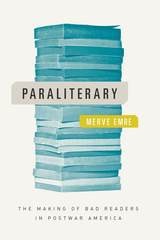
Paraliterary
The Making of Bad Readers in Postwar AmericaMerve Emre
University of Chicago Press, 2017
We should, Emre argues, think of such readers not as non-literary but as paraliterary—thriving outside the institutions we take as central to the literary world. She traces this phenomenon to the postwar period, when literature played a key role in the rise of American power. At the same time as American universities were producing good readers by the hundreds, many more thousands of bad readers were learning elsewhere to be disciplined public communicators, whether in diplomatic and ambassadorial missions, private and public cultural exchange programs, multinational corporations, or global activist groups. As we grapple with literature’s diminished role in the public sphere, Paraliterary suggests a new way to think about literature, its audience, and its potential, one that looks at the civic institutions that have long engaged readers ignored by the academy.

Picture Books for Children
Fiction, Folktales, and PoetryMary Northrup
American Library Association, 2012
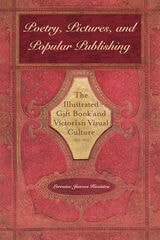
Poetry, Pictures, and Popular Publishing
The Illustrated Gift Book and Victorian Visual Culture, 1855–1875Lorraine Janzen Kooistra
Ohio University Press, 2011
In Poetry, Pictures, and Popular Publishing eminent Rossetti scholar Lorraine Janzen Kooistra demonstrates the cultural centrality of a neglected artifact: the Victorian illustrated gift book. Turning a critical lens on “drawing-room books” as both material objects and historical events, Kooistra reveals how the gift book’s visual/verbal form mediated “high” and popular art as well as book and periodical publication.
A composite text produced by many makers, the poetic gift book was designed for domestic space and a female audience; its mode of publication marks a significant moment in the history of authorship, reading, and publishing. With rigorous attention to the gift book’s aesthetic and ideological features, Kooistra analyzes the contributions of poets, artists, engravers, publishers, and readers and shows how its material form moved poetry into popular culture. Drawing on archival and periodical research, she offers new readings of Eliza Cook, Adelaide Procter, and Jean Ingelow and shows the transatlantic reach of their verses. Boldly resituating Tennyson’s works within the gift-book economy he dominated, Kooistra demonstrates how the conditions of corporate authorship shaped the production and receptionof the laureate’s verses at the peak of his popularity.
Poetry, Pictures, and Popular Publishing changes the map of poetry’s place—in all its senses—in Victorian everyday life and consumer culture.
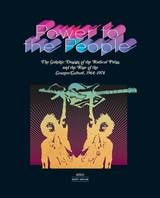
Power to the People
The Graphic Design of the Radical Press and the Rise of the Counter-Culture, 1964-1974Geoff Kaplan
University of Chicago Press, 2013
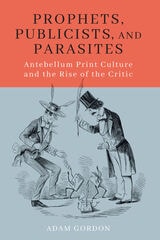
Prophets, Publicists, and Parasites
Antebellum Print Culture and the Rise of the CriticAdam Gordon
University of Massachusetts Press, 2020
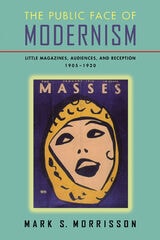
Public Face Of Modernism
Little Magazines, Audiences, And Reception, 1905-1920Mark S. Morrisson
University of Wisconsin Press, 2000
The phenomenal successes of new advertising agencies and mass market publishers did elicit what Morrisson calls a "crisis of publicity" for some modernists and for many concerned citizens in both countries. But, as Morrisson demonstrates, the vast influence of these industries on consumers also had a profound and largely overlooked effect upon many modernist authors, artists, and others. By exploring the publicity and audience reception of several of the most important modernist magazines of the period, The Public Face of Modernism shows how modernists, far from lamenting the destruction of meaningful art and public culture by the new mass market, actually displayed optimism about the power of mass-market technologies and strategies to transform and rejuvenate contemporary culture—and, above all, to restore a public function to art.
This reconstruction of the "public face of modernism" offers surprising new perceptions about the class, gender, racial, and even generational tensions within the public culture of the early part of the century, and provides a rare insight into the actual audiences for modernist magazines of the period. Moreover, in new readings of works by James Joyce, George Bernard Shaw, Wyndham Lewis, Ford Madox Ford, T. S. Eliot, William Carlos Williams, and many others, Morrisson shows that these contexts also had an impact on the techniques and concerns of the literature itself.
Pura Belpré Awards
Celebrating Latino Authors and IllustratorsRose Zertuche Treviño
American Library Association, 2006