330 books match the query 'Brazil' and 17 start with p
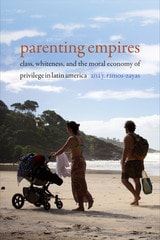
cover of Parenting Empires: Class, Whiteness, and the Moral Economy of Privilege in Latin America

Parenting Empires

Class, Whiteness, and the Moral Economy of Privilege in Latin America

Ana Yolanda Ramos-Zayas

Duke University Press, 2020
In Parenting Empires, Ana Y. Ramos-Zayas focuses on the parenting practices of Latin American urban elites to analyze how everyday experiences of whiteness, privilege, and inequality reinforce national and hemispheric idioms of anti-corruption and austerity. Ramos-Zayas shows that for upper-class residents in the affluent neighborhoods of Ipanema (Rio de Janeiro) and El Condado (San Juan), parenting is particularly effective in providing moral grounding for neoliberal projects that disadvantage the overwhelmingly poor and racialized people who care for and teach their children. Wealthy parents in Ipanema and El Condado cultivate a liberal cosmopolitanism by living in multicultural city neighborhoods rather than gated suburban communities. Yet as Ramos-Zayas reveals, their parenting strategies, which stress spirituality, empathy, and equality, allow them to preserve and reproduce their white privilege. Defining this moral economy as “parenting empires,” she sheds light on how child-rearing practices permit urban elites in the Global South to sustain and profit from entrenched social and racial hierarchies.
[more]
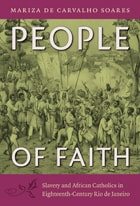
cover of People of Faith: Slavery and African Catholics in Eighteenth-Century Rio de Janeiro

People of Faith

Slavery and African Catholics in Eighteenth-Century Rio de Janeiro

Mariza de Carvalho Soares

Duke University Press, 2011
In People of Faith, Mariza de Carvalho Soares reconstructs the everyday lives of Mina slaves transported in the eighteenth century to Rio de Janeiro from the western coast of Africa, particularly from modern-day Benin. She describes a Catholic lay brotherhood formed by the enslaved Mina congregants of a Rio church, and she situates the brotherhood in a panoramic setting encompassing the historical development of the Atlantic slave trade in West Africa and the ethnic composition of Mina slaves in eighteenth-century Rio. Although Africans from the Mina Coast constituted no more than ten percent of the slave population of Rio, they were a strong presence in urban life at the time. Soares analyzes the role that Catholicism, and particularly lay brotherhoods, played in Africans’ construction of identities under slavery in colonial Brazil. As in the rest of the Portuguese empire, black lay brotherhoods in Rio engaged in expressions of imperial pomp through elaborate festivals, processions, and funerals; the election of kings and queens; and the organization of royal courts. Drawing mainly on ecclesiastical documents, Soares reveals the value of church records for historical research.
[more]
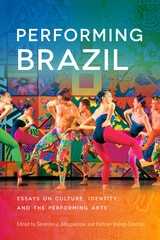
cover of Performing Brazil: Essays on Culture, Identity, and the Performing Arts

Performing Brazil

Essays on Culture, Identity, and the Performing Arts

Edited by Severino J. Albuquerque and Kathryn Bishop-Sanchez

University of Wisconsin Press, 2015

A field-shaping anthology by top cultural critics and practitioners representing a wide range of disciplines and art forms, Performing Brazil is the first book to bring together studies of the many and varied manifestations of Brazilian performance in and beyond their country of origin. Arguing that diverse forms of performance are best understood when presented in tandem, it offers new takes on better-known forms, such as carnival and capoeira, as well as those studied less often, including gender acts, curatorial practice, political protest, and the performance of Brazil in the United States.
            The contributors to the volume are Maria José Somerlate Barbosa, Eric A. Galm, Annie McNeill Gibson, Ana Paula Höfling, Benjamin Legg, Bryan McCann, Simone Osthoff, Fernando de Sousa Rocha, Cristina F. Rosa, Alessandra Santos, and Lidia Santos.
[more]
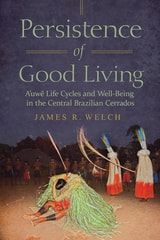
cover of Persistence of Good Living: A’uwe Life Cycles and Well-Being in the Central Brazilian Cerrados

Persistence of Good Living

A’uwe Life Cycles and Well-Being in the Central Brazilian Cerrados

James R. Welch

University of Arizona Press, 2023

Cultural understandings of well-being often differ from scientific measures such as health, happiness, and affluence. For the Indigenous A’uwẽ (Xavante) people in the tropical savannas of Brazil, special forms of intimate and antagonistic social relations, camaraderie, suffering, and engagement with the environment are fundamental aspects of community wellness.

Anthropologist James R. Welch transparently presents ethnographic insights from his long-term fieldwork in two A’uwẽ communities. He addresses how distinctive constructions of age organization contribute to social well-being in an era of major ecological, economic, and sociocultural change. Welch shows how A’uwẽ perspectives on the human life cycle help define ethnic identity, promote cultural resilience, and encourage the betterment of youth. They provide frameworks that people may creatively mobilize to responsibly and respectfully engage with others at different stages of life. They also motivate people to access and manage landscape resources essential to the social construction of good living. Through careful analysis, Welch shows how contemporary traditional peoples can foster enthusiasm for service to family and community amid dominant cultures that prioritize individual well-being.

This book is an essential resource for students and scholars interested in sociocultural anthropology, Indigenous cultures, health and culture, and human ecology.
[more]
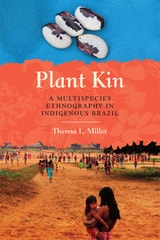
cover of Plant Kin: A Multispecies Ethnography in Indigenous Brazil

Plant Kin

A Multispecies Ethnography in Indigenous Brazil

By Theresa L. Miller

University of Texas Press, 2019

The Indigenous Canela inhabit a vibrant multispecies community of nearly 3,000 people and over 300 types of cultivated and wild plants living together in Maranhão State in the Brazilian Cerrado (savannah), a biome threatened with deforestation and climate change. In the face of these environmental threats, Canela women and men work to maintain riverbank and forest gardens and care for their growing crops, whom they consider to be, literally, children. This nurturing, loving relationship between people and plants—which offers a thought-provoking model for supporting multispecies survival and well-being throughout the world—is the focus of Plant Kin.

Theresa L. Miller shows how kinship develops between Canela people and plants through intimate, multi-sensory, and embodied relationships. Using an approach she calls “sensory ethnobotany,” Miller explores the Canela bio-sociocultural life-world, including Canela landscape aesthetics, ethnobotanical classification, mythical storytelling, historical and modern-day gardening practices, transmission of ecological knowledge through an education of affection for plant kin, shamanic engagements with plant friends and lovers, and myriad other human-nonhuman experiences. This multispecies ethnography reveals the transformations of Canela human-environment and human-plant engagements over the past two centuries and envisions possible futures for this Indigenous multispecies community as it reckons with the rapid environmental and climatic changes facing the Brazilian Cerrado as the Anthropocene epoch unfolds.
[more]
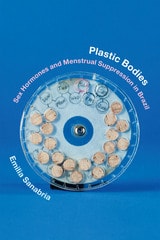
cover of Plastic Bodies: Sex Hormones and Menstrual Suppression in Brazil

Plastic Bodies

Sex Hormones and Menstrual Suppression in Brazil

Emilia Sanabria

Duke University Press, 2016
In Plastic Bodies Emilia Sanabria examines how sex hormones are enrolled to create, mold, and discipline social relations and subjectivities. She shows how hormones have become central to contemporary understandings of the body, class, gender, sex, personhood, modernity, and Brazilian national identity. Through interviews with women and doctors; observations in clinics, research centers and pharmacies; and analyses of contraceptive marketing, Sanabria traces the genealogy of menstrual suppression, from its use in population control strategies in the global South to its remarketing as a practice of pharmaceutical self-enhancement couched in neoliberal notions of choice. She links the widespread practice of menstrual suppression and other related elective medical interventions to Bahian views of the body as a malleable object that requires constant work. Given this bodily plasticity, and its potentially limitless character, the book considers ways to assess the values attributed to bodily interventions. Plastic Bodies will be of interest to all those working in medical anthropology, gender studies, and sexual and reproductive health.
[more]
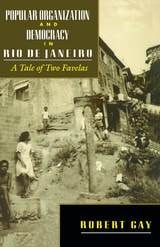
cover of Popular Organization and Democracy in Rio De Janeiro: A Tale of Two Favelas

Popular Organization and Democracy in Rio De Janeiro

A Tale of Two Favelas

Robert Gay

Temple University Press, 1993

"Robert Gay's study is well done. It provides a detailed look at two different forms of popular political organization in Brazil and how they relate to the state, local people, parties, and politicians.... Gay allows the reader to catch a glimpse of the enormous varieties of ways in which popular organizations relate politics to contemporary Brazil. There is no comparable book on Latin American politics." --Scott Mainwaring, Helen Kellogg Institute for International Studies, University of Notre Dame This urban tale of survival illustrates two versions of active, organized, aggressive participation in the political process. Vila Brasil survives by exchanging votes for favors. The president of its neighborhood association promises political candidates that the favela will vote in masse for the highest bidder. Vila Brasil has maneuvered this power to become one of the best served favelas in the region--for the moment, at least. Vidigal, on the other hand, steadfastly refuses to support candidates who campaign on boasts or promises alone. Vote-selling, or buying, is not permitted. To do well in Vidigal, a politician must talk not only about providing electricity and water in the favela, but also about wages, education, and health care over the longer term. In analyzing the favela's different responses to the popular movement that confronted the military in Rio de Janeiro in the late 1970s and early 1980s, the author makes a significant contribution to literature about relationships among urban poor, political elites, and the state.
[more]
cover of Portugal and Brazil in Transition

Portugal and Brazil in Transition

Raymond S. Sayers, Editor

University of Minnesota Press, 1968

Portugal and Brazil in Transition was first published in 1968. Minnesota Archive Editions uses digital technology to make long-unavailable books once again accessible, and are published unaltered from the original University of Minnesota Press editions.

Through a series of essays on various aspects of Portuguese and Brazilian culture, this book presents an enlightening picture of contemporary civilization in the two countries and a forecast of what the next twenty years or so may bring. The authors discuss subjects in such basic fields as literature, linguistics, history, the social sciences, geography, the fine arts, music, and natural science. Taken as a whole, the contents demonstrate the logic of organizing a volume not around a geographical concept but, rather, around a historical concept, in this case "the world the Portuguese created," as Gilberto Freyre described it.

The essays are based on papers that were given at the Sixth International Colloquium of Luso-Brazilian Studies, held in the United States in 1966. In addition to the essays, the book contains the text of comments and discussion about the papers. There are twenty-seven major essays by as many contributors and comments by a number of discussants.
[more]
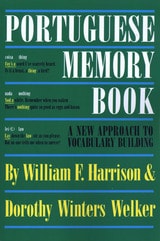
cover of Portuguese Memory Book: A New Approach to Vocabulary Building

Portuguese Memory Book

A New Approach to Vocabulary Building

By William F. Harrison and Dorothy Winters Welker

University of Texas Press, 1996

Mnemonics is an age-old device for remembering names, numbers, and many other things. The Portuguese Memory Book, by William F. Harrison and Dorothy Welker, makes use of this reliable memory help in a series of mnemonic jingles that are by turns playful, sardonic, touching, and heroic to help both students and independent learners acquire and remember Portuguese vocabulary.

The mnemonic jingles present both the sound of the  Portuguese word (indicated by syllables in underlined boldface type) and its English meaning (given by a word or phrase in boldface type):

noite (f.) night

Don't annoy Chihuahuas in the night.
If you ignore their bark, you'll feel their bite.

This innovative approach to vocabulary building is simple, effective, and entertaining. The authors also include a general pronunciation guide to Brazilian Portuguese, particularly to the Carioca dialect of Rio de Janeiro.
[more]
cover of Power and Everyday Life: The Lives of Working Women in Nineteenth-Century Brazil

Power and Everyday Life

The Lives of Working Women in Nineteenth-Century Brazil

Dias, Maria Odila Silva

Rutgers University Press, 1995

This important new work is a study of the everyday lives of the inhabitants of São Paulo in the nineteenth century. Full of vivid detail, the book concentrates on the lives of working women--black, white, Indian, mulatta, free, freed, and slaves, and their struggles to survive. Drawing on official statistics, and on the accounts of travelers and judicial records, the author paints a lively picture of the jobs, both legal and illegal, that were performed by women. Her research leads to some surprising discoveries, including the fact that many women were the main providers for their families and that their work was crucial to the running of several urban industries. This book, which is a unique record of women’s lives across social and race strata in a multicultural society, should be of interest to students and researchers in women’s studies, urban studies, historians, geographers, economists, sociologists, and anthropologists.
[more]
cover of Power and Everyday Life: The Lives of Working Women in Nineteenth-Century Brazil

Power and Everyday Life

The Lives of Working Women in Nineteenth-Century Brazil

Dias, Maria Odila Silva

Rutgers University Press, 1995

This important new work is a study of the everyday lives of the inhabitants of São Paulo in the nineteenth century. Full of vivid detail, the book concentrates on the lives of working women--black, white, Indian, mulatta, free, freed, and slaves, and their struggles to survive. Drawing on official statistics, and on the accounts of travelers and judicial records, the author paints a lively picture of the jobs, both legal and illegal, that were performed by women. Her research leads to some surprising discoveries, including the fact that many women were the main providers for their families and that their work was crucial to the running of several urban industries. This book, which is a unique record of women’s lives across social and race strata in a multicultural society, should be of interest to students and researchers in women’s studies, urban studies, historians, geographers, economists, sociologists, and anthropologists.
[more]
cover of Precarious Democracy: Ethnographies of Hope, Despair, and Resistance in Brazil

Precarious Democracy

Ethnographies of Hope, Despair, and Resistance in Brazil

Benjamin Junge

Rutgers University Press, 2021
Brazil changed drastically in the 21st century’s second decade. In 2010, the country’s outgoing president Lula left office with almost 90% approval. As the presidency passed to his Workers' Party successor, Dilma Rousseff, many across the world hailed Brazil as a model of progressive governance in the Global South. Yet, by 2019, those progressive gains were being dismantled as the far right-wing politician Jair Bolsonaro assumed the presidency of a bitterly divided country. Digging beneath this pendulum swing of policy and politics, and drawing on rich ethnographic portraits, Precarious Democracy shows how these transformations were made and experienced by Brazilians far from the halls of power. Bringing together powerful and intimate stories and portraits from Brazil's megacities to rural Amazonia, this volume demonstrates the necessity of ethnography for understanding social and political change, and provides crucial insights on one of the most epochal periods of change in Brazilian history.
 
[more]
cover of Pretty Modern: Beauty, Sex, and Plastic Surgery in Brazil

Pretty Modern

Beauty, Sex, and Plastic Surgery in Brazil

Alexander Edmonds

Duke University Press, 2010
Pretty Modern is a riveting account of Brazil’s emergence as a global leader in plastic surgery. Intrigued by a Carnaval parade that mysteriously paid homage to a Rio de Janeiro plastic surgeon, anthropologist Alexander Edmonds conducted research that took him from Ipanema socialite circles to glitzy telenovela studios to the packed waiting rooms of public hospitals offering free cosmetic surgery. The result is provocative exploration of the erotic, commercial, and intimate aspects of beauty in a nation with extremes of wealth and poverty and a reputation for natural sensuality. Drawing on conversations with maids and their elite mistresses, divorced housewives, black celebrities, and favela residents aspiring to be fashion models, Edmonds analyzes what sexual desirability means and does for women in different social positions. He argues that beauty is a distinct realm of modern experience that does not simply reflect other inequalities. It mimics the ambiguous emancipatory potential of capital, challenging traditional hierarchies while luring consumers into a sexual culture that reduces the body to the brute biological criteria of attractiveness. Illustrated with color photographs, Pretty Modern offers a fresh theoretical perspective on the significance of female beauty in consumer capitalism.
[more]
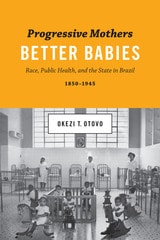
cover of Progressive Mothers, Better Babies: Race, Public Health, and the State in Brazil, 1850-1945

Progressive Mothers, Better Babies

Race, Public Health, and the State in Brazil, 1850-1945

By Okezi T. Otovo

University of Texas Press, 2016

In Bahia, Brazil, the decades following emancipation saw the rise of reformers who sought to reshape the citizenry by educating Bahian women in methods for raising “better babies.” The idealized Brazilian would be better equipped to contribute to the labor and organizational needs of a modern nation. Backed by many physicians, politicians, and intellectuals, the resulting welfare programs for mothers and children mirrored complex debates about Brazilian nationality. Examining the local and national contours of this movement, Progressive Mothers, Better Babies investigates families, medical institutions, state-building, and social stratification to trace the resulting policies, which gathered momentum in the aftermath of abolition (1888) and the declaration of the First Republic (1889), culminating during the administration of President Getúlio Vargas (1930–1945).

Exploring the cultural discourses on race, gender, and poverty that permeated medical knowledge and the public health system for almost a century, Okezi T. Otovo draws on extensive archival research to reconstruct the implications for Bahia, where family patronage politics governed poor women’s labor as the mothers who were the focus of medical interventions were often the nannies and nursemaids of society’s wealthier families. The book reveals key transition points as the state of Bahia transformed from being a place where poor families could expect few social services to becoming the home of numerous programs targeting the poorest mothers and their children. Negotiating crucial questions of identity, this history sheds new light on larger debates about Brazil’s past and future.

[more]
cover of Public Spectacles of Violence: Sensational Cinema and Journalism in Early Twentieth-Century Mexico and Brazil

Public Spectacles of Violence

Sensational Cinema and Journalism in Early Twentieth-Century Mexico and Brazil

Rielle Navitski

Duke University Press, 2017
In Public Spectacles of Violence Rielle Navitski examines the proliferation of cinematic and photographic images of criminality, bodily injury, and technological catastrophe in early twentieth-century Mexico and Brazil, which were among Latin America’s most industrialized nations and later developed two of the region’s largest film industries. Navitski analyzes a wide range of sensational cultural forms, from nonfiction films and serial cinema to illustrated police reportage, serial literature, and fan magazines, demonstrating how media spectacles of violence helped audiences make sense of the political instability, high crime rates, and social inequality that came with modernization. In both nations, sensational cinema and journalism—influenced by imported films—forged a common public sphere that reached across the racial, class, and geographic divides accentuated by economic growth and urbanization. Highlighting the human costs of modernization, these media constructed everyday experience as decidedly modern, in that it was marked by the same social ills facing industrialized countries. The legacy of sensational early twentieth-century visual culture remains felt in Mexico and Brazil today, where public displays of violence by the military, police, and organized crime are hypervisible.
[more]
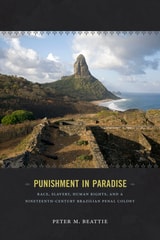
cover of Punishment in Paradise: Race, Slavery, Human Rights, and a Nineteenth-Century Brazilian Penal Colony

Punishment in Paradise

Race, Slavery, Human Rights, and a Nineteenth-Century Brazilian Penal Colony

Peter M. Beattie

Duke University Press, 2015
Throughout the nineteenth century the idyllic island of Fernando de Noronha, which lies two hundred miles off Brazil's northeastern coast, was home to Brazil's largest forced labor penal colony. In Punishment in Paradise Peter M. Beattie uses Noronha as a case study to understand nineteenth-century Brazil's varied social and cultural values, especially in relation to justice, class, color, civil condition, human rights and labor. As Brazil’s slave population declined after 1850, the use of colonial-era disciplinary practices at Noronha—such as flogging and forced labor—stoked anxieties about human rights and Brazil’s international image. Beattie contends that the treatment of slaves, convicts, and other social categories subject to coercive labor extraction were interconnected and that reforms that benefitted one of these categories made them harder to deny to others. In detailing Noronha's history and the end of slavery as part of an international expansion of human rights, Beattie places Brazil firmly in the purview of Atlantic history.
[more]
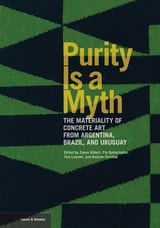
cover of Purity Is a Myth: The Materiality of Concrete Art from Argentina, Brazil, and Uruguay

Purity Is a Myth

The Materiality of Concrete Art from Argentina, Brazil, and Uruguay

Zanna Gilbert

J. Paul Getty Trust, The, 2021

Presenting new scholarship, this publication is an innovative technical study of the Concrete art movement in Latin America.

Purity Is a Myth presents new scholarship on Concrete art in Argentina, Brazil, and Uruguay from the 1940s to the 1960s. Originally coined by the Dutch artist Theo van Doesburg in 1930, the term concrete denotes abstract painting with no reference to external reality. Van Doesburg argued that there was nothing more real than a line, color, or plane. Artists such as Willys de Castro, Lygia Clark, Waldemar Cordeiro, Hermelindo Fiaminghi, Judith Lauand, Raúl Lozza, Tomás Maldonado, Hélio Oiticica, and Rhod Rothfuss would reinvent this concept in postwar Latin America.

Drawing on research conducted by Getty and international partners, the essays in this volume address a variety of topics, including the general history, emergence, and reception of Concrete art; processes and color; scientific analysis of works; illustrated chronologies of the paint industry in Brazil and Argentina; and Concrete design on paper. An innovative technical study of the Concrete art movement in Latin America, this volume will be indispensable to scholars, practitioners, and students of Latin American art.
[more]