Results by title
211 books match the query 'Campaigns & Elections' and 21 start with p
POLITICAL CONSULTANTS IN US CONGRESS ELECTIONS
STEPHEN K. MEDVIC
The Ohio State University Press, 2001
Political Consultants in U.S. Congressional Elections answers two simple questions: What do professional political consultants do? and How successful are they? Medvic analyzes the way consultants shape political dialogue and uses empirical data to show the benefits—and limits—of a consultant's involvement in a campaign. He focuses on issues as diverse as vote shares, outcomes, and fundraising. Finally, the author demonstrates how the adversarial nature of campaigns fosters the kind of electioneering advocated by most political consultants and argues that this process may not be as harmful for the country as is often suggested.
Parties and Elections in Greece
The Search for LegitimacyRichard Clogg
Duke University Press, 1987
Parties on the Ground
A Study of Nominations for the House of RepresentativesKathleen Bawn, Knox Brown, Angela X. Ocampo, Shawn Patterson Jr., John L. Ray, and John Zaller
University of Chicago Press, 2026
A close-up examination of the roots of congressional politics in nominations for the House of Representatives.
With most House seats all but guaranteed for one party in general elections, primary elections for party nominees often decide who goes to Congress. Yet primaries are notoriously difficult to study, due in part to both the variety of rules that govern them and the differences in the influence of local leaders. Based on wide-ranging evidence from field interviews to fundraising data to exit polls, Parties on the Ground overcomes these challenges to take readers under the hood for an in-depth look at the nomination process.
Although progressive reformers sought the adoption of primaries to empower voters’ control over nominations, Parties on the Ground finds that most voters pay too little attention to make use of the opportunity. Instead, the most important actors are intense policy demanders—such as interest groups and activist organizations—who supply campaign resources to some candidates and deny them to others. These groups care most about securing an agent for their own interests and values; to this end, they put serious effort into vetting candidates and often coordinate among themselves or with local parties in support of their choices. At the same time, competition between establishment and insurgent groups can be high, especially in the Republican Party. Developing a nuanced account of House nominations in today’s parties, Parties on the Ground offers a host of new insights into this understudied but significant piece of the puzzle of American politics.
Partisan Gerrymandering and the Construction of American Democracy
Erik J. Engstrom
University of Michigan Press, 2016
Erik J. Engstrom offers a historical perspective on the effects of gerrymandering on elections and party control of the U.S. national legislature. Aside from the requirements that districts be continuous and, after 1842, that each select only one representative, there were few restrictions on congressional districting. Unrestrained, state legislators drew and redrew districts to suit their own partisan agendas. With the rise of the “one-person, one-vote” doctrine and the implementation of the Voting Rights Act of 1965, however, redistricting became subject to court oversight.
Engstrom evaluates the abundant cross-sectional and temporal variation in redistricting plans and their electoral results from all the states, from 1789 through the 1960s, to identify the causes and consequences of partisan redistricting. His analysis reveals that districting practices across states and over time systematically affected the competitiveness of congressional elections, shaped the partisan composition of congressional delegations, and, on occasion, determined party control of the House of Representatives.
Party Mandates and Democracy
Making, Breaking, and Keeping Election Pledges in Twelve CountriesElin Naurin, Terry J. Royed, and Robert Thomson, Editors
University of Michigan Press, 2019
The fulfillment of parties’ election pledges is an essential part of the democratic process. This book is the first major, genuinely comparative study of promises across a broad range of countries and elections, including the United States, Canada, nine Western European countries, and Bulgaria. The book thus adds to the body of literature on the variety of outcomes stemming from alternative democratic institutions.
Patchwork Nation
Sectionalism and Political Change in American PoliticsJames G. Gimpel and Jason E. Schuknecht
University of Michigan Press, 2004
Paying for the Party
How Fundraising Demands Lead to Less Productive and Less Representative LegislaturesMichael R. Kistner
University of Chicago Press, 2026
A revealing, data-rich exploration of how American legislators transformed from active policymakers into party fundraisers.
Lawmakers in Congress and state legislatures across the United States spend enormous amounts of time and effort fundraising, not just for their own seats but for the party. Whether dialing for dollars or hosting high-priced fundraising events, the pursuit of campaign funds is now a massive part of the American legislator’s job description. What explains this transformation, and what are the consequences for public policy?
In Paying for the Party, Michael Kistner uses new theory and new data to answer these questions. He shows that state legislative party organizations—Democratic and Republican caucuses in capitols across the country—are responsible for turning their members into single-minded seekers of money. Parties reward legislators who contribute the most with powerful leadership and committee positions. Consequently, the members who now hold these agenda-setting positions are increasingly neither the most productive nor knowledgeable lawmakers, but rather those who can raise the most money. And when legislators are asked to raise more money, they skip committee hearings for fundraising events, enacting fewer substantive policies as a result. Paying for the Party shows that parties in contemporary American legislatures have hollowed out the policymaking capacity of their institutions and empowered a decidedly non-representative set of legislators.
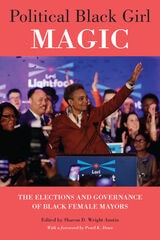
Political Black Girl Magic
The Elections and Governance of Black Female MayorsEdited by Sharon D. Wright Austin
Temple University Press, 2023
Case studies in this interdisciplinary volume include female mayors in Atlanta, Baltimore, Charlotte, Chicago, Compton, and Washington, DC, among other cities, along with discussion of each official’s political context. Covering mayors from the 1960s to the present, Political Black Girl Magic identifies the most significant obstacles black women have faced as mayors and mayoral candidates, and seeks to understand how race, gender, or the combination of both affected them.
Contributors: Andrea Benjamin, Nadia E. Brown, Pearl K. Dowe, Christina Greer, Precious Hall, Valerie C. Johnson, Yolanda Jones, Lauren King, Angela K. Lewis-Maddox, Minion K.C. Morrison, Marcella Mulholland, Stephanie A. Pink-Harper, Kelly Briana Richardson, Emmitt Y. Riley, III, Ashley Robertson Preston, Taisha Saintil, Jamil Scott, Fatemeh Shafiei, James Lance Taylor, LaRaven Temoney, Linda Trautman, and the editor
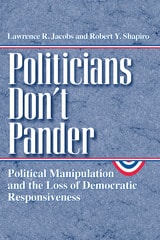
Politicians Don't Pander
Political Manipulation and the Loss of Democratic ResponsivenessLawrence R. Jacobs and Robert Y. Shapiro
University of Chicago Press, 2000
In this provocative and engagingly written book, the authors argue that the reality is quite the opposite. In fact, when not facing election, contemporary presidents and members of Congress routinely ignore the public's policy preferences and follow their own political philosophies, as well as those of their party's activists, their contributors, and their interest group allies. Politicians devote substantial time, effort, and money to tracking public opinion, not for the purposes of policymaking, but to change public opinion—to determine how to craft their public statements and actions to win support for the policies they and their supporters want.
Taking two recent, dramatic episodes—President Clinton's failed health care reform campaign, and Newt Gingrich's "Contract with America"—as examples, the authors show how both used public opinion research and the media to change the public's mind. Such orchestrated displays help explain the media's preoccupation with political conflict and strategy and, the authors argue, have propelled levels of public distrust and fear of government to record highs.
Revisiting the fundamental premises of representative democracy, this accessible book asks us to reexamine whether our government really responds to the broad public or to the narrower interests and values of certain groups. And with the 2000 campaign season heating up, Politicians Don't Pander could not be more timely.
"'Polling has turned leaders into followers,' laments columnist Marueen Dowd of The New York Times. Well, that's news definitely not fit to print say two academics who have examined the polls and the legislative records of recent presidents to see just how responsive chief executives are to the polls. Their conclusion: not much. . . . In fact, their review and analyses found that public opinion polls on policy appear to have increasingly less, not more, influence on government policies."—Richard Morin, The Washington Post
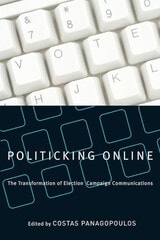
Politicking Online
The Transformation of Election Campaign CommunicationsPanagopoulos, Costas
Rutgers University Press, 2009
While the Internet may have transformed the landscape of modern political campaigns throughout the world, Costas Panagopoulos reminds readers that officials and campaign workers need to adapt to changing circumstances, know the limits of their methods, and combine new technologies with more traditional techniques to achieve an overall balance.
Politics the Wellstone Way
How to Elect Progressive Candidates and Win on IssuesWellstone Action Wellstone Action Wellstone Action
University of Minnesota Press, 2005
Wellstone Action is a nonprofit organization dedicated to continuing Paul and Sheila Wellstone’s fight for progressive change and economic justice by teaching effective political action skills to people across the country. Politics the Wellstone Way is a workshop in book form, providing the detailed framework needed to jump-start a new generation of activists plus plenty of helpful tools for old pros, including articulating a strong message, base building, field organizing, budgeting, fundraising, scheduling, getting out the vote, and grassroots advocacy and lobbying, illustrated by practical and inspirational examples.
From the school board all the way to the White House, Politics the Wellstone Way instructs people on becoming better organizers, candidates, campaign workers, and citizen activists, empowering them to make their voices heard.
Wellstone Action was established by the Wellstones’ two surviving sons, David and Mark. The main vehicle for this ongoing work is Camp Wellstone, a weekend training program that Wellstone Action leads regularly in locations across the country. Jeff Blodgett, Paul Wellstone’s longtime campaign manager, is the executive director of Wellstone Action. For more information visit www.wellstoneaction.org.
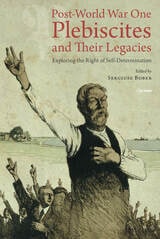
Post-World War One Plebiscites and Their Legacies
Exploring the Right of Self-DeterminationSergiusz Bober
Central European University Press, 2024
Plebiscites, or referendums, are epitomes of direct democracy and the right of self-determination. While direct democracy has always been a key subject in the theory and practice of western liberal democracies, the issue of self-determination has been propelled to the fore by the hegemonistic moves of Russia. By providing a historical analysis of the post-World War One plebiscites, this book deals with enduring, painfully contemporary, and in in any case fundamental, concepts.
The contributors to this edited volume approach the referendums comparatively. After grounding the analysis theoretically, the authors look at detailed aspects of individual cases, with the two plebiscites held in the Danish-German border region of Schleswig in the winter of 1920 as points of departure. They then extend the exploration through the inter-war period and address the effects of border delimitations on everyday life or gender roles in the context of ethnic mobilization. Finally, the book places the post-World War One plebiscites in a long-term perspective. The concluding essays assess, among others, the applicability of plebiscitary solutions to contemporary conflicts, taking into consideration issues of borders, religion, language, identity, and minority rights.

Practicing Electoral Assistance
A Critical EthnographyEva Johais
University of Michigan Press, 2027
Electoral assistance is the prototypical tool to promote democracy and the related goals of peace and development. Rather than assessing whether this tool achieves its intentions, Practicing Electoral Assistance explains how international support for election processes has become normal practice. For this practice-theoretical approach to world politics, Eva Johais combines theories and methods from anthropology, international relations, political science, and sociology. Based on multisited ethnographic fieldwork, she presents detailed empirical knowledge of the relevant institutions, organizations, actors, and actions. Practicing Electoral Assistance takes readers to hotel rooftops, embassies, government buildings, and offices in Abidjan (Côte d’Ivoire), Addis Ababa (Ethiopia), Conakry (Guinea), and to the United Nations headquarters in New York. Through this journey, readers come to understand that electoral assistance means different things: it is a mission for democracy promoters, an intervention tool for peacebuilders, a work for election experts, and a business line for managers of development organizations. While the practice is anchored in the aid system, it has gained independence from the system’s structural constraints through the professionalization of election administration and the establishment of the transnational election profession.
Pre-Election Polling
Sources of Accuracy and ErrorIrving Crespi
Russell Sage Foundation, 1988
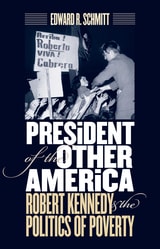
President of the Other America
Robert Kennedy and the Politics of PovertyEdward R. Schmitt
University of Massachusetts Press, 2010
Robert Kennedy's abbreviated run for the presidency in 1968 has assumed almost mythical proportions in American memory. His campaign has been romanticized because of its tragic end, but also because of the foreign and domestic crises that surrounded it. Yet while most media coverage initially focused on Kennedy's opposition to the Vietnam War as the catalyst of his candidacy, another issue commanded just as much of his attention. That issue was poverty. Stumping across the country, he repeated the same antipoverty themes before college students in Kansas and Indiana, loggers and women factory workers in Oregon, farmers in Nebraska, and business groups in New York. Although his calls to action sometimes met with apathy, he refused to modify his message. “If they don't care,” he told one aide, “the hell with them.”
As Edward R. Schmitt demonstrates, Kennedy's concern with the problem of poverty was not new. Although critics at the time accused him of opportunistically veering left in order to outflank an unpopular president, a closer look at the historical record reveals a steady evolution rather than a dramatic shift in his politics.
Presidential Campaigns and Presidential Accountability
Michele P. Claibourn
University of Illinois Press, 2011
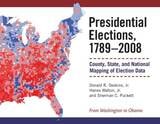
Presidential Elections, 1789-2008
County, State, and National Mapping of Election DataDonald R. Deskins, Jr., Hanes Walton, Jr., and Sherman C. Puckett
University of Michigan Press, 2010
"Hanes Walton, Donald Deskins, and Sherman Puckett have produced a highly impressive collection and valuable contribution to the literature on American electoral politics. This work is indispensable for academic libraries, political scientists, historians, and serious students of American government."
---Immanuel Ness, Professor, Department of Political Science, Brooklyn College, City University of New York
"Massive amounts of information about presidential elections which are not readily available elsewhere. Unprecedented coverage in one volume of every single American presidential election."
---James Gimpel, Professor of Government, University of Maryland
"This is an extraordinary research endeavor; the most comprehensive set of aggregate election data ever assembled. Painstakingly researched, this color-coded volume presents data for every presidential election from 1789 to 2008. Unlike most, the wide ranging narrative for this atlas identifies racial patterns in the vote. Everyone who studies or is interested in presidential elections should have this impressive collection of statistical data in their libraries. A visual gem for the digital age."
---Robert Smith, Professor of Political Science, San Francisco State University
"Presidential Elections, 1789-2008 is a genuine tour de force that captures in an extremely accessible and comprehensive way the electoral geography of America's presidential elections, from Washington to Obama. An invaluable addition to the library of all those interested in presidential elections and U.S. politics."
---Marion Orr, Frederick Lippitt Professor of Public Policy and Professor of Political Science, Brown University
"This volume sets an extraordinarily high standard in scholarship, completeness, description, and explanation of our political process. It has been said that all politics are local, but never before has this been demonstrated with such clarity and panache, using the simple method of standardized tables summarizing voting, then showing state and county breakdowns of the numbers, greatly strengthened by beautiful full-color maps and cartograms. Every scholar of politics and democracy will benefit from the work laid out in this volume."
---Keith Clarke, Professor of Geography, University of California, Santa Barbara
Presidential Elections is an almanac of the popular vote in every presidential election in American history, analyzed at the county level with histories of each campaign, graphs, and stunning four-color maps. Most Americans are familiar with the crude red state/blue state maps used by commentators and campaign strategists---and even, for want of an alternative, by many academics. In providing a higher-resolution view of voting behavior the authors of this new volume enable examination of local and regional political trends that are invisible in state-level aggregations.
Presidential Elections will enable scholars to more subtly analyze voting behavior, campaigns, and presidential politics; commentators will use it to analyze trends and trace the historical evolution of new coalitions and voting blocs; strategists will use it to plan campaigns and mobilize constituencies. Presidential Elections will become the standard almanac on the subject: a required resource for academic and public libraries, as well as for scholars, consultants, and pundits nationwide.
Donald R. Deskins, Jr., is a political geographer and Emeritus Professor of Sociology and a former Associate Dean of the Horace H. Rackham School of Graduate Studies at the University of Michigan.
Hanes Walton, Jr., is Professor of Political Science at the University of Michigan. He also holds positions as Senior Research Scientist at the Center for Political Studies and as a faculty member in the Center for Afroamerican and African Studies.
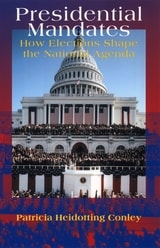
Presidential Mandates
How Elections Shape the National AgendaPatricia Heidotting Conley
University of Chicago Press, 2001
Presidents claim mandates, Conley shows, only when they can mobilize voters and members of Congress to make a major policy change: the margin of victory, the voting behavior of specific groups, and the composition of Congress all affect their decisions. Using data on elections since 1828 and case studies from Truman to Clinton, she demonstrates that it is possible to accurately predict which presidents will ask for major policy changes at the start of their term. Ultimately, she provides a new understanding of the concept of mandates by changing how we think about the relationship between elections and policy-making.
Presidential Selection
Alexander Heard and Michael Nelson, eds.
Duke University Press, 1987
What are the international implications of how the Unites States chooses its presidents? How does the process affect other nations? Does it enhance or diminish the ability of the United States to deal effectively with the rest of the world?
How do the changing characteristics of the the presidential selection process affect the shaping of public policies, and vice versa? For example, how have changes in citizen participation, campaign technologies, and campaign finance laws altered the balance of political power among institutions and interests?
What is the influence of the Constitution on presidential selection, as in the prescribed qualifications for the office and in provisions for unusual circumstances?
Public Financing in American Elections
Edited by Costas Panagopoulos
Temple University Press, 2011
Reformers argue that public financing of campaigns will help rescue American democracy from the corruptive influence of money in elections. Public Financing in American Elections evaluates this claim and aims to remove much of the guesswork from the discussion about public finance.
Featuring some of the most senior scholars in political science and electoral studies, this book provides an up-to-date treatment of campaign finance research and thinking about public campaign financing reforms. Exploring proposals at the local, state, and federal levels, the contributors provide a comprehensive overview of public financing initiatives in the United States and discuss their impact. Focused analyses of several current public programs are also presented.
Pushback
The Political Fallout of Unpopular Supreme Court DecisionsDave Bridge
University of Missouri Press, 2024
Certain to appeal to anyone interested in American political science and history, Pushback closes with a detailed examination of the unequivocally countermajoritarian Supreme Court ruling of our lifetimes, Dobbs v. Jackson Women’s Health Organization, which overturned Roe. For the first time in 50 years, conditions are ripe for a party to win votes by campaigning against the will of the Court. Upcoming elections will tell if the Republicans overplayed their hand, or if Democrats will play theirs as skillfully as did the GOP after Roe.