Results by title
66 books match the query 'Challenges' and 5 start with p

Performance-Based Student Assessment
Challenges and PossibilitiesEdited by Joan Boykoff Baron and Dennie Palmer Wolf
University of Chicago Press, 1996
The first section discusses the concepts of learning that underpin different approaches to performance assessment. These essays compare notions of fixed intelligence and developmental learning and outline the need to acknowledge and support diversity in America's classrooms. The second section considers the political issues surrounding assessment systems that have been pilot-tested in Connecticut, Vermont, and Kentucky. The third and final section reviews design possibilities for future systems to assess both aptitude and achievement.
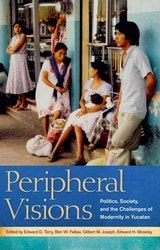
Peripheral Visions
Politics, Society, and the Challenges of Modernity in YucatanEdward D. Terry
University of Alabama Press, 2010
The essays in this collection illuminate both the processes of change and the negative reactions that they frequently elicited
Yucatan has been called “a world apart”—cut off from the rest of Mexico by geography and culture. Yet, despite its peripheral location, the region experienced substantial change in the decades after independence. As elsewhere in Mexico, apostles of modernization introduced policies intended to remold Yucatan in the image of the advanced nations of the day. Indeed, modernizing change began in the late colonial era and continued throughout the 19th century as traditional patterns of land tenure were altered and efforts were made to divest the Catholic Church of its wealth and political and intellectual influence. Some changes, however, produced fierce resistance from both elites and humbler Yucatecans and modernizers were frequently forced to retreat or at least reach accommodation with their foes.
Covering topics from the early 19th century to the late 20th century, the essays in this collection illuminate both the processes of change and the negative reactions that they frequently elicited. The diversity of disciplines covered by this volume—history, anthropology, sociology, economics—illuminates at least three overriding challenges for study of the peninsula today. One is politics after the decline of the Institutional Revolutionary Party: What are the important institutions, practices, and discourses of politics in a post-postrevolutionary era? A second trend is the scholarly demystification of the Maya: Anthropologists have shown the difficulties of applying monolithic terms like Maya in a society where ethnic relations are often situational and ethnic boundaries are fluid. And a third consideration: researchers are only now beginning to grapple with the region’s transition to a post-henequen economy based on tourism, migration, and the assembly plants known as maquiladoras. Challenges from agribusiness and industry will no doubt continue to affect the peninsula’s fragile Karst topography and unique environments.
Contributors: Eric N. Baklanoff, Helen Delpar, Paul K. Eiss, Ben W. Fallaw, Gilbert M. Joseph, Marie Lapointe, Othón Baños Ramírez, Hernán Menéndez Rodríguez, Lynda S. Morrison, Terry Rugeley, Stephanie J. Smith
Physician Communication with Patients
Research Findings and ChallengesJon B. Christianson, PhD, Louise H. Warrick, DrPH, Michael Finch, PhD, and Wayne Jonas, MD
University of Michigan Press, 2012
We all have a good idea of how we want things to go when we visit a physician. We expect to be able to explain why we are there, and we hope the physician will listen and possibly ask questions that help us clarify our thoughts. Most of us hope that the physician will provide some expression of empathy, offer a clear, nontechnical assessment of our problem, and describe "next steps" in a way that is easy to understand. Ideally, we would like to be asked about our ability to follow treatment recommendations. Some experts say that these expectations are not only reasonable but even necessary if patients are to get the care they need. Yet there is a growing body of research that suggests the reality of physician communication with patients often falls short of this ideal in many respects.
A careful analysis of the findings of this research can provide guidance to physician educators, health care administrators, and health policy makers interested in understanding the role that improved physician communication can play in improving quality of care and patient outcomes. Physician Communication with Patients summarizes findings from the academic literature pertaining to various aspects of this question, discussing those findings in the context of current pressures for change in the organization and delivery of medical services.

Policing in Natural Disasters
Stress, Resilience, and the Challenges of Emergency ManagementTerri M. Adams and Leigh R. Anderson
Temple University Press, 2019
When natural disasters and emergencies strike, the short- and long-term effects of these events on first responders—the very people society relies upon in the midst of a catastrophe—are often overlooked. Policing in Natural Disasters provides a comprehensive analysis of the major challenges faced by law enforcement officers during extreme crisis events. Terri Adams and Leigh Anderson examine the dilemmas police departments face as well as the impact of the disasters on the professional and personal lives of the officers. Case studies explore the response and recovery phases of emergencies including Hurricane Katrina, the 2010 earthquake and subsequent tsunami in Santiago, Chile, and the Superstorm Tornado Outbreak in 2011.
Policing in Natural Disasters was inspired by the personal accounts of triumph and tragedy shared by first responders. It provides an understanding of first-responder behaviors during disasters, as well as the preparedness, mitigation, response and recovery policy implications for first responders and emergency managers. As first responders must frequently cope with stress, uncertainty, and threats to their health and safety during high-consequence events, Adams and Anderson provide lessons from first-hand experiences of police officers that can lead to better management in times of crisis.

Proof-of-Stake for Blockchain Networks
Fundamentals, challenges and approachesCong T. Nguyen
The Institution of Engineering and Technology, 2024