Results by title
159 books match the query 'Change' and 7 start with p
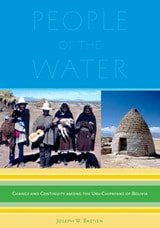
People of the Water
Change and Continuity among the Uru-Chipayans of BoliviaJoseph Bastien
University of Utah Press, 2012
People of the Water is an ethnographic analysis of the cultural practices of the Uru-Chipayans—how they have maintained their culture and how they have changed. The Chipayans are an Andean people whose culture predates the time of the Incas (c. AD 1400), but they were almost wiped out by 1940, when only around 400 remained. Yet their population has quadrupled in the last 60 years. Joseph Bastien has spent decades living with and studying the Chipayans, and here for the first time he discusses the dynamics between traditional, social, and religious practices and the impending forces of modernity upon them. With the support of more than 100 illustrations he documents how, in spite of challenges, the Chipayans maintain ecological sustainability through an ecosystem approach that is holistic and symbolically embedded in rituals and customs.
Chipayans have a resilient and innovative culture, maintaining dress, language, hairstyle, rituals, and behavior while also re-creating their culture from a dialectic between themselves and the world around them. Bastien provides the reader with a series of experienced observations and intimate details of a group of people who strive to maintain their ancient traditions while adapting to modern society. This ethnographic study offers insightful, surprising, and thoughtful conclusions applicable to interpreting the world around us.

Phonological Variation and Change in the Dialect of Charleston, South Carolina, Volume 82
Maciej Baranowski
Duke University Press, 0
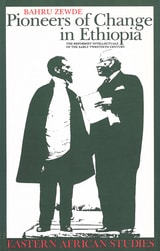
Pioneers Of Change In Ethiopia
The Reformist Intellectuals of the Early Twentieth CenturyBahru Zewde
Ohio University Press, 2002
In this exciting new study, Bahru Zewde, one of the foremost historians of modern Ethiopia, has constructed a collective biography of a remarkable group of men and women in a formative period of their country’s history. Ethiopia’s political independence at the end of the nineteenth century put this new African state in a position to determine its own levels of engagement with the West. Ethiopians went to study in universities around the world. They returned with the skills of their education acquired in Europe and America, and at home began to lay the foundations of a new literature and political philosophy. Pioneers of Change in Ethiopia describes the role of these men and women of ideas in the social and political transformation of the young nation and later in the administration of Haile Selassie.

Poetics of Change
The New Spanish-American NarrativeBy Julio Ortega
University of Texas Press, 1986
Too often literary criticism is academic exercise rather than creative act. For the multifaceted Julio Ortega—respected poet, dramatist, and novelist in his own right—the act of criticism becomes profoundly creative, his incisive readings of the text far transcending the pedantry that may falsely pass for imagination, intelligence, and rigor. Nearly every Spanish-American writer of consequence, from Paz to Fuentes, Cortázar to Lezama Lima, has extolled Ortega’s criticism as not merely a reflection but an essential part of the renaissance that took place in Spanish-American letters during the late twentieth century.
Poetics of Change brings together Ortega’s most penetrating and insightful analyses of the fiction of Borges, Fuentes, García Márquez, Carpentier, Rulfo, Cabrera Infante, and others responsible for great writing from Spanish America. Ortega concerns himself most with the semantic innovations of these masters of the modern narrative and their play with form, language, and the traditional boundaries of genre. Mapping their creative territory, he finds that the poetics of Spanish-American writing is that of a dynamically changing genre that has set exploration at its very heart.

Political Groups in Chile
The Dialogue between Order and ChangeBy Ben G. Burnett
University of Texas Press, 1970
Before the Pinochet coup in 1973, Chile had a lengthy history of constitutionalism. Early in the republican era the aristocracy established order in the political system; a century later the emergent middle sectors infused politics with wider democratic practices and, relative to most of Latin America, a level of pluralism came to characterize group politics.
Despite the distinctive advantages that embellished Chile’s political system, however, certain unfulfilled promises still marred the actual picture in the early 1960s. As the lower economic strata of society were continually passed over by most of the social reforms and economic advances that bettered the general outlook of the nation, their frustrations were brought out into the open and their votes were appealed to by reformist and radical political parties anxious to break the political hegemony of moderates and conservatives.
Thus, the 1960s stood out as a high-water mark in the confrontation between, on the one side, those desirous of maintaining the status quo, or at most admitting to prescriptive change, and, on the other, progressive elements demanding deep structural alterations in the entire social fabric. This study seeks to analyze the sources of alienation, the styles and objectives of the participants in the confrontation, and the relative ability of groups to gain satisfaction of their claims upon the political system. Ben G. Burnett delineates this dialogue between order and change as it inexorably pushed toward a showdown in the presidential elections of 1964 and the congressional elections of 1965.
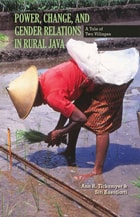
Power, Change, and Gender Relations in Rural Java
A Tale of Two VillagesAnn R. Tickamyer
Ohio University Press, 2012
Women’s status in rural Java can appear contradictory to those both inside and outside the culture. In some ways, women have high status and broad access to resources, but other situations suggest that Javanese women lack real power and autonomy. Javanese women have major responsibilities in supporting their families and controlling household finances. They may also own and manage their own property. Yet these symbols and potential sources of independence and influence are determined by a culturally prescribed, state-reinforced, patriarchal gender ideology that limits women’s autonomy. Power, Change, and Gender Relations in Rural Java examines this contradiction as well as sources of stability and change in contemporary Javanese gender relations.
The authors conducted their research in two rural villages in Yogyakarta, Indonesia, during three important historical and political periods: the end of the New Order regime; the transitional period of reformation; and the subsequent establishment of a democratic government. Their collaboration brings a unique perspective, analyzing how gender is constructed and reproduced and how power is exercised as Indonesia faces the challenges of building a new social order.
Processual Sociology
Andrew Abbott
University of Chicago Press, 2016
In Processual Sociology, Abbott first examines the endurance of individuals and social groups through time and then goes on to consider the question of what this means for human nature. He looks at different approaches to the passing of social time and determination, all while examining the goal of social existence, weighing the concepts of individual outcome and social order. Abbott concludes by discussing core difficulties of the practice of social science as a moral activity, arguing that it is inescapably moral and therefore we must develop normative theories more sophisticated than our current naively political normativism. Ranging broadly across disciplines and methodologies, Processual Sociology breaks new ground in its search for conceptual foundations of a rigorously processual account of social life.