Results by title
121 books match the query 'Cinema' and 2 start with p
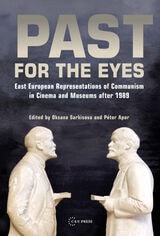
Past for the Eyes
East European Representations of Communism in Cinema and Museums After 1989Oksana Sarkisova
Central European University Press, 2008
How do museums and cinema shape the image of the Communist past in today’s Central and Eastern Europe? This volume is the first systematic analysis of how visual techniques are used to understand and put into context the former regimes. After history “ended” in the Eastern Bloc in 1989, museums and other memorials mushroomed all over the region. These efforts tried both to explain the meaning of this lost history, as well as to shape public opinion on their society’s shared post-war heritage. Museums and films made political use of recollections of the recent past, and employed selected museum, memorial, and media tools and tactics to make its political intent historically credible. Thirteen essays from scholars around the region take a fresh look at the subject as they address the strategies of fashioning popular perceptions of the recent past.
[more]
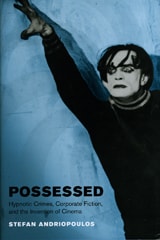
Possessed
Hypnotic Crimes, Corporate Fiction, and the Invention of CinemaStefan Andriopoulos
University of Chicago Press, 2008
Silent cinema and contemporaneous literature explored themes of mesmerism, possession, and the ominous agency of corporate bodies that subsumed individual identities. At the same time, critics accused film itself of exerting a hypnotic influence over spellbound audiences. Stefan Andriopoulos shows that all this anxiety over being governed by an outside force was no marginal oddity, but rather a pervasive concern in the late nineteenth and early twentieth centuries.
Tracing this preoccupation through the period’s films—as well as its legal, medical, and literary texts—Andriopoulos pays particular attention to the terrifying notion of murder committed against one’s will. He returns us to a time when medical researchers described the hypnotized subject as a medium who could be compelled to carry out violent crimes, and when films like The Cabinet of Dr. Caligari and Dr. Mabuse, the Gambler famously portrayed the hypnotist’s seemingly unlimited power on the movie screen. Juxtaposing these medicolegal and cinematic scenarios with modernist fiction, Andriopoulos also develops an innovative reading of Kafka’s novels, which center on the merging of human and corporate bodies.
Blending theoretical sophistication with scrupulous archival research and insightful film analysis, Possessed adds a new dimension to our understanding of today’s anxieties about the onslaught of visual media and the expanding reach of vast corporations that seem to absorb our own identities.
[more]