Results by title
718 books match the query 'Civil rights' and 34 start with p

PADRES
The National Chicano Priest MovementBy Richard Edward Martínez
University of Texas Press, 2005
From the 1848 Treaty of Guadalupe Hidalgo to the 1960s, Mexican American Catholics experienced racism and discrimination within the U.S. Catholic church, as white priests and bishops maintained a racial divide in all areas of the church's ministry. To oppose this religious apartheid and challenge the church to minister fairly to all of its faithful, a group of Chicano priests formed PADRES (Padres Asociados para Derechos Religiosos, Educativos y Sociales, or Priests Associated for Religious, Educational, and Social Rights) in 1969. Over the next twenty years of its existence, PADRES became a powerful force for change within the Catholic church and for social justice within American society.
This book offers the first history of the founding, activism, victories, and defeats of PADRES. At the heart of the book are oral history interviews with the founders of PADRES, who describe how their ministries in poor Mexican American parishes, as well as their own experiences of racism and discrimination within and outside the church, galvanized them into starting and sustaining the movement. Richard Martínez traces the ways in which PADRES was inspired by the Chicano movement and other civil rights struggles of the 1960s and also probes its linkages with liberation theology in Latin America. He uses a combination of social movement theory and organizational theory to explain why the group emerged, flourished, and eventually disbanded in 1989.
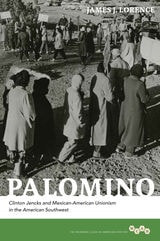
Palomino
Clinton Jencks and Mexican-American Unionism in the American SouthwestJames J. Lorence
University of Illinois Press, 2013
Participation and Political Equality
A Seven-Nation ComparisonSidney Verba
University of Chicago Press, 1987
Participation in America
Political Democracy and Social EqualitySidney Verba and Norman H. Nie
University of Chicago Press, 1987
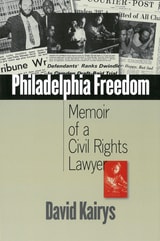
Philadelphia Freedom
Memoir of a Civil Rights LawyerDavid Kairys
University of Michigan Press, 2008
"David Kairys is one of the grand long-distance runners in the struggle for justice in America. His brilliant legal mind and superb lawyerly skills are legendary. This marvelous book is his gift to us!"
---Cornel West, Professor of Religion and African American Studies, Princeton University, and award-winning author of Race Matters
Philadelphia Freedom is the spellbinding tale of an idealistic young lawyer coming of age in the political cauldron of the 1960s and 1970s. From his immersion in the civil rights movement to his determined court battles to quell criminal violence by Philadelphia police, Kairys recounts how he helped make history in the city of brotherly love."
---William K. Marimow, Editor and Executive Vice President, Philadelphia Inquirer, and recipient of two Pulitzer Prizes
"In the current climate of political deception and the trampling of our civil rights, Kairys's compelling book is a clenched fist, a prayer for social justice and a call to conscience."
---Steve Lopez, Los Angeles Times columnist and former Philadelphia Inquirer columnist
"With engaging, insider stories of innovative legal strategies of a truly creative lawyer, this book evokes the ebullient spirit of progressive social change launched in the 1960s and should be read by aspiring and practicing lawyers as well as anyone interested in American social history. Philadelphia Freedom reads like a suspense novel and reveals how novel legal and political thinking can and does make a real difference to individuals and to the quality of justice."
---Martha L. Minow, Jeremiah Smith, Jr. Professor of Law, Harvard University
"David Kairys's compelling book properly explains the vital role that civil rights attorneys play in our system of justice."
---Judge John E. Jones III, United States District Court for the Middle District of Pennsylvania, and presiding judge in the landmark Kitzmiller v. Dover Area School District case
A memoir that is also a compelling page-turner, Philadelphia Freedom is the poignant, informative, often inspiring account of renowned civil-rights lawyer David Kairys's personal quest for achieving social justice during the turbulent 1960s and 70s.
Philadelphia Freedom brings us intimately and directly into Kairys's burgeoning law career and the struggles of the 60s as his professional and private life navigated the turmoil and promise of the civil rights and antiwar movements.
Many of the cases Kairys took on involved discrimination and equal protection, freedom of speech, and government malfeasance. Kairys is perhaps most well known for his victory in the Camden 28 draft board case, in which the FBI set up a sting of the Catholic anti-war left at the behest of the highest levels of government.
The stories and cases range from nationally important and recognizable---the family of the scientist the CIA unwittingly gave LSD in the 1950s; the leading race discrimination case against the FBI; Dr. Benjamin Spock's First Amendment case before the Supreme Court; the city handgun lawsuits Kairys conceived---to those he encountered in his early work as a public defender. The characters include public figures such as FBI Directors J. Edgar Hoover and Louis Freeh; CIA Director William Colby; Pennsylvania Senator Arlen Specter; New York Attorney General Eliot Spitzer; U.S. Attorneys General Edward Levi and John Mitchell; Georgia Governor Lester Maddox; Pennsylvania Governor, former Philadelphia Mayor, and Democratic National Committee chair Ed Rendell; Philadelphia Mayor and Police Commissioner Frank Rizzo. But some of the most memorable are not well known, involving regular people caught up in the often heartless machinery of the courts and legal system.
Though it reads like a novel, with all the elements of character, plot, and suspense, Philadelphia Freedom also has historical significance as a firsthand account of the 1960s and 70s and contains social commentary about race as well as insights and major perspectives on the nature and social role of law.
David Kairys is Professor of Law at Beasley School of Law, Temple University. He was a full-time civil rights lawyer from 1968 to 1990.
Planning White Supremacy
Civil Rights and City Planning in Montgomery, Alabama, 1920–1970Rebecca Coleen Retzlaff
University of Alabama Press, 2026
An unflinching account of how city planning was deployed to enforce white supremacy in Montgomery, Alabama—the birthplace of the Civil Rights Movement—and how Black activists fought back, block by neighborhood block.
At the heart of the Civil Rights Movement was a city meticulously designed to enforce inequality. In Planning White Supremacy: Civil Rights and City Planning in Montgomery, Alabama, 1920–1970, Rebecca Coleen Retzlaff traces how city officials used the tools of modern planning—zoning, infrastructure, housing codes, public investment, and highway construction—to suppress political power, economic opportunity, and spatial freedom for Black citizens.
As the birthplace of the Civil Rights Movement, Montgomery became a battleground where urban planning and direct-action protest collided, shaping the city’s culture in ways that still resonate today. Retzlaff’s analysis exposes the calculated use of municipal power to control land use, displace Black communities, keep schools and neighborhoods segregated, and preserve white political dominance. By placing urban planning at the center of Montgomery’s story, this groundbreaking work reframes the movement not only as a fight for voting rights and legal equality, but as a struggle for space, housing, mobility, education, and the right to live with dignity. Retzlaff also highlights the resilience and joy of the close-knit Black neighborhoods that nurtured the civil rights activists who changed history.
Retzlaff reveals how urban planning decisions systematically targeted Black neighborhoods, reinforcing racial inequality under the guise of modernization. With historical depth and critical insight, Planning White Supremacy situates Montgomery within the broader context of American urban history—offering a vital perspective on the intersection of race, space, and power. Essential for scholars of urban planning, history, and racial justice, this book also provides urgent insight into how these legacies continue to shape cities and Black socioeconomic opportunities today.
Pobre Raza!
Violence, Justice, and Mobilization among México Lindo Immigrants, 1900-1936By F. Arturo Rosales
University of Texas Press, 1999
Fleeing the social and political turmoil spawned by the Mexican Revolution, massive numbers of Mexican immigrants entered the southwestern United States in the early decades of the twentieth century. But instead of finding refuge, many encountered harsh, anti-Mexican attitudes and violence from an Anglo population frightened by the influx of foreigners and angered by anti-American sentiments in Mexico.
This book examines the response of Mexican immigrants to Anglo American prejudice and violence early in the twentieth century. Drawing on archival sources from both sides of the border, Arturo Rosales traces the rise of "México Lindo" nationalism and the efforts of Mexican consuls to help poor Mexican immigrants defend themselves against abuses and flagrant civil rights violations by Anglo citizens, police, and the U.S. judicial system. This research illuminates a dark era in which civilian and police brutality, prejudice in the courtroom, and disproportionate arrest, conviction, and capital punishment rates too often characterized justice for Mexican Americans.
Police, Power, and the Production of Racial Boundaries
Muñiz, Ana
Rutgers University Press, 2015
Muñiz illuminates the degree to which the definitions of “gangs” and “deviants” are politically constructed labels born of public policy and court decisions, offering an innovative look at the process of criminalization and underscoring the ways in which a politically powerful coalition can define deviant behavior. As she does so, Muñiz also highlights the various grassroots challenges to such policies and the efforts to call attention to their racist effects. Muñiz describes the fight over two very different methods of policing: community policing (in which the police and the community work together) and the “broken windows” or “zero tolerance” approach (which aggressively polices minor infractions—such as loitering—to deter more serious crime). Police, Power, and the Production of Racial Boundaries also explores the history of the area to explain how Cadillac-Corning became viewed by outsiders as a “violent neighborhood” and how the city’s first gang injunction—a restraining order aimed at alleged gang members—solidified this negative image. As a result, Muñiz shows, Cadillac-Corning and other sections became a test site for repressive practices that eventually spread to the rest of the city.
Policing Protest
The Post-Democratic State and the Figure of Black InsurrectionPaul A. Passavant
Duke University Press, 2021

Political Action
Key To Understanding PoliticsDick Simpson
Ohio University Press, 1984
Politics and the study of politics are at a watershed. They are deficient because they fail to respond to fundamental crises in our society, fail to incorporate new knowledge from other fields of study, and fail to allow citizens to function as mature human beings shaping their own destiny. Political Action demonstrates the need for a new political science which, in turn, may lead to a new politics more adequate to the problems of this era.
Modern political science, as currently studied and practiced, is irrelevant for both public officials and citizens because it fails to focus on political action. Simpson and Beam provide a methodology for the study of political action and demonstrate how the study of political action using these methods provides a better understanding of politics and how these methods aid in identifying effective strategies for building a better America.
Without a new focus on political action, political science will remain sterile and without a more humane politics, citizens will remain misinformed, apathetic, and helpless. Political Action is controversial because it challenges the profession of political science. It provides a “paradigm shift” in the field which is important for allied social science disciplines as well. For political strategists, it provides the methodological tool of political action propositions which allow a careful calculation of the effects of alternative strategies.
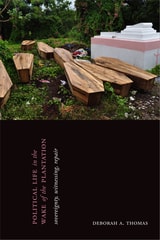
Political Life in the Wake of the Plantation
Sovereignty, Witnessing, RepairDeborah A. Thomas
Duke University Press, 2019
Political Participation and Government Regulation
Sam Peltzman
University of Chicago Press, 1998
This collection reflects Peltzman's long career studying the interface between the private economy and the public sector. It will be essential to anyone who wishes to study government activity and voting behavior from an economic perspective.

Political Philosophy 3
From the Rights of Man to the Republican IdeaLuc Ferry and Alain Renaut
University of Chicago Press, 1992
Several French theorists have recently attempted a new account of rights, one that would replace the discredited Marxist view of rights as mere formalities concealing the realities of class domination. In this final volume of Political Philosophy, Luc Ferry and Alain Renaut summarize these efforts and put forward their own set of arguments.
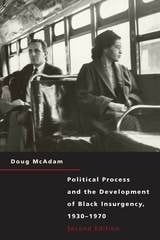
Political Process and the Development of Black Insurgency, 1930-1970
Doug McAdam
University of Chicago Press, 1999
"[A] first-rate analytical demonstration that the civil rights movement was the culmination of a long process of building institutions in the black community."—Raymond Wolters, Journal of American History
"A fresh, rich, and dynamic model to explain the rise and decline of the black insurgency movement in the United States."—James W. Lamare, Annals of the American Academy of Political and Social Science

Political Repression in Modern America
FROM 1870 TO 1976Robert Justin Goldstein
University of Illinois Press, 1978
Enhanced with a new introduction and an updated bibliography, Political Repression in Modern America remains an essential record of the relentless intolerance that suppresses radical dissent in the United States.
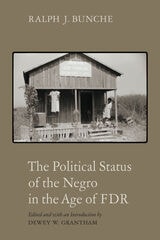
Political Status of the Negro in the Age of FDR
A Carnegie-Myrdal Report Emphasizing the American SouthRalph J. Bunche
University of Chicago Press, 1973
This volume presents the essence of a massive report prepared in 1940 by a team headed by political scientist and civil rights leader Ralph J. Bunche for the Carnegie Corporation’s Survey of the Negro in America. The report was used by Swedish social economist Gunnar Myrdal in writing his monumental An American Dilemma, and it shaped Myrdal’s treatment of the Black political experience. As a valuable historical document, it provides a backdrop against which we can measure change in the Black American’s political status and interpret the origins and consequences of the second Reconstruction.
The Political Status of the Negro introduces essential information about political practices in the Southern states. It offers insight into the historical, economic, sociological, and psychological factors that accounted for these practices, as well as some understanding of the myths, stereotypes, and symbols that contemporaries often used to explain and justify them. The study’s most enduring value lies in its wealth of personal interviews which were conducted in the South in the late 1930s and in its first-hand impressions of the African Americans and Southern politics.
The book is divided into two parts: The first contains Bunche’s explanations, comments, and analytical writings on the subject; the second includes almost all of the interviews and field reports. To this text historian Dewey W. Grantham added a comprehensive introduction that discusses Bunche and his work, the preparation of the research manuscript, and the book’s role in Gunnar Myrdal’s later work.
Political Tolerance and American Democracy
John L. Sullivan, James Piereson, and George E. Marcus
University of Chicago Press, 1982
Politics of Religious Freedom
Edited by Winnifred Fallers Sullivan, Elizabeth Shakman Hurd, Saba Mahmood, and Peter G. Danchin
University of Chicago Press, 2015
The fruits of the three-year Politics of Religious Freedom research project, the contributions to this volume unsettle the assumption—ubiquitous in policy circles—that religious freedom is a singular achievement, an easily understood state of affairs, and that the problem lies in its incomplete accomplishment. Taking a global perspective, the more than two dozen contributors delineate the different conceptions of religious freedom predominant in the world today, as well as their histories and social and political contexts. Together, the contributions make clear that the reasons for persecution are more varied and complex than is widely acknowledged, and that the indiscriminate promotion of a single legal and cultural tool meant to address conflict across a wide variety of cultures can have the perverse effect of exacerbating the problems that plague the communities cited as falling short.
Politics, Faith, and the Making of American Judaism
Peter Adams
University of Michigan Press, 2014
In 1862, in the only instance of a Jewish expulsion in America, General Ulysses S. Grant banished Jewish citizens from the region under his military command. Although the order was quickly revoked by President Lincoln, it represented growing anti-Semitism in America. Convinced that assimilation was their best defense, Jews sought to Americanize by shedding distinctive dress, occupations, and religious rituals.
American Jews recognized the benefit and urgency of bridging the divide between Reform and Orthodox Judaism to create a stronger alliance to face the challenges ahead. With Grant’s 1868 presidential campaign, they also realized they could no longer remain aloof from partisan politics. As they became a growing influence in American politics, both political parties courted the new Jewish vote.
Once in office, Grant took notice of the persecution of Jews in Romania and Russia, and he appointed more Jews to office than any president before him. Indeed, Simon Wolf, a Washington lawyer who became one of Grant’s closest advisers, was part of a new generation of Jewish leaders to emerge in the post–Civil War era—thoroughly Americanized, politically mature, and committed to the modernized Judaism of the Reform movement.
In Politics, Faith, and the Making of American Judaism, Peter Adams recounts the history of the American Jewish Community’s assimilation efforts, organization, and political mobilization in the late 19th century, as political and cultural imperatives crafted a new, American brand of Judaism.
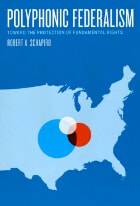
Polyphonic Federalism
Toward the Protection of Fundamental RightsRobert A. Schapiro
University of Chicago Press, 2009
The relationship between the states and the national government is among the most contested issues in the United States. And questions about where power should reside, how decisions should be made, and how responsibility should be allocated have been central to the American experiment in federalism. In Polyphonic Federalism, Robert A. Schapiro defends the advantages of multiple perspectives in government, arguing that the resulting “polyphony” creates a system that is more efficient, democratic, and protective of liberties.
This groundbreaking volume contends that contemporary views of federalism are plagued by outmoded dualist notions that seek to separate state and federal authority. Instead, Schapiro proposes a polyphonic model that emphasizes the valuable interaction of state and federal law, one that more accurately describes the intersecting realities of local and national power. Through an analysis of several legal and policy debates, Polyphonic Federalism demonstrates how a multifaceted government can best realize the potential of federalism to protect fundamental rights.
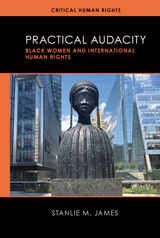
Practical Audacity
Black Women and International Human RightsStanlie James
University of Wisconsin Press, 2022
Stanlie M. James weaves narratives by and about these women throughout the history of the field, illustrating how they conceptualize, develop, and implement human rights. By centering the courage and innovative interventions of capable and visionary Black women, she places them rightfully alongside such figures as Thurgood Marshall and Charles Hamilton Houston. This volume fundamentally shifts the frame through which human rights struggles are understood, illuminating how those who witness and experience oppression have made some of the biggest contributions to building a better world.
Prison and Social Death
Price, Joshua M
Rutgers University Press, 2015
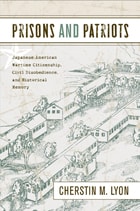
Prisons and Patriots
Japanese American Wartime Citizenship, Civil Disobedience, and Historical MemoryCherstin Lyon
Temple University Press, 2011
Prisons and Patriots provides a detailed account of forty-one Nisei (second-generation Japanese Americans), known as the Tucsonians, who were imprisoned for resisting the draft during WWII. Cherstin Lyon parallels their courage as resisters with that of civil rights hero Gordon Hirabayashi, well known for his legal battle against curfew and internment, who also resisted the draft. These dual stories highlight the intrinsic relationship between the rights and the obligations of citizenship, particularly salient in times of war.
Lyon considers how wartime civil disobedience has been remembered through history—how soldiers have been celebrated for their valor while resisters have been demonized as unpatriotic. Using archival research and interviews, she presents a complex picture of loyalty and conflict among first-generation Issei and Nisei. Lyon contends that the success of the redress movement has made room for a narrative that neither reduces the wartime confinement to a source of shame nor proffers an uncritical account of heroic individuals.
Privacy at Risk
The New Government Surveillance and the Fourth AmendmentChristopher Slobogin
University of Chicago Press, 2007
Applying the Fourth Amendment’s prohibition on unreasonable searches and seizures, Slobogin argues that courts should prod legislatures into enacting more meaningful protection against government overreaching. In setting forth a comprehensive framework meant to preserve rights guaranteed by the Constitution without compromising the government’s ability to investigate criminal acts, Slobogin offers a balanced regulatory regime that should intrigue everyone concerned about privacy rights in the digital age.

Private Acts, Social Consequences
Bayer, Ronald
Rutgers University Press, 1991
Bayer, staff member of a policy studies center in New York State, here reviews the record of public agencies in dealing with AIDS-created biological, social and political problems, including resolution of conflicts between privacy and the public good. He notes the contradiction between Centers for Disease Control recommendations of counseling, education and broad-scale voluntary testing of all Americans at risk, and federal policies that favor mandatory testing of the military, marriage applicants, hospital workers, patients and prostitutes, among others, and quarantine of AIDS carriers advocated by some states. Bayer recommends restraint by individuals in sexual matters and drug use, accompanied by an assault on the economic and social problems that underlie the epidemic, especially as regards the newborn and teenagers. In the growing body of AIDS literature, this is a valuable fact-finding study that should interest a lay as well as professional audience.
From Library Journal
Bayer's topic is the politically charged dilemma AIDS presents to public health officials and policymakers. What steps can be taken which will not only protect society at large, but also safeguard the privacy and civil liberties of individuals? The author ably traces the political history of AIDS. He suggests a responsible but nonauthoritarian approach, combining education; health care access for IV users; promotion of anonymous, confidential screening; defense of victims' rights; appropriate contact notification programs; and moderate laws protecting society from malicious individuals. This work is well-documented and cogently argued. Highly recommended for all academic collections and larger public libraries.
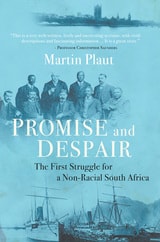
Promise and Despair
The First Struggle for a Non-Racial South AfricaMartin Plaut
Ohio University Press, 2016
The struggle for freedom in South Africa goes back a long way. In 1909, a remarkable interracial delegation of South Africans traveled to London to lobby for a non-racialized constitution and franchise for all. Among their allies was Mahatma Gandhi, who later encapsulated lessons from the experience in his most important book, Hind Swaraj. Though the mission failed, the London debates were critical to the formation of the African National Congress in 1912.
With impeccable storytelling and rich character depictions, Martin Plaut describes the early quest for black franchise and the seeds it planted for a new South Africa. While most people believe that black South Africans obtained the vote in 1994, men of all races voted in the Cape Colony for almost a century, sometimes deciding election outcomes. The London mission was part of a long history of nonwhite political agency.
Taking as its centerpiece the 1909 delegation, Promise and Despair covers the twelve years between the South African War and the First World War, during which the major forces that would shape twentieth-century South Africa were forged. Plaut reveals new details of the close collaboration between Gandhi and the ANC leadership during the Indian-South African community’s struggle for their rights, the influence of the American South on South African racial practices, and the workings of the Imperial system.

Protecting American Health Care Consumers
Eleanor DeArman Kinney
Duke University Press, 2002
To promote and ensure consumer protection in an increasingly adversarial and complicated health-care culture, Kinney first analyzes the procedures by which consumer concerns are presently discerned and resolved and then explains why these systems are unsatisfactory. She also discusses problematic procedures for making coverage policy and quality standards and proposes reforms in a variety of processes that would enable all consumers, including the uninsured, to influence key policies and standards and also to raise concerns and obtain appropriate remedies.
As the first comprehensive treatment of administrative procedures in American health plans and other such institutions, Protecting American Health Care Consumers will be welcomed by state and federal policymakers, managed care executives, and lawyers charged with designing and implementing protections for consumers in public and private health plans.
Protest In Belgrade
Winter of DiscontentMladen Lazic
Central European University Press, 1999
Protest in Belgrade addresses one of the most important social movements of this decade - the civil and student peace demonstrations which took place in Belgrade during the winter of 1996/97. The demonstrations, the largest ever in history, were in response to Milošević’s nullifying of the results of local elections in fourteen towns in Serbia which created global media attention and attracted worldwide sympathy.
This in-depth study of a society calling for democracy is based on interviews with over 1000 civilians and students. The book is unique because much of the research was carried out and completed while the demonstrations were still in progress and before the outcome of events was known. A chronology of events is also included.
The book provides an abundance of valuable information for analysts of post-socialist transformation, researchers of social movements and social change, and for all those concerned with the tragic events in Southeast Europe.
Public Interests
Media Advocacy and Struggles over U.S. TelevisionPerlman, Allison
Rutgers University Press, 2016
Nearly as soon as television began to enter American homes in the late 1940s, social activists recognized that it was a powerful tool for shaping the nation’s views. By targeting broadcast regulations and laws, both liberal and conservative activist groups have sought to influence what America sees on the small screen. Public Interests describes the impressive battles that these media activists fought and charts how they tried to change the face of American television.
Public and Private in Thought and Practice
Perspectives on a Grand DichotomyEdited by Jeff Weintraub and Krishan Kumar
University of Chicago Press, 1997
In contexts ranging from friendship, the family, and personal life to nationalism, democratic citizenship, the role of women in social and political life, and the contrasts between western and (post-)Communist societies, this book brings out the ways the various uses of the public/private distinction are simultaneously distinct and interconnected. Public and Private in Thought and Practice will be of interest to students and scholars in disciplines including politics, law, philosophy, history, sociology, and women's studies.
Contributors include Jeff Weintraub, Allan Silver, Craig Calhoun, Daniela Gobetti, Jean L. Cohen, Jean Bethke Elshtain, Alan Wolfe, Krishan Kumar, David Brain, Karen Hansen, Marc Garcelon, and Oleg Kharkhordin.
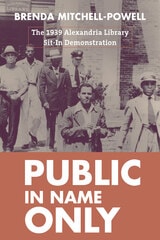
Public in Name Only
The 1939 Alexandria Library Sit-In DemonstrationBrenda Mitchell-Powell
University of Massachusetts Press, 2022
Library History Round Table Reads Selection, March 2024
Alexandria Historical Society Special Merit Award, 2023
When Alexandria, Virginia’s first public library, was constructed just a few blocks from his home, Samuel Wilbert Tucker, a young, Black attorney, was appalled to learn that he could not use the library because of his race. Inspired by the legal successes of the NAACP in discrimination cases, he organized a grassroots protest to desegregate the library that his tax dollars supported.
Public in Name Only tells the important, but largely forgotten, story of Tucker and a group of Black citizens who agitated for change in the terms and conditions of their lives. Employing the combined strategies of direct-action public protest, nonviolent civil disobedience, and municipal litigation, Tucker’s initiative dovetailed with the national priorities and tactics of larger civil rights organizations. While Tucker’s campaign did not end with the desegregation of the Alexandria Library, but instead resulted in the creation of a “separate-and-unequal” Jim Crow Black branch, the sit-in demonstration represents a momentous early struggle for racial equity waged through civil rights activism.
Puerto Rican Citizen
History and Political Identity in Twentieth-Century New York CityLorrin Thomas
University of Chicago Press, 2010
Building its incisive narrative from a wide range of archival sources, interviews, and first-person accounts of Puerto Rican life in New York, this book illuminates the rich history of a group that is still largely invisible to many scholars. At the center of Puerto Rican Citizen are Puerto Ricans’ own formulations about political identity, the responses of activists and ordinary migrants to the failed promises of American citizenship, and their expectations of how the American state should address those failures. Complicating our understanding of the discontents of modern liberalism, of race relations beyond black and white, and of the diverse conceptions of rights and identity in American life, Thomas’s book transforms the way we understand this community’s integral role in shaping our sense of citizenship in twentieth-century America.
Pulled Over
How Police Stops Define Race and CitizenshipCharles R. Epp, Steven Maynard-Moody, and Donald P. Haider-Markel
University of Chicago Press, 2014
Pulled Over deftly traces the strange history of the investigatory police stop, from its discredited beginning as “aggressive patrolling” to its current status as accepted institutional practice. Drawing on the richest study of police stops to date, the authors show that who is stopped and how they are treated convey powerful messages about citizenship and racial disparity in the United States. For African Americans, for instance, the experience of investigatory stops erodes the perceived legitimacy of police stops and of the police generally, leading to decreased trust in the police and less willingness to solicit police assistance or to self-censor in terms of clothing or where they drive. This holds true even when police are courteous and respectful throughout the encounters and follow seemingly colorblind institutional protocols. With a growing push in recent years to use local police in immigration efforts, Hispanics stand poised to share African Americans’ long experience of investigative stops.
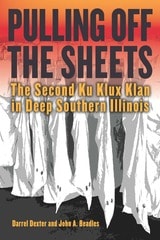
Pulling off the Sheets
The Second Ku Klux Klan in Deep Southern IllinoisDarrel Dexter and John A. Beadles
Southern Illinois University Press, 2024
WINNER, Certificate of Excellence in “Scholarly Publications” from the Illinois State Historical Society’s 2025 Best of Illinois History Awards!
Unmasking old-time racism in southern Illinois
Pulling off the Sheets tells the previously obscured history of the Second Ku Klux Klan which formed in deep southern Illinois in the early 1920s. Through meticulous research into both public and private records, Darrel Dexter and John A. Beadles recount the Klan’s mythical origins, reemergence, and swift disappearance. This important historical account sets out to expose the lasting impact of the Klan on race relations today.
The ideation of the Klan as a savior of the white race and protector of white womanhood was perpetuated by books, plays, and local news sources of the time. The very real but misplaced fear of Black violence on whites created an environment in which the Second Klan thrived, and recruitment ran rampant in communities such as the Protestant church. Events like the murder of Daisy Wilson intensified the climate of racial segregation and white supremacy in the region, and despite attempts at bringing justice to the perpetrators, most failed. The Second Klan’s presence may have been short-lived, but the violence and fear it inflicted continues to linger.
This disturbing historical account challenges readers to “pull back the sheet” and confront the darkest corners of their past. Dexter and Beadles emphasize the importance of acknowledging the damage that white supremacy and racism cause and how we can move toward healing.