Results by title
118 books match the query 'College teachers' and 6 start with p
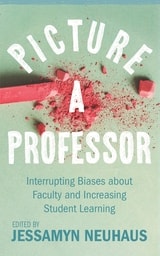
Picture a Professor
Interrupting Biases about Faculty and Increasing Student LearningJessamyn Neuhaus
West Virginia University Press, 2022
“Does a service to all who would prefer a different path, offering realistic strategies to engage students in undermining scholarly stereotypes.”—Science
Picture a Professor is a collection of evidence-based insights and intersectional teaching strategies crafted by and for college instructors. It aims to inspire transformative student learning while challenging stereotypes about what a professor looks like.
Representing a variety of scholarly disciplines, the volume’s contributing authors offer practical advice for effectively navigating student preconceptions about embodied identity and academic expertise. Each contributor recognizes the pervasiveness of racialized, gendered, and other biases about professors and recommends specific ways to respond to and interrupt such preconceptions—helping students, teachers, and others reenvision what we think of when we picture a professor.
Educators at every stage of their career will find affirming acknowledgment of the ways systemic inequities affect college teaching conditions, as well as actionable advice about facilitating student learning with innovative course design, classroom activities, assessment techniques, and more.
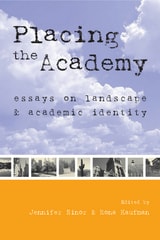
Placing the Academy
Essays on Landscape, Work, and Identityedited by Jennifer Sinor and Rona Kaufman
Utah State University Press, 2007
Twenty-one writers answer the call for literature that addresses who we are by understanding where we are--where, for each of them, being in some way part of academia. In personal essays, they imaginatively delineate and engage the diverse, occasionally unexpected play of place in shaping them, writers and teachers in varied environments, with unique experiences and distinctive world views, and reconfiguring for them conjunctions of identity and setting, here, there, everywhere, and in between.
Contents
I Introduction Writing Place, Jennifer Sinor
II Here
Six Kinds of Rain: Searching for a Place in the Academy, Kathleen Dean Moore and Erin E. Moore
The Work the Landscape Calls Us To, Michael Sowder
Valley Language, Diana Garcia
What I Learned from the Campus Plumber, Charles Bergman
M-I-Crooked Letter-Crooked Letter, Katherine Fischer
On Frogs, Poems, and Teaching at a Rural Community College, Sean W. Henne
III There
Levittown Breeds Anarchists Film at 11:00, Kathryn T. Flannery
Living in a Transformed Desert, Mitsuye Yamada
A More Fortunate Destiny, Jayne Brim Box
Imagined Vietnams, Charles Waugh
IV Everywhere
Teaching on Stolen Ground, Deborah A. Miranda
The Blind Teaching the Blind: The Academic as Naturalist, or Not, Robert Michael Pyle
Where Are You From? Lee Torda
V In Between
Going Away to Think, Scott Slovic
Fronteriza Consciousness: The Site and Language of the Academy and of Life, Norma Elia Cantu
Bones of Summer, Mary Clearman Blew
Singing, Speaking, and Seeing a World, Janice M. Gould
Making Places Work: Felt Sense, Identity, and Teaching, Jeffrey M. Buchanan
VI Coda
Running in Place: The Personal at Work, in Motion, on Campus, and in the Neighborhood, Rona Kaufman
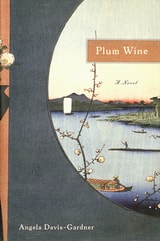
Plum Wine
A NovelAngela Davis-Gardner
University of Wisconsin Press, 2006
Barbara Jefferson, a young American teaching in Tokyo in the 1960s, is set on a life-changing quest when her Japanese surrogate mother, Michi, dies, leaving her a tansu of homemade plum wines wrapped in rice paper. Within the papers Barbara discovers writings in Japanese calligraphy that comprise a startling personal narrative. With the help of her translator, Seiji Okada, Barbara begins to unravel the mysteries of Michi's life, a story that begins in the early twentieth century and continues through World War II and its aftermath.
As Barbara and Seiji translate the plum wine papers they form an intimate bond, with Michi a ghostly third in what becomes an increasingly uneasy triangle. Barbara is deeply affected by the revelation that Michi and Seiji are hibakusha, survivors of the atomic bombing in Hiroshima, and even harder for her to understand are the devastating psychological effects wrought by war. Plum Wine examines human relationships, cultural differences, and the irreparable consequences of war in a story that is both original and timeless.
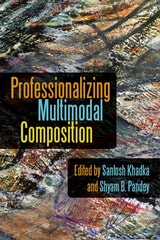
Professionalizing Multimodal Composition
Santosh Khadka
Utah State University Press, 2023
Academic leaders, scholars, and faculty who have successfully designed and launched academic programs or faculty development initiatives discuss the theoretical and logistical questions considered in their design, the outcomes they achieved, and how others can emulate them. This exchange of knowledge, insight, experiences, and lessons learned among community members is critical for enabling or inspiring other programs, departments, and institutions to conceive, design, and launch academic programs or faculty development initiatives for their own faculty.
The larger goal of professionalizing is to work with teaching faculty to increase their interactional expertise with multimodal composition, and this collection offers a set of models for how faculty can do that at their own institutions and in their own programs.
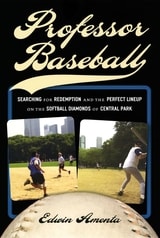
Professor Baseball
Searching for Redemption and the Perfect Lineup on the Softball Diamonds of Central ParkEdwin Amenta
University of Chicago Press, 2007
It happens every summer: packs of beer-bellied men with gloves and aluminum bats, putting their middle-aged bodies to the test on the softball diamond. For some, this yearly ritual is driven by a simple desire to enjoy a good ballgame; for others, it’s a way to forge friendships—and rivalries. But for one short, wild-haired, bespectacled professor, playing softball in New York’s Central Park means a whole lot more. It's one last chance to heal the nagging wounds of Little League trauma before the rust of decline and the relentless responsibilities of fatherhood set in.
Professor Baseball is the coming-of-middle-age story of New York University professor and Little League benchwarmer Edwin Amenta. As rookie manager of the Performing Arts Softball League’s doormat Sharkeys, he reverses softball’s usual brawn-over-brains formula. He coaxes his skeptical teammates to follow his sabermetric and sociological approach, based equally on Bill James and Max Weber, which in the heady days of early success he dubs “Eddy Ball.” But Amenta soon learns that his teammates’ attachments to favorite positions and time-honored (if ineffective) strategies are hard to break—especially when the team begins losing. And though he rejects the baseball-as-life metaphor, life keeps intruding on his softball season. Amenta here comes to grips with the humiliation of assisted reproduction, suffers mysterious ailments, and finds himself lingering at the sponsor’s bar, while his partner, a beautiful but baseball-challenged professor, second-guesses his book in the making. Can he turn his team—and his life—around?
Packed with colorful personalities, dramatic games, and the bustle of New York life, Professor Baseball will charm anyone who has ever root, root, rooted for the underdog.

Professor Superstar
Fandom and Anti-Fandom of AcademiaMel Stanfill
University of Michigan Press, 2026