Results by title
355 books match the query 'Communism, Post-Communism & Socialism' and 23 start with p
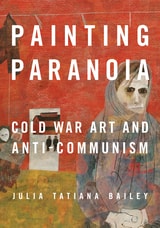
Painting Paranoia
Cold War Art and Anti-CommunismJulia Tatiana Bailey
University of Illinois Press, 2026
Based on extensive archival research conducted in the United States and Russia, this manuscript contributes to the political history of twentieth-century American art and the revisionist history of cultural diplomacy in the Cold War by charting the politicization of myths of Soviet art. It reveals how those with control over the reception of art in the United States built and sustained a strategy of othering towards Socialist Realism, presents the rhetoric of Soviet artistic otherness in the context of debates surrounding the concept of American art, and reclaims the post-war history of American Social Realism.
Partisan Ruptures
Self-Management, Market Reform and the Spectre of Socialist YugoslaviaGal Kirn
Pluto Press, 2019
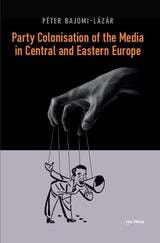
Party Colonisation of the Media in Central and Eastern Europe
Péter Bajomi-Lázár
Central European University Press, 2014
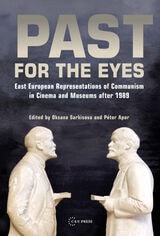
Past for the Eyes
East European Representations of Communism in Cinema and Museums After 1989Oksana Sarkisova
Central European University Press, 2008
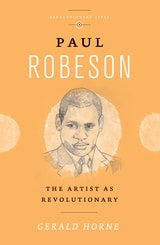
Paul Robeson
The Artist as RevolutionaryGerald Horne
Pluto Press, 2015
“A fine, taut analysis of the great African American athlete, singer, actor, and political activist.”
—Choice, Highly Recommended
Paul Robeson should be remembered today as the forerunner of Malcolm X, Dr. Martin Luther King, Jr. and Muhammad Ali. He sacrificed his fame and fortune a performer and athlete in order to fight for the rights of African Americans during the time of Jim Crow and U.S. Apartheid.
A world-famous singer and actor, a trained lawyer, an early star of American professional football and a polyglot who spoke over a dozen languages: these could be the crowning achievements of a life well-lived. Yet for Paul Robeson the higher calling of social justice led him to abandon both the NFL and Hollywood and become one of the most important political activists of his generation, a crusader for freedom and equality who battled both Jim Crow and US Senator Joseph McCarthy during the communist witch hunt of the 1950s.
In Paul Robeson: The Artist as Revolutionary, Gerald Horne discovers within Robeson's remarkable and revolutionary life the story of the twentieth century's great political struggles: against racism, against colonialism, against poverty—and for international socialism. Chapters include:
*”The Best Known American in the World"
*Rising Revolutionary
*From Moscow to Madrid
*"Black Stalin"?
*Robeson: Primary Victim of the "Blacklist"
*Triumph—and Tragedy
*Death of a Revolutionary
In the Introduction, Horne writes: “Paul Robeson—activist, artist, athlete—experienced a dramatic rise and fall, perhaps unparalleled in U.S. history. From mingling with the elite of London society and Hollywood in the 1930s, by the time he died in 1976, he was a virtual recluse in a plain abode in a working-class neighborhood of Philadelphia. What helps to explicate this tragic art of his life is a fateful decision he made when fascism was rising: he threw in his lot with those battling for socialism and decide to sacrifice his thriving artistic career on behalf of the struggle against Jim Crow—or U.S. apartheid.”
This critical and searching biography provides an opportunity for readers to comprehend the triumphs and tragedies of the revolutionary progressive movement of which Paul Robeson was not just a part, but perhaps its most resonant symbol.

Philosophizing the Everyday
Revolutionary Praxis and the Fate of Cultural TheoryJohn Roberts
Pluto Press, 2006
John Roberts argues that this understanding of the everyday downgrades its revolutionary meaning and philosophical implications. Bringing radical political theory back to the centre of the discussion, he shows how notions of cultural democratization have been oversimplified. Asserting that the everyday should not be narrowly identified with the popular, Roberts critiques the way in which the concept is now overly associated with consumption and 'ordinariness'.
Engaging with the work of key thinkers including, Lukács, Arvatov, Benjamin, Lefebvre, Gramsci, Barthes, Vaneigem, and de Certeau, Roberts shows how the concept of the everyday continues to be central to debates on ideology, revolution and praxis. He offers a lucid account of different approaches that developed over the course of the twentieth century, making this an ideal book for anyone looking for a politicised approach to cultural theory.
John Roberts is a Senior Research Fellow in Fine Art at the University of Wolverhampton. He is the author of The Art of Interruption: Realism, Photography and the Everyday (Manchester University Press, 1997) and The Philistine Controversy (Verso, with Dave Beech, 2002), plus other books and numerous articles, in Radical Philosophy and elsewhere.
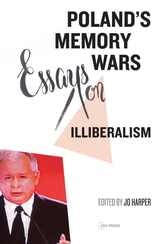
Poland's Memory Wars
Essays on IlliberalismJo Harper
Central European University Press, 2018
This volume of essays and interviews by Polish, British, and American academics and journalists provides an overview of current Polish politics for both informed and non-specialist readers. The essays consider why and how PiS, Law and Justice, the party of Jarosław Kaczynski, returned to power, and the why and how of its policies while in power. They help to make sense of how “history” plays a key role in Polish public life and politics.
The descriptions of PiS in Western media tend to rework old stereotypes about Eastern Europe that had lain dormant for some time. The book addresses the underlying question whether PiS was simply successful in understanding its electorate, and just helped Poland to revert to its normal state. This new Normal seems quite similar to the old one: insular, conservative, xenophobic, and statist.
The book looks at the current struggle between one ‘Poland’ and another; between a Western-looking Poland and an inward-looking Poland, the former more interested in opening to the world, competing in open markets, and working within the EU, and the latter more concerned with holding onto tradition.
The question of illiberalism has gone from an ‘Eastern’ problem (Russia, Turkey, Hungary, etc.) to a global one (Brexit and the U.S. elections). This makes the very specific analysis of Poland’s illiberalism applicable on a broader scale.
Poles Together?
The Emergence and Development of Political Parties in Postcommunist PolandAleks Szczerbiak
Central European University Press, 2001
This book fills a gap in the existing literature on how parties and party systems are developing in the new democracies of post-communist Central and Eastern Europe. It provides the first detailed, empirically based examination from a structural and organizational perspective of the new parties and political groupings that have emerged in Poland since the collapse of communism in 1989.
The author develops his argument on the basis of an analysis of five key structural and organizational variables: the internal distribution of power and modes of representation within the parties; the role of the party bureaucracy; the relationship between parties and their electorates; the development of parties as membership organizations; and the relationship between parties and the state.
As the first in-depth, empirically grounded single-country study of party structure and organization in post-communist Eastern Europe, the book provides an opportunity to draw broader conclusions about the process of Central and East European party development and will contribute significantly towards the development of a post-communist political party model. Szczerbiak sheds light on an important aspect of the more general process of post-communist democratization in the region and provides a major contribution to one of the least-explored areas of transition.
Police in Transition
Essays on the Police Forces in Transition CountriesAndrás Kádár
Central European University Press, 2001
The police forces of the transition countries in Central and Eastern Europe have to undergo profound reform to be able to respond to the needs of society; to serve the public and not just the government, and to prove that they can effectively combat crime. This volume is the result of a survey by the Hungarian Helsinki Committee concerning the mode and extent of changes police forces of the post-communist countries have undergone since 1989 – 1990. Information is provided about the relevant tasks, organization, personnel, accountability, and international relations of the national police forces and about the coercive measures they are entitled to use.
Written by internationally acknowledged experts of policing and representatives of human-rights organizations, Police in Transition deals with the questions of transition, European trends in the governance of the police, the relationship between police and criminality, the role of the police in the constitutional framework, the limits of policing, police brutality, civilian oversight of the police and the possibilities of a democratic reform of police forces in Central and Eastern Europe.
Political Corruption in Transition
A Sceptic's HandbookAndrás Sajó
Central European University Press, 2002
Based on two international conferences at Princeton University and the Central European University, this is a handy guide to the problem of corruption in transition countries, with an important comparative content. Political Corruption in Transition is distinguished from similar publications by at least two features: by the quality of the carefully selected and edited essays ans by its original treatment. Instead of the usual preaching and excommunications, this Skeptic`s Handbook represents down-to-earth realism.
Combines general issues with case studies and original research. The geographic coverage is wide, though it is ideas rather than a geography that drive the volume`s organization.
Politics and Policies in Post-Communist Transition
Primary and Secondary Privatisation in Central Europe and the Former Soviet UnionKároly Attila Soós
Central European University Press, 2011
Politics of James Connolly
Kieran Allen
Pluto Press, 1990
Kieran Allen breaks this mould, assessing the founder of the Irish Marxist movement ideas from a revolutionary socialist perspective. Allen considers the strengths and weaknesses of Connolly’s revolutionary strategy, the effect of his commitment to international socialism on his nationalist loyalties and arguing that, ultimately, Connolly's enduring relevance derives from his anti-imperialism. Any socialist movement today ignores this book at its peril.
Politics of Legitimacy
State-Society Relations and Patterns of Chinese PoliticsDingxin Zhao
University of Chicago Press, 2026
The Chinese communist state has survived massive social changes, including the introduction of capitalist markets, an ongoing explosion of technological innovation, and an unprecedented jump in wealth and education, accompanied by a major cultural transformation. How has China managed to maintain its power even as the ground has so profoundly shifted? In Politics of Legitimacy, Dingxin Zhao argues that state power can be legitimized in three ideal-typical ways: a set of values upheld by the state (ideological legitimacy), recognized political processes such as regular competitive elections (procedural legitimacy), and the state’s capacity to provide public goods (performance legitimacy).
Building on this theoretical framework, Zhao analyzes different aspects of Chinese politics, including the tragic ending of the 1989 pro-democracy movement, the weak development of mass-based nationalism in post-Mao China, the reasons behind China’s economic success, the anti-establishment tendency of the Chinese mass media and social media, and the sources of political tension in China, despite a superb economy. Moreover, Zhao’s innovative framework is widely applicable beyond China, shifting our attention from regime-type categories to the tools and relationships that determine their survival or collapse, and illuminating the current global emergence of conservatism and religious nationalism.
Politics without a Past
The Absence of History in Postcommunist NationalismShari J. Cohen
Duke University Press, 1999
common characterizations of postcommunist politics as either a resurgence of
aggressive nationalism or an evolution toward Western-style democracy. Cohen
draws upon extensive field research to paint a picture of postcommunist
political life in which ideological labels are meaningless and exchangeable
at will, political parties appear and disappear regularly, and citizens
remain unengaged in the political process.
In contrast to the conventional wisdom, which locates the roots of widespread intranational strife in deeply rooted national identities from the past, Cohen argues that a profound ideological vacuum has fueled destructive tension throughout postcommunist Europe and the former Soviet Union. She uses Slovakia as a case study to reveal that communist regimes bequeathed an insidious form of historical amnesia to the majority of the political elite and the societies they govern. Slovakia was particularly vulnerable to communist intervention since its precommunist national consciousness was so weak and its only period of statehood prior to 1993 was as a Nazi puppet-state. To demonstrate her argument, Cohen focuses on Slovakia’s failure to forge a collective memory of the World War II experience. She shows how communist socialization prevented Slovaks from tying their individual family stories—of the Jewish deportations, of the anti-Nazi resistance, or of serving in the wartime government—to a larger historical narrative shared with others, leaving them bereft of historical or moral bearings.
Politics without a Past develops an analytical framework that will be important for future research in Eastern Europe, the former Soviet Union, and beyond. Scholars in political science, history, East European and post-Soviet studies will find Cohen’s methodology and conclusions enlightening. For policymakers, diplomats, and journalists who deal with the region, she offers valuable insights into the elusive nature of postcommunist societies.
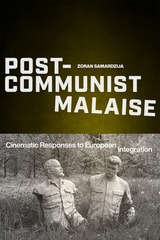
Post-Communist Malaise
Cinematic Responses to European IntegrationZoran Samardzija
Rutgers University Press, 2020
Post-Communist Restitution and the Rule of Law
Csongor Kuti
Central European University Press, 2009
Postsocialism and Cultural Politics
China in the Last Decade of the Twentieth CenturyXudong Zhang
Duke University Press, 2008
Zhang examines the reactions of intellectuals, authors, and filmmakers to the cultural and political conflicts in China during the 1990s. He offers a nuanced assessment of the changing divisions and allegiances within the intellectual landscape, and he analyzes the postsocialist realism of the era through readings of Mo Yan’s fiction and the films of Zhang Yimou. With Postsocialism and Cultural Politics, Zhang applies the same keen insight to China’s long 1990s that he brought to bear on the 1980s in Chinese Modernism in the Era of Reforms.
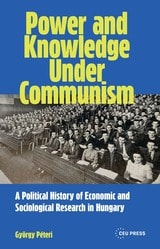
Power and Knowledge Under Communism
A Political History of Economic and Sociological Research in HungaryGyorgy Peteri
Central European University Press, 2026
Present Tensions
European Writers on Overcoming DictatorshipsKristina Kaiserová
Central European University Press, 2009
Prison Letters
Antonio Gramsci
Pluto Press, 1997
Antonio Gramsci is one of the great European Marxists, hailed by Eric Hobsbawm as 'an extraordinary philosopher ... probably the most original communist thinker of twentieth-century Europe'.
Gramsci developed Marx's ideas with an emphasis on culture rather than economics. This classic work reveals his thinking through letters to friends and family written whilst he was in prison.
His primary contribution has been in his insistence on an understanding of popular culture in the battle to create a revolutionary consciousness. It is this humanitarian aspect of his thinking that illuminates the vivid personal testimony of his prison letters, written between 1926 and 1937.
Privatization in Eastern Europe
Is the State Withering Away?Roman Frydman
Central European University Press, 1994
Promises of 1968
Crisis, Illusion and UtopiaVladimir Tismaneanu
Central European University Press, 2011
Protestantism and Politics in Eastern Europe and Russia
The Communist and Post-Communist ErasSabrina P. Ramet, ed.
Duke University Press, 1993
Based on extensive field research, including interviews with notable figures in the Protestant churches in the region, the essays in this volume address broad topics such as the church's involvment in environmentalism, pacifism, and other dissident movements, as well as issues particular to Russia, Poland, Czechoslovakia, East Germany, (1949–1989), Hungary, Yugoslavia (1945-1991), Bulgaria, and Romania. The final volume in the three-volume work "Christianity Under Stress," Protestantism and Politics in Eastern Europe and Russia will prove invaluable to anyone hoping to understand not only the workings of religion under Communism, but the historical and contemporary interactions of church and state in general.
Contributors. Paul Bock, Lawrence Klippenstein, Paul Mojzes, Earl A. Pope, Joseph Pungur, Sabrina Petra Ramet, Walter Sawatsky, N. Gerald Shenk, Gerd Stricker, Sape A. Zylstra