Results by title
56 books match the query 'Community organization' and 2 start with p
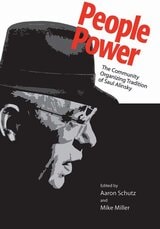
People Power
The Community Organizing Tradition of Saul AlinskyAaron Schutz
Vanderbilt University Press, 2015
--Fred Ross, Cesar Chavez, Dolores Huerta, and the Community Service Organization and National Farm Workers Association
--Nicholas von Hoffman and the Woodlawn Organization
--Tom Gaudette and the Northwest Community Organization
--Ed Chambers, Richard Harmon, and the Industrial Areas Foundation
--Shel Trapp, Gale Cincotta, and National People's Action
--Heather Booth, Midwest Academy, and Citizen Action
--Wade Rathke and ACORN
Weaving classic texts with interviews and their own context-setting commentaries, the editors of People Power provide the first comprehensive history of Alinsky-based organizing in the tumultuous period from 1955 to 1980, when the key organizing groups in the United States took form. Many of these selections--previously available only on untranscribed audiotapes or in difficult-to-read mimeograph or Xerox formats--appear in print here for the first time.
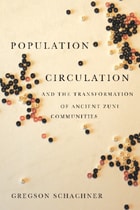
Population Circulation and the Transformation of Ancient Zuni Communities
Gregson Schachner
University of Arizona Press, 2012
Because nearly all aspects of culture depend on the movement of bodies, objects, and ideas, mobility has been a primary topic during the past forty years of archaeological research on small-scale societies. Most studies have concentrated either on local moves related to subsistence within geographically bounded communities or on migrations between regions resulting from pan-regional social and environmental changes. Gregson Schachner, however, contends that a critical aspect of mobility is the transfer of people, goods, and information within regions. This type of movement, which geographers term "population circulation," is vitally important in defining how both regional social systems and local communities are constituted, maintained, and—most important—changed.
Schachner analyzes a population shift in the Zuni region of west-central New Mexico during the thirteenth century AD that led to the inception of major demographic changes, the founding of numerous settlements in frontier zones, and the initiation of radical transformations of community organization. Schachner argues that intraregional population circulation played a vital role in shaping social transformation in the region and that many notable changes during this period arose directly out of peoples' attempts to create new social mechanisms for coping with frequent and geographically extensive residential mobility. By examining multiple aspects of population circulation and comparing areas that were newly settled in the thirteenth century to some that had been continuously occupied for hundreds of years, Schachner illustrates the role of population circulation in the formation of social groups and the creation of contexts conducive to social change.