86 books match the query 'Conflict' and 10 start with p
cover of Participatory Culture Wars: Controversy, Conflict, and Complicity in Fandom

Participatory Culture Wars

Controversy, Conflict, and Complicity in Fandom

Simone Driessen

University of Iowa Press, 2025

From writing fan fiction to campaigning for better media representation, fandom and participatory culture have long been seen as tools to resist dominant narratives and fight for a better future. But participatory culture is not always socially and politically progressive; rather, as Participatory Culture Wars demonstrates, it can be politically regressive and socially reactive. Communities coalesce around the exclusionary and the misinformed.
         Fans, fandoms, and fan practices are no longer the realm of media and popular culture; they have been adopted and co-opted across the contemporary political terrain. This volume offers specific examples and suggests approaches that can help make sense of the constantly shifting interaction between fandom and politics.

Contributors:
Alfred Archer, Renee Barnes, Simone Driessen, Xing Fan, Monica Flegel, Zoe Hurley, Bethan Jones, Sklaerenn Le Gallo, Judith Leggatt, Georgina Mills, Peng Qiao, James Rendell, Mel Stanfill, Michelle Stewart, Rebecca Williams, Christina Wurst
[more]
cover of Partners in Conflict: The Politics of Gender, Sexuality, and Labor in the Chilean Agrarian Reform, 1950–1973

Partners in Conflict

The Politics of Gender, Sexuality, and Labor in the Chilean Agrarian Reform, 1950–1973

Heidi Tinsman

Duke University Press, 2002

Partners in Conflict examines the importance of sexuality and gender to rural labor and agrarian politics during the last days of Chile’s latifundia system of traditional landed estates and throughout the governments of Eduardo Frei and Salvador Allende. Heidi Tinsman analyzes differences between men’s and women’s participation in Chile’s Agrarian Reform movement and considers how conflicts over gender and sexuality shape the contours of working-class struggles and national politics.

Tinsman restores women to a scholarly narrative that has been almost exclusively about men, recounting the centrality of women’s labor to the pre-Agrarian Reform world of the hacienda during the 1950s and recovering women’s critical roles in union struggles and land occupations during the Agrarian Reform itself. Providing a theoretical framework for understanding why the Agrarian Reform ultimately empowered men more than women, Tinsman argues that women were marginalized not because the Agrarian Reform ignored women but because, under both the Frei and Allende governments, it promoted the male-headed household as the cornerstone of a new society. Although this emphasis on gender cooperation stressed that men should have more respect for their wives and funneled unprecedented amounts of resources into women’s hands, the reform defined men as its protagonists and affirmed their authority over women.

This is the first monographic social history of Chile’s Agrarian Reform in either English or Spanish, and the first historical work to make sexuality and gender central to the analysis of the reforms.

[more]
cover of Philadelphia: Neighborhoods, Division, and Conflict in a Post-Industrial City

Philadelphia

Neighborhoods, Division, and Conflict in a Post-Industrial City

Carolyn Adams

Temple University Press, 1993
[more]
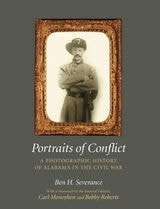
cover of Portraits of Conflict: A Photographic History of Alabama in the Civil War

Portraits of Conflict

A Photographic History of Alabama in the Civil War

Ben H. Severance

University of Arkansas Press, 2012

Portraits of Conflict: A Photographic History of Alabama in the Civil War is the tenth volume in this acclaimed series showing the human side of the country's great national conflict. Over 230 photographs of soldiers and civilians from Alabama, many never seen before, are accompanied by their personal stories and woven into the larger narrative of the war both on the battlefield and the home front. Alabama is unusual among the Rebel states in that, while its people saw little fighting inside its boundaries, nearly one hundred thousand Alabamians served with Confederate units throughout the South. This volume chronicles their experiences in almost every battle east of the Mississippi River--especially at Sharpsburg, Chancellorsville, and Gettysburg under the legendary Robert E. Lee; at Murfreesboro and Chickamauga as part of the ill-fated Army of Tennessee; and at the famous siege of Vicksburg. Ultimately Union soldiers did invade the state, and Alabamians defended their homeland against enemy cavalry raiders at Selma and against Federal warships in the fight for Mobile Bay. The volume also includes accounts of some of Alabama's leading politicians as well as several of its more ordinary citizens. This new volume contains the same quality of photography and storytelling that has attracted Civil War enthusiasts since the first volume was published in 1987, making it another welcome addition to the series Civil War History called "a sensibly priced, beautifully produced photographic history."
[more]
cover of Portraits of Conflict: A Photographic History of Louisiana in the Civil War

Portraits of Conflict

A Photographic History of Louisiana in the Civil War

Carl H. Moneyhon

University of Arkansas Press, 1990
[more]
cover of Portraits of Conflict: A Photographic History of Missouri in the Civil War

Portraits of Conflict

A Photographic History of Missouri in the Civil War

William Garrett Piston

University of Arkansas Press, 2009
A deeply divided border state, heir to the “Bleeding Kansas” era, Missouri became the third most fought-over state in the war, following Virginia and Tennessee. Rich in resources and manpower, critical politically to both the Union and the Confederacy, it was the scene of conventional battles, river warfare, and cavalry raids. It saw the first combat by organized units of Native Americans and African Americans. It was also marked by guerrilla warfare of unparalleled viciousness. This volume, the ninth in the series, includes hundreds of photographs, many of them never before published. The authors provide text and commentary, organizing the photographs into chapters covering the origins of the war, its conventional and guerrilla phases, the war on the rivers, medicine (Sweeny’s medical knowledge adds a great deal to this chapter and expands our knowledge of its practice in the west), the experiences of Missourians who served out of state, and the process of reunion in the postwar years.
[more]
cover of Portraits of Conflict: Tennessee: A Photographic History of Tennessee in the Civil War

Portraits of Conflict

Tennessee: A Photographic History of Tennessee in the Civil War

Richard B. McCaslin

University of Arkansas Press, 2007

It’s one thing to understand that over twenty-thousand Confederate and Union soldiers died at the Battle of Murfreesboro. It’s quite another to study an ambrotype portrait of twenty-year-old private Frank B. Crosthwait, dressed in his Sunday best, looking somberly at the camera. In a tragically short time, he’ll be found on the battlefield, mortally wounded, still clutching the knotted pieces of handkerchief he used in a hopeless attempt to stop the bleeding from his injuries. Private Crosthwait’s image is one of more than 250 portraits—many never before published—to be found in the much anticipated Portraits of Conflict: A Photographic History of Tennessee in the Civil War. The eighth in the distinguished Portraits of Conflict series, this volume joins the personal and the public to provide a uniquely rich portrayal of Tennesseans—in uniforms both blue and gray—who fought and lost their lives in the Civil War. Here is the story of a widow working as a Union spy to support herself and her children. Of a father emerging from his house to find his Confederate soldier son dying at his feet. Of a nine-year-old boy who attached himself to a Union regiment after his mother died. Their stories and faces, joined with personal remembrances from recovered letters and diaries and ample historical information on secession, famous battles, surrender, and Reconstruction, make this new Portraits of Conflict a Civil War treasure.
[more]
cover of Power and Terror: Conflict, Hegemony, and the Rule of Force

Power and Terror

Conflict, Hegemony, and the Rule of Force

Noam Chomsky

Pluto Press, 2011

[more]
cover of Power and Time: Temporalities in Conflict and the Making of History

Power and Time

Temporalities in Conflict and the Making of History

Edited by Dan Edelstein, Stefanos Geroulanos, and Natasha Wheatley

University of Chicago Press, 2020

A collection of essays that challenges how we interpret history by focusing on the nexus of two concepts— “power” and “time”—as they manifest in a wide variety of case studies.

Time is the backdrop of historical inquiry, yet it is much more than a featureless setting for events. Different temporalities interact dynamically; sometimes they coexist tensely, sometimes they clash violently. In this innovative volume, editors Dan Edelstein, Stefanos Geroulanos, and Natasha Wheatley challenge how we interpret history by focusing on the nexus of two concepts—“power” and “time”—as they manifest in a wide variety of case studies. Analyzing history, culture, politics, technology, law, art, and science, this engaging book shows how power is constituted through the shaping of temporal regimes in historically specific ways. Power and Time includes seventeen essays on human rights; sovereignty; Islamic, European, Chinese, and Indian history; slavery; capitalism; revolution; the Supreme Court; the Anthropocene; and even the Manson Family. Power and Time will be an agenda-setting volume, highlighting the work of some of the world’s most respected and original contemporary historians and posing fundamental questions for the craft of history.

[more]
cover of Power in Colonial Africa: Conflict and Discourse in Lesotho, 1870–1960

Power in Colonial Africa

Conflict and Discourse in Lesotho, 1870–1960

Elizabeth A. Eldredge

University of Wisconsin Press, 2007

Even in its heyday European rule of Africa had limits. Whether through complacency or denial, many colonial officials ignored the signs of African dissent. Displays of opposition by Africans, too indirect to counter or quash, percolated throughout the colonial era and kept alive a spirit of sovereignty that would find full expression only decades later.
    In Power in Colonial Africa: Conflict and Discourse in Lesotho, 1870–1960, Elizabeth A. Eldredge analyzes a panoply of archival and oral resources, visual signs and symbols, and public and private actions to show how power may be exercised not only by rulers but also by the ruled. The BaSotho—best known for their consolidation of a kingdom from the 1820s to 1850s through primarily peaceful means, and for bringing colonial forces to a standstill in the Gun War of 1880–1881—struggled to maintain sovereignty over their internal affairs during their years under the colonial rule of the Cape Colony (now part of South Africa) and Britain from 1868 to 1966. Eldredge explores instances of BaSotho resistance, resilience, and resourcefulness in forms of expression both verbal and non-verbal. Skillfully navigating episodes of conflict, the BaSotho matched wits with the British in diplomatic brinksmanship, negotiation, compromise, circumvention, and persuasion, revealing the capacity of a subordinate population to influence the course of events as it selectively absorbs, employs, and subverts elements of the colonial culture.


“A refreshing, readable and lucid account of one in an array of compositions of power during colonialism in southern Africa.”—David Gordon, Journal of African History

“Elegantly written.”—Sean Redding, Sub-Saharan Africa

“Eldredge writes clearly and attractively, and her studies of the war between Lerotholi and Masupha and of the conflicts over the succession to the paramountcy are essential reading for anyone who wants to understand those crises.”—Peter Sanders, Journal of Southern African Studies
[more]