Results by title
98 books match the query 'Control' and 8 start with p

Pandora's Locks
The Opening of the Great Lakes-St. Lawrence SeawayJeff Alexander
Michigan State University Press, 2009
The St. Lawrence Seaway was considered one of the world's greatest engineering achievements when it opened in 1959. The $1 billion project-a series of locks, canals, and dams that tamed the ferocious St. Lawrence River-opened the Great Lakes to the global shipping industry.
Linking ports on lakes Superior, Michigan, Huron, Erie, and Ontario to shipping hubs on the world's seven seas increased global trade in the Great Lakes region. But it came at an extraordinarily high price. Foreign species that immigrated into the lakes in ocean freighters' ballast water tanks unleashed a biological shift that reconfigured the world's largest freshwater ecosystems.
Pandora's Locks is the story of politicians and engineers who, driven by hubris and handicapped by ignorance, demanded that the Seaway be built at any cost. It is the tragic tale of government agencies that could have prevented ocean freighters from laying waste to the Great Lakes ecosystems, but failed to act until it was too late. Blending science with compelling personal accounts, this book is the first comprehensive account of how inviting transoceanic freighters into North America's freshwater seas transformed these wondrous lakes.

Patterns of Hospital Ownership and Control
James Hamilton
University of Minnesota Press, 1961

People in Control
Human factors in control room designJan Noyes
The Institution of Engineering and Technology, 2001
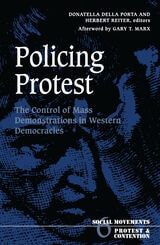
Policing Protest
The Control of Mass Demonstrations in Western DemocraciesDonatella della Porta Della Porta
University of Minnesota Press, 1998
The first international examination of how police respond to political protests.
The way in which police handle political demonstrations is always potentially controversial. In contemporary democracies, police departments have two different, often conflicting aims: keeping the peace and defending citizens’ right to protest. This collection, the only resource to examine police interventions cross-nationally, analyzes a wide array of policing styles. The contributors look at cultures and political power to examine the methods, the trends and cycles, and the consequences of policing protest.
Focusing on Italy, France, Germany, Great Britain, Switzerland, Spain, the United States, and South Africa, the contributors explore the various police strategies of coercion, negotiation, and information surveillance. They discuss protest policing in relation to specific countries’ governments and consider public opinion, media, and the police’s perception of reality to illustrate the reciprocal ways in which police and protest are defined. Moreover, this volume considers the profound changes from the forceful 1960s to a “softer” 1990s, including the consequences of this move.Comparative and innovative, Policing Protest highlights the crucial influences of demonstration interventions and lends greater understanding to the study of social movements and their relationship to the state. Contributors: Rocco De Biasi, U of Genoa; Olivier Fillieule, Institute of Political Science, Paris; Oscar Jaime-Jiménez, Universidad Nacional de Educación a Distancia, Madrid; Fabien Jobard, U of Rouen, France; Hanspeter Kriesi, U of Geneva; Gary T. Marx, Massachusetts Institute of Technology and U of Colorado, Boulder; John McCarthy, Catholic U of America; Clark McPhail, U of Illinois; Fernando Reinares, Universidad Nacional de Educación a Distancia, Madrid; Robert Reiner, London School of Economics; David Schweingruber; P. A. J. Waddington, U of Reading, UK; Martin Winter, U of Halle, Germany; Dominique Wisler, U of Geneva.
Power Plant Control and Instrumentation
The control of boilers and HRSG systemsDavid Lindsley
The Institution of Engineering and Technology, 2000

Power System Stability
Modelling, analysis and controlAbdelhay A. Sallam
The Institution of Engineering and Technology, 2015

Power Systems and Smart Grids
Control, management and power quality of smart grids, Volume 2Ali Mohamed Eltamaly
The Institution of Engineering and Technology, 2025
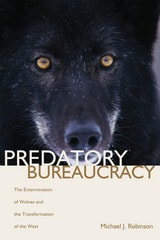
Predatory Bureaucracy
The Extermination of Wolves and the Transformation of the WestMichael Robinson
University Press of Colorado, 2005
Robinson follows wolves' successful adaptation to the arrival of explorers, mountain men, and bounty hunters, through their disastrous century-long entanglement with the federal government. He shares the parallel story of the Biological Survey's rise, detailing the personal, social, geographic, and political forces that allowed it to thrive despite opposition from hunters, animal lovers, scientists, environmentalists, and presidents.
Federal predator control nearly eliminated wolves throughout the United States and Mexico and radically changed American lands and wildlife populations. It undercut the livelihoods of countless homestead families in order to benefit an emerging western elite of livestock owners. The extermination of predators led to problems associated with prey overpopulation, but, as Robinson reveals, extermination and control programs still continue. Predatory Bureaucracy will fascinate readers interested in wildlife, ecosystems, agriculture, and environmental politics.