Results by title
106 books match the query 'Customs & Traditions' and 9 start with p
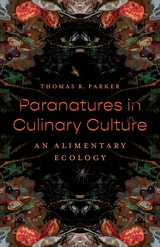
Paranatures in Culinary Culture
An Alimentary EcologyThomas R. Parker
University of Minnesota Press, 2025
Uncovering the intricate cultural threads that inform our dietary practices
Paranatures in Culinary Culture embarks on a gastronomic odyssey, redefining foods we thought we knew and revealing the extraordinary stories of ordinary ingredients and the cultural forces shaping our diets. The book begins with a simple premise: to eat is to assimilate the outer world into the inner body, both physically and mentally. But what happens when this assimilation process goes awry? Thomas R. Parker reveals how culinary staples are not only elements of identity formation but also instruments of cultural disruption when their true nature emerges and challenges our preconceptions.
Parker explores how certain foods—bread, oysters, pigs, cheese, and wine—can both create and destabilize narratives, unsettle assimilation, and decenter Western culinary traditions. Taking inspiration from architectural historian David Gissen’s concept of “subnature” and Michel Serres’s idea of the “parasite,” Parker develops the concept of paranatures: flavors, foods, and practices considered unpalatable by different societies at different times. He reveals how certain ordinary foods live parallel paranatural lives, addressing larger issues of colonial and postcolonial food theory and challenging long-held notions that cuisine was meant to uphold.
Serving up a rich blend of history, culture, and gastronomy, Parker leads readers to perceive food as an adventure, inviting them to taste the untamed side of nature. He offers a thought-provoking invitation to reconceptualize the roles and narratives we assign to the natural world and its produce, allowing us to see food, nature, and ourselves in new ways.
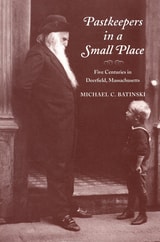
Pastkeepers in A Small Place
Five Centuries in Deerfield, MassachusettsMichael C. Batinski
University of Massachusetts Press, 2004
Like many small places in the American landscape, Batinski points out, Deerfield does not fit into the history we learn in textbooks. With the exception of the famous French and Indian raid on the town in 1704, nothing of national significance has happened there. Yet that has not diminished the interest of local inhabitants in establishing and maintaining a vital connection to the past.
Different groups, from Native Pocumtuck to Puritan settlers to the grandchildren of Polish immigrants, have told the Deerfield story in varied and sometimes conflicting ways, each drawing on the past to shape its own sense of collective identity. Together their efforts at pastkeeping reveal how people organize and explain the motion of time, why they feel it important to pass on family stories, and why they keep family heirlooms. In doing so, Batinski argues, they illustrate why the preservation of the past remains a civic concern to us all.
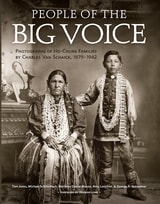
People of the Big Voice
Photographs of Ho-Chunk Families by Charles Van Schaick, 1879-1942Tom Jones
Wisconsin Historical Society Press, 2027
A stunning photographic portrayal of the Ho-Chunk people during a challenging period that presents the resilience of a community whose story continues to this day.
People of the Big Voice tells the visual history of Ho-Chunk families at the turn of the twentieth century and beyond as depicted through the lens of Black River Falls studio photographer Charles Van Schaick. The family relationships among those who sat for the photographer are clearly visible in these images. Sisters, friends, families, and young couples appear and reappear, fleshing out a narrative of the period, from 1879 to 1942, referred to as "the dark ages” in First Nations tribal history.
Following introductory essays from three of the authors are more than three hundred beautifully detailed photographs. Unique to the project are captions that identify over ninety percent of the individuals pictured—made possible by the continuing efforts of tribal members and genealogists—and include both English and Ho-Chunk names.
Also featured are candid shots of Ho-Chunk people on the streets of Black River Falls, outside family dwellings, and at powwows. As author and Ho-Chunk tribal member Amy Lonetree writes, "A significant number of the images were taken just a few short years after the darkest, most devastating period for the Ho-Chunk. Invasion, diseases, warfare, forced assimilation, loss of land, and repeated forced removals from our beloved homelands left the Ho-Chunk people in a fight for their culture and their lives."
A significant contribution to the history of Native peoples, People of the Big Voice is a breathtaking portrayal of a resilient community whose story continues today.

Performing Palimpsest Bodies
Postmemory Theatre Experiments in MexicoRuth Hellier-Tinoco
Intellect Books, 2019
Focusing on four projects from one of Mexico’s most significant contemporary theatre companies, La Máquina de Teatro, directed by renowned artists Juliana Faesler and Clarissa Malheiros, this study documents the rigorous performances of layered, plural, and trans identities as collaborative, feminist, and queer re-visions of official histories and collective memories, using ideas of scenarios, archives, and remains. Illustrated with over 100 color photos, Performing Palimpsest Bodies will appeal to artists and scholars interested in contemporary theatre and performance studies, critical dance studies, and collective creation.
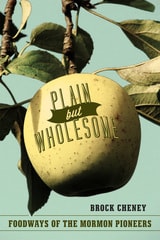
Plain but Wholesome
Foodways of the Mormon PioneersBrock Cheney
University of Utah Press, 2012
Plain But Wholesome presents a groundbreaking foray into Mormon history. Brock Cheney explores the foodways of Mormon pioneers from their trek west through the arrival of the railroad and reveals new perspectives on the fasci-nating Mormon settlement era. Relying on original diaries, newspaper accounts, and recipe books from the 1850s, Cheney draws a vivid portrait of what Mormon pioneers ate and drank. Although other authors have sketched the subject before, this portrait is the first effort that might be described as scholarly, though the lively prose will interest a broad general audience.
Presented here are the first explicit descriptions of the menus, food processes, and recipes of the Mormon pioneers. While many have supposed that earlier pioneer foodways continued to be handed down through Mormon families, Cheney has confirmed traditions going back generations and covering more than a century. The book also exposes myths and clichés about pioneer piety and hardships, as Cheney examines such pioneer extravagances as fresh “oysters on the half shell” and pioneer trends of alcohol consumption.
A perfect gift for the history buff or Dutch oven chef, Plain But Wholesome will also prove its place among scholars and historians. With its rollicking blend of historical source material and modern interpretation, this book will entertain and educate novice and expert alike.

Playing Dead
Mock Trauma and Folk Drama in Staged High School Drunk Driving TragediesMontana Miller
Utah State University Press, 2012
As the Grim Reaper pulls a student out of class to be a “victim” of drunk driving in a program called “Every 15 Minutes,” Montana Miller observes the ritual through a folklorist’s lens. Playing Dead examines why hundreds of American schools and communities each year organize these mock tragedies without any national sponsorship or coordination. Often, the event is complete with a staged accident in the parking lot, a life-flight helicopter, and faux eulogies for the “dead” students read in school assemblies. Grounding her research in play theory, frame theory, and theory of folk drama, Miller investigates key aspects of this emergent tradition, paying particular attention to its unplanned elements—enabled by the performance’s spontaneous nature and the participants’ tendency to stray from the intended frame. Miller examines such variations in terms of the program as a whole, analyzing its continued popularity and weighing its success as perceived by participants. Her fieldwork reveals a surprising aspect of Every 15 Minutes that typical studies of ritual do not include: It can be fun. Playing Dead is volume two of the series Ritual, Festival, and Celebration, edited by Jack Santino.
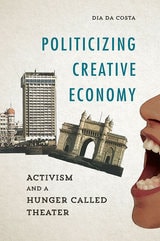
Politicizing Creative Economy
Activism and a Hunger Called TheaterDia Da Costa
University of Illinois Press, 2016
As Da Costa shows, commodification, heritage, and management discussions inevitably creep into performance. Yet the ability of performance to undermine such subtle invasions make activist theater a crucial site for considering what counts as creativity in the cultural politics of creative economy. Da Costa explores the precarious lives, livelihoods, and ideologies at the intersection of heritage projects, planning discourse, and activist performance. By analyzing the creators, performers, and activists involved--individuals at the margins of creative economy as well as society--Da Costa builds a provocative argument. Their creative economy practices may survive, challenge, and even reinforce the economies of death, displacement, and divisiveness used by the urban poor to survive.
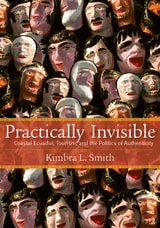
Practically Invisible
Coastal Ecuador, Tourism, and the Politics of AuthenticityKimbra Smith
Vanderbilt University Press, 2015
Thus came a nearly inevitable shock, as the daily rhythms of life--rising before dawn to prepare for a long day of maintaining livestock and crops; returning for a late lunch and siesta; joining in a game of soccer followed by dinner in the evening--transformed forever in favor of a new tourist industry and the compromises required to support it. As Practically Invisible demonstrates, for Agua Blancans, becoming a supposedly "authentic" version of their own indigenous selves required performing their culture for outsiders, thus becoming these performances within the minds of these visitors. At the heart of this story, then, is a delicate balancing act between tradition and survival, a performance experienced by countless indigenous groups.
Practice of Everyday Life
Volume 2: Living and CookingMichel De Certeau
University of Minnesota Press, 1998