Results by title
304 books match the query 'Death' and 18 start with p
Pacific Tremors
Richard Stern
Northwestern University Press, 2001
Pain, Death, and the Law
Austin Sarat, Editor
University of Michigan Press, 2001
Paradise in Purgatory
The Eschatological Healing of Victims in the Catholic TraditionNathan W. O'Halloran
Catholic University of America Press, 2024
Passages and Afterworlds
Anthropological Perspectives on Death in the CaribbeanMaarit Forde and Yanique Hume, editors
Duke University Press, 2018
Contributors. Donald Cosentino, Maarit Forde, Yanique Hume, Paul Christopher Johnson, Aisha Khan, Keith E. McNeal, George Mentore, Richard Price, Karen Richman, Ineke (Wilhelmina) van Wetering, Bonno (H.U.E.) Thoden van Velzen
Passed On
African American Mourning Stories, A MemorialKarla FC Holloway
Duke University Press, 2002
With a focus on the “death-care” industry—black funeral homes and morticians, the history of the profession and its practices—Holloway examines all facets of the burial business, from physicians, hospital chaplains, and hospice administrators, to embalming- chemical salesmen, casket makers, and funeral directors, to grieving relatives. She uses narrative, photographs, and images to summon a painful history of lynchings, white rage and riot, medical malpractice and neglect, executions, and neighborhood violence. Specialized caskets sold to African Americans, formal burial photos of infants, and deathbed stories, unveil a glimpse of the graveyards and burial sites of African America, along with burial rituals and funeral ceremonies.
Revealing both unexpected humor and anticipated tragedy, Holloway tells a story of the experiences of black folk in the funeral profession and its clientele. She also reluctantly shares the story of her son and the way his death moved her research from page to person.
In the conclusion, which follows a sermon delivered by Maurice O. Wallace at the funeral for the author’s son, Bem, Holloway strives to commemorate—through observation, ceremony, and the calling of others to remembrance and celebration.
Peak Experiences
Danger, Death, and Daring in the Mountains of the NortheastEdited by Carol Stone White
University Press of New England, 2012
Peregrina
Love and Death in MexicoBy Alma M. Reed
University of Texas Press, 2007
In the Yucatán, they never forgot Alma Reed. She arrived for the first time in 1923, on assignment for the New York Times Sunday Magazine to cover an archaeological survey of Mayan ruins. It was a contemporary Maya, however, who stole her heart. Felipe Carrillo Puerto, said to be descended from Mayan kings, had recently been elected governor of the Yucatán on a platform emphasizing egalitarian reforms and indigenous rights. The entrenched aristocracy was enraged; Reed was infatuated—as was Carrillo Puerto. He and Reed were engaged within months. Yet less than a year later—only eleven days before their intended wedding—Carrillo Puerto was assassinated. He had earned his place in the history books, but Reed had won a place in the hearts of Mexicans: the bolero "La Peregrina" remains one of the Yucatán's most famous ballads.
Alma Reed recovered from her tragic romance to lead a long, successful life. She eventually returned to Mexico, where her work in journalism, archaeology, and art earned her entry into the Orden del Aguila Azteca (Order of the Aztec Eagle). Her time with Carrillo Puerto, however, was the most intense of her life, and when she was encouraged (by Hollywood, especially) to write her autobiography, she began with that special period. Her manuscript, which disappeared immediately after her sudden death in 1966, mingled her legendary love affair with a biography of Carrillo Puerto and the political history of the Yucatán. As such, it has long been sought by scholars as well as romantics. In 2001, historian Michael Schuessler discovered the manuscript in an abandoned apartment in Mexico City. An absolutely compelling memoir, Peregrina restores Reed's place in Mexican history in her own words.
Perfection in Death
Patrick M. Clark
Catholic University of America Press, 2015
Philodemus, On Death
W. Benjamin Henry
SBL Press, 2009
Plants of Life, Plants of Death
Frederick J. Simoons
University of Wisconsin Press, 1998
Pythagoras, the ancient Greek mathematician, did not himself eat fava beans in any form; in fact, he banned his followers from eating them. Cultural geographer Frederick Simoons disputes the contention that Pythagoras established that ban because he recognized the danger of favism, a disease that afflicts genetically-predisposed individuals who consume fava beans. Contradicting more deterministic explanations of history, Simoons argues that ritual considerations led to the Pythagorean ban.
In his fascinating and thorough new study, Simoons examines plants associated with ritual purity, fertility, prosperity, and life, on the one hand, or with ritual impurity, sickness, ill fate, and death, on the other. Plants of Life, Plants of Death offers a wealth of detail from not only history, ethnography, religious studies, classics, and folklore, but also from ethnobotany and medicine. Simoons surveys a vast geographical region extending from Europe through the Near East to India and China. He tells the story of India's giant sacred fig trees, the pipal and the banyan, and their changing role in ritual, religion, and as objects of pilgrimage from antiquity to the present day; the history of mandrake and ginseng, “man roots” whose uses from Europe to China have been shaped by the perception that they are human in form; and the story of garlic and onions as impure foods of bad odor in that same broad region.
Simoons also identifies and discusses physical characteristics of plants that have contributed to their contrasting ritual roles, and he emphasizes the point that the ritual roles of plants are also shaped by basic human concerns—desire for good health and prosperity, hopes for fertility and offspring, fear of violence, evil and death—that were as important in antiquity as they are today.
“It dazzles as a piece of scholarship.”—Daniel W. Gade, University of Vermont
Playing Dead
Mock Trauma and Folk Drama in Staged High School Drunk Driving TragediesMontana Miller
Utah State University Press, 2012
As the Grim Reaper pulls a student out of class to be a “victim” of drunk driving in a program called “Every 15 Minutes,” Montana Miller observes the ritual through a folklorist’s lens. Playing Dead examines why hundreds of American schools and communities each year organize these mock tragedies without any national sponsorship or coordination. Often, the event is complete with a staged accident in the parking lot, a life-flight helicopter, and faux eulogies for the “dead” students read in school assemblies. Grounding her research in play theory, frame theory, and theory of folk drama, Miller investigates key aspects of this emergent tradition, paying particular attention to its unplanned elements—enabled by the performance’s spontaneous nature and the participants’ tendency to stray from the intended frame. Miller examines such variations in terms of the program as a whole, analyzing its continued popularity and weighing its success as perceived by participants. Her fieldwork reveals a surprising aspect of Every 15 Minutes that typical studies of ritual do not include: It can be fun. Playing Dead is volume two of the series Ritual, Festival, and Celebration, edited by Jack Santino.
Playing with Dynamite
Sharon Harrigan
University of Wisconsin Press, 2017
Playing with Dynamite is about the family secrets that can distance us from each other and the honesty that can bring us closer. It’s about a daughter who goes looking for her father but finds her mother instead. It’s about memory and truth, grieving and growing, and what it means to go home again.
Pleasure Grounds of Death
The Rural Cemetery in Nineteenth-Century AmericaJoy M. Giguere
University of Michigan Press, 2024
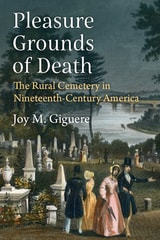
Pleasure Grounds of Death considers the history of the rural cemetery in the United States throughout the duration of the nineteenth century as not only a critical cultural institution embedded in the formation of community and national identities, but also as major sites of contest over matters of burial reform, taste and respectability, and public behavior; issues concerning race, class, and gender; conflicts over the burial of the Civil War dead and formation of postwar memory; and what constituted the most appropriate ways to structure the landscape of the dead in a modern and progressive society. As cultural landscapes that served the needs of the living as well as the dead, rural cemeteries offer a mirror for the transformations and conflicts taking place throughout the nineteenth century in American society.
Poetics of Processing
Memory Formation, Identity, and the Handling of the DeadAnna J. Osterholtz
University Press of Colorado, 2020
The contributors interpret postmortem treatment of the physical body through a poetics lens, examining body processing as a mechanism for the re-creation of cosmological events and processing’s role in the creation of social memory. They analyze methods of processing and the ways in which the living use the physical body to stratify society and gain power, as evidenced in rituals of body preparation and burial around the world, objects buried with the dead and the hierarchies of tomb occupancy, the dissection of cadavers by medical students, the appropriation of living spaces once occupied by the dead, and the varying treatments of the remains of social outsiders, prisoners of war, and executed persons.
The Poetics of Processing combines social theory and bioarchaeology to examine how the living manipulate the bodies of the dead for social purposes. These case studies—ranging from prehistoric to historic and modern and from around the globe—explore this complex material relationship that does not cease with physical death. This volume will be of interest to mortuary archaeologists, bioarchaeologists, and cultural anthropologists.
Contributors:
Dil Singh Basanti, Roselyn Campbell, Carlina de la Cova, Eric Haanstad, Scott Haddow, Christina Hodge, Christopher Knusel, Kristin Kuckelman, Clark Spencer Larsen, Debra Martin, Kenneth Nystrom, Adrianne Offenbecker, Megan Perry, Marin Pilloud, Beth K. Scaffidi, Mehmet Somel, Kyle D. Waller
Politics, Metaphysics, and Death
Essays on Giorgio Agamben's Homo SaceAndrew Norris, ed.
Duke University Press, 2005
The contributors analyze Agamben’s thought from the perspectives of political theory, philosophy, jurisprudence, and the history of law. They consider his work not only in relation to that of his major interlocutors—Hannah Arendt, Michel Foucault, Carl Schmitt, Walter Benjamin, and Martin Heidegger—but also in relation to the thought of Plato, Pindar, Heraclitus, Descartes, Kafka, Bataille, and Derrida. The essayists’ approaches are varied, as are their ultimate evaluations of the cogency and accuracy of Agamben’s arguments. This volume also includes an original essay by Agamben in which he considers the relation of Benjamin’s “Critique of Violence” to Schmitt’s Political Theology. Politics, Metaphysics, and Death is a necessary, multifaceted exposition and evaluation of the thought of one of today’s most important political theorists.
Contributors: Giorgio Agamben, Andrew Benjamin, Peter Fitzpatrick, Anselm Haverkamp, Paul Hegarty, Andreas Kalyvas, Rainer Maria Kiesow , Catherine Mills, Andrew Norris, Adam Thurschwell, Erik Vogt, Thomas Carl Wall
Pompeii's Living Statues
Ancient Roman Lives Stolen from DeathEugene Dwyer
University of Michigan Press, 2010
In AD 79, Mt. Vesuvius erupted in two stages. While the first stage was incredibly destructive, it was the second stage, a so-called pyroclastic flow, that inundated Pompeii with a combination of superheated gases, pumice, and rocks, killing tens of thousands of people and animals and burying them in ash and mud.
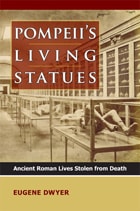
During excavations of the town in 1863, Giuseppe Fiorelli, the director of the dig, poured plaster of paris into a cavity under the soil revealed by a workman's pick. When the plaster set and the mound was uncovered, all were amazed to see the secret that the ground had held for 1,800 years: a detailed cast of an ancient Pompeian such as no one had seen before, frozen in the instant of dying and complete in every respect, including outlines of the clothes he was wearing at the time of the destruction. The bodies, photographed and exhibited in the specially built Pompeii Museum, completely changed the world's ideas of life in ancient Italy.
Pompeii's Living Statues is a narrative account, supported by contemporary documents, of the remarkable discovery of those ancient victims preserved in the volcanic mud of Vesuvius.
Eugene Dwyer examines these casts and related records, the originals of a number of which (along with their museum) were lost in World War II bombing. As he considers the casts as archaeological and cultural pieces, he also discusses Pompeii and its artifacts in the context of Italian unification and party politics, the development of modern excavation methods, and the challenges of maintaining a very large archaeological site. Dwyer's clear organization and writing style, combined with a collection of photographs and engravings, make for a fascinating exploration of Pompeii and its victims.
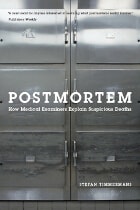
Postmortem
How Medical Examiners Explain Suspicious DeathsStefan Timmermans
University of Chicago Press, 2006
Postmortem goes deep inside the world of medical examiners to uncover the intricate web of pathological, social, legal, and moral issues in which they operate. Stefan Timmermans spent years in a medical examiner’s office, following cases, interviewing examiners, and watching autopsies. While he relates fascinating cases here, he is also more broadly interested in the cultural authority and responsibilities that come with being a medical examiner. Although these professionals attempt to remain objective, medical examiners are nonetheless responsible for evaluating subtle human intentions. Consequently, they may end—or start—criminal investigations, issue public health alerts, and even cause financial gain or harm to survivors. How medical examiners speak to the living on behalf of the dead, is Timmermans’s subject, revealed here in the day-to-day lives of the examiners themselves.
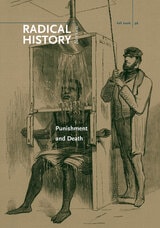
Punishment and Death
The Need for Radical Analysis, Volume 2006Ethan Blue and Patrick Timmons, eds.
Duke University Press, 0
The issue’s contributors—comprising both academics and activists—examine the practices of punishment and death imposed upon citizens, particularly through penal systems. One contributor exposes how the indignation and outrage many Americans expressed toward the military torture at Abu Ghraib do not extend to similar instances of torture (beatings, “shower-baths,” sexual abuse, etc.) against inmates of color within the U.S. prison system. Another contributor reflects on the unexpected but effective alliance between antiprison activists and the environmental justice movement in California, which worked to stop the massive prison-building boom of the late twentieth and early twenty-first centuries. Bringing a longer sweep of Western colonialism into view, another essay reveals the racial prejudices within disciplinary processes of Puerto Rico that lingered even after the island’s emancipation from the Spanish American empire, leading to unequal distribution of punishment on both colonial and domestic subject populations.
Contributors. Ethan Blue, Rose Braz, Helena Cobban, Craig Gilmore, Alan Eladio Gómez, R. J. Lambrose, Heather Jane McCarty, Dylan Rodríguez, Kelvin Santiago-Valles, Carolyn Strange, Patrick Timmons