Results by title
75 books match the query 'Death & Dying' and 7 start with p
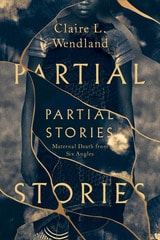
Partial Stories
Maternal Death from Six AnglesClaire L. Wendland
University of Chicago Press, 2022
By the early twenty-first century, about one woman in twelve could expect to die of a pregnancy or childbirth complication in Malawi. Specific deaths became object lessons. Explanatory stories circulated through hospitals and villages, proliferating among a range of practitioners: nurse-midwives, traditional birth attendants, doctors, epidemiologists, herbalists. Was biology to blame? Economic underdevelopment? Immoral behavior? Tradition? Were the dead themselves at fault?
In Partial Stories, Claire L. Wendland considers these explanations for maternal death, showing how they reflect competing visions of the past and shared concerns about social change. Drawing on extended fieldwork, Wendland reveals how efforts to legitimate a single story as the authoritative version can render care more dangerous than it might otherwise be. Historical, biological, technological, ethical, statistical, and political perspectives on death usually circulate in different expert communities and different bodies of literature. Here, Wendland considers them together, illuminating dilemmas of maternity care in contexts of acute change, chronic scarcity, and endemic inequity within Malawi and beyond.

Passages and Afterworlds
Anthropological Perspectives on Death in the CaribbeanMaarit Forde and Yanique Hume, editors
Duke University Press, 2018
Contributors. Donald Cosentino, Maarit Forde, Yanique Hume, Paul Christopher Johnson, Aisha Khan, Keith E. McNeal, George Mentore, Richard Price, Karen Richman, Ineke (Wilhelmina) van Wetering, Bonno (H.U.E.) Thoden van Velzen
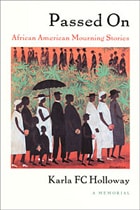
Passed On
African American Mourning Stories, A MemorialKarla FC Holloway
Duke University Press, 2002
With a focus on the “death-care” industry—black funeral homes and morticians, the history of the profession and its practices—Holloway examines all facets of the burial business, from physicians, hospital chaplains, and hospice administrators, to embalming- chemical salesmen, casket makers, and funeral directors, to grieving relatives. She uses narrative, photographs, and images to summon a painful history of lynchings, white rage and riot, medical malpractice and neglect, executions, and neighborhood violence. Specialized caskets sold to African Americans, formal burial photos of infants, and deathbed stories, unveil a glimpse of the graveyards and burial sites of African America, along with burial rituals and funeral ceremonies.
Revealing both unexpected humor and anticipated tragedy, Holloway tells a story of the experiences of black folk in the funeral profession and its clientele. She also reluctantly shares the story of her son and the way his death moved her research from page to person.
In the conclusion, which follows a sermon delivered by Maurice O. Wallace at the funeral for the author’s son, Bem, Holloway strives to commemorate—through observation, ceremony, and the calling of others to remembrance and celebration.
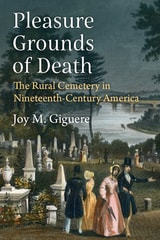
Pleasure Grounds of Death
The Rural Cemetery in Nineteenth-Century AmericaJoy M. Giguere
University of Michigan Press, 2024
Pleasure Grounds of Death considers the history of the rural cemetery in the United States throughout the duration of the nineteenth century as not only a critical cultural institution embedded in the formation of community and national identities, but also as major sites of contest over matters of burial reform, taste and respectability, and public behavior; issues concerning race, class, and gender; conflicts over the burial of the Civil War dead and formation of postwar memory; and what constituted the most appropriate ways to structure the landscape of the dead in a modern and progressive society. As cultural landscapes that served the needs of the living as well as the dead, rural cemeteries offer a mirror for the transformations and conflicts taking place throughout the nineteenth century in American society.
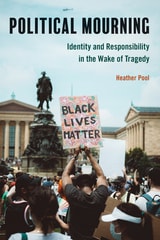
Political Mourning
Identity and Responsibility in the Wake of TragedyHeather Pool
Temple University Press, 2021
What leads us to respond politically to the deaths of some citizens and not others? This is one of the critical questions Heather Pool asks in Political Mourning. Born out of her personal experiences with the trauma of 9/11, Pool’s astute book looks at how death becomes political, and how it can mobilize everyday citizens to argue for political change.
Pool examines four tragedies in American history—the Triangle Shirtwaist Factory Fire, the lynching of Emmett Till, the September 11 attacks, and the Black Lives Matter movement—that offered opportunities to tilt toward justice and democratic inclusion. Some of these opportunities were taken, some were not. However, these watershed moments show, historically, how political identity and political responsibility intersect and how racial identity shapes who is mourned. Political Mourning helps explain why Americans recognize the names of Trayvon Martin and Sandra Bland; activists took those cases public while many similar victims have been ignored by the news media.
Concluding with an afterword on the coronavirus, Pool emphasizes the importance of collective responsibility for justice and why we ought to respond to tragedy in ways that are more politically inclusive.
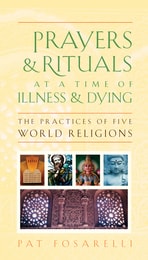
Prayers and Rituals at a Time of Illness and Dying
The Practices of Five World ReligionsPatricia Fosarelli
Templeton Press, 2008
In the course of caring for the ill or dying, health care professionals are sometimes the only ones available to provide spiritual comfort to their patients. In our modern pluralistic society, where patients could come from any number of religious traditions, it can often be difficult to find exactly the right words in these situations.
Prayers and Rituals at a Time of Illness and Dying: The Practices of Five World Religions by experienced physician and theologian Pat Fosarelli offers clear instructions for health care professionals on how to better understand the needs of their Buddhist, Hindu, Muslim, Christian, and Jewish patients during these difficult times. Devoting separate chapters to each tradition, Fosarelli briefly outlines the basic beliefs and then looks at the main tenets of each religion, exploring the varied approaches that they take to illness and end-of-life issues. For each tradition, she also describes practices and offers suitable prayers. Each chapter suggests modifications that may be necessary for Western hospitals, modifications for children, and specific suggestions about what not to do or say in respect to different faith traditions.
This easy-to-use, pocket-sized resource will be referenced again and again by physicians, paramedics, hospital and military chaplains, pastoral counselors, hospice providers, and other medical professionals.
Prelude to Hospice
Florence Wald, Dying People, and their FamiliesAbel, Emily K.
Rutgers University Press, 2018